
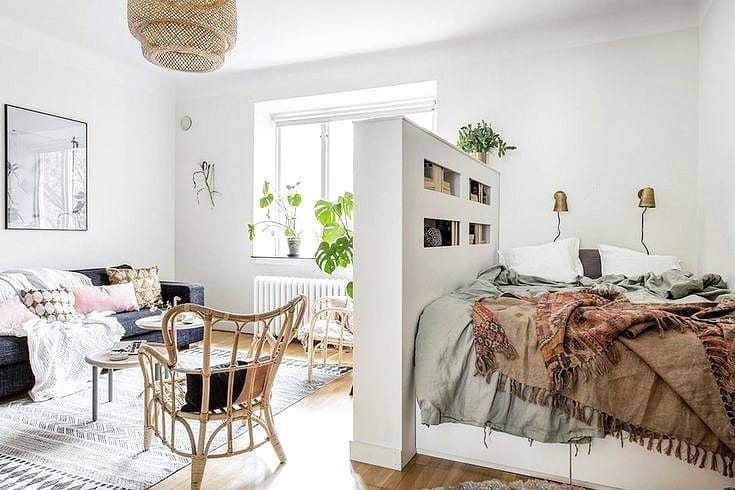
Separate a Studio Bed with Furniture You Can See Over
The source uses rugs to give sleeping and living areas separate identities. Movable screens can adjust the level of visual privacy, while the back of a sofa acts as a low boundary without becoming a full-height wall.
A bookcase offers another division with storage, using either open shelves or a more solid back. Follow its anchoring requirements. Evaluate daylight and movement before adding any divider, since a studio needs workable access as well as a recognizable sleeping zone.
Choose the level of visual separation first
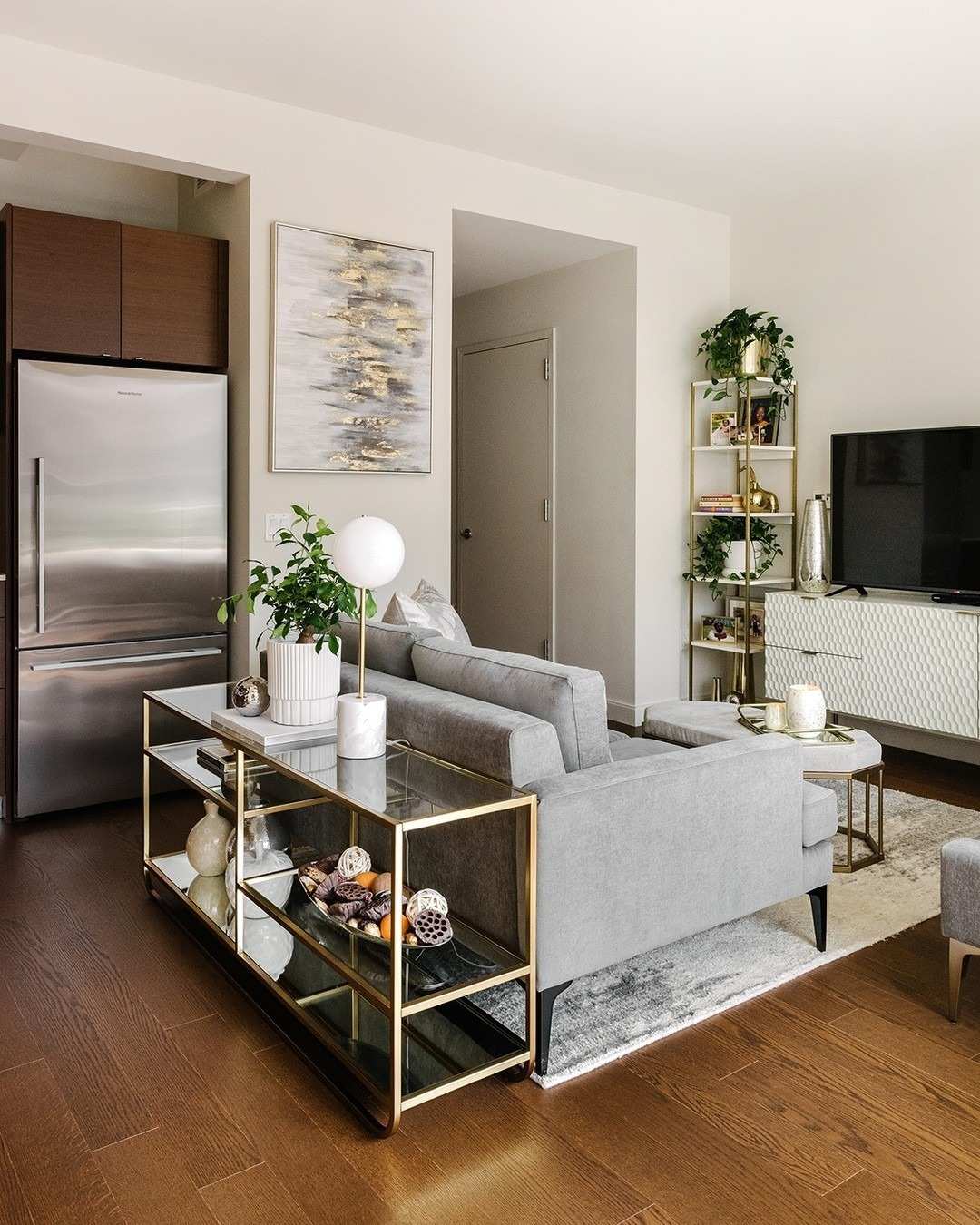
Lisa Furtado suggests the back of a sofa as a lower boundary that can be seen over, while a bookcase, screen, or curtain can create a stronger divide. Open shelving and plants admit more visual connection than a solid-backed unit. The article also suggests using rugs or distinct paint areas where adding another tall piece would make the layout too crowded. The right choice depends on whether the aim is a gentle activity boundary or greater privacy around the bed.
Keep the shared room usable on both sides
Curtains need appropriate supports and sufficient fabric clearance, while freestanding storage must be suitable and secured as instructed. Furniture at the foot of a bed can define a sitting area, but leave space to get into bed and use nearby drawers. The reference also mentions rugs and color zones as options that add no tall barrier. These do not provide acoustic isolation, but they may be enough where light and movement are more important than screening. Compare the actual sleeping, working, and social routines before adding a divider that consumes valuable floor area.
Choose the degree of separation before choosing the object
Lisa Furtado's suggestions range from a sofa back to a full curtain and therefore offer different degrees of enclosure. Identify the view that should change: a bed visible from the entrance, a desk facing the lounge, or belongings behind the sleeping area. A low furniture boundary may make activities easier to read while preserving an open outlook. It does not create the visual screening of an opaque curtain. An open bookcase falls somewhere between those effects, depending on its contents. Compare those results from the actual seats and doorways rather than assuming that every room-divider photograph provides equivalent privacy or light transmission.
Evaluate both sides of a storage boundary
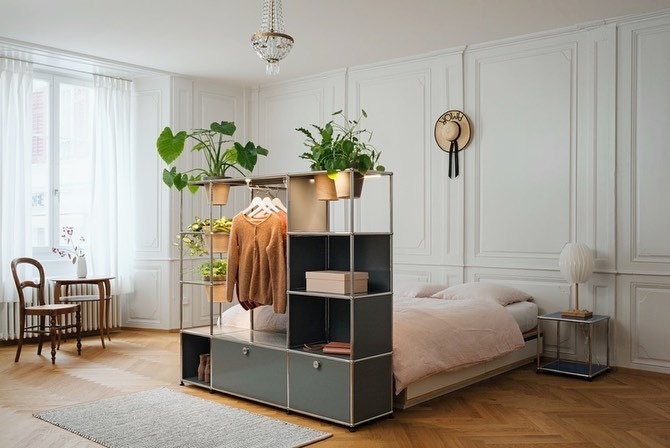
The reference suggests bookcases, shelves with plants, and clothing racks as ways to combine zoning with another task. The contents become part of the boundary's appearance and practical footprint. Hanging garments project beyond the rack, plants need suitable light and care access, and shelves need the support and securing specified for the product. Consider what the back looks like from the bed as well as from the living area. A solid bookcase back with artwork can feel more enclosed, while an open frame allows more views through it. Neither choice removes the need for a clear route, useful bed access, and a suitable location for the possessions it holds.
Use a lighter intervention where furniture is already sufficient
A rug or permitted color treatment can identify a zone without introducing another freestanding object. Compare those options first if the studio already accommodates its main furniture tightly. Curtains require appropriate fixing and enough gathering space, while an additional sheer layer introduces another track or rod arrangement to resolve. The source also mentions platform storage and a Murphy bed, but a different bed mechanism is a larger decision than moving a sofa. Check the full opening area, support, and current installation instructions before considering it a space-saving solution. The strongest adaptation may be a carefully positioned sofa with a restrained visual cue, rather than several overlapping boundaries competing in the same small room. Review the arrangement with bedding, occupied seats, and the usual stored items in place; an empty-room outline can hide the practical conflict between an attractive boundary and everyday use.
References
- 13 ways to create a bedroom in a studio apartment. Real Homes; Aida M Toro.
Rugs, movable dividers, and sofa backs can define a sleeping area.


Leave a Comment