

Compare Three Ways to Divide a Studio
The source groups room dividers into folding, hanging, and shelf-based designs. A folding screen can move as privacy needs change, while hanging panels offer another visual boundary. Shelving adds a storage function alongside separation.
Assess how each option affects light, walking routes, and access to belongings. A divider can define a sleeping or working area, but it does not necessarily provide sound isolation. In a studio, choose the least obstructive arrangement that supports the privacy actually needed.
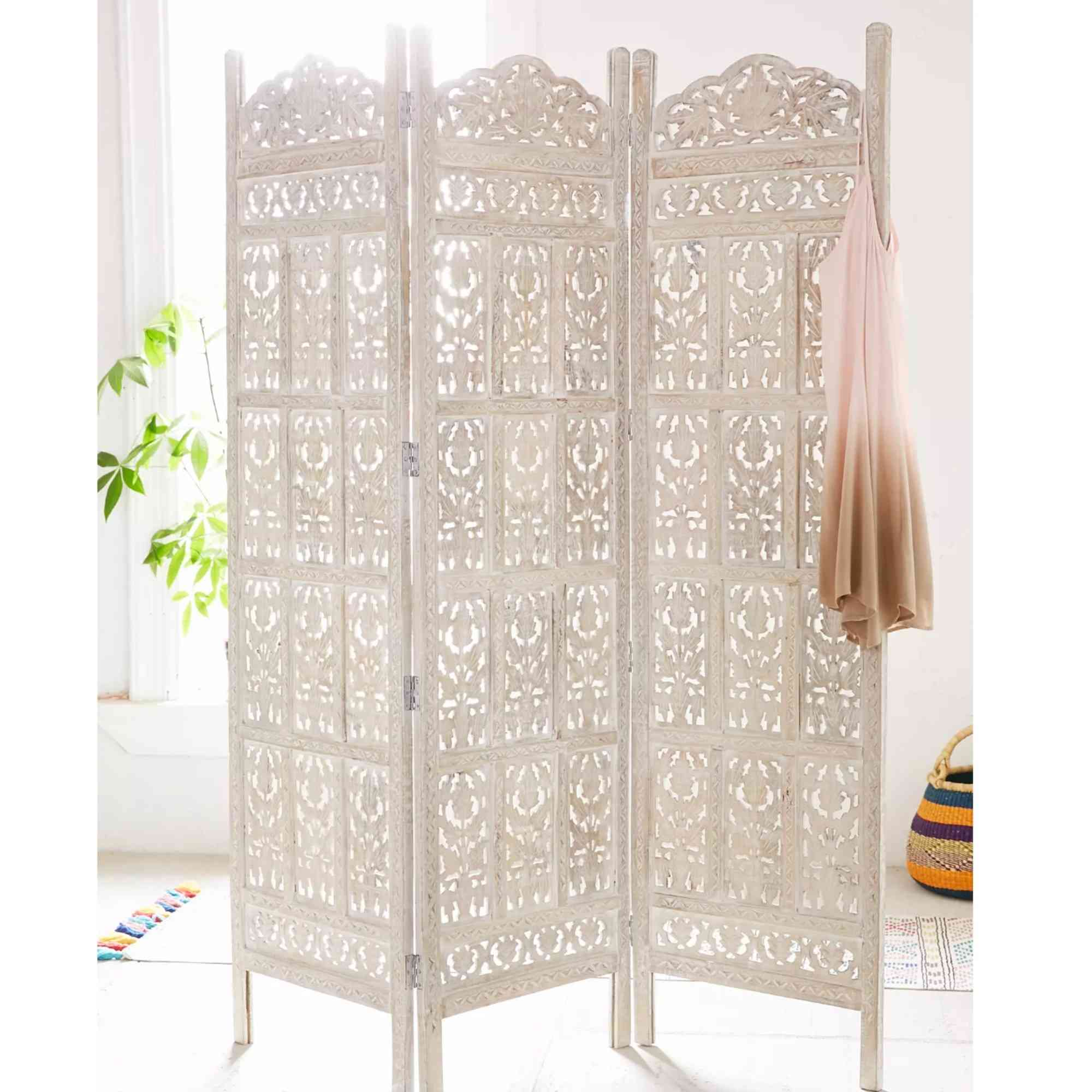
Compare the form of separation each type creates
The reference groups dividers into folding screens, hanging designs, and shelving. Folding panels can move between positions, a hanging system depends on suitable fixing points, and shelves introduce storage as well as a boundary. An open or perforated design lets more light through but offers less visual screening than a solid panel. The textile, carved-timber, and canvas examples also create different shadows and levels of openness within the same room. Choose according to the activity being separated rather than the pattern alone.
Include installation and the unused position in the plan
The examples range from textile panels to carved timber and canvas-covered frames, with different widths and materials. Check the current product dimensions, stability guidance, and any permission needed for ceiling or wall fixings. A movable screen also needs somewhere to stand when folded. Shelving used as a divider must be suitable and secured as instructed, especially where both sides are accessible. The writer's enthusiasm describes personal experience, not proof that a divider is necessary in every small home. A clear furniture arrangement may provide sufficient zoning where another physical object would obstruct movement.
Decide which kind of separation the room actually needs
The three categories in the reference do not perform identical jobs. A folding screen can interrupt the view of a desk after work, while a shelf divider can give objects a defined place on the boundary. A hanging panel depends on its openness and material for the amount of screening it provides. Begin with the particular activity and the view that should change. An illustrative comparison could examine the same desk from the sofa with no boundary, an open screen, and a more opaque panel. If rearranging the furniture already makes the work area less prominent, another object may be unnecessary. The choice should improve a specific relationship rather than treat a divider as a required accessory for every studio.

Compare installation with the normal traffic through the space
The source warns against flimsy choices in a heavily used area and discusses different materials, widths, and structures. A folding design needs stable panel positioning, a hanging one needs suitable attachment, and a shelf system needs appropriate support and securing. Check the actual instructions and the routes used on both sides before comparing patterns. A product's front width does not show every projection or the space required to pass it while carrying belongings. An open weave can preserve more light, but also reveals more of what sits behind it. Decide that trade-off deliberately, especially if the purpose is privacy rather than simply making the room's activities visually clearer.
Plan the display and unused position before adding the divider
Lubo Todorov describes creating a vignette, such as a reading corner supported by a rug and a lamp. The boundary is useful when the activity inside it remains comfortable and accessible. A shelf version should be selected by the actual objects it will hold and the load and installation guidance, not just the number of open compartments in a photograph. A movable screen also needs a suitable place when folded. The published shopping dimensions and customer-rating selections belong to particular products and publication context. Verify the current specifications rather than reproduce an unusual dimension from the list without checking. The best divider connects a purposeful room arrangement with a material and outline that suit it, without turning a clear route into an obstacle.
References
Folding screens, hanging panels, and shelving create different kinds of boundaries.


Leave a Comment