
Coordinate an Open Apartment Through Furniture and Color
Work with an existing contemporary shell
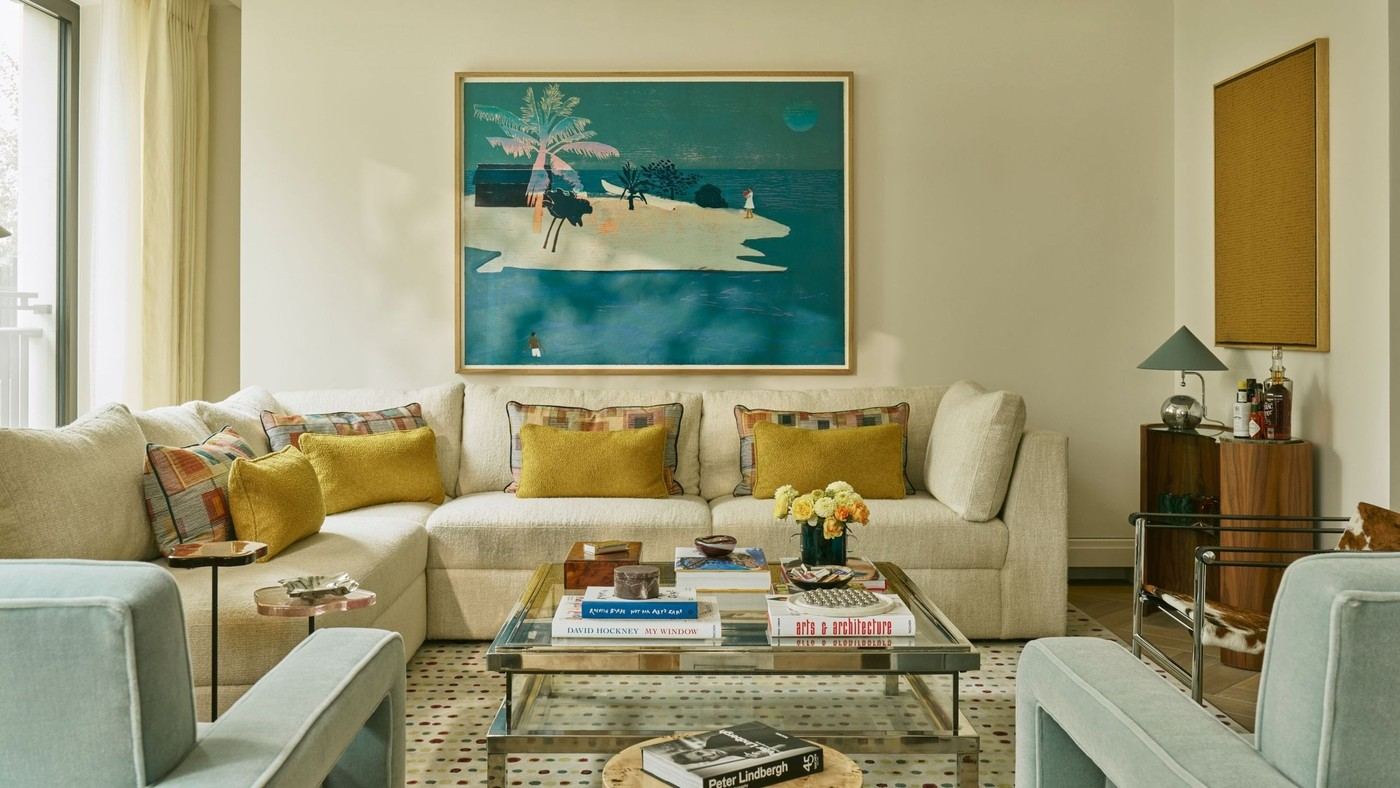
In a Chelsea Barracks apartment, Studio Squire retained the existing kitchen and bathrooms while softening the contemporary interior around them. Large windows and crisp architectural lines already established a clear identity. The design therefore concentrated on adding warmth and personality rather than replacing everything. This is useful for understanding how a finished apartment can change character through carefully selected furnishings, even when major fixed elements remain in place.
Let selected pieces carry the stronger colors
Most walls stayed a calm, pale cream, while upholstery and decorative additions introduced yellow, turquoise, green, ochre, and blue. British-made furniture, antiques, and layered details helped the result feel comfortable without abandoning its modern setting. The lesson is to distribute personality through the things added to the room. A restrained background can support varied accents when they are considered together as part of a coherent apartment scheme.
Keep the existing architectural finishes as a reference
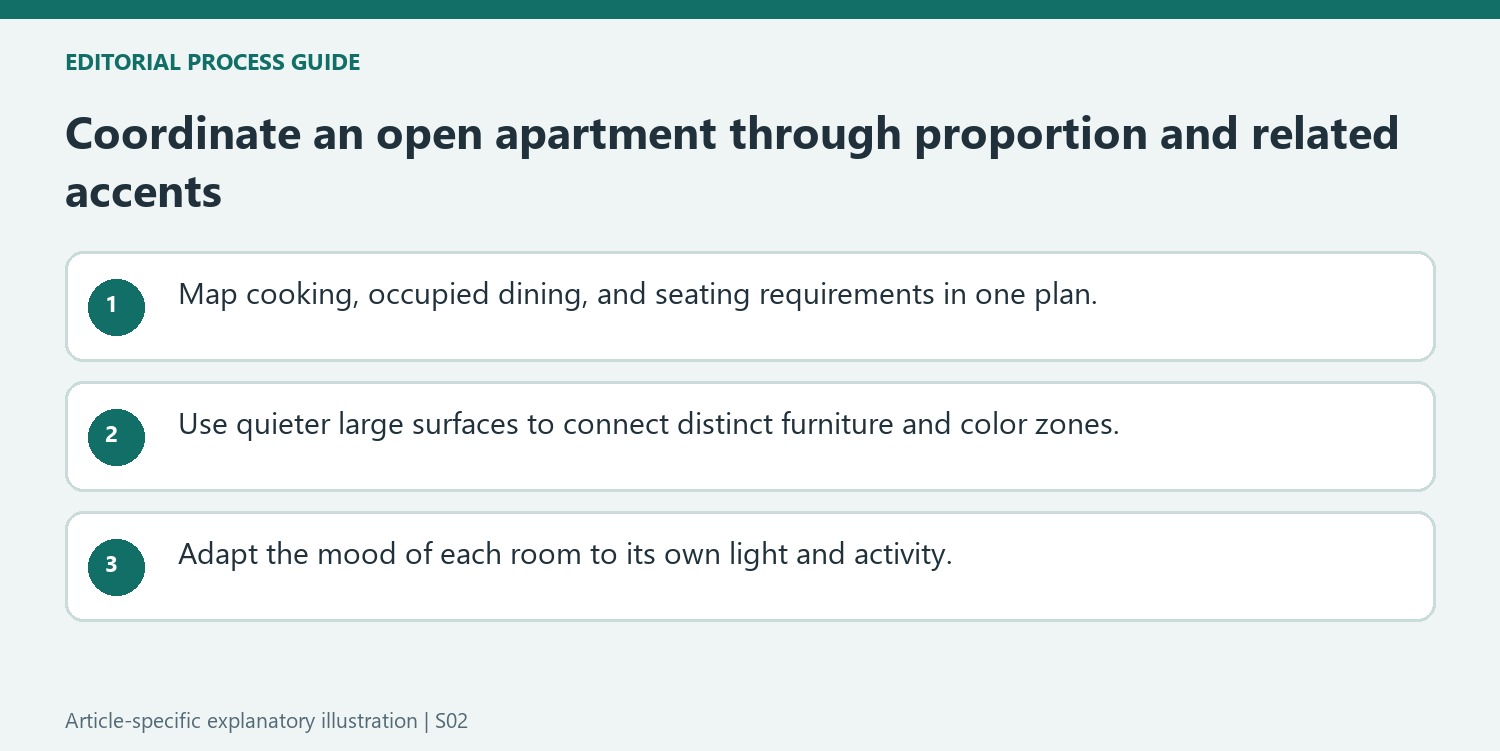
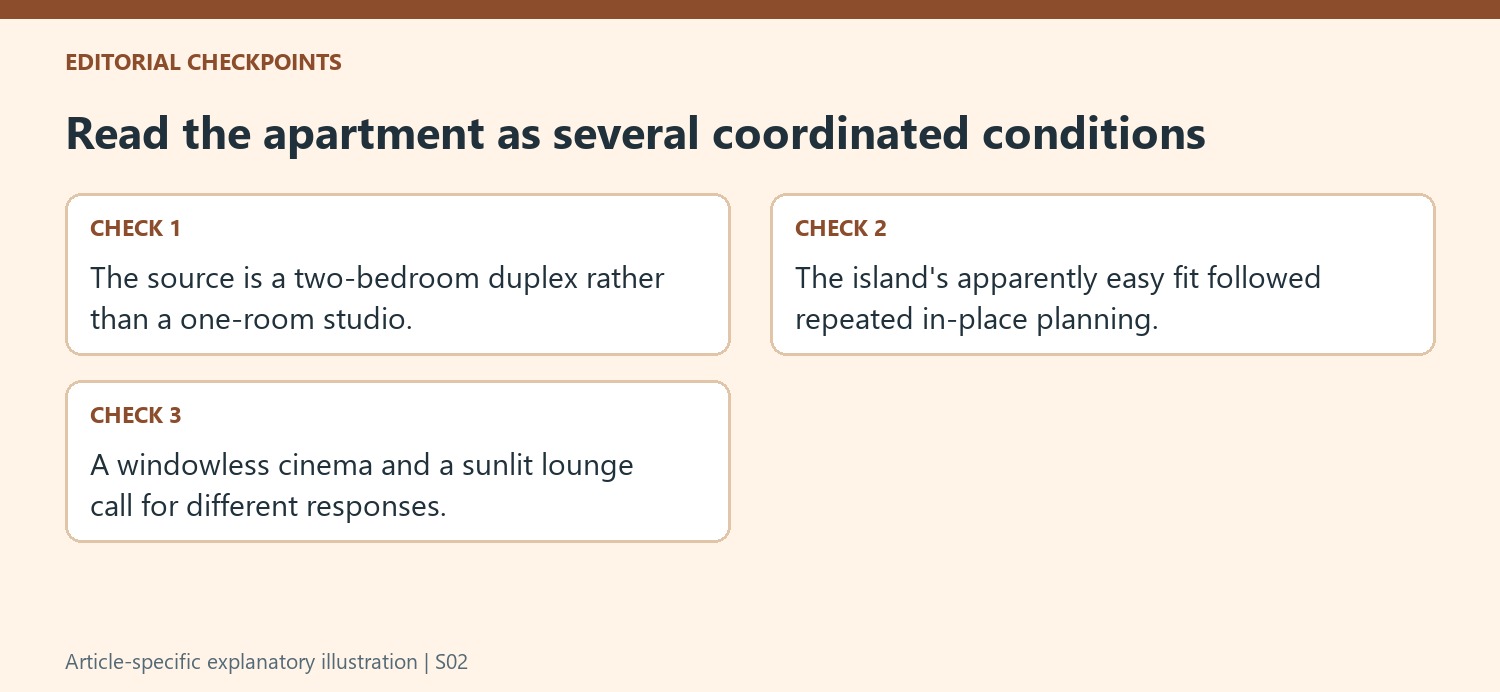
Studio Squire retained the apartment's contemporary kitchen and bathrooms, using pale cream walls to support furniture in yellow, mid-blue, turquoise, and warmer neutral tones. This explains how color was introduced without changing every permanent surface. The project includes a two-bedroom duplex, so its ideas concern a particular compact open-plan arrangement rather than the needs of a one-room studio.
Use related objects to connect the zones
Angelica Squire describes mixing British-made new furnishings with antiques and objects that suggest a longer history. Bespoke pieces and a Tom Hammick artwork add stronger individual moments while the architecture remains relatively restrained. A useful adaptation begins with one repeated tone or material across the seating and dining areas, then allows the furniture functions to define them. Custom pieces in the source respond to its own dimensions and budget. Compare the space needed for storage, seating, and circulation before adding a large sectional or an island merely because it appears in the photographed apartment.
Borrow the planning discipline behind the color
The source's open living area accommodates cooking, dining for six, and a generous seating group. Angelica Squire describes repeatedly mapping the island in place to establish the proportions. That work explains the apparently effortless result more precisely than the color palette alone. In another apartment, draw the retained kitchen, dining chairs in use, and the main seats together before selecting a large additional piece. A banquette or sectional may be useful in one setting and unnecessary in another. The project is a compact two-bedroom duplex with several separate rooms, so its successful mix of activities should not be treated as proof that the same furniture list belongs in a one-room studio.
Let each zone carry a related but distinct accent
The pale cream architecture provides continuity while the upholstery, artwork, and fitted elements introduce stronger notes. The yellow dining banquette is one clear example of color marking a function without a solid partition. Identify a tone already present in the room and consider where a related material would connect the next activity. The source's Tom Hammick artwork complements the sofa rather than requiring an exact match. An illustrative adaptation could link a chair cushion with dining upholstery while leaving most walls quiet. This keeps the visual relationship legible without asking every zone to use identical furniture or every object to repeat the same bright color.
Compare the quieter and darker rooms by their conditions
The bedrooms sit on a lower level and use restrained styling with color focused on headboards, while the windowless cinema room deliberately adopts a deeper green setting. Those different responses show that the apartment does not rely on one universal brightness strategy. Check the actual daylight, intended activity, and lighting before borrowing either mood. A dark cinema treatment should not be presented as the same solution as a sunlit open-plan lounge, nor as a substitute for practical equipment and room requirements. The mixture of new pieces and antiques can be adapted more selectively: one retained older object may provide character beside contemporary furniture. Keep the specific function and proportions of each zone central to the decision.
References
- This Bijou London Apartment Avoids Feeling Cold Thanks to an Unexpected Yet 'Welcoming and Happy' Yellow and Blue Palette. Homes and Gardens; Charlotte Olby.
In a Chelsea Barracks apartment, Studio Squire retained the existing kitchen and bathrooms while softening the contemporary interior around them.


Leave a Comment