
Choose First-Apartment Furniture That Can Move with You
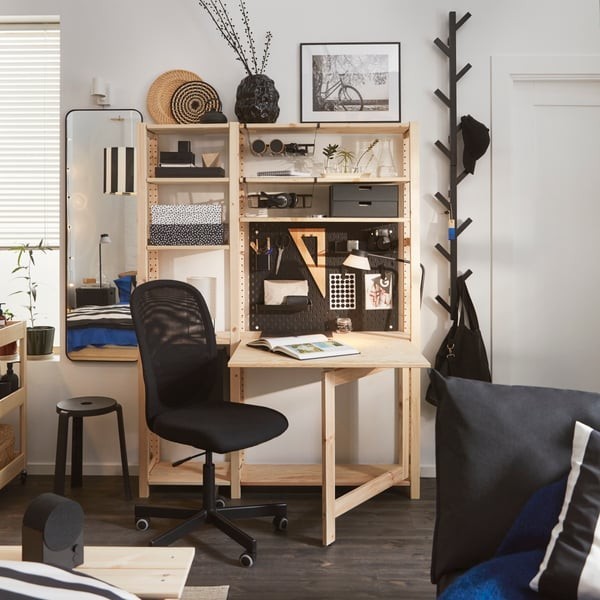
The source equips a first studio with a folding table that serves studies, meals, and social time. Folding it away marks a change in activity and frees space for other uses. Furniture that can be disassembled and reassembled also supports a future move.
Sliding cabinet doors avoid the swing space needed by hinged ones. A sleeper sofa and side table include concealed storage, while a fold-flat drying rack has a place when laundry is finished. Each feature is useful because it addresses a specific routine rather than adding furniture for appearance alone.
Choose reusable construction alongside the daily function
The IKEA example uses a folding IVAR table for study and meals, then folds it down to release floor space. The source also describes a system that can be disassembled for a later move. Check the current assembly instructions, dimensions, and wall-fixing requirements rather than assuming every component will suit another apartment. A folding mechanism is most useful when it can be operated easily in the proposed position.
Combine the concealed and temporary storage needs
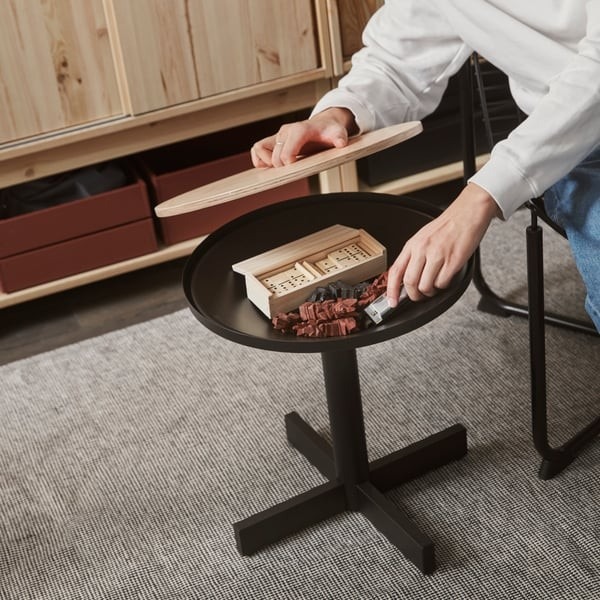
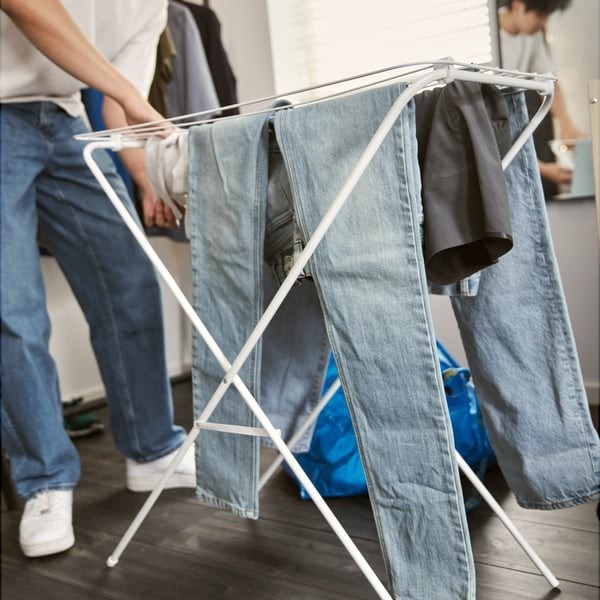
A sleeper sofa and side table provide hidden compartments, while sliding cabinet doors avoid the swing of conventional hinged doors. The article also includes a folding drying rack and a laundry bag that takes little space when empty. These are different responses to the routines of a first apartment, not a requirement to furnish the whole room from one collection. Allow suitable ventilation and walking space when drying laundry indoors. Striped textiles or a lampshade can add personality after the more practical needs of sleeping, studying, dining, and storing possessions have been resolved.
Compare the furnished room in more than one state
IKEA's student example describes folding the study table away to mark a change from work to another activity. This is a routine to evaluate, rather than an automatic space saving for every occupant. Identify where the laptop, papers, and chair will go before the table closes. If clearing the surface requires moving several unrelated belongings, the change may not happen often. An illustrative room plan could show study, dining, and exercise separately, using the actual furniture dimensions in each state. Compare which of those activities really occurs each day. A slightly larger fixed surface can sometimes be more practical than a compact folding one that must be repeatedly unloaded.
Plan the next move alongside the present fit
The source identifies the IVAR system's ability to be disassembled and reassembled as a reason to keep it through later moves. Check the current instructions, component dimensions, and condition when assessing that possibility. Reuse depends on retaining the parts and having a suitable place for them in another home; it is not a guarantee that every later room will accommodate the same arrangement. Sliding cabinet doors can avoid a hinged door's outward swing, but still need clear access from the front. Consider the objects stored inside and whether some remain behind the closed panel. This makes the choice a comparison of actual retrieval and moving requirements rather than a general preference for one door type.
Make concealed storage and domestic chores part of the plan
The sleeper sofa and side table in the reference hide belongings within their normal outlines. Decide which contents belong in each compartment and how easily they can be reached while the furniture is being used. Guest bedding might fit the sofa's role, whereas frequently needed study materials may need a different location. The folding drying rack also needs an appropriate deployed position, not merely a slim place when empty. Keep that position separate from the route required to use the room. Finally, the striped shade, bedding, and curtains illustrate one way to add personality. Repeating a selected textile relationship can make retained furniture feel intentional without requiring the whole room to be purchased as a matching set. Keeping one familiar textile or lamp through a move can also give a new arrangement continuity while the rest of the furniture is adjusted to a different room.
References
- Smart tips for a tiny first apartment. ikea.com.
Folding surfaces and sliding storage doors reduce demands on a limited footprint.


Leave a Comment