
Let a Small Apartment's Dining Table Do More than Serve Meals
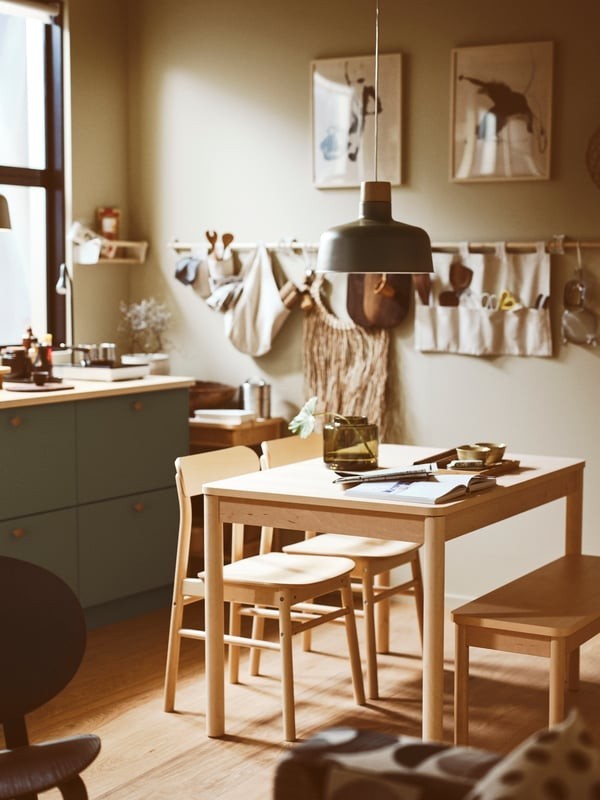
The source presents a compact apartment whose dining table is also used for work, travel planning, games, and entertaining. This shared surface supports several activities without requiring a separate piece of furniture for each. Open and closed kitchen storage keep daily supplies organized nearby.
In the bedroom, a bed positioned away from the wall creates access behind it to clothing storage concealed by a curtain. The arrangement shows why circulation should be planned around furniture use rather than treating every wall edge as mandatory placement.
Let the dining surface accommodate real daily activities
The IKEA apartment uses the table for meals, work, trip planning, cards, and entertaining. That range depends on being able to clear and reset the surface, so nearby storage matters as much as the table itself. Identify where work materials and serving items will go when the activity changes. A useful shared table needs enough clear space for the current task rather than remaining permanently styled.
Connect the shared spaces through practical storage
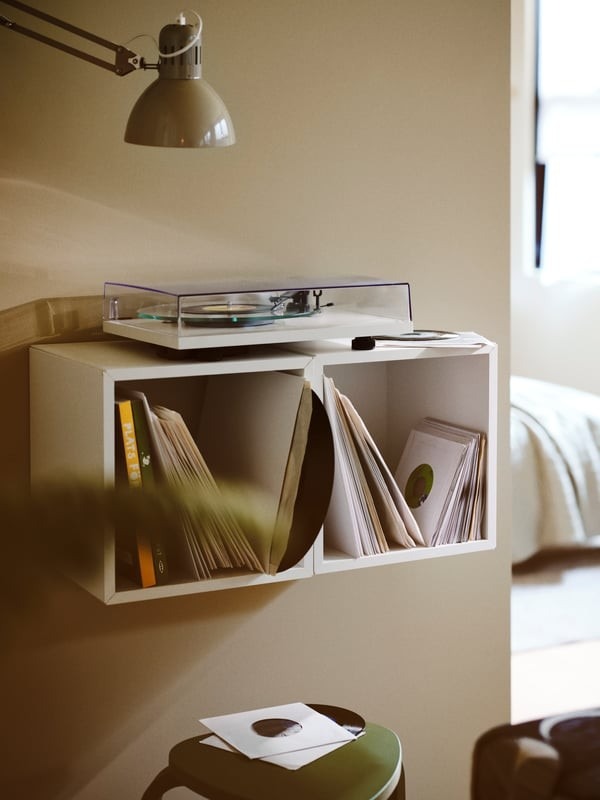
The kitchen combines open and closed storage, while the living area keeps records and refreshments within reach of the seats. In the bedroom, a free-standing bed creates a route behind it toward clothing storage. The couple's organized clothing area remains reachable through that planned route behind the bed. These arrangements respond to a specific one-bedroom plan and should not be assumed suitable for every studio. A comparable principle is to place storage near the activity it serves and preserve its access route. Woven baskets, timber shelves, and quieter closed fronts can then connect the rooms visually without replacing the more important decisions about movement and retrieval.
Make the dining surface useful across a normal week
In IKEA's one-bedroom example, the table hosts meals, occasional work, travel planning, cards, and snacks for friends. That range does not mean all those activities occur at once. Consider which ones matter in the actual household and what must change between them. A laptop and maps need a clear surface and somewhere to go before dinner. Frequently used dining items should be close enough to retrieve without turning the table into their permanent storage area. Compare the chair comfort and useful top dimensions for both eating and longer seated tasks. The transferable idea is a deliberate shared surface, rather than a separate furniture purchase for every occasional activity.
Coordinate open and closed storage with what happens nearby
The kitchen combines display with concealed storage, while the living room keeps records and snacks near its seating. List the possessions used in each activity and position them where returning them is straightforward. Open storage can make selected objects part of the room, but a heavily used mixed-purpose surface may benefit from closed space for less decorative work materials. The bathroom's baskets and cabinetry show a similar relationship in a different setting. They are not interchangeable storage specifications for the dining area. Use the source's consistent attention to practical contents as the model, and compare the amount of accessible capacity before deciding on the visible arrangement.
Preserve the whole apartment route when moving one piece
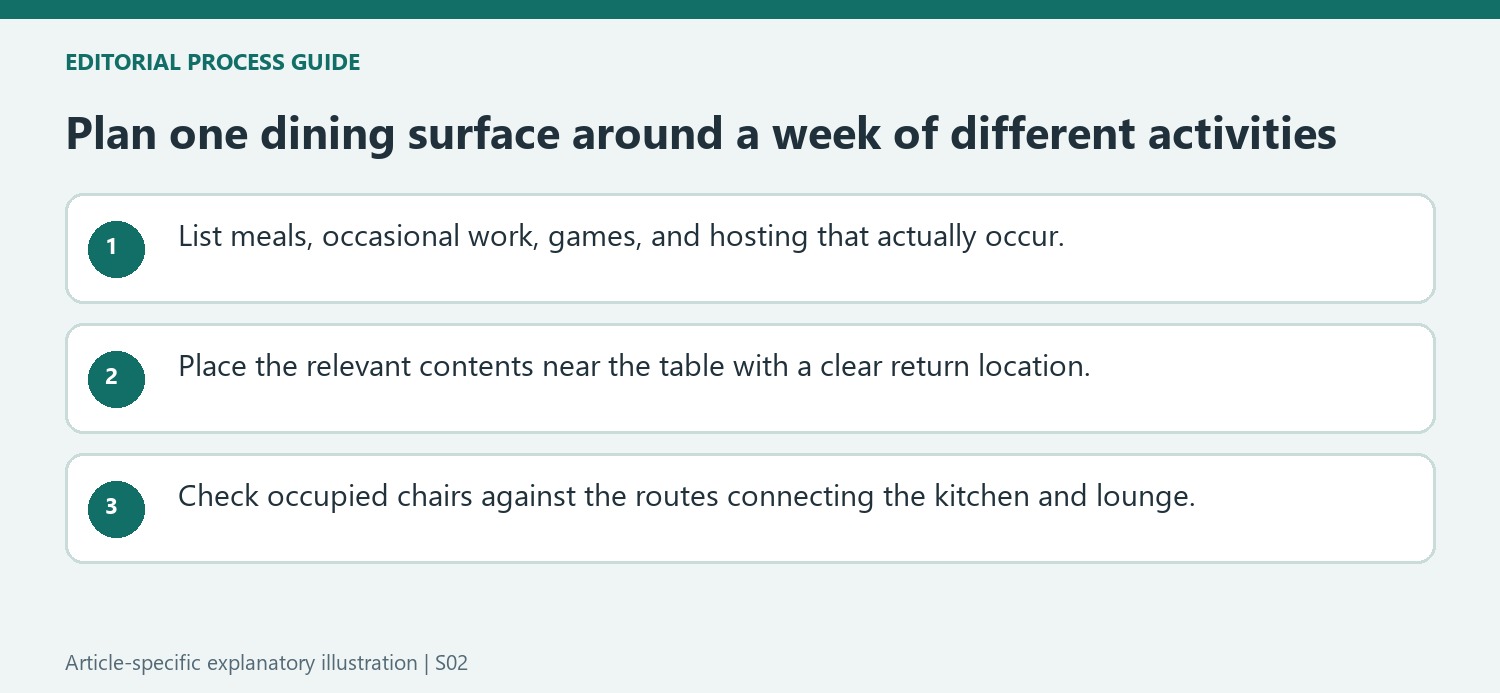
The source bedroom uses a free-floating bed with a walkway behind it to a curtained clothing area. That is a response to the particular three-wall arrangement, not a rule that every compact bedroom benefits from a centrally placed frame. The same principle applies to the dining table: its usefulness depends on the surrounding routes and neighboring activities. Check the occupied chair positions against kitchen access and the path toward the lounge. An illustrative review could follow a normal evening from preparing food to eating and putting things away. Keep the material and color relationships that appeal to the household, while adapting the furniture positions to the actual room instead of reproducing the published home as a fixed template. The attractive photograph is a starting point for understanding relationships, while the household's repeated tasks provide the more useful test of the final arrangement.
References
A carefully placed table can support work, hobbies, planning, and guests.


Leave a Comment