
Build a Studio Organizing System before Buying More Bins
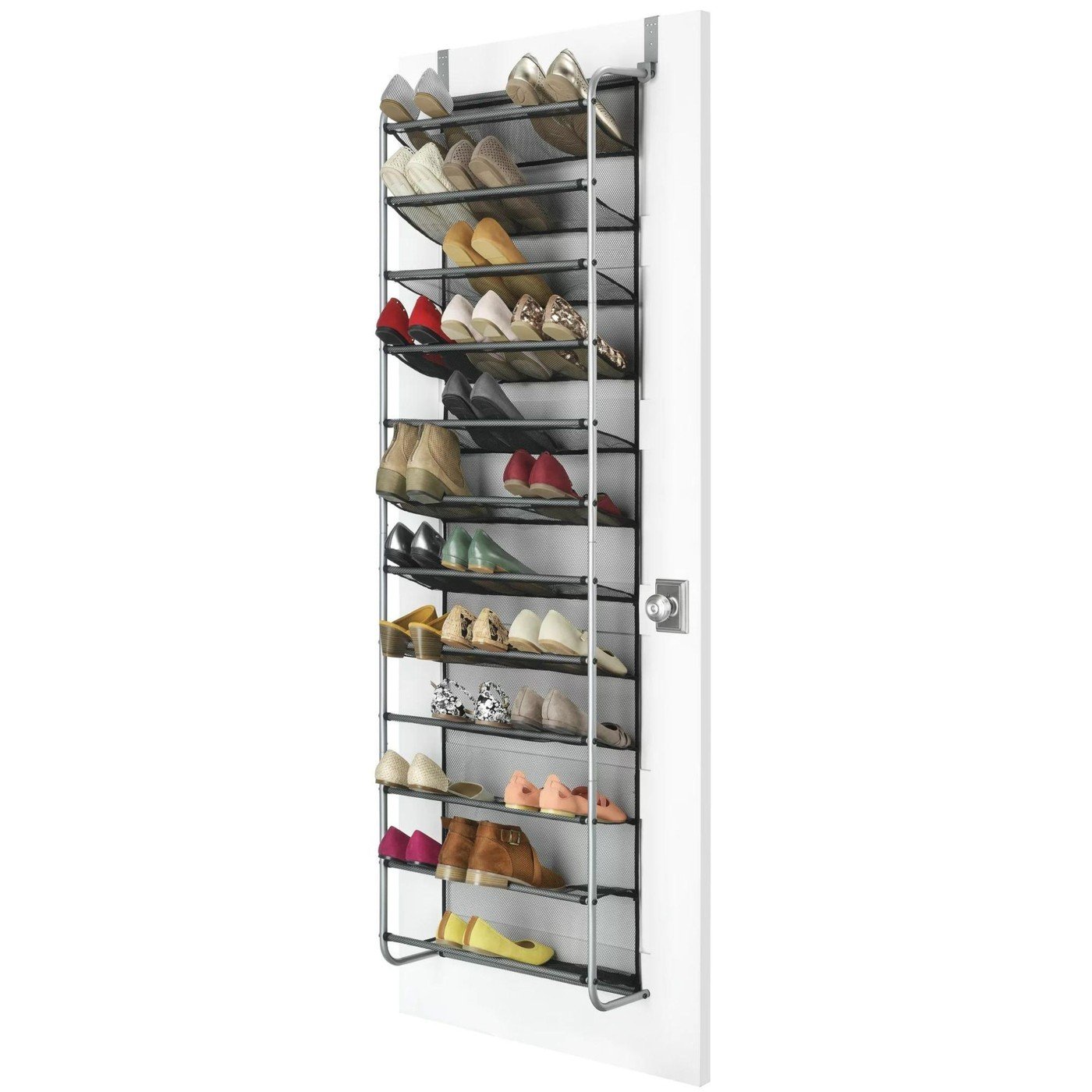
The source starts apartment organization with reviewing possessions and donating items no longer needed. Over-the-door organizers and stackable cabinet shelves make use of existing surfaces. Baskets and bins then group the belongings that remain rather than hiding an unsorted accumulation.
Seasonal rotation keeps bulky clothes and equipment out of prime daily storage. Distinct zones help an open apartment support different tasks. In a studio, choose containers after deciding what belongs in each zone so their size and location reflect actual routines.
Review possessions before measuring the organizers
Shantae Duckworth recommends taking items out and asking whether they are used, in working condition, and proportionate to the household. That process helps define the storage requirement instead of buying containers for an undifferentiated pile. Usable items that are no longer needed can be donated or rehomed where suitable local options exist, while damaged items need an appropriate disposal route.
Choose accessible locations for the retained groups
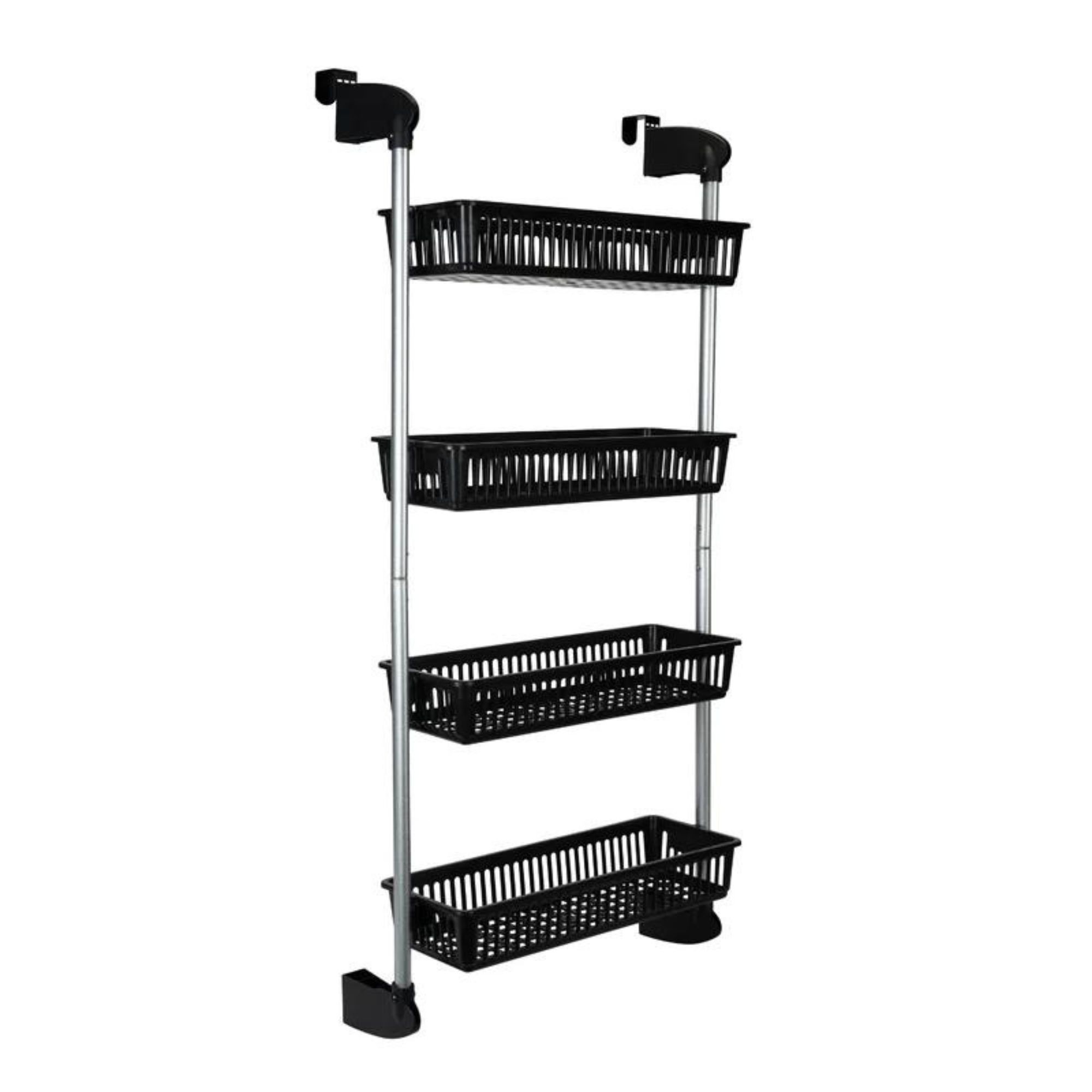
The feature suggests over-door organizers, cabinet shelf inserts, hooks, baskets, and bins as ways to use overlooked space. Their dimensions and fixing requirements still need to match the actual door, cupboard, or wall. Check that an over-door item does not prevent closure and that a shelf insert leaves sufficient height for the dishes. Adhesive hooks have surface and load limits, so follow the current instructions rather than assuming they work everywhere without marks. The source also emphasizes storing items close to where they are regularly used. Label categories where useful and put frequently used belongings where they can be returned easily. The system should reduce repeated searching as well as improve the appearance of the room.
Make the first pass about decisions rather than equipment
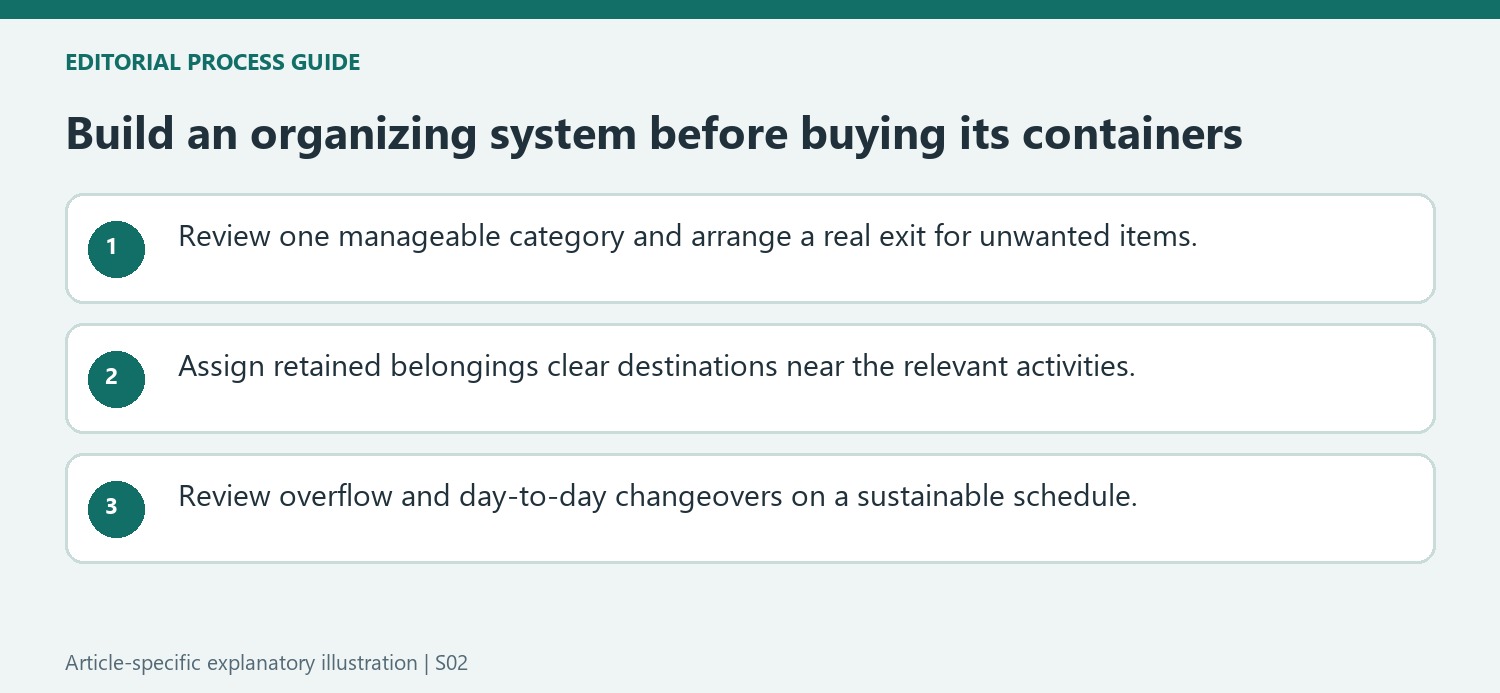
Shantae Duckworth recommends examining possessions closely before building the storage arrangement. Choose a manageable category or area so the review can be finished and the room remains usable. Identify what still fits, works, and has a genuine role in the household. The article's dinner-plate example illustrates questioning quantity, not prescribing the same number for everyone; regular hosting changes the useful amount. Items suitable for donation need a realistic route out of the apartment, including any collection arrangements that actually exist locally. Set that step up before leaving a pile near the entrance indefinitely. The organizing project begins to work when decisions lead to changed contents, rather than simply moving the same collection into new bins.
Assign destinations near the activities that create clutter
Lisa Cantu suggests grouping related items and labeling their containers. Place those groups where returning them is straightforward: work supplies near the work surface, seasonal clothes away from the daily selection, and cleaning tools where they can be safely and conveniently reached. Over-door organizers and stackable shelves can use existing capacity, but their fit, support, and door operation need checking against the actual products. Adhesive hooks also have surface and load limitations. A container should clarify a category and its destination, not become another place to hide a mixture of unrelated belongings. Leave the surfaces needed for cooking and work clear enough that those activities do not require a fresh sorting session every time.
Use zoning and a maintenance rhythm together
Shivani Vyas discusses partitions and vertical storage where an apartment serves several activities. Identify whether a visual boundary is actually missing before adding a curtain, panel, or mounted element. The storage destination may solve the clutter problem without another divider. If a partition is appropriate, include permissions, support, and the routes on both sides. Duckworth's recurring review also matters because possessions and seasonal needs change. Choose a schedule the household can sustain and use it to correct the categories that repeatedly overflow. The aim is not a permanently untouched display. It is an apartment that can move between work, meals, and rest with a simple return routine and an understandable place for its everyday belongings.
References
- How to organize a small apartment, according to the professionals. Real Homes; Amanda Lauren; Eve Smallman.
Decluttering, hanging storage, and zones can make an apartment easier to maintain.


Leave a Comment