
Let the TV Share Attention with the Rest of the Room
Give the eye another destination
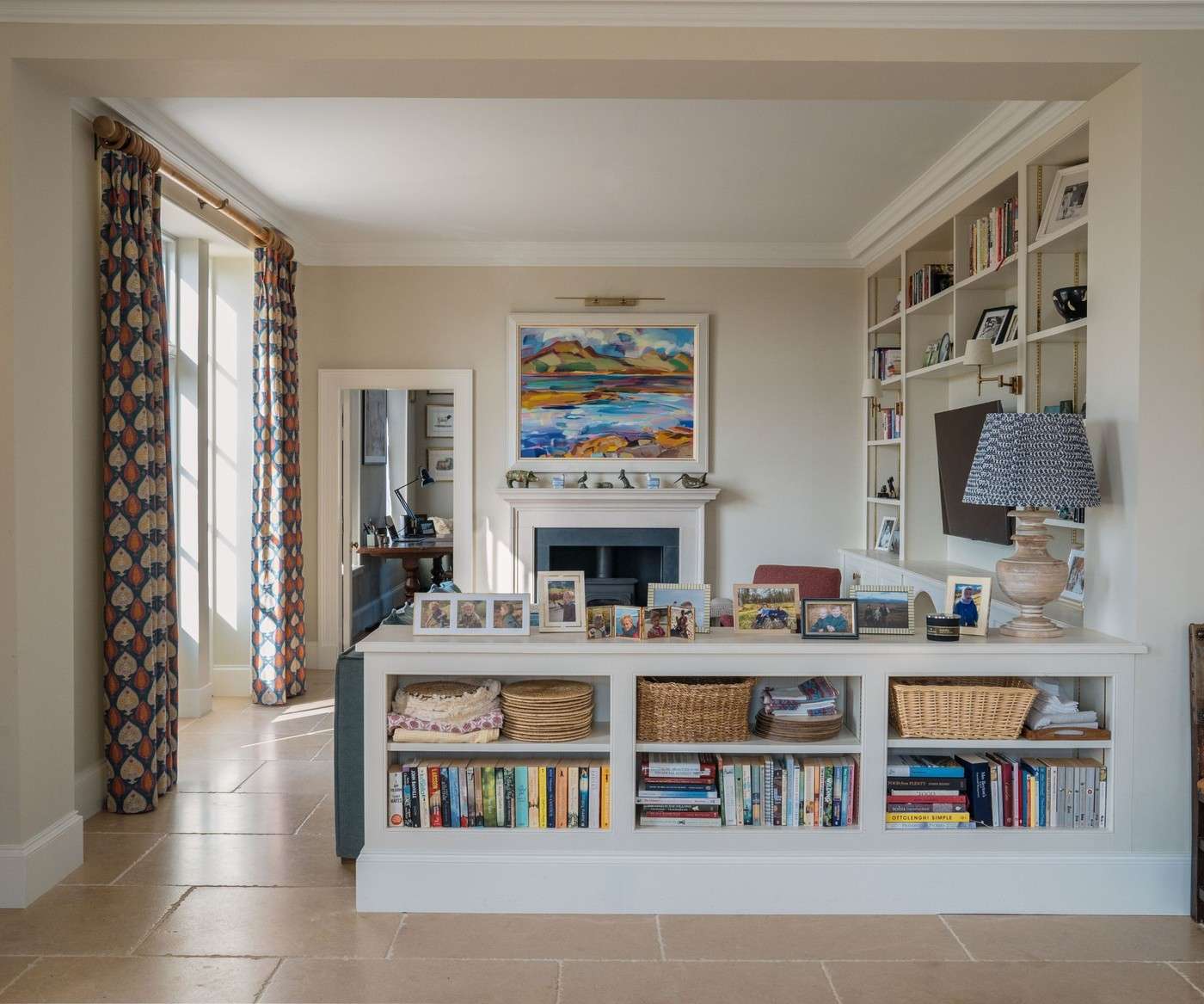
A living room does not have to revolve entirely around its television. The source describes placing a screen lower within a shelving or console arrangement, allowing artwork, books, or another architectural feature to attract attention first. In one example, a prominent artwork above a fireplace creates a stronger focal point while the television remains available within nearby joinery. The practical purpose of the screen is preserved without letting it define every view of the room.
Build flexibility into the seating plan
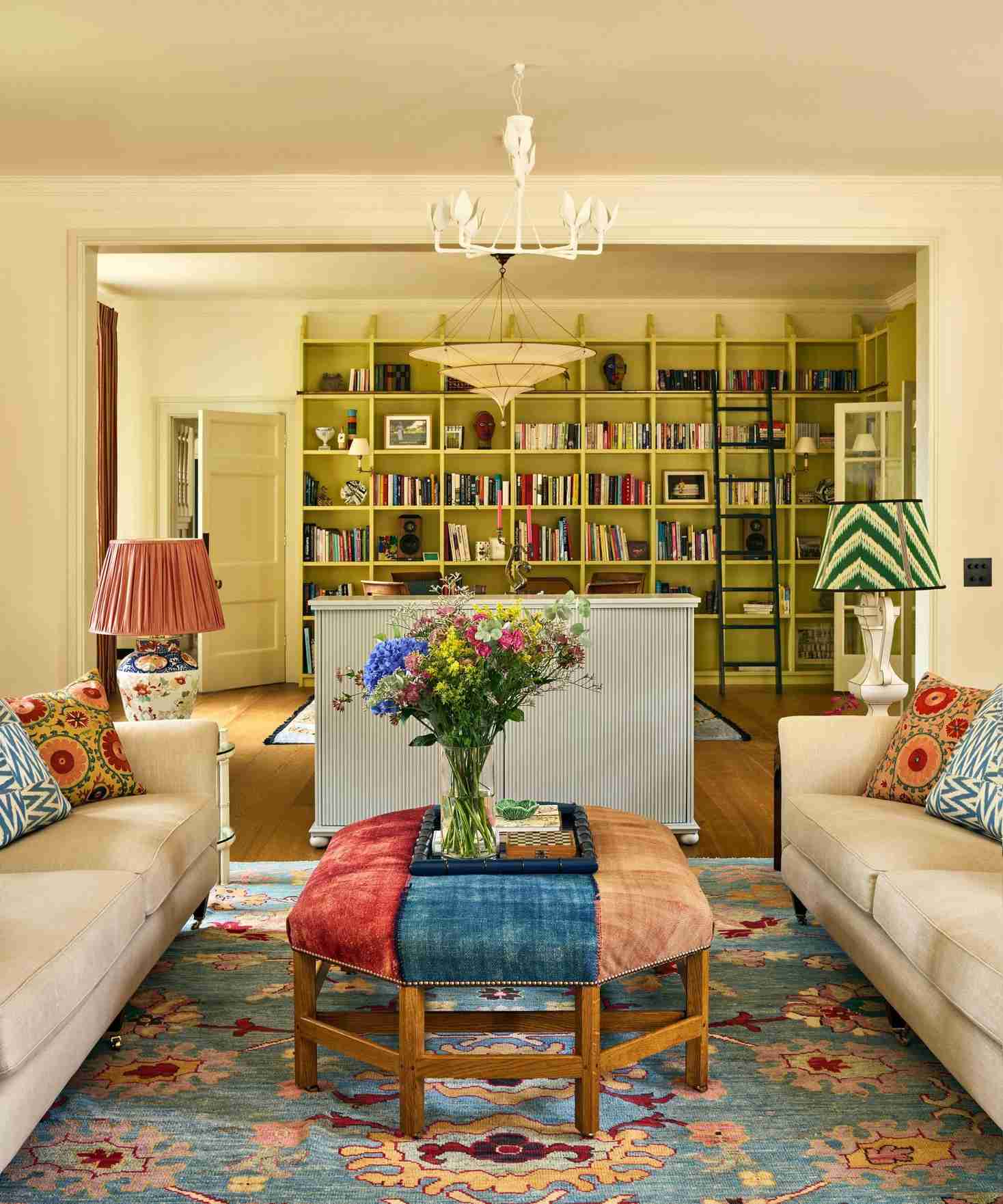
A bracket can let the television sit neatly against the wall until it is needed. Another featured approach conceals the screen in a cabinet, allowing opposing sofas to support conversation rather than face a permanent black rectangle. These examples suggest treating television placement as part of the complete composition. The furniture and surrounding objects can reduce its dominance through position and hierarchy.
Give another feature enough visual emphasis
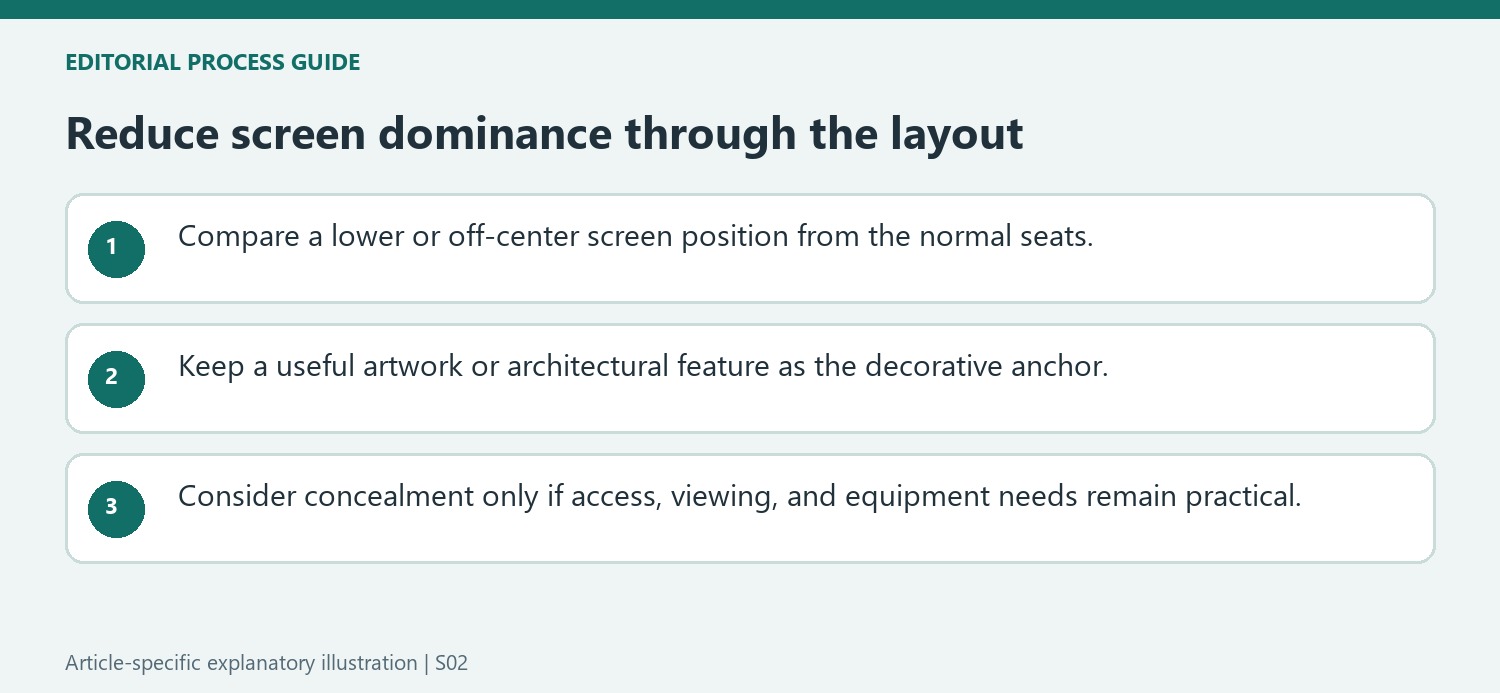
Leanne Kilroy suggests a lower screen position with books or artwork nearby, while Olivia White-Hamilton's example uses a strong fireplace canvas and shelving to shift attention. Lowering a screen still needs to preserve a comfortable seated viewing angle and suitable equipment support. A decorative preference should not determine the mounting height in isolation from the actual chairs.
Choose the degree of concealment that the routine supports
The feature contrasts a bracketed screen that can be pulled forward, a bespoke tambour cabinet, and less symmetrical placement to one side. These options differ substantially in cost, space, and operation. A cabinet also needs appropriate access, cable routing, and ventilation for the equipment. Decide how often the television will be used and whether opening or moving its enclosure will be convenient. Two facing seats can support conversation even when the screen is not the central feature. The aim is a flexible arrangement whose furniture makes sense during both viewing and social use.
Compare a less prominent position with a comfortable one
Leanne Kilroy's advice to place a screen low concerns its visual dominance in the wider room. That styling objective should be tested from the actual seats rather than interpreted as a requirement to put every television close to the floor. A low console may let artwork and books attract attention first, yet its height still needs to work with the display and the occupants. Compare the screen both on and off, because a position that disappears pleasantly during conversation may be awkward during a film. The article describes several different interiors, so the strongest solution is the one that supports the household's particular balance of viewing and social use.
Use another feature as the anchor without blocking the screen
In the Olpol and Co example, artwork over the fireplace attracts attention while the television sits within joinery and can be pulled forward on a bracket. This separates the decorative emphasis from the viewing position. An illustrative adaptation might retain a meaningful artwork as the room's center and place the screen to one side, without purchasing new built-in cabinetry. Check the complete movement of any adjustable mount and the clearance required by the equipment. Books and display objects can soften a screen's surroundings, but should not interfere with its ventilation or operation. A different focal point is most convincing when the rest of the seating still works as a comfortable group.
Choose concealment only when it suits the daily routine
Studio Hollond's tambour cabinet offers a more involved example than merely moving a television sideways. It allows opposing sofas to read as a sociable arrangement while the screen is hidden. Before considering a comparable unit, decide how often the doors would actually be opened, where controls and connected equipment would sit, and whether the viewing angle remains useful. Fable Interiors offers another route by keeping the screen to the right of the fireplace and preserving the original features. These are alternatives with different costs and practical demands. A room can borrow the off-center emphasis or a quieter console without needing bespoke concealment, so start with the smallest change that improves both ordinary viewing and the room when the television is unused.
References
- The 4 Clever Layout Tricks Designers Use to Make a TV Less Dominant in Your Living Room. Homes and Gardens; Eleanor Richardson.
A living room does not have to revolve entirely around its television.


Leave a Comment