
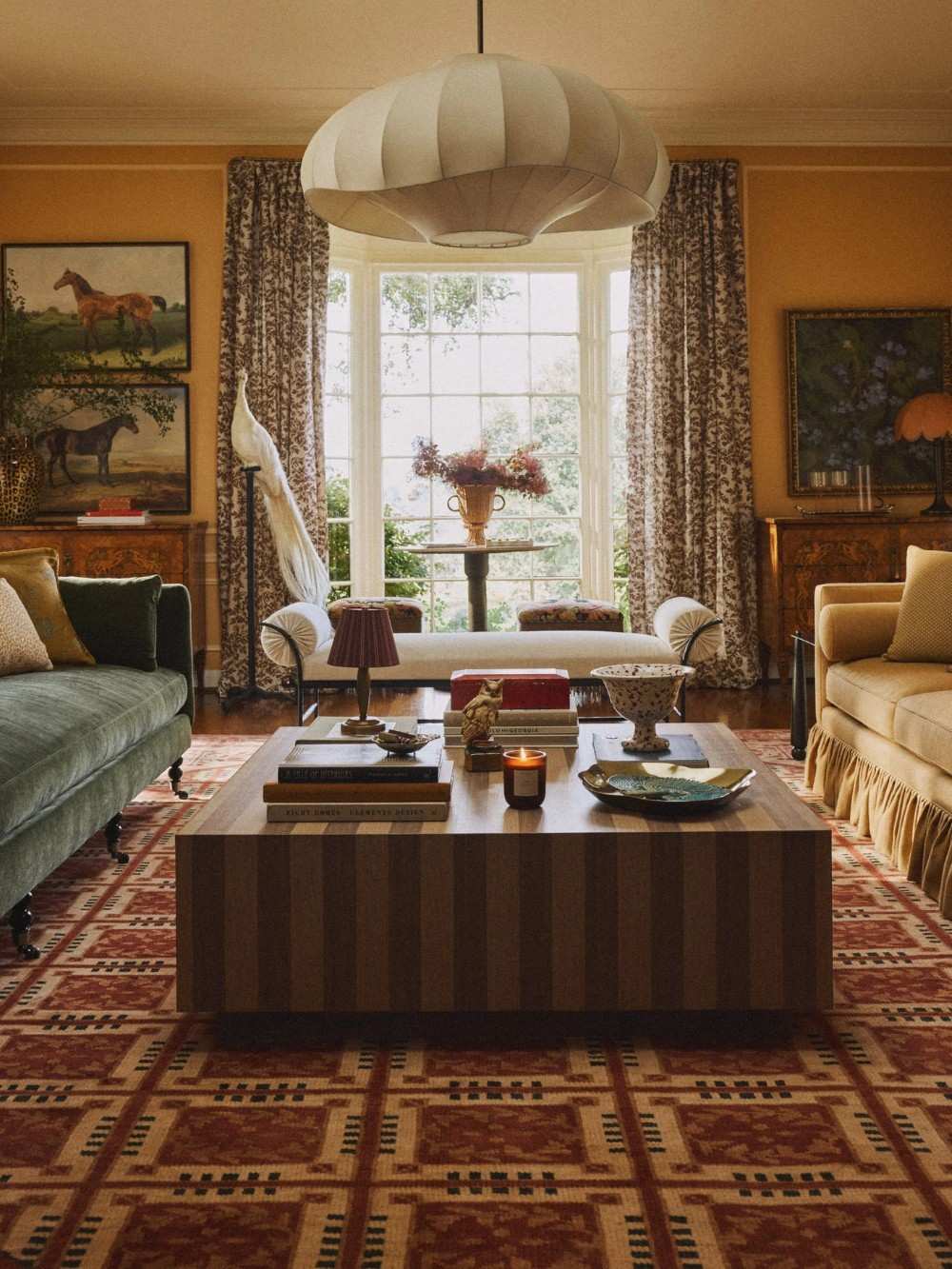
Avoid Harsh Overhead-Only Lighting in Your Living Room
Give different lights different jobs
Recessed spots or one pendant can leave a living room feeling severe when they are the only sources of illumination. The source separates lighting into ambient light for the overall room, task light for activities such as reading, and accent light for selected features. These roles can be provided by a mixture of lamps, pendants, and wall lights. The arrangement should create comfortable pockets of illumination rather than flood every surface from directly overhead.
Keep bulb tones coherent
Color temperature also changes the result. The article includes a designer's preference for warm 2700K bulbs in living rooms and emphasizes maintaining a consistent overall temperature. That is a design recommendation, not a mandatory specification for every home. Consider it alongside the room's materials and desired atmosphere. Adding several fittings will not solve an uncomfortable scheme if their light feels harsh or their tones clash across the same seating area.
Separate brightness from the color of the light
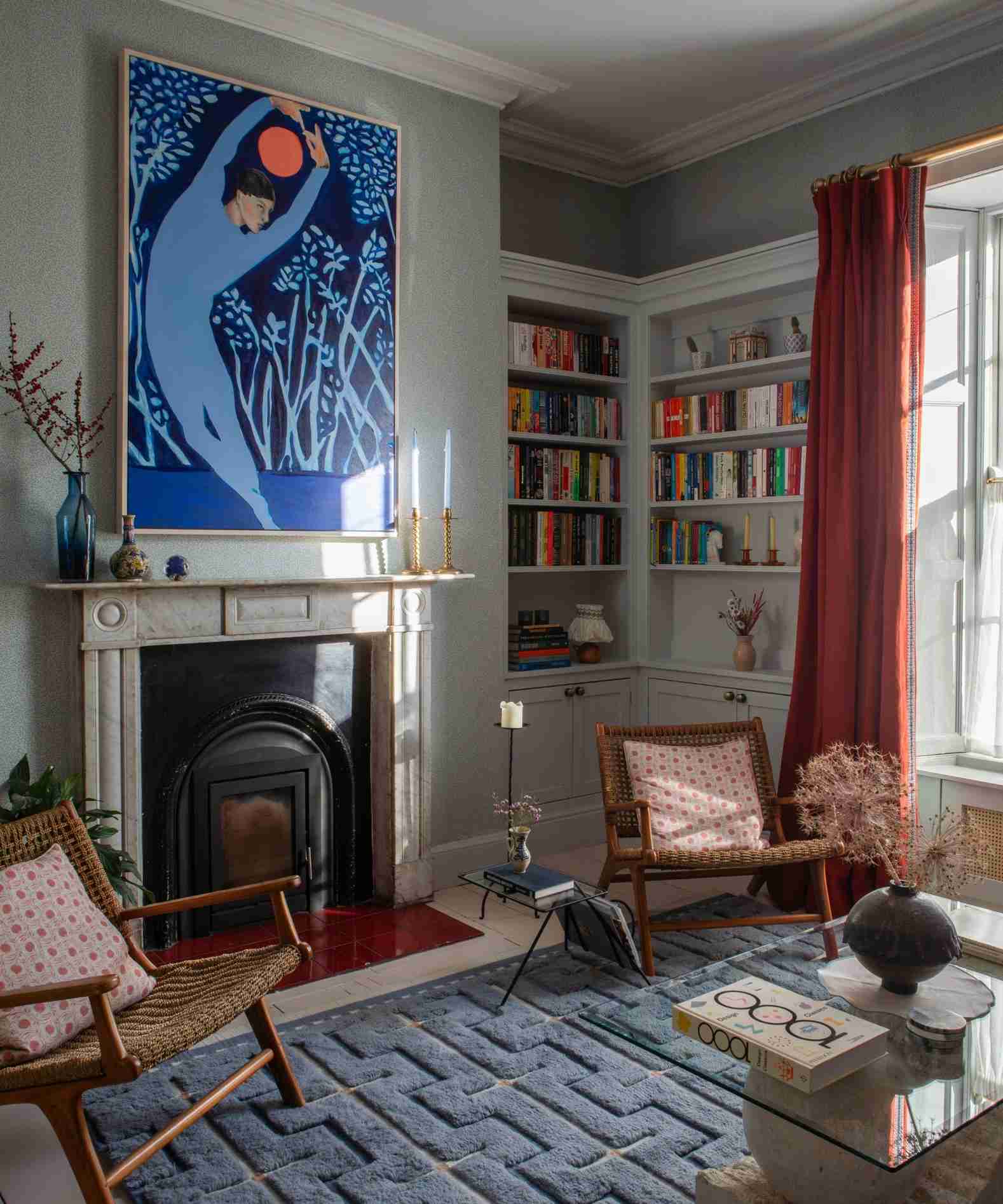
The designers discuss warm lamp temperatures around 2700 to 3000 Kelvin as possible choices for a relaxing living space. Kelvin describes color temperature, not how much usable illumination the lamp provides. Compare the appearance of the selected bulb with the room's textiles and finishes, and check its output for the task instead of assuming that a warmer number automatically produces a successful scheme.
Provide control over the different lighting functions
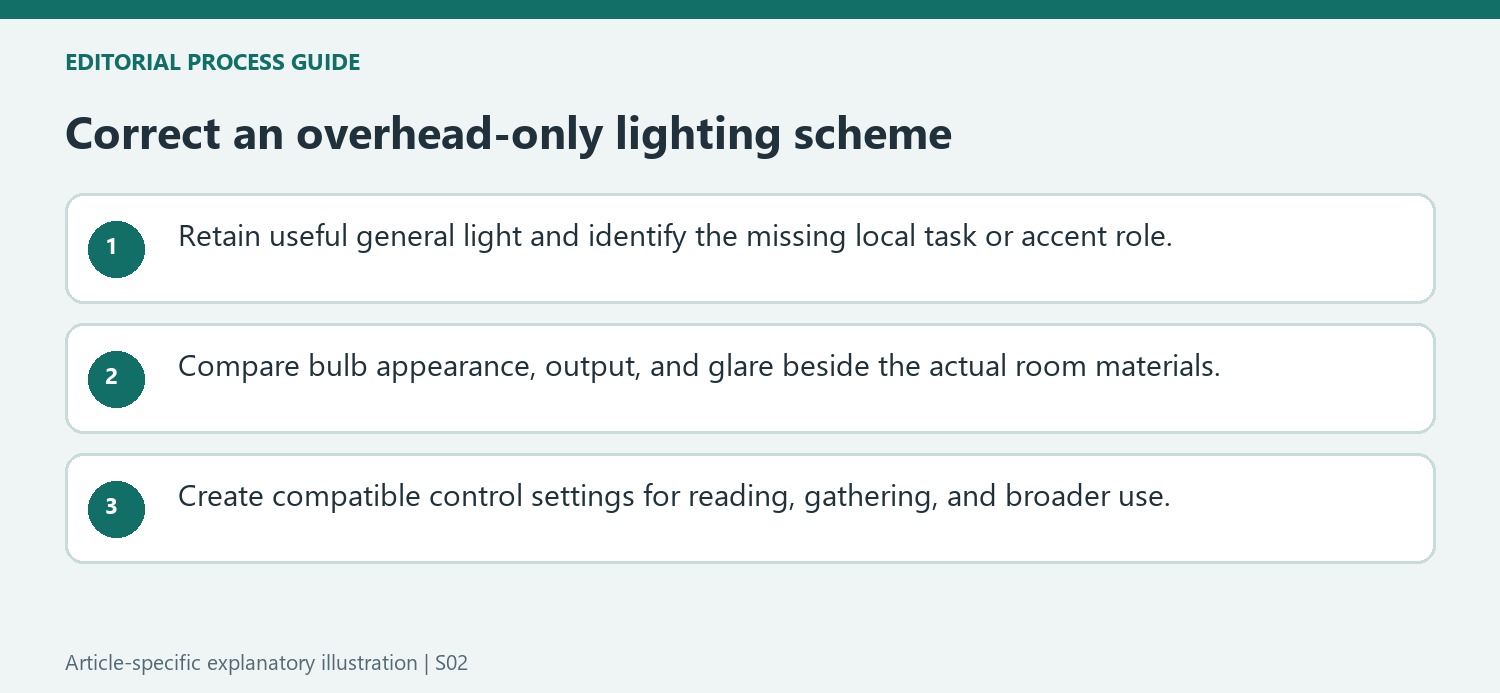
Sally Storey describes layers on separate circuits, while the article also recommends dimmers as a way to move between cleaning, socializing, and quieter evening use. Compatible lamps and controls are required; not every bulb or fixture will dim correctly with every switch. A reading light near a seat and an accent light on a feature serve different roles from general illumination. The source criticizes reliance on overhead light, but a ceiling fixture can remain useful as one part of the arrangement. Review the actual activities and switching options before replacing otherwise serviceable fittings.
Keep useful overhead illumination within a broader scheme
The source criticizes relying entirely on recessed lights or one pendant, particularly in a room intended for relaxation. That does not mean a serviceable ceiling fixture should automatically be removed. Identify when broader illumination is useful, such as cleaning or a group game, and what is missing during quieter use. A shaded lamp beside the seating may introduce the local pool of light the room lacks without replacing everything above it. An illustrative comparison can test the ceiling light alone and then the same room with a suitable local source. The difference should be assessed from the actual seats, including glare and the visibility of the activity, rather than only from an atmospheric photograph.
Test bulb color against the materials already selected
Izabela Marino discusses a cohesive warm temperature, while Betsy Traube relates the choice to the room's tones and daylight. Those comments explain different intended effects rather than one mandatory bulb value. Compare the upholstery, artwork, and wall finish under the proposed lamp, including when another existing source is on. A pleasing shade in isolation may appear mismatched when a much cooler fitting illuminates the same area. Kelvin is a description of light appearance; the useful brightness, beam, and shading need separate consideration. Keep the products and their settings identifiable so a later replacement bulb does not unintentionally change the room's established lighting relationship.
Match each control setting to a real activity
Sally Storey's discussion of separate circuits and dimmers concerns the ability to change the room rather than hold one level all day. Identify which sources should remain useful for reading, which provide the broader background, and which highlight a feature. Not every lamp needs to be used at the same time. A swivel-arm reading light should reach the task while its full movement remains clear of neighboring furniture. Shade color also changes the way a fitting contributes, so an attractive dark shade needs testing rather than being assumed to deliver enough local light. Check fixture and control compatibility, then evaluate the planned settings during normal daytime, evening, and hosting routines before adding further decorative sources.
References
- These Are the 5 Living Room Lighting Mistakes To Avoid. Homes and Gardens; Eleanor Richardson.
Recessed spots or one pendant can leave a living room feeling severe when they are the only sources of illumination.


Leave a Comment