
Frame Small-Room Features with No-Wiring Wall Lights
Use lighting to frame existing features
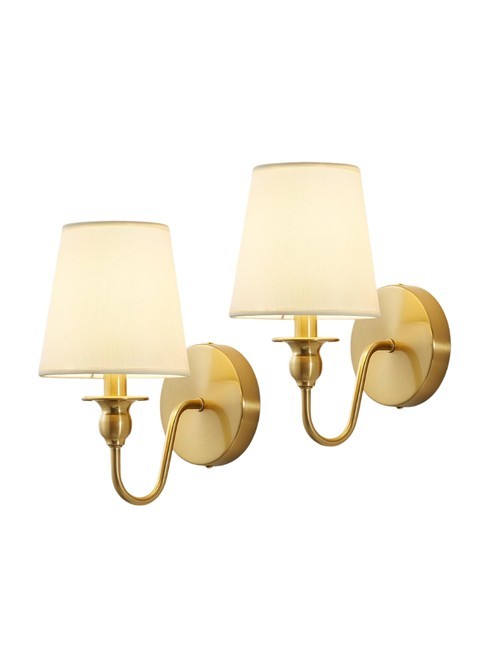
Stick-on wall lights can emphasize furniture or artwork without requiring a conventional wired installation. The source describes using shaded, antique-style fittings around pictures and other focal points in a rented apartment. Because their positions can be reconsidered when the display changes, they provide a flexible decorative layer. The appeal is the ability to create an intentional lighting arrangement without treating every alteration as a building project.
Choose installation as carefully as appearance
A no-wiring light is not automatically suitable for every wall or every location. Check the fitting's power source, attachment system, weight, and manufacturer guidance for the surface involved. Follow the removal instructions as well as the installation steps. These lights are most useful when they support a clear visual purpose, such as framing a picture or adding atmosphere near seating, while respecting the restrictions that come with a rented home.
Treat no-wiring fixtures as a specific kind of lighting
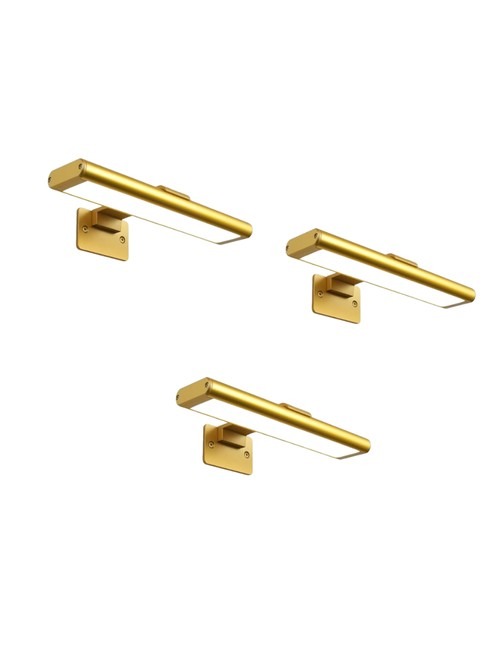
The writer describes removable wall sconces arranged around artwork and furniture as a way to change an apartment's decorative emphasis. That avoids the electrical work associated with a permanently wired fitting, but products vary in their fixing system, power supply, and output. Read the current installation instructions rather than assuming every item advertised as a wall light can simply be stuck to any surface.
Check the wall and the practical maintenance
A removable fixture still needs a suitable surface, an appropriate weight rating, and enough access for charging or battery replacement where relevant. Test any adhesive according to its directions and check the tenancy terms before installation; removable does not guarantee that every paint finish will remain unaffected. A pair can frame an artwork, but it may provide only accent light rather than adequate illumination for reading. The source is a dated shopping edit tied to a sale period, so its discounts and availability need checking independently. Choose the mounting and lighting performance first, then the decorative outline.
Decide whether the fixture is framing or illuminating a task
The writer's apartment examples use sconces around pictures and furniture to give those objects more presence. That decorative aim can be successful even when the fitting provides only modest accent light. Begin with the particular artwork or seating feature and compare the fixture's outline and position against it. If the purpose is reading, investigate the usable light on the page rather than assuming that a sconce beside a chair is sufficient. A pair around a frame may look balanced while directing most of its light elsewhere. The source offers a style editor's personal arrangement, so borrow the intentional placement without treating the resulting appearance as proof of a particular lighting performance.
Compare the wall finish with the current fixing instructions
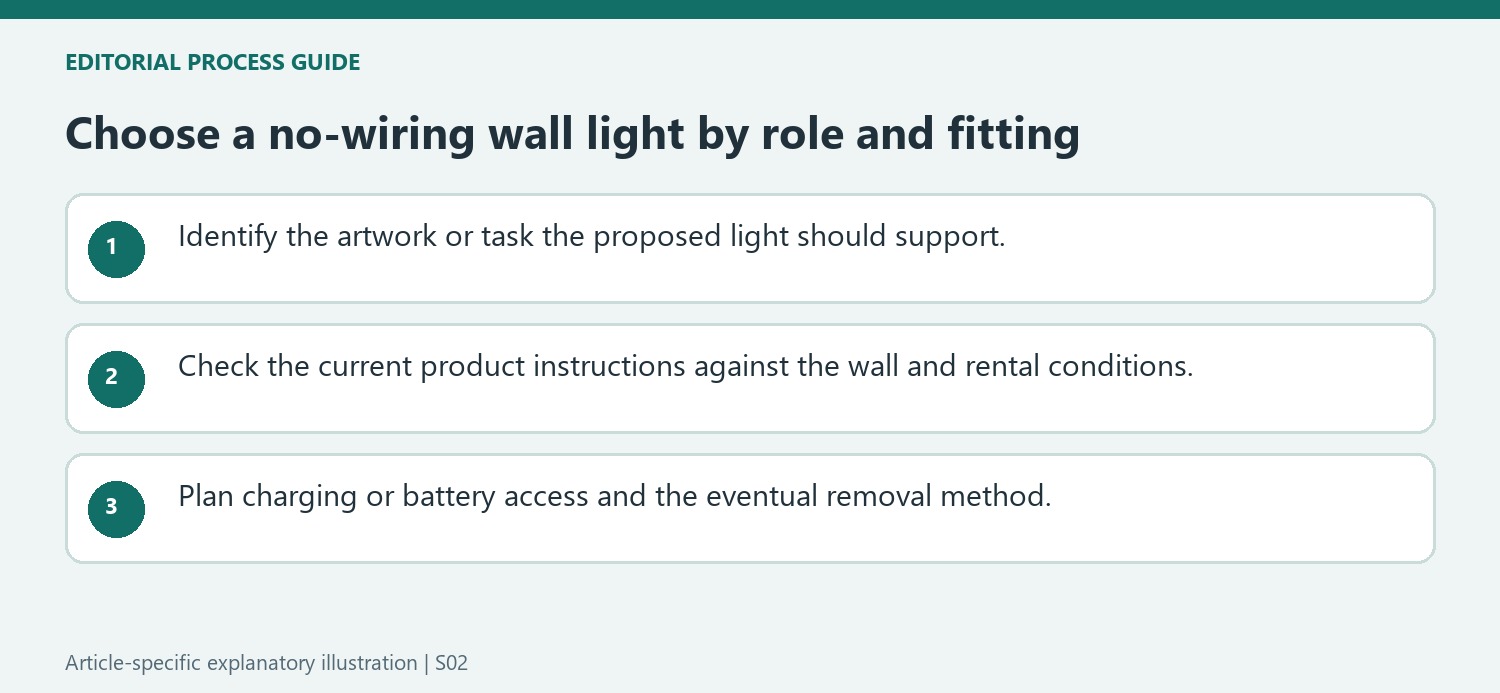
No-wiring products can still use different attachment systems, and a removable claim does not establish suitability for every painted surface. Confirm the fixture's weight, the approved wall conditions, and any preparation or curing requirements in the maker's instructions. A rental also needs the relevant tenancy restrictions considered before fitting. The writer describes moving lights when an artwork changes size, but repeated removal and reattachment depend on the specific system and replacement materials. Plan the composition with temporary measurements first so the chosen location is deliberate. If the surface or fixing method is uncertain, that question needs resolving before an attractive shopping photograph becomes an installation decision.
Include charging and removal in the ownership plan
A battery-powered or rechargeable light needs ongoing access, so check how the power source is reached after the fixture is mounted. Compare the advertised working duration at the intended setting and identify where any removable component will be charged. The source's sale-led edit does not provide one universal battery arrangement or maintenance schedule. Keep the product information and removal directions available, particularly if the wall display may change. Current availability and price also need checking independently of the publication's Prime Day claims. A suitable no-wiring fitting can provide a flexible decorative layer, but the useful choice combines a clear visual role with reliable attachment, an appropriate light contribution, and maintenance that fits the household.
References
- Stick-On Wall Lights Are My Style Editor Secret – These 16 Chic Sconces Add Instant Ambience, No Wiring Required. Homes and Gardens; Julia Demer.
Stick-on wall lights can emphasize furniture or artwork without requiring a conventional wired installation.


Leave a Comment