
Style a Brown Sofa with a Clear Color Relationship
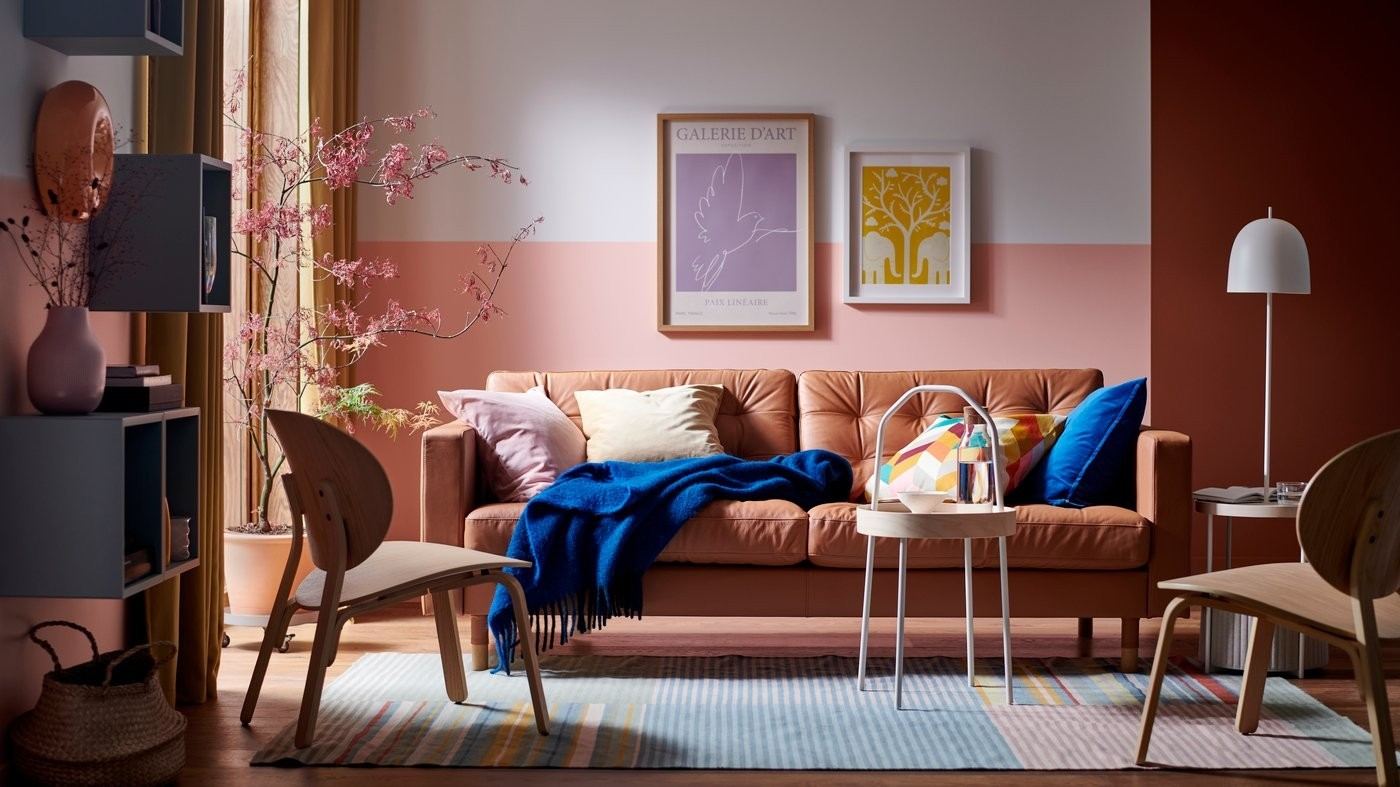
A brown leather sofa can work with contrasting blues or with more traditional furnishings. IKEA's examples use cushions, throws, and patterned rugs to connect the sofa to the rest of the room rather than treating it as an isolated dark object.
Light-colored wood and airy table designs support a modern look, while a rug helps mark the seating area. In a small living room, choose a focused combination of these elements so the sofa feels integrated. Updating the textiles can refresh an existing piece without using more floor space.
Choose one of the source's color relationships
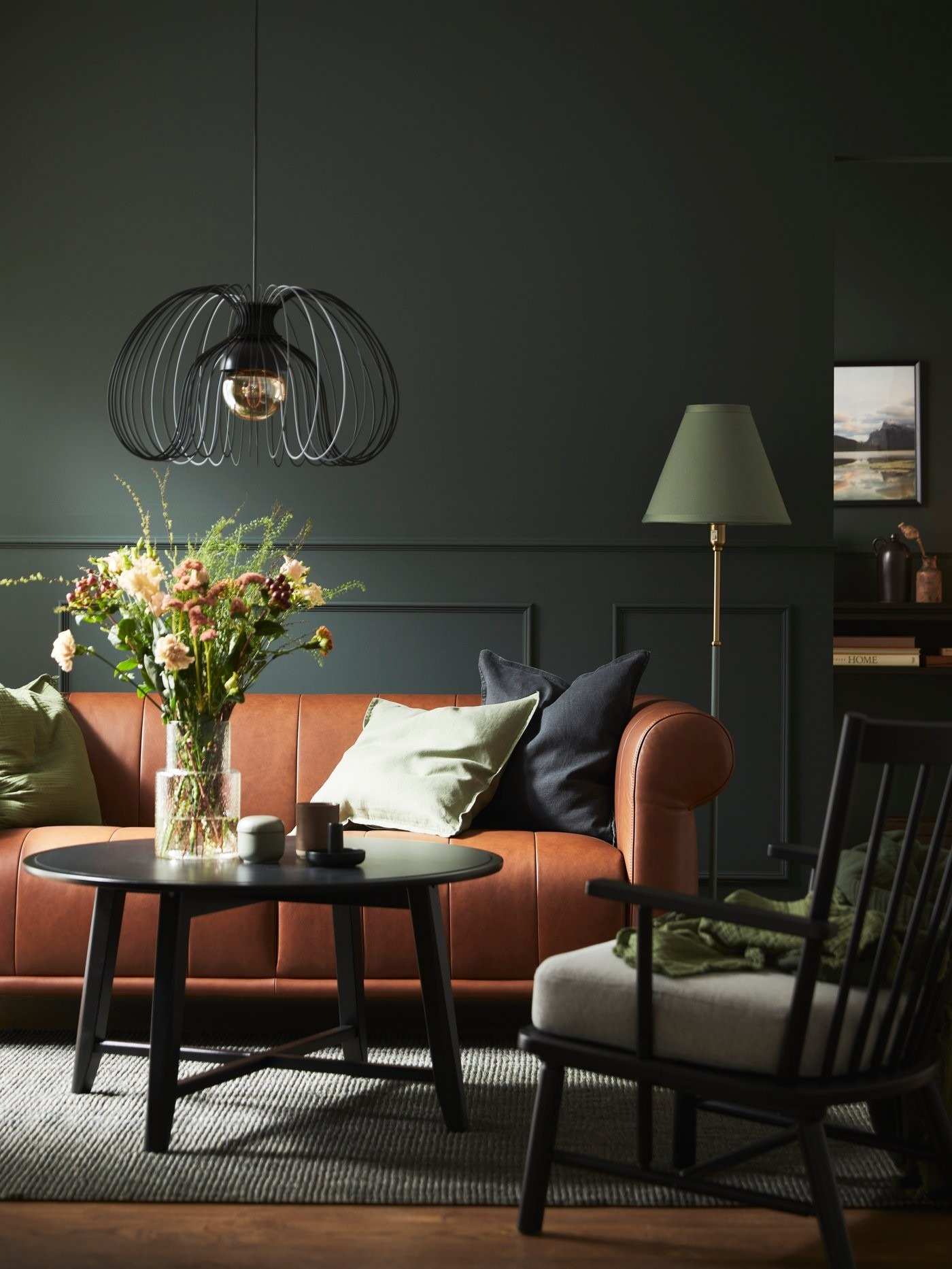
The IKEA examples include blue textiles against brown leather, darker green-gray surroundings with warmer accents, and a more natural combination of timber and muted accessories. These are alternative directions for the same broad sofa color. Select the one that fits the existing flooring and walls instead of combining every suggested palette. A cushion or throw provides a smaller test before changing larger surfaces.
Let texture distinguish the related pieces
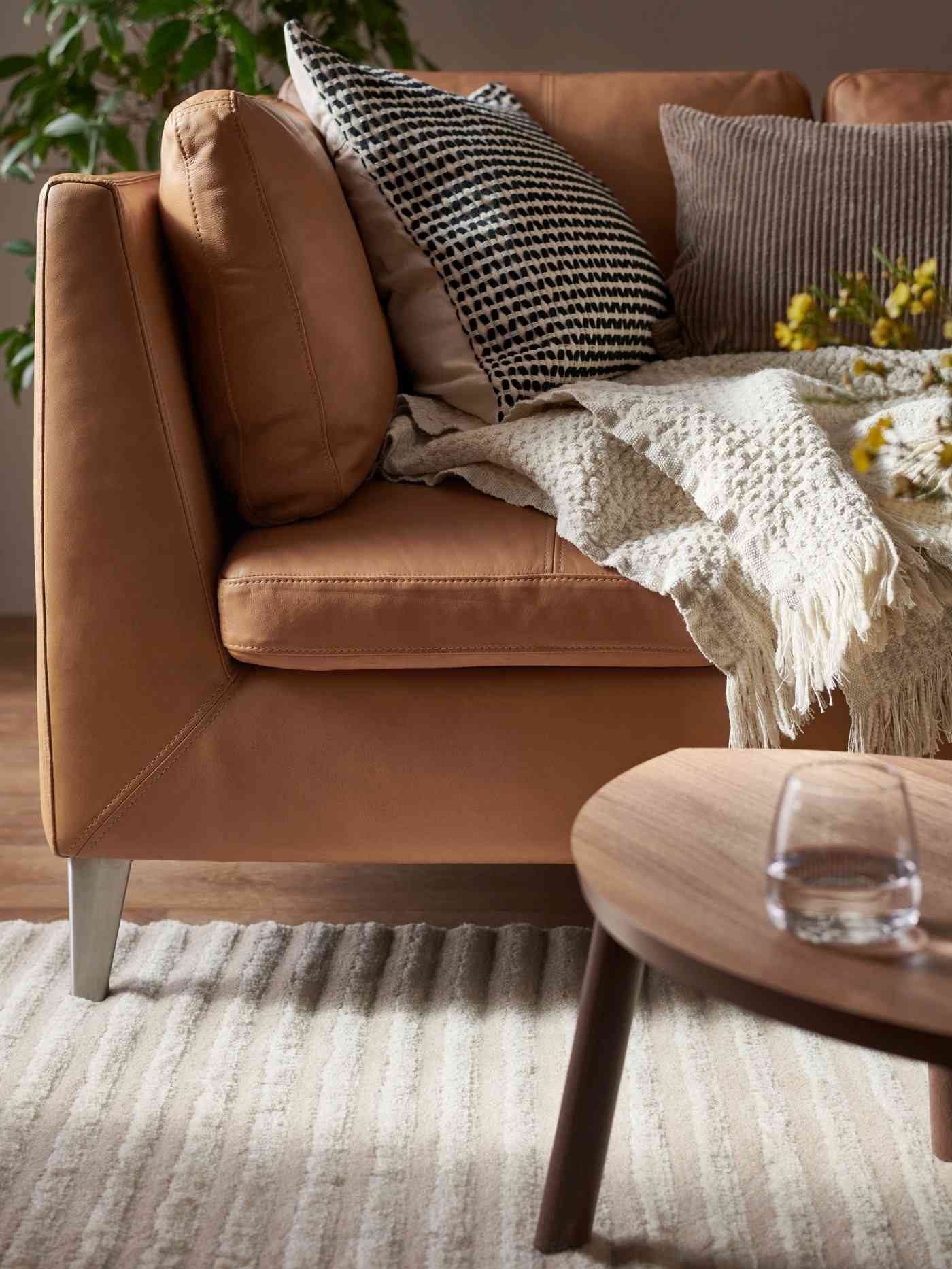
The source combines leather, a high-and-low-pile wool rug, a softer throw, corduroy, and heavier woven cushions. Similar tones can therefore remain varied because their surfaces differ. A wool-and-cotton throw gives another softer surface against the leather. A lighter wood chair or table also changes the outline around the sofa, while boxes and a vase can continue a quieter natural-material reference. Check seating comfort, rug care, and the dimensions of additional furniture before borrowing the showroom arrangement. A retailer's product example demonstrates a particular composition rather than proving that every brown leather sofa requires the same chair, rug, or decorative accessories.
Read the brown leather as one material in a group
The IKEA examples make the sofa feel connected through the objects immediately around it. Begin with the leather's actual tone and finish beside the floor, then compare the proposed textile. A blue throw may create a visible contrast while a green-gray setting produces a quieter relationship. Neither direction requires replacing every supporting piece. An illustrative test can use one cushion already owned and a wood sample beside the sofa to reveal which connection is missing. The retailer's general brown-sofa label covers different shapes and shades, so assess the particular seat rather than expecting the same accessory to work identically with every tan, chestnut, or darker leather finish.
Let the rug connect the contrast to the rest of the seating
In the modern example, the patterned rug and blue accents help relate the sofa to lighter wooden furniture. Compare the rug's colors with both the leather and the smaller chair rather than judging it in isolation. Its outline should also support the group physically, with normal access to each seat. A light, open table can reduce the impression of bulk while still needing a usable top and appropriate dimensions. If the room already contains a strong patterned rug, a simpler textile may provide enough change. The point is to build one intelligible relationship between the existing anchor and its neighbors, rather than layer several unrelated contrasts because each looks attractive separately.
Use tactile differences to avoid an overly matched arrangement
The source's wool rug, soft throw, corduroy, and heavier woven cushion introduce different surfaces around the leather. Choose which contrast is needed most, especially if the existing room already has several distinct textures. Similar natural colors can look varied through their weave and finish without requiring another bold accent. A vase and bamboo boxes continue one quieter direction, but should serve their normal display or storage roles rather than crowd the available table. Follow the individual materials' care guidance instead of treating all the textiles as one washable layer. Updating a few well-positioned objects can refresh the brown sofa's setting while retaining useful floor space and the parts of the room that already work. Compare the revised textiles during an ordinary evening as well as daylight, since the leather and woven surfaces can read differently under the lamps.
References
A brown leather sofa can work with contrasting blues or with more traditional furnishings.


Leave a Comment