
Align Peel and Stick Wallpaper With Less Guesswork
Prepare the surface and tools
A straight first panel and a clean wall make peel and stick wallpaper much easier to manage. Tempaper recommends cleaning the surface with a damp cloth and waiting until it dries completely. Gather a level, pencil, tape measure, craft knife, straight edge and squeegee before opening a roll. Check that multiple rolls have matching lot numbers, and inspect the delivered material for damage before installation starts.
Match the repeat gradually
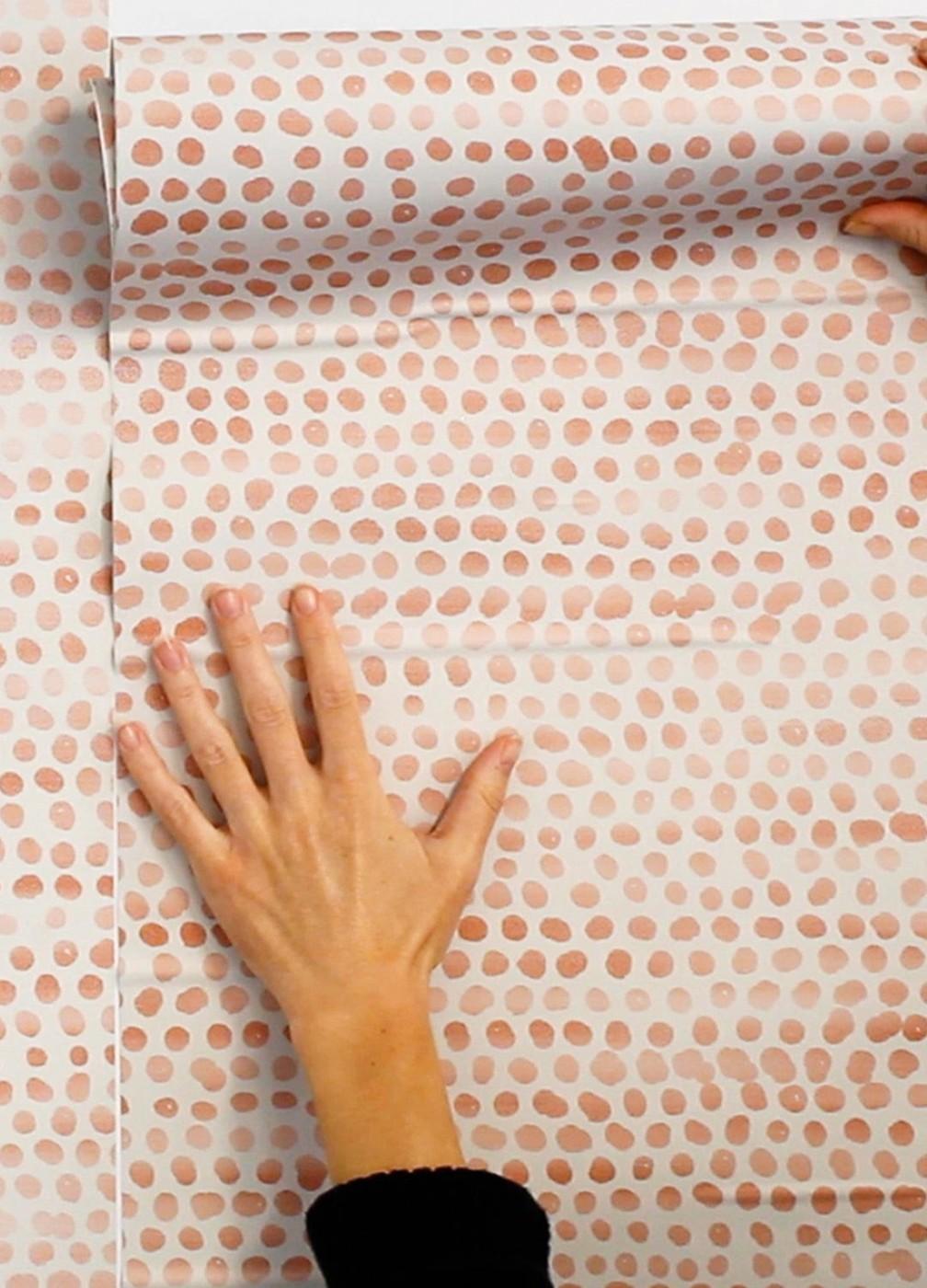
Find the horizontal pattern repeat on the label, then choose a recognizable detail on the first two panels. Move the second panel until that detail lines up before removing more backing and smoothing the paper onto the wall. Use the squeegee to work out air bubbles as you progress. A second person can support the loose material and make alignment easier. If removing electrical covers, turn off the supply first and restore power only after replacing the covers.
Use the product label to plan the first two strips
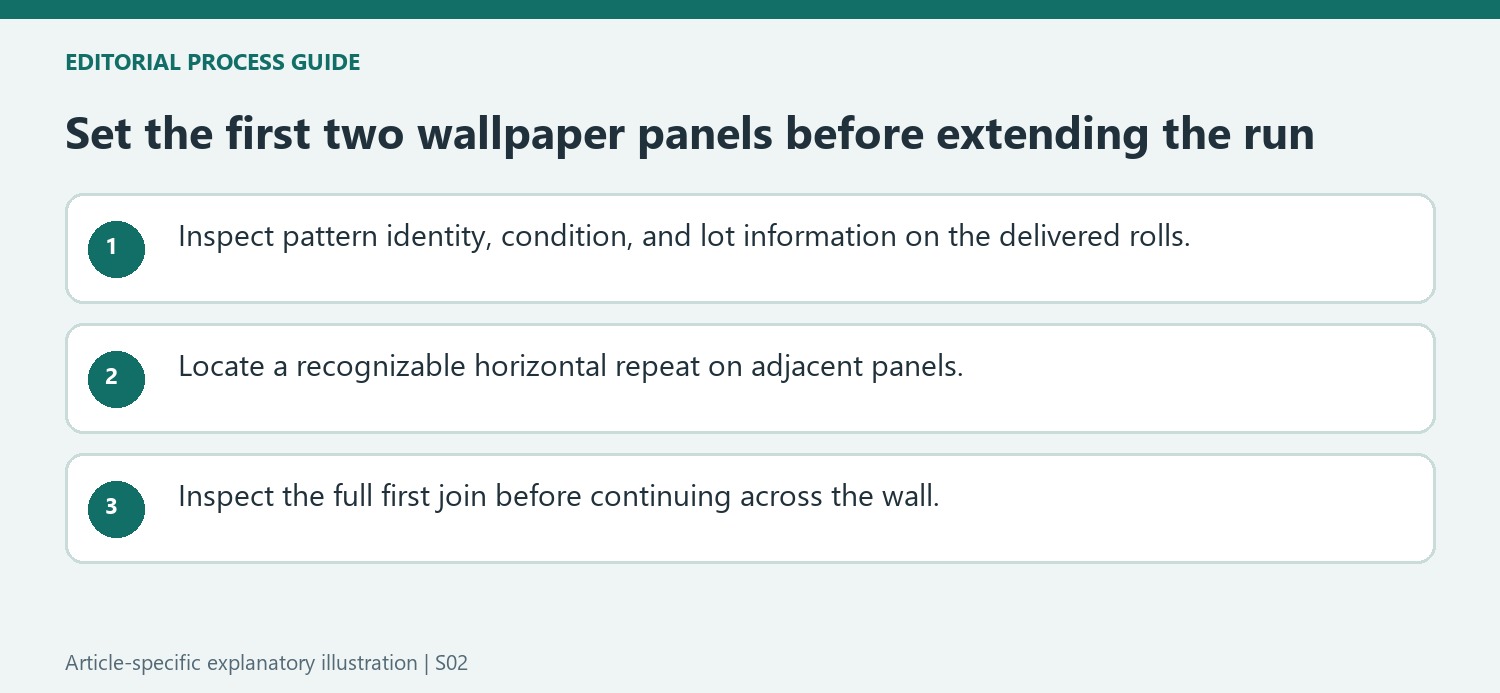
Tempaper’s example uses a recognizable motif in its Moire Dots pattern to establish the match. Identify the equivalent detail on your chosen design and compare the two panels before committing either edge. Keep the top and bottom trimming allowance consistent with the current instructions. Do not stretch the material to force a match, because that can make the next seam harder to align.
Keep preparation instructions specific to the paint
The guide includes additional cleaning advice for certain zero-VOC finishes, but compatibility varies by paint and wallpaper. Check the current directions for both and test appropriately before applying a cleaning solution across the room. Let the surface dry fully and repair unsuitable areas before starting. A level reference is more reliable than assuming a corner is straight. Inspect all rolls before cutting so a lot mismatch or damaged section can be addressed without interrupting a half-finished wall.
Solve the first repeat on a manageable length
Tempaper's instructions begin with the horizontal repeat, which is identified on the product label. Choose a recognizable detail that can be located on both neighboring panels. Comparing those details before a long section adheres makes an alignment error easier to see. The decorative repeat and the panel edge provide different information: one describes how the picture joins, while the other must follow the planned installation direction. Avoid judging a whole wall from a tiny matched fragment at the top. Compare the join farther down while the material is still manageable, following the product's instructions for handling and repositioning.
Stage the rolls and tools before uncovering adhesive
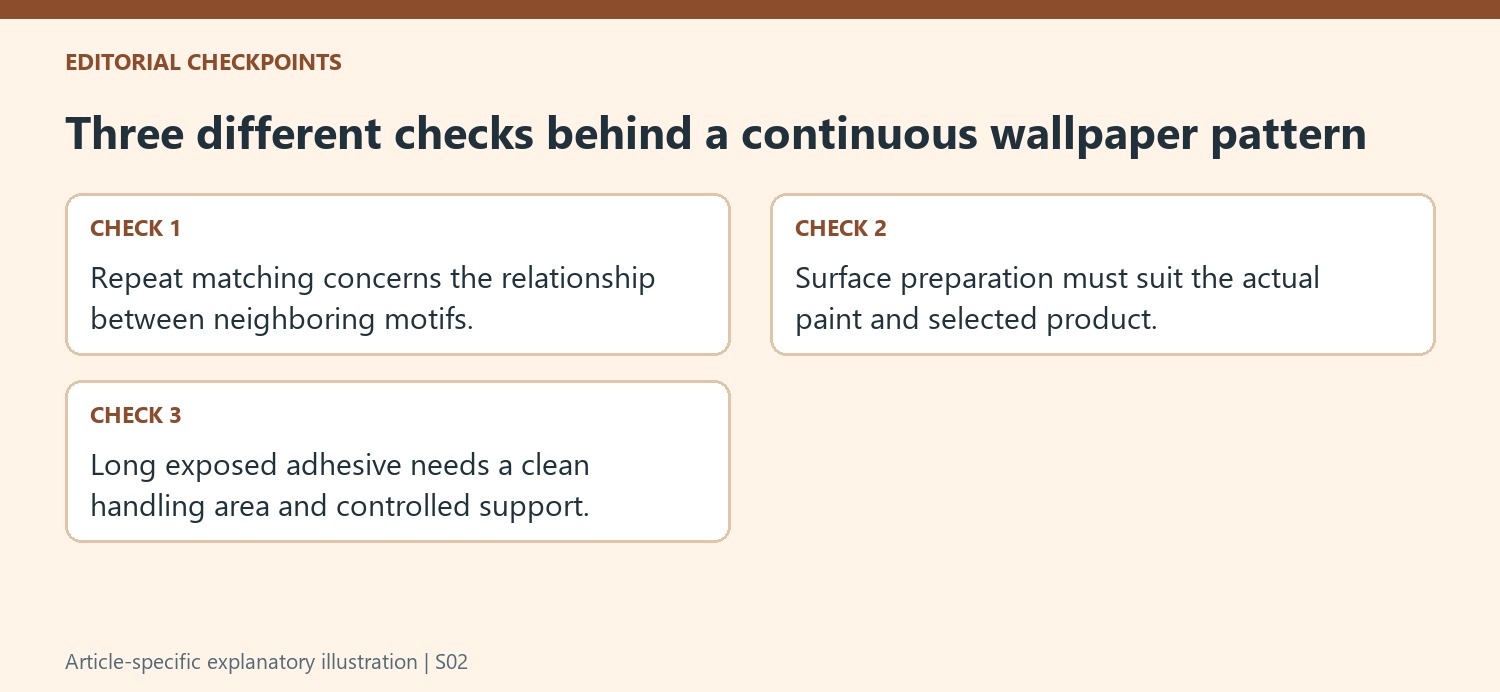
Check delivered rolls for the correct pattern, damage, and matching lot information before beginning. A replacement ordered later may complicate continuity, even if the product name remains the same. Plan where measured lengths can lie without collecting dust on the adhesive. A level, measuring tape, appropriate cutting equipment, straightedge, and suitable smoothing tool should be ready rather than retrieved while holding a partly exposed panel. Arrange stable access to the work and consider a helper for handling long material. That preparation supports a controlled first pair of panels without assuming that every wall or pattern needs exactly the same cut allowance.
Keep surface preparation specific to the actual product
The manufacturer discusses cleaning and a particular alcohol-and-water preparation for some paint situations. Treat that as product guidance to verify, rather than a universal cleaning recipe for all painted walls. Identify the existing coating and check its compatibility, condition, and required curing before application. The clean, dry surface is part of the installation system, not a separate cosmetic step. Where outlet or switch covers are involved, the source calls for isolating power; its brief decorating instructions are not a complete electrical-work procedure. Use appropriate assistance if the task exceeds safe access to ordinary covers. Finish with a deliberate inspection of the first two panels before extending the sequence across the room, keeping the product label available for reference.
References
- How To Apply and Align Peel and Stick Wallpaper. Tempaper & Co.; Dev Team.
A straight first panel and a clean wall make peel and stick wallpaper much easier to manage.


Leave a Comment