
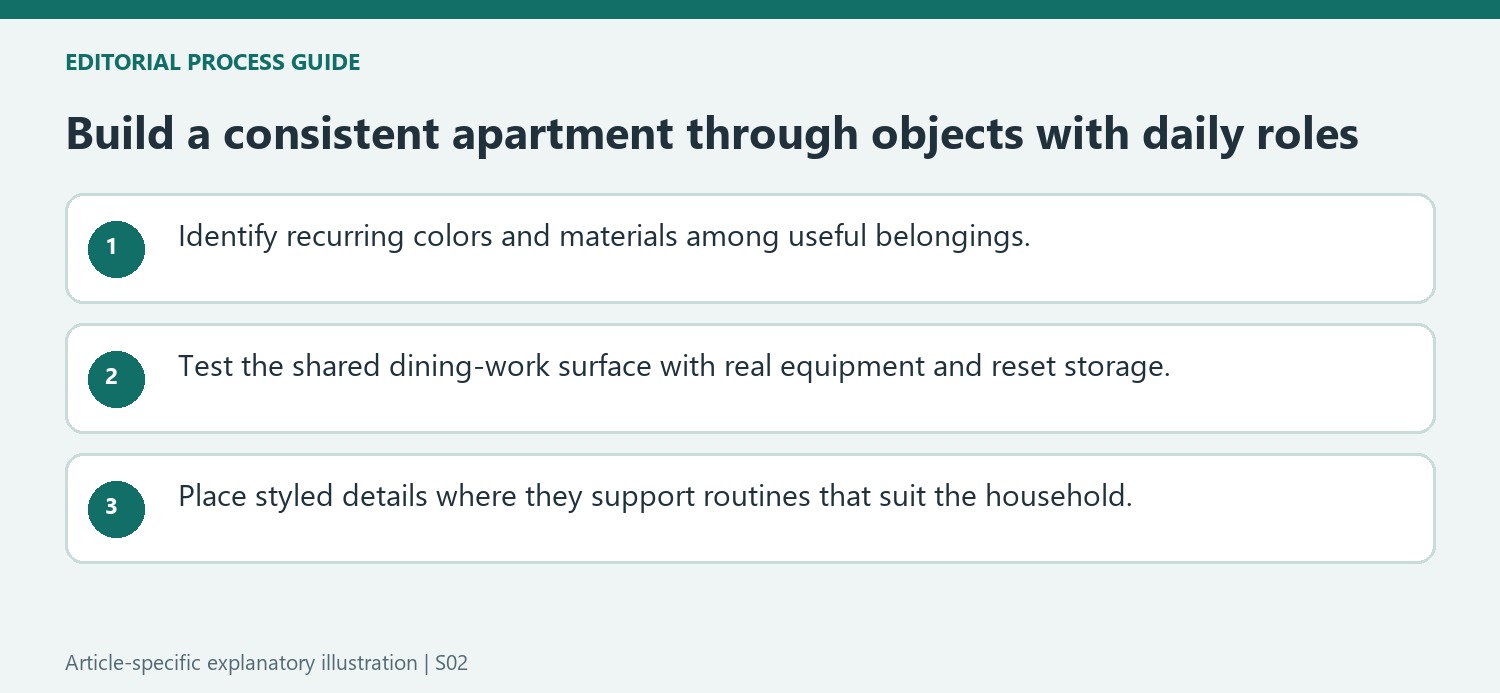
Build Apartment Character Through a Consistent Set of Objects
IKEA's one-bedroom apartment example uses soft natural tones, woven baskets, wood, and glass vases to create a considered interior. The restrained palette connects the details, making the compact home feel cohesive without relying on a minimalist approach.
The dining table also supports occasional work with a cork protector and a supportive chair. A hallway mirror and lighting create another purposeful corner. For a rental, these furnishings and objects offer ways to establish character through portable pieces that also support everyday routines.
Use a limited palette without requiring minimal possessions
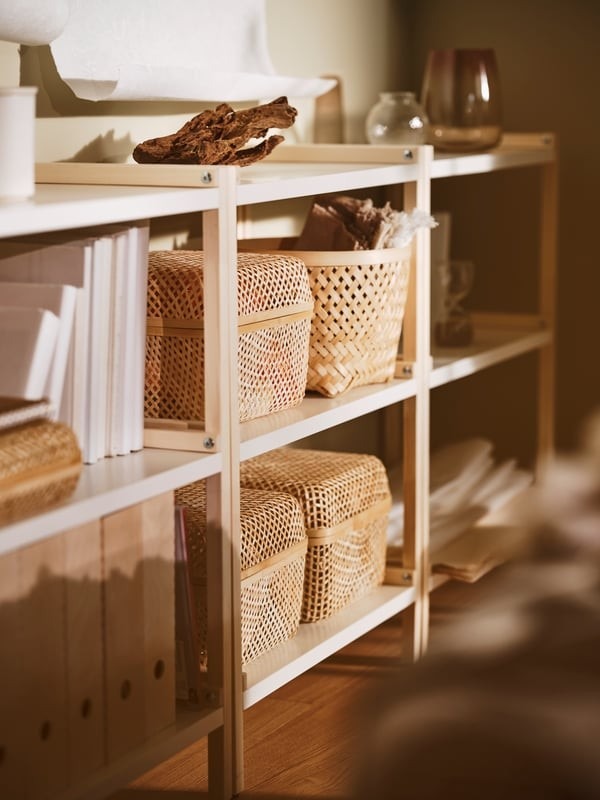
The featured couple repeats soft natural tones through baskets, wood, and glass. This gives different objects a visible relationship even though the home is not described as minimalist. Select a few recurring materials or colors and compare new purchases with what is already useful. A coordinated room can still contain personal collections rather than reducing every surface to an empty display.
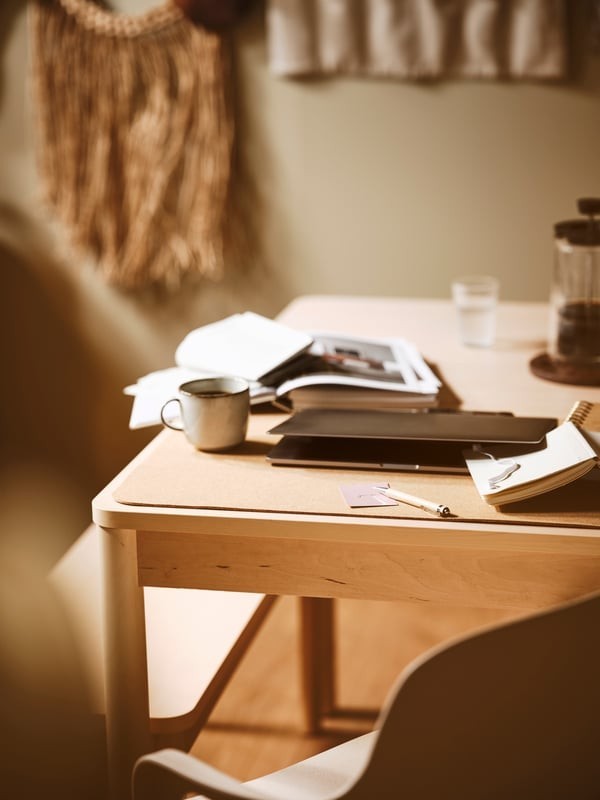
Check the dining table as a real occasional workstation
The source adds a cork protector and a supportive chair when work happens at home. Compare the seated height, available surface, and equipment with the table’s dining role. A pad may protect against appropriate everyday use, but it is not a universal barrier against heat, liquids, or craft chemicals. Give work supplies a nearby return location before the next meal.
Connect the details with the daily routine
The hallway mirror and lighting support getting ready, while preparing lunches the evening before frees time for a slower breakfast together. Those are specific household choices, not requirements for a considered apartment. Borrow the idea of assigning objects a purpose and repeating a coherent visual theme, while choosing routines that fit the actual residents.
Repeat a visual relationship rather than an identical object
The IKEA apartment story links a varied collection through soft tones and recurring wood, glass, and woven surfaces. This shows how a room can feel consistent without requiring every item to come from the same range. Compare the visible texture and color of existing pieces before introducing another container or vase. A clear glass object and a woven basket may have different jobs while belonging to a coherent group. Notice the larger background surfaces as well as tabletop details. The source describes a considered appearance, not a measured increase in physical space, so judge the result by how clearly the room reads and how comfortably it works.
Assess the dining table's second role with its equipment present
The featured residents occasionally work at the table because most of their working time is elsewhere. That makes their setup a useful example of intermittent use rather than proof of a complete daily workstation. Place the actual laptop and other equipment on the surface and assess the seated relationship, lighting, and available depth. Check the table protector's intended use and the furniture's care instructions. Plan where work items return when the meal begins. If a shared table stays covered with equipment, the room's apparent flexibility may not match its daily operation. The useful comparison is the occupied table during a normal session and the effort needed to restore the dining arrangement.
Connect styled details with a sustainable household routine
The source's hallway mirror and lighting support getting ready, while lunch preparation the previous evening leaves more time for breakfast together. Those examples relate possessions to repeated activities instead of treating every object solely as a photograph. Choose the routines that suit the actual household and place the relevant items where they can be used and returned. A basket should hold a real collection, and a display vase should remain practical to clean and refill. Wall-mounted pieces still require suitable supports and permission where applicable. A consistent apartment develops through that relationship between useful objects and repeated materials. It need not copy the couple's habits or purchase every featured accessory to achieve a similarly considered effect. Reassess the details after ordinary use shows which positions are helpful and which become clutter.
References
- Decor ideas to bring into your home. ikea.com.
IKEA's one-bedroom apartment example uses soft natural tones, woven baskets, wood, and glass vases to create a considered interior.


Leave a Comment