
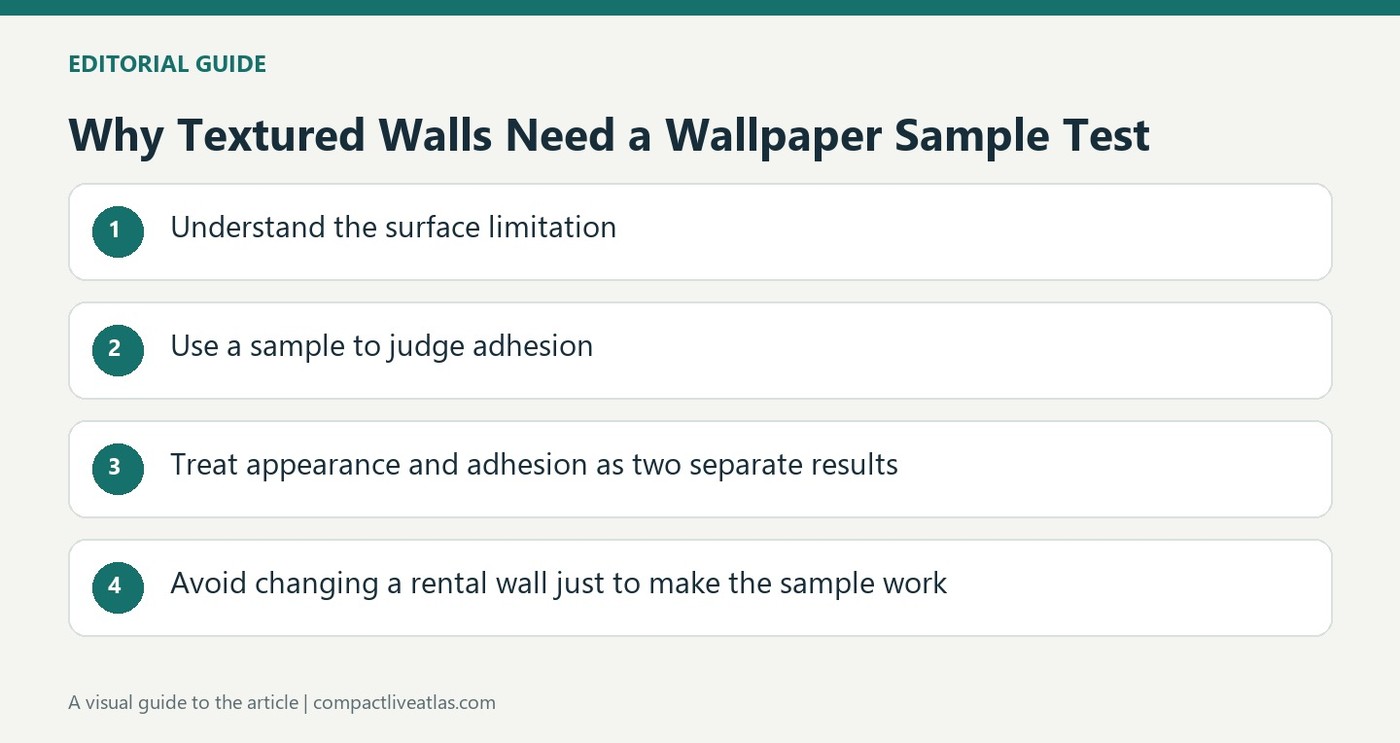
Why Textured Walls Need a Wallpaper Sample Test
Understand the surface limitation
Peel and stick wallpaper performs most predictably on smooth, clean painted walls. Tempaper generally does not recommend its removable covering for textured surfaces, even though some customers have successfully used it over a light orange peel finish. Raised areas reduce contact between the adhesive and the wall, while deeper valleys can trap air. Heavy popcorn texture may remain visible or prevent the paper from sticking altogether.
Use a sample to judge adhesion
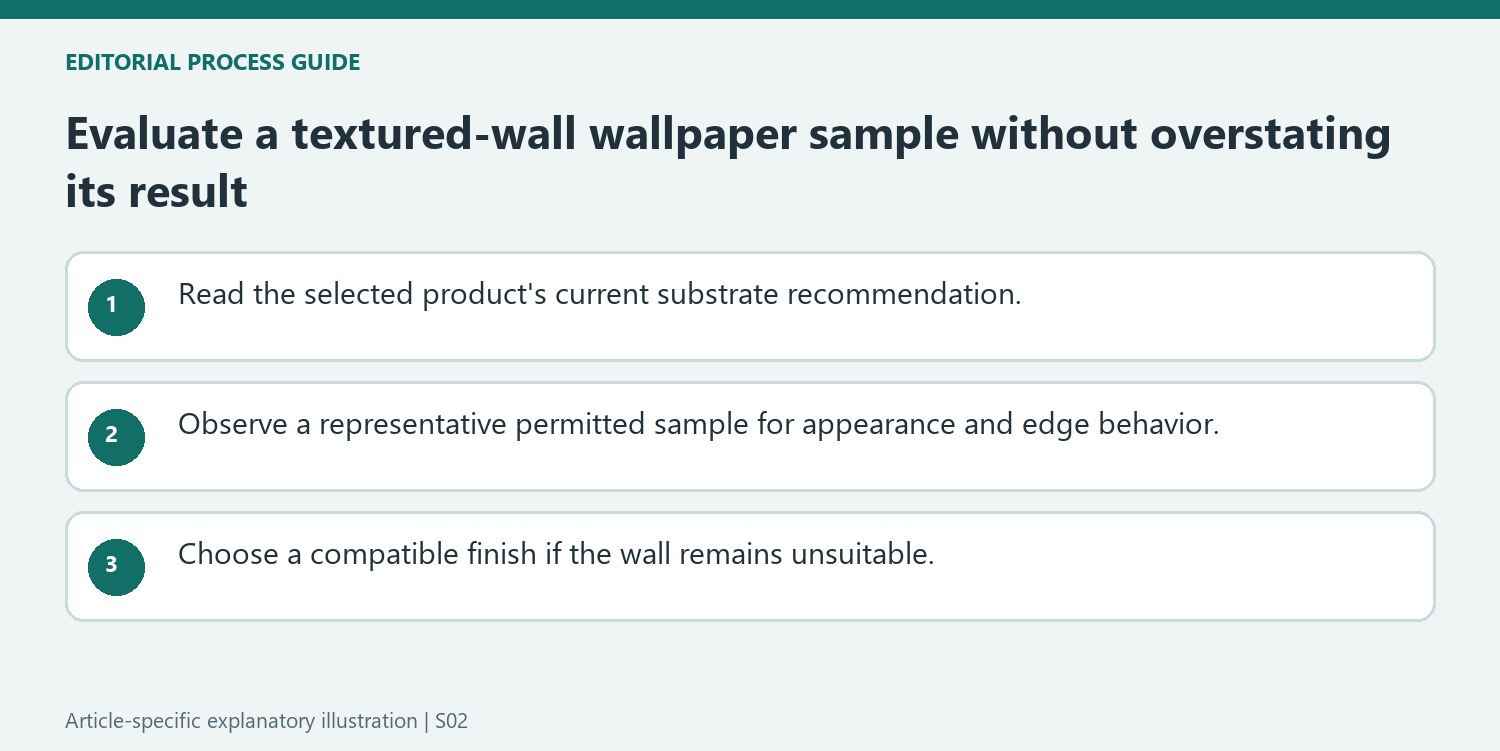
Place a sample on the most textured area and leave it there for several days before ordering full rolls. Check whether the edges lift and how much texture shows through the design. Thicker paper, darker colors and busy patterns may disguise imperfections, but they do not guarantee reliable adhesion. The manufacturer still recommends a smooth surface in good condition, primed and painted with a compatible finish. Clean away dirt and allow the wall to dry before any approved installation.
Treat appearance and adhesion as two separate results
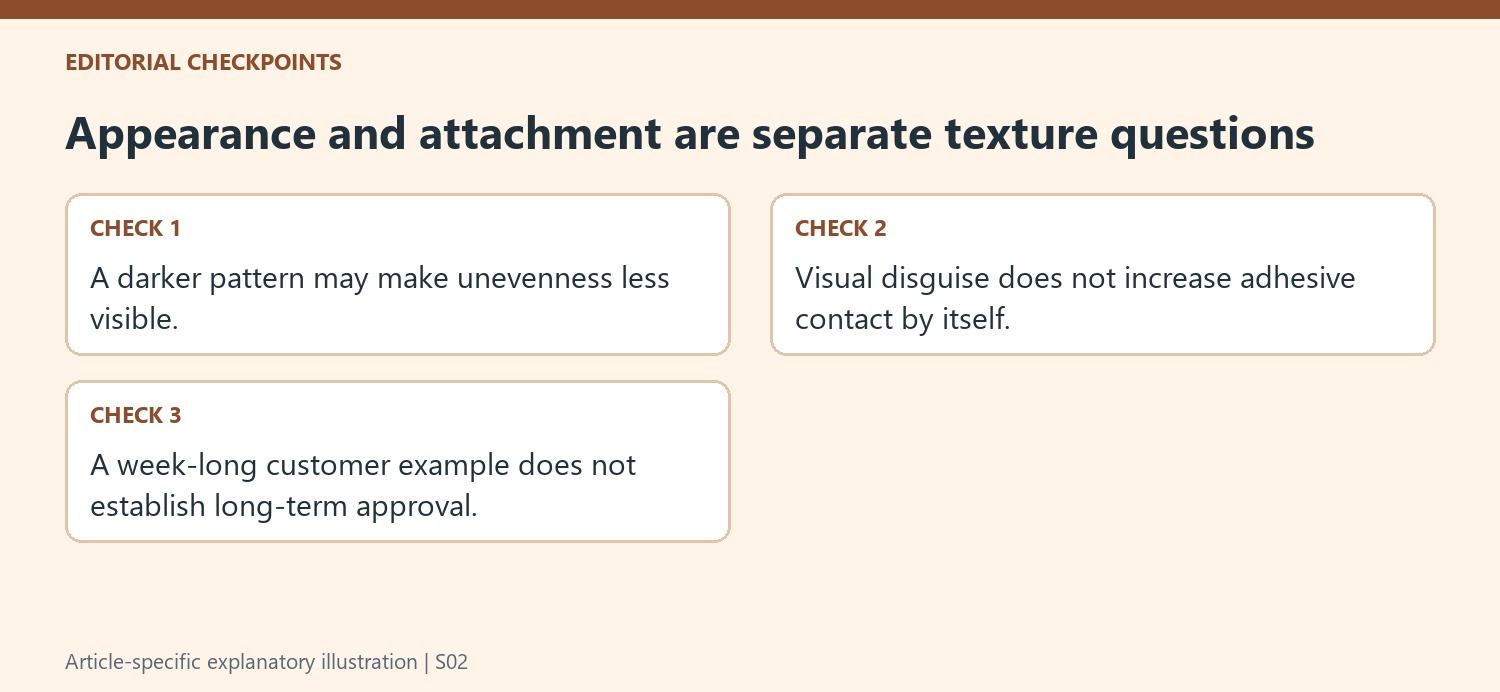
A busier or darker print may make a small bump less noticeable, but it cannot create adhesive contact where the paper bridges a deep hollow. Inspect the sample for edge lifting as well as visible texture. A photograph of a successful orange-peel wall is an individual outcome, not a tested approval for every wall with that name.
Avoid changing a rental wall just to make the sample work
Smoothing a surface by scraping, filling, or sanding can alter the property and may involve an unknown older coating. Obtain permission and appropriate assessment before undertaking that work. Follow the current product’s paint-finish and curing guidance; advice from a different brand may specify another surface. If the sample fails, choose another decorating approach or a professionally specified preparation rather than covering the full wall and hoping the weight of more material will improve the bond. Keep the surface test as a decision point, not merely an installation formality.
Separate an individual result from the manufacturer's position
Tempaper generally discourages applying its removable wallpaper to textured walls. The customer example in the article describes a sample that stayed on a particular orange-peel surface for more than a week. That observation does not reverse the general recommendation or establish long-term performance across the full room. A textured wall creates a contact problem as well as a visible finish problem. A sample can help reveal those issues, but it cannot convert an unsuitable substrate into an approved one. Read the current selected product's requirements before deciding whether a test is useful or whether a different wall treatment is the more appropriate choice.
Record both the appearance and the attachment
Place any permitted sample where the actual texture is representative, including a more pronounced area rather than only the smoothest patch. Observe it under the room's usual lighting and from the position where the wall is normally seen. Note whether peaks and depressions show through, whether edges lift, and whether the surface appears adequately engaged according to the maker's guidance. Keep the sample date and conditions with the product details. Several days of observation can inform a decision, yet it does not reproduce every future seasonal or room condition. Do not add unsupported adhesive treatments to make a sample appear successful if those treatments depart from the specified system.
Do not confuse visual disguise with improved adhesion
The article discusses thicker material and darker or busier patterns as ways texture may be less noticeable. Those choices concern what the eye sees; they do not establish more contact between adhesive and an uneven substrate. A highly patterned sample that looks appealing can therefore leave the practical question unresolved. Distinguish light orange peel from much heavier relief rather than treating all texture as one condition. If smoothing is proposed, assess the existing wall and coatings through an appropriate method instead of scraping an unknown older surface to copy an online example. Choosing paint or another compatible finish can be a successful design decision when removable wallpaper does not suit the wall. The goal is a dependable finish with acceptable appearance, not simply a sample that looks good for a photograph.
References
- How to Cover Textured Walls With Peel and Stick Temporary Wallpaper. Tempaper & Co.; Danielle Tighe.
Peel and stick wallpaper performs most predictably on smooth, clean painted walls.


Leave a Comment