
Define Temporary Living Zones With Screens and Furniture
Separate activities without closing the room
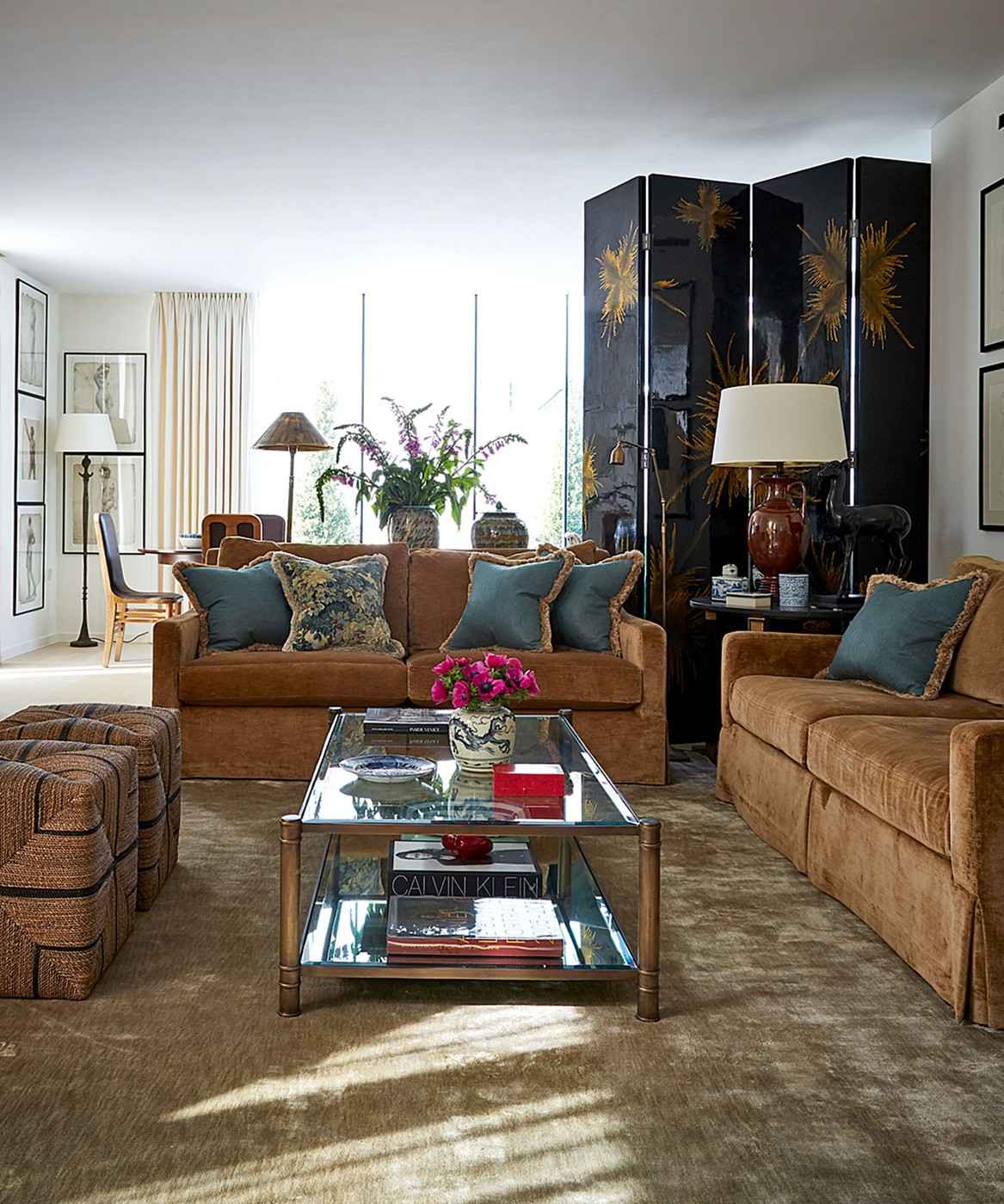
Homes & Gardens describes broken plan living as a middle ground between one completely open space and several enclosed rooms. Movable screens are a particularly adaptable option because they can create a cozy corner, hide part of a view and fold away when the arrangement changes. A decorative screen also becomes a backdrop, adding color, texture or pattern instead of functioning only as a practical barrier.
Let furnishings define the layout
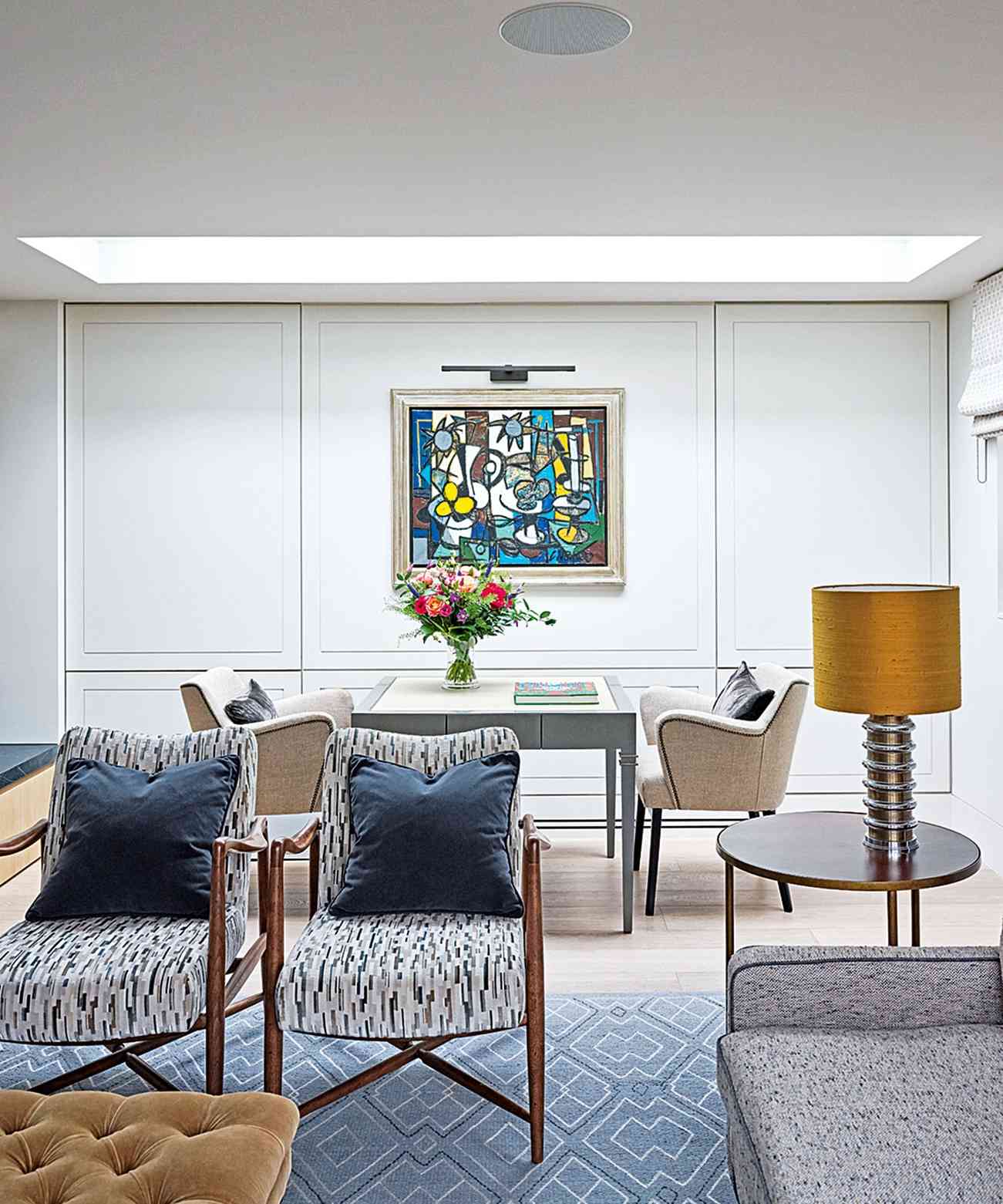
The guide also shows how furniture can establish zones where a permanent partition would be unsuitable. High backed seating can distinguish a living area, while a bookcase can make a stronger division if its size and placement suit the room. Drapes or sheer curtains can soften a large bedroom and create a pause between activities without always closing the full width. Choose an approach that leaves useful daylight and walking routes available, and check any anchoring or curtain supports required before installation.
Decide whether the boundary should disappear
Paolo Moschino values a movable screen because it can conceal part of a view, create intimacy, and move to another home. A tall bookcase makes a more permanent-feeling division and introduces loaded stability and anchoring requirements. Check the room from both sides before choosing between them. A sofa back may provide enough definition when a full-height divider would make circulation awkward.
Keep visual zoning separate from building performance
The article’s steel-framed glazing, sliding panels, and heating examples are substantial projects with their own design and regulatory requirements. They should not be treated as interchangeable rental accessories. A curtain can add a pause between activities without offering the acoustic or fire performance of an engineered wall. If those performance requirements matter, obtain suitable professional guidance. For a simpler temporary change, mark the intended boundary with furniture first and test the ordinary routes, daylight, and activities before ordering a larger divider.
Use the smallest boundary that establishes the intended zone
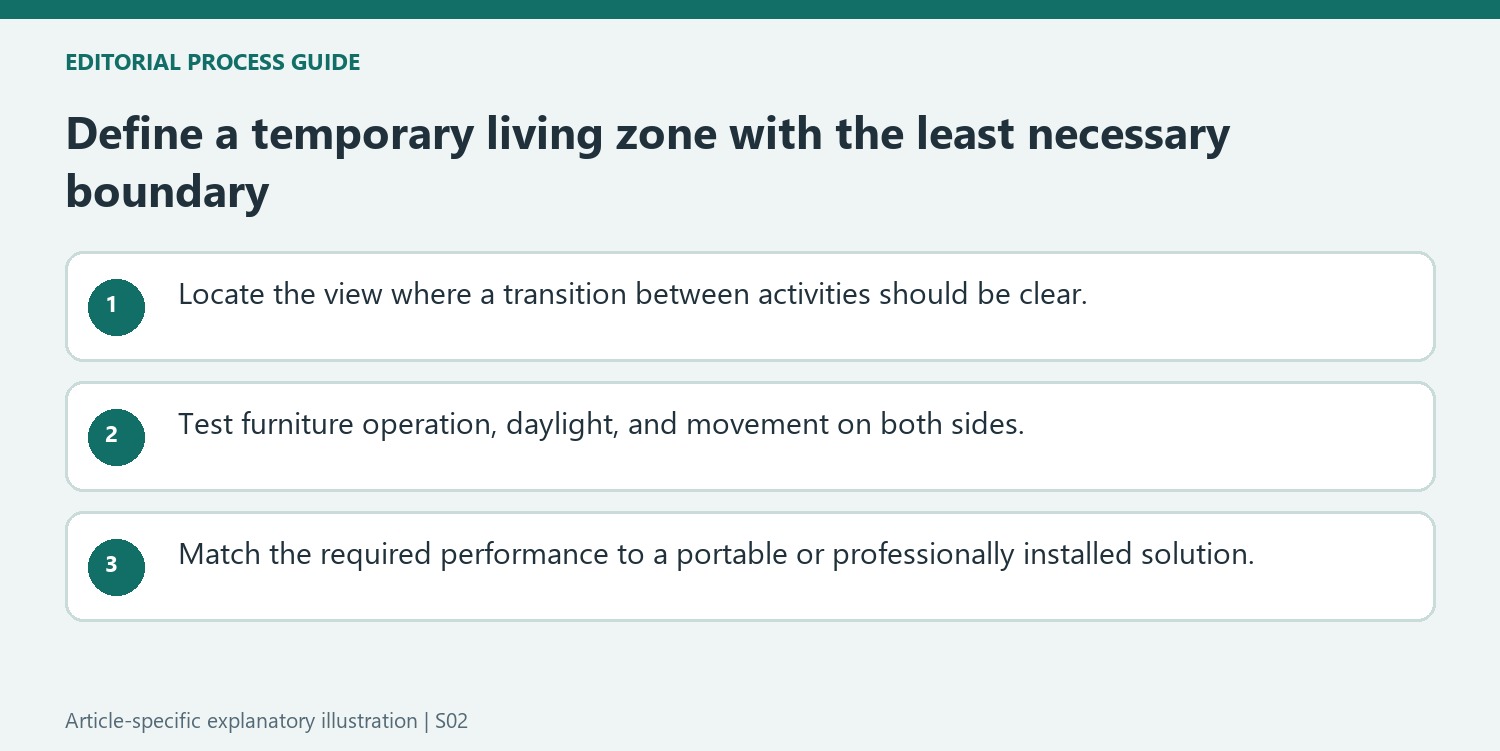
Homes & Gardens describes broken-plan living as a range between a fully open layout and conventional separate rooms. A screen, the back of seating, or a carefully placed bookcase may supply enough visual distinction for a particular activity. Define the point where you want the transition to be noticed and test that view before dividing the whole room. A small decorative interruption can create a sense of arrival without surrounding every activity with a barrier. The source's more extensive glazing and sliding-wall projects show other possibilities, but they do not imply that a temporary furniture change delivers the same acoustic or enclosure performance.
Evaluate the arrangement with doors and furniture operating
Mark the proposed screen or furniture edge with chairs pulled out and storage doors open. Include the route between zones, the light reaching the farther space, and access to windows. Tall furniture may require anchoring and a suitable location even when it seems movable. An open-backed unit can share views and display items while still introducing its full base depth into the walking area. Compare the arrangement from both sides because the reverse of a cabinet or sofa may become a prominent new surface. The boundary should help explain the room's organization without making daily tasks depend on squeezing through an awkward gap.
Keep portable experiments distinct from building changes
The article includes steel-framed glazing, fitted sliding panels, curtains, and a central stove among its varied examples. Glazing and other construction need the relevant design, installation, and regulatory assessment, while heating equipment requires its specified clearances and professional requirements. These are not temporary equivalents of folding a screen beside a chair. A rental-friendly trial can begin with permitted furniture placement and an appropriate portable item, preserving required routes and support. If the actual need is speech privacy or a fully enclosed work room, assess that performance directly instead of expecting a visual divider to provide it. The useful lesson is to choose the degree of separation that suits the activity and the property, with a practical way to change the arrangement later.
References
- Room divider ideas – 12 lessons in versatile modern living. Homes and Gardens; Jennifer Ebert.
Homes & Gardens describes broken plan living as a middle ground between one completely open space and several enclosed rooms.


Leave a Comment