
Let the Sofa Establish Your Small Living Room Layout
Position the sofa first
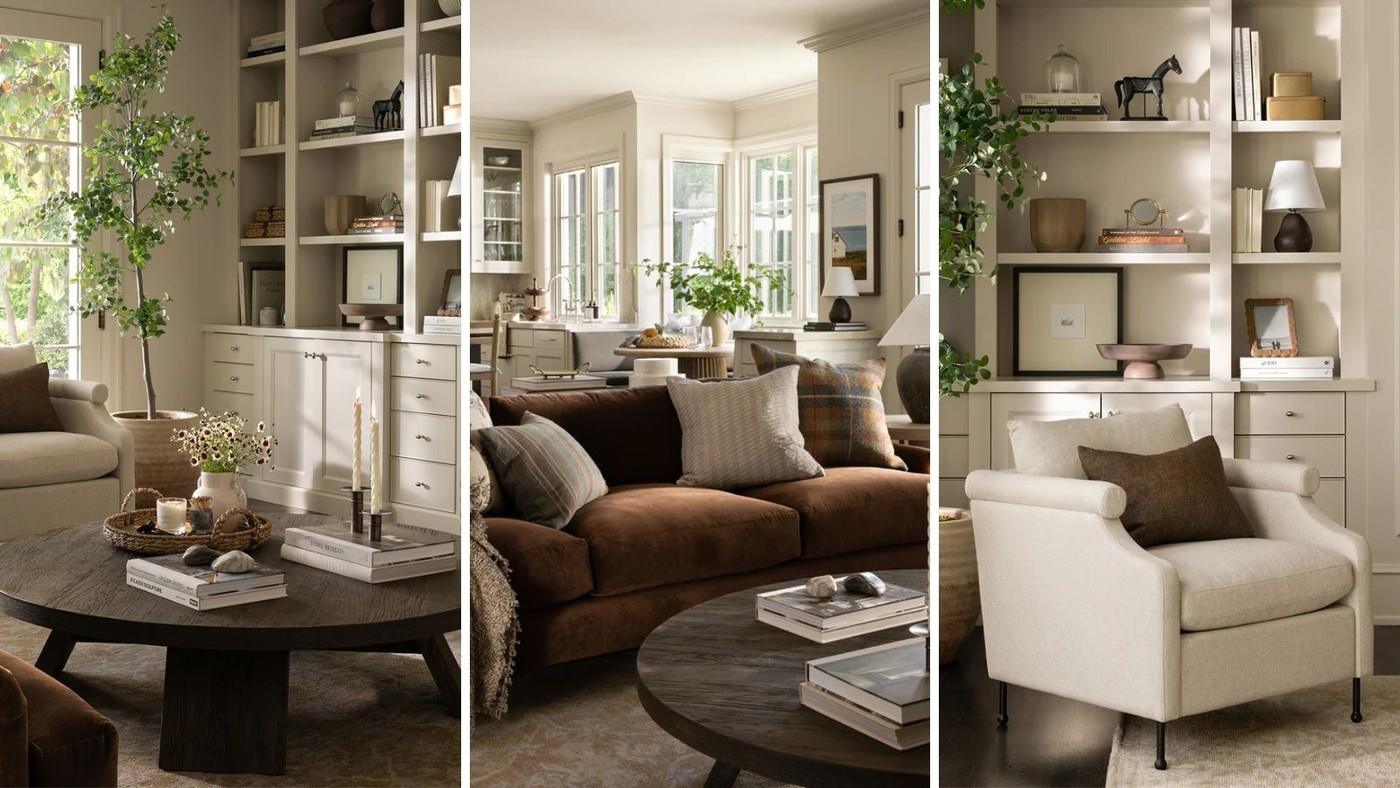
Shea McGee's approach starts with the biggest item in the living room. A sofa establishes the shape, scale, and visual character that the other furniture can respond to. In the featured arrangement, a traditional velvet sofa sits away from the perimeter to form a distinct seating zone. This shows why the wall is not automatically the best position for a large piece. Its placement should support the composition and the way the room is used.
Introduce contrast through smaller furniture
The accompanying armchairs bring a more modern shape and linen upholstery, creating contrast without abandoning a restrained palette. A curved coffee table adds another material and softens the surrounding straight lines. The useful lesson is to coordinate pieces through their relationships rather than buying matching furniture: vary texture, silhouette, and finish while preserving balance across the complete group.
Read the sofa as the beginning of a relationship
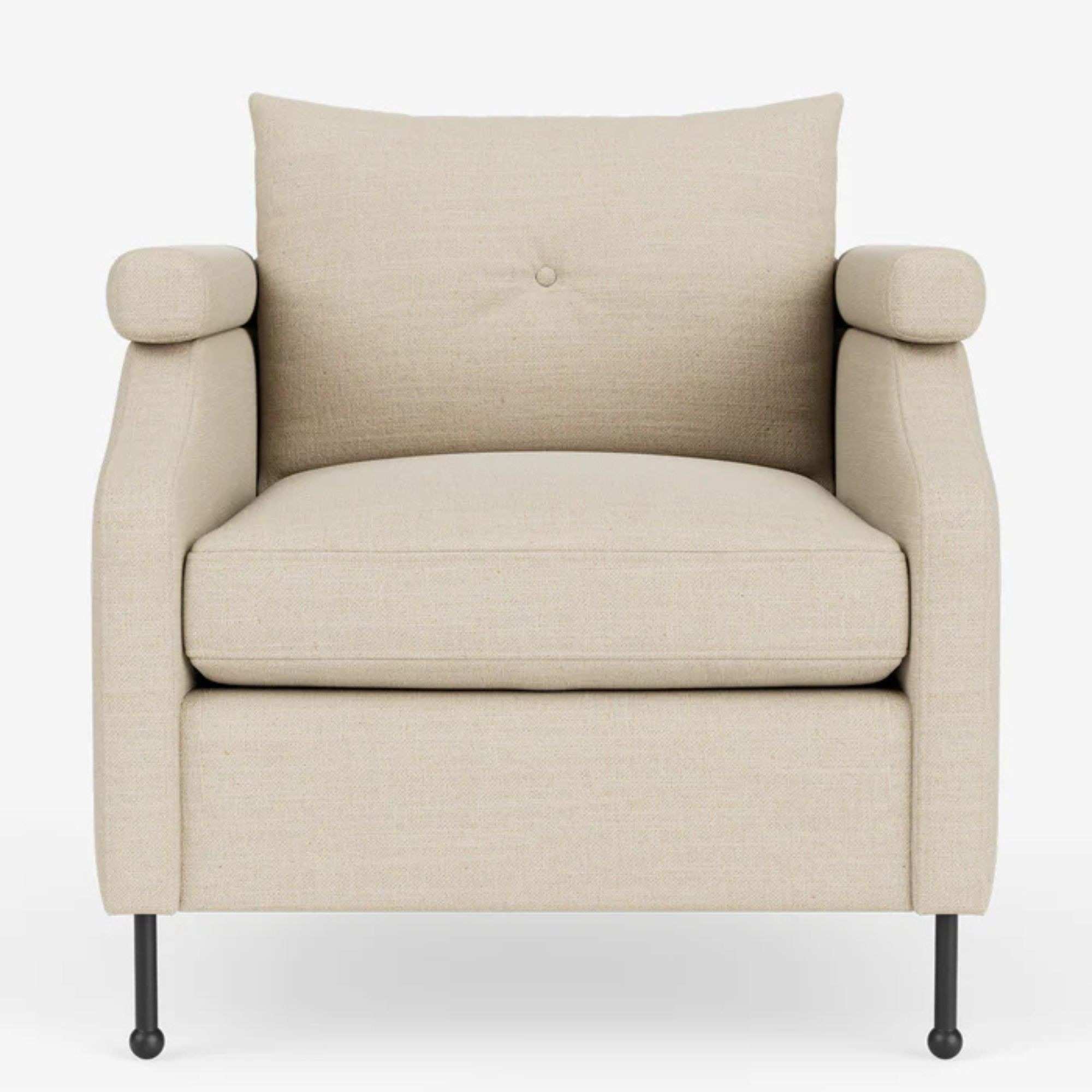
Shea McGee starts with a praline velvet sofa in a traditional roll-arm shape, then introduces more contemporary linen chairs. The contrast works through fabric and outline while the palette stays relatively quiet. This is a way to relate different pieces rather than a requirement to purchase a matching furniture range. Position the largest item first and confirm the remaining floor space before selecting the smaller seats.
Balance the straight edges with a different table shape
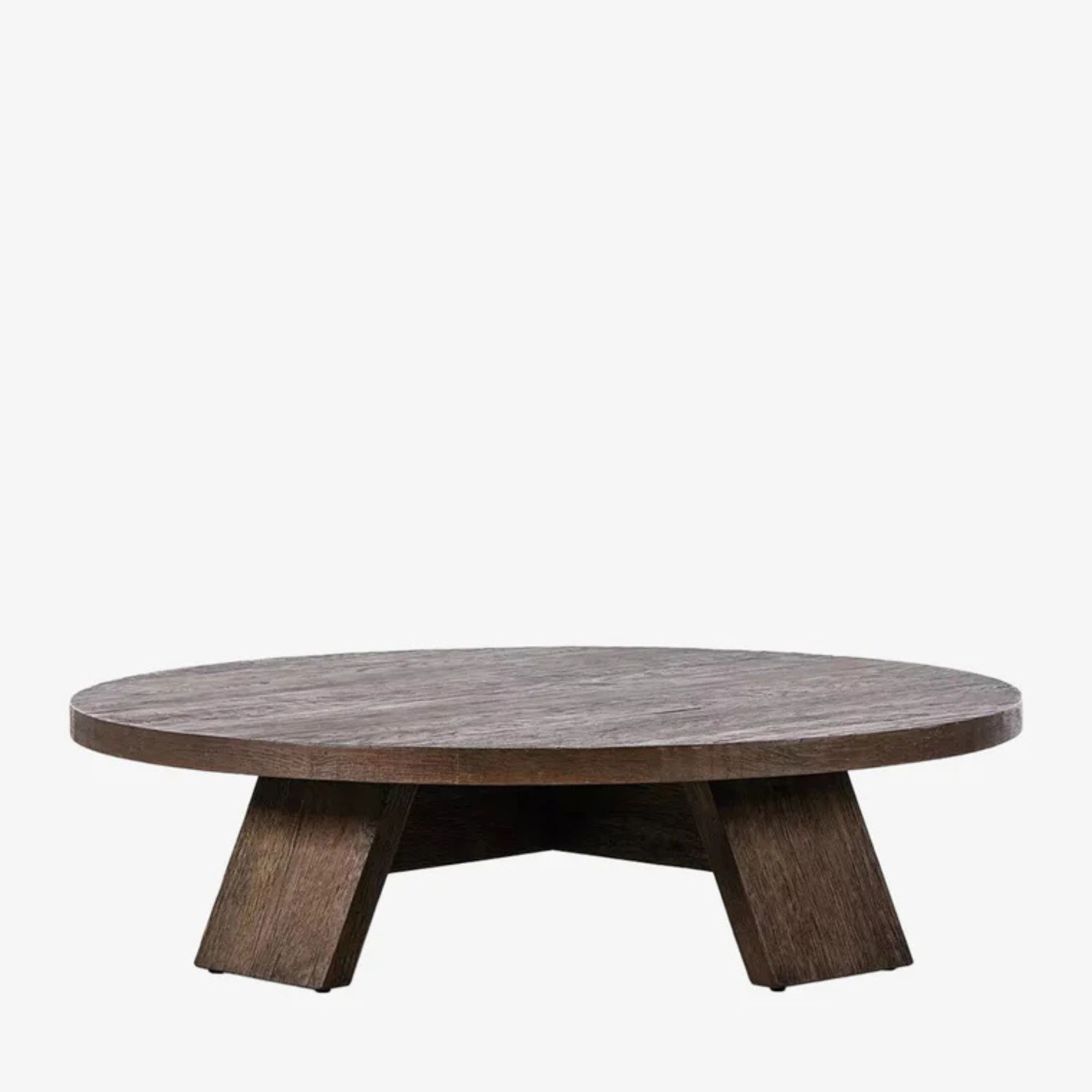
The featured low coffee table has an organic outline and a darker finish, providing another material and shape within the group. Its dimensions suit the photographed arrangement; a smaller room may need a more compact version of the idea. Floating a sofa can establish a zone, but only when the circulation behind it remains useful. Check the full footprint, including the space needed to approach the seats, rather than assuming the retailer's layout will fit another home. Historical sale references in the article also do not establish current pricing or availability.
Record which part of the example is doing each job
McGee's three stages separate the anchor, the supporting seats, and the center table. The sofa supplies the largest block of color and a traditional outline; the linen chairs introduce another texture and a more contemporary shape. The table changes both the geometry and the depth of the finish. Writing down those roles can make the method easier to adapt with existing furniture. A retained sofa does not have to be praline velvet to act as the anchor. Look for the missing relationship, such as a softer upholstery texture or a different curve, instead of buying three items simply because they appear together in a retailer's room.
Check the floating arrangement from every approach
The source positions the sofa away from the perimeter to define a cozy zone within a larger room. That works because the surrounding space can support the arrangement. In a compact lounge, mark the sofa's depth and the approach behind it before deciding to float it. Include the parts that project beyond its main cushion, such as rolled arms or legs. An illustrative adaptation might retain the furniture contrast while placing the sofa nearer a wall. That borrows the designer's relationship between old and new without reproducing an unsuitable footprint. Moving the largest piece first should reveal the usable space left for the chairs, rather than commit the room to a display layout.
Evaluate the curved table as a usable surface
McGee points to the rounded outline and generous top as reasons for the organic table choice. Curves can soften the appearance of a rectangular seating group, but the complete shape still needs checking where people pass and sit down. A low table may suit the illustrated relaxed setting while being awkward for someone who needs a higher reachable surface. Compare the height with the actual sofa cushion, and consider how a seated person will place and retrieve a drink. Rounded corners do not remove the need to consider stability, material, and everyday use. The reference offers a compositional method and a product example; it does not establish that the featured table is the right size or safest choice for every household.
References
- Shea McGee tells us her simple 3 step living room layout formula. Homes and Gardens; Eleanor Richardson.
Shea McGee's approach starts with the biggest item in the living room.


Leave a Comment