
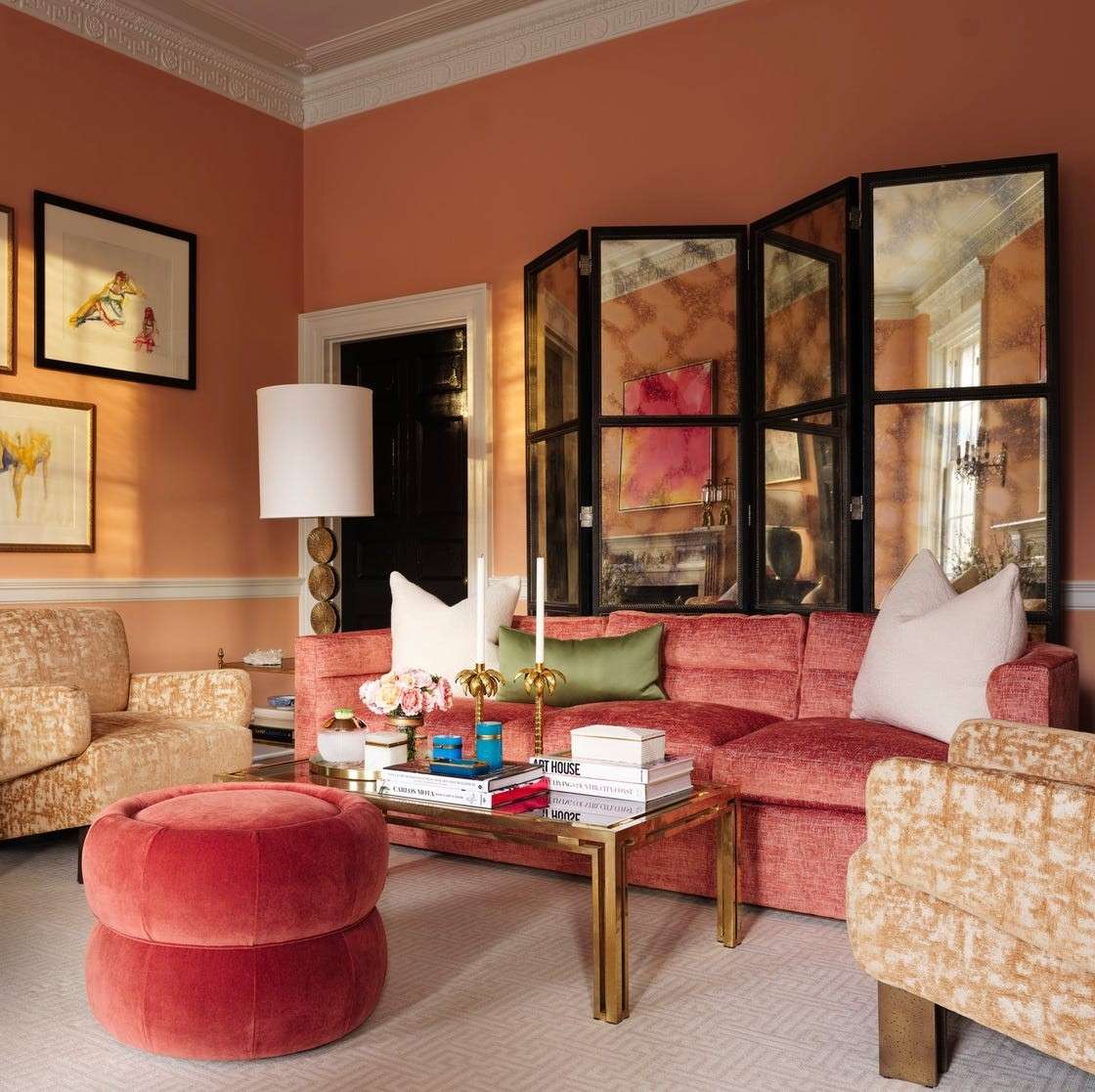
Expand Compact Lounge Seating with Carefully Chosen Pieces
Mix compact seats with a simple anchor
Small living rooms can accommodate more than one kind of seating. The featured designer examples pair a restrained sofa with a distinctive armchair, or use a fitted banquette to make an awkward area work harder. A wall-mounted swing-arm drinks table can serve nearby seats without requiring another full table on the floor. These arrangements expand the room's usefulness by considering the supporting furniture as carefully as the seats themselves.
Vary height and keep sightlines open
An ottoman can provide an additional place to perch, while a lounge chair can turn a corner into a useful retreat. Club chairs offer individual seats, and low chairs may preserve the view through nearby windows. The examples also mix upholstery and back heights for character. Extra seating works best when its shape, position, and accompanying surfaces suit the available room rather than simply increasing the furniture count.
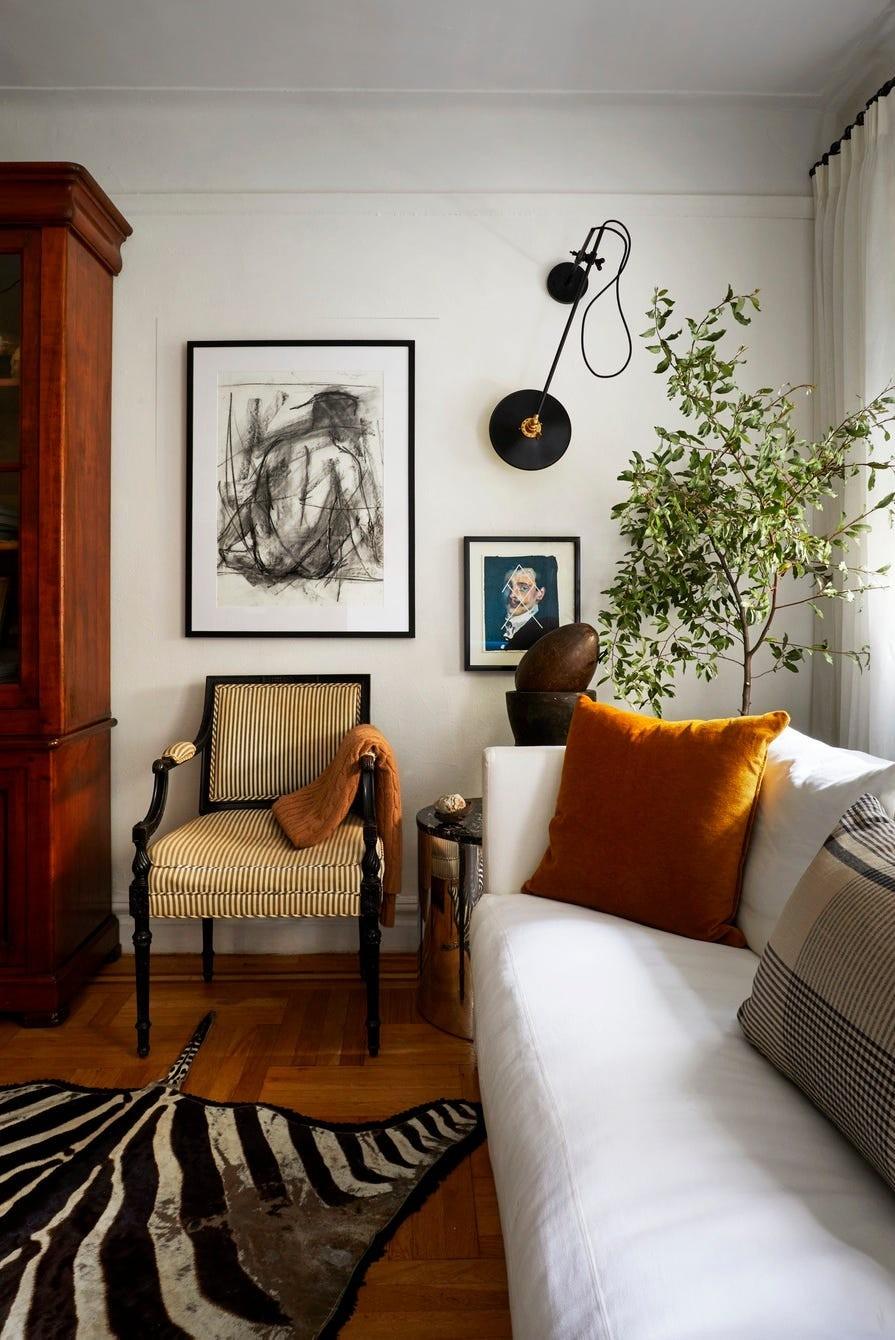
Select the extra seat by the task it should serve
The reference ranges from patterned armchairs and upholstered club chairs to low seats and movable ottomans. Melanie Turner's example uses a circular ottoman, while Tina Ramchandani introduces wood-and-cane chairs with a more open outline. These choices change both the sitting experience and the apparent weight of the arrangement. Compare comfort, seat height, and ease of moving the piece before judging it only by its footprint.
Look for a useful architectural opportunity
Marita Simmons and Krysta Gibbons use a fitted banquette with a swing-arm drinks table, and another example develops a nook for seating and games. Such solutions make use of a particular wall or recess, but their dimensions cannot be transferred automatically to a different home. Check how a seated guest will reach a drink, stand up, and pass nearby furniture. A compact lounge may gain more from one well-placed chair or a dual-purpose footstool than from adding every seating type in the feature.
Choose between a perch and a chair for sustained sitting
The reference's ottomans, small stools, club chairs, and lounge seats offer different levels of support. An occasional place for a visitor to perch is not the same requirement as the chair used for reading every evening. Begin with that distinction before deciding which option looks smallest. A low seat may preserve the view through a window but be difficult for a particular occupant to use. A lounge chair could be the more comfortable choice if the corner can accommodate its depth. Test sitting and standing where possible, and compare the complete outline, not only the seat width. The article's varied examples are a menu of approaches rather than interchangeable specifications.
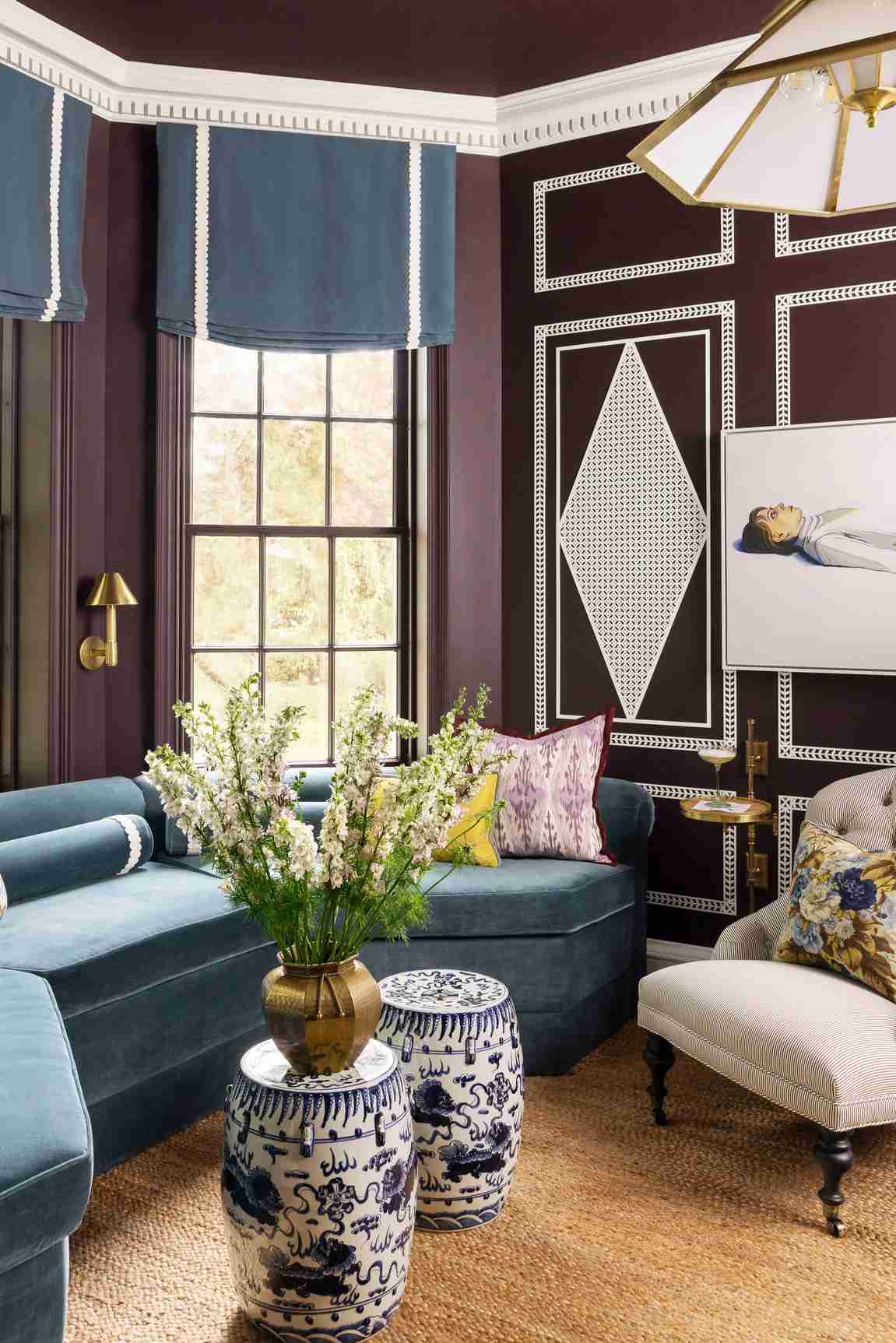
Give an extra seat a reachable supporting surface
Kipling House's banquette includes a wall-mounted swing-arm drinks table, which reduces the need for another freestanding piece. Its advantage depends on the wall, mounting, and movement available in that particular design. In another room, a compact side table or existing shelf may be a better answer. Sketch where someone would place a cup from each proposed seat and how the surface affects the route beside it. An ottoman used as a footrest, spare seat, and tray surface cannot perform all those roles for different people at the same moment. Decide which use has priority during a normal evening and where the tray or footrest will go when the room hosts guests.
Use variation with one clear reason for each piece
Christina Salway's example mixes back heights and upholstery, while Hannah Ozburn combines an olive sofa with patterned supporting pieces. These approaches show that a small room does not need a uniform furniture suite. Choose the contrast that solves the actual visual problem: an open cane chair can lighten a heavy upholstered group, while a patterned armchair may give a neutral sofa a focal companion. There is no requirement to add every color, texture, and silhouette at once. The source also includes an L-shaped sofa that occupies two walls, illustrating a different priority centered on generous lounging. Compare that single large seating solution with a mixed group according to the room's users, available paths, and need for flexible individual seats.
References
- These Designer-Approved Tricks Will Maximize Seating in Any Tiny Living Room. House Beautiful; Kelly Allen.
Small living rooms can accommodate more than one kind of seating.


Leave a Comment