
Choose a Coffee Table That Respects a Tight Footprint
Relate the table to the sofa
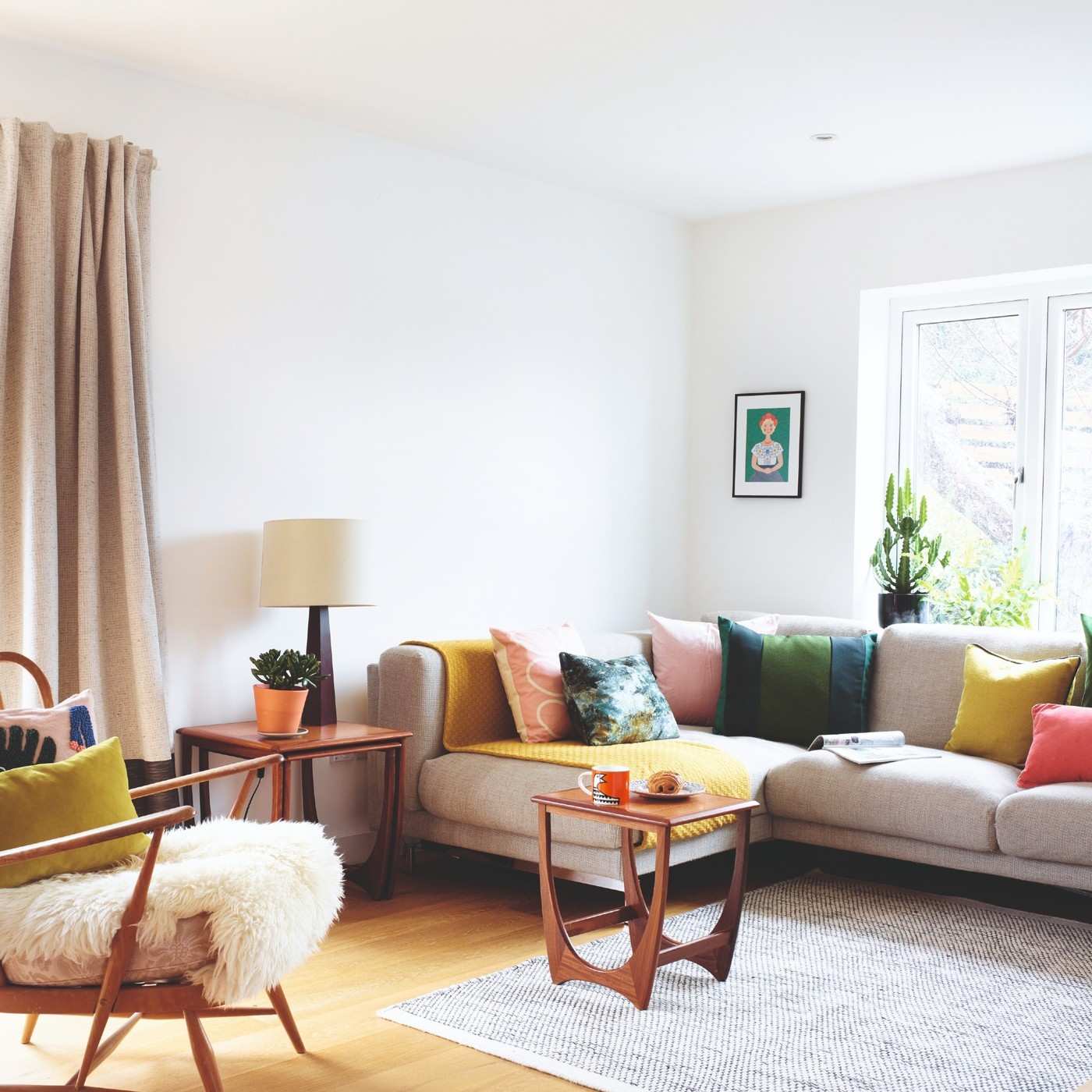
A coffee table in a compact lounge should feel proportionate to both the room and the seating. The source recommends using roughly two-thirds of the sofa's length as a starting point when comparing options. That relationship can help prevent an isolated table from overwhelming the arrangement. First establish the essential furniture and storage needs, then decide whether a coffee table deserves space in the final layout at all.
Look for useful details and lighter forms
Storage can make the same footprint more productive. A lower shelf or drawer offers somewhere to put items that would otherwise spread across the room. Shape also affects how substantial a table appears: curved forms and visually lighter designs can suit a restricted lounge better than heavy, angular pieces. Evaluate these features together, because a table needs to support daily use as well as balance the surrounding furniture.
Check proportions and movement together
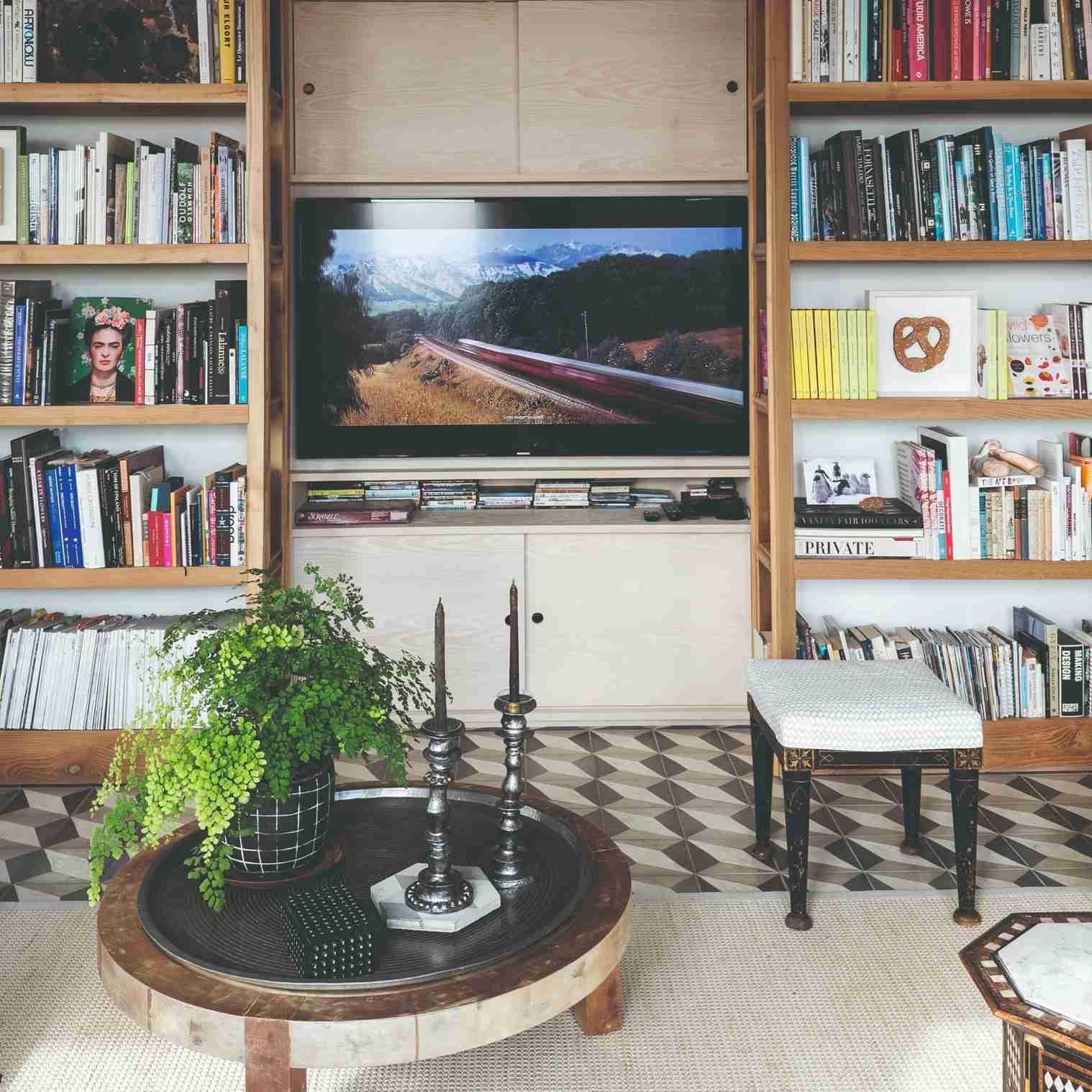
Kelly Collins suggests a coffee table around two-thirds of the sofa length as a starting point, while the feature also favors curved edges, slimmer outlines, and raised legs for some compact rooms. Those suggestions do not determine the right size on their own. Mark the table's footprint and leave room to reach the seat, extend legs, and pass the group before ordering.
Choose the additional function that will be useful
The source compares a lower shelf or drawer, nesting tables that expand for guests, and an ottoman with a tray. Each has a different trade-off. A nesting set needs space when the smaller table is pulled out; a storage table needs usable access; an upholstered ottoman needs a stable serving surface. A visually light table is not necessarily physically smaller, so compare measurements as well as photographs. The useful choice is the one that earns its place through the required surface or storage function without making the main route through the room difficult.
Compare the table's whole footprint rather than its top alone
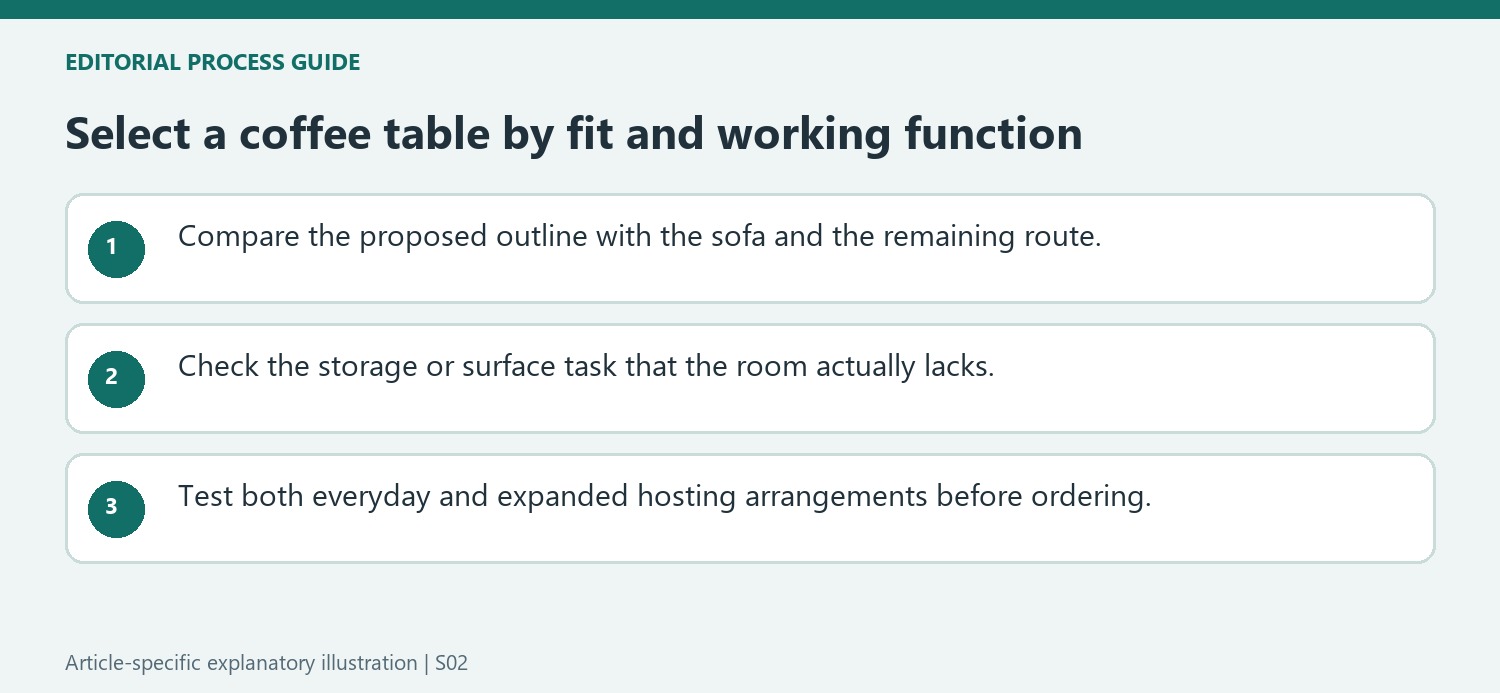
A round top, an oval, and an irregular shape can occupy very different amounts of the route beside a sofa. Include projecting legs and any drawer or lifting mechanism when marking a proposed piece. The reference favors curves for flow, but a large circle may consume more width than a narrower oval in a particular lounge. Compare two outlines in the actual position and consider how someone approaches the seat with a drink. Visual lightness and physical clearance are separate judgments. A raised-leg design can reveal more floor without reducing its widest dimension. Choose the form that works with the remaining path instead of assuming a curved edge automatically makes the table compact.
Match storage to the objects that need a home
The article's shelves, drawers, and lift-up ottomans provide different kinds of access. List the items currently left on the sofa or surrounding surfaces and compare their size with the proposed storage, including any internal division. An open shelf may keep books accessible but does not conceal everything visually. A drawer can hide smaller items yet needs unobstructed opening space. A lift-up top must be usable in the position where the ottoman will actually stand. These details determine whether the additional function earns its floor area. The source's enthusiasm for storage is a buying perspective, rather than evidence that every compact room needs a storage table.
Plan the expanded arrangement before choosing nesting tables
A nesting set looks compact when closed, while its useful hosting arrangement spreads the pieces farther apart. Sketch both conditions and decide which seat each smaller surface will serve. There should also be a clear place to return the pieces after the gathering. Compare this approach with one ordinary side table or an ottoman and tray, especially if the room already has enough central surface. An ottoman used for feet may require moving the tray when it becomes an extra seat. The practical choice depends on the household's most frequent activity and the remaining circulation. A product photograph can suggest an arrangement, but its apparent openness cannot replace the measurements of the real room.
References
A coffee table in a compact lounge should feel proportionate to both the room and the seating.


Leave a Comment