
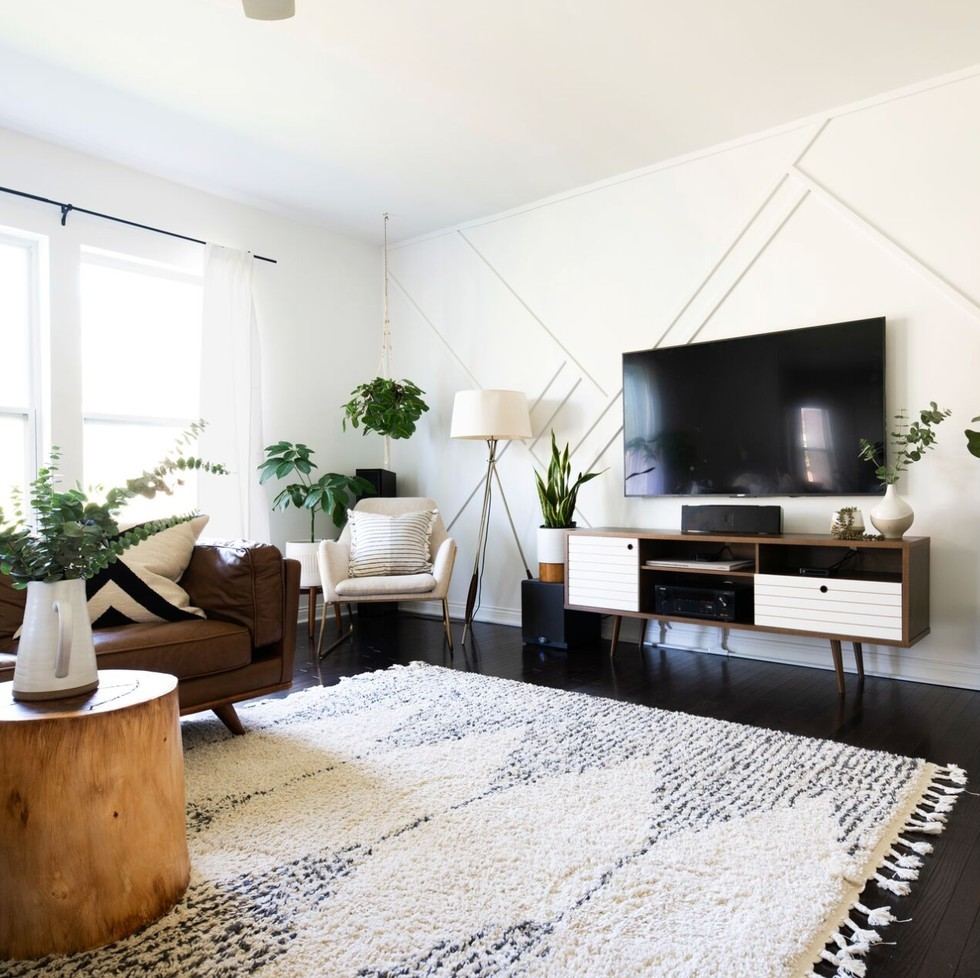
Size the Rug to Connect the Seating Group
A rug helps define and anchor a living room, particularly in an open-plan space. Good Housekeeping's guidance warns that a rug chosen too small can make the furniture feel disconnected, even when its color and design are otherwise appealing.
The article also encourages contrast rather than matching every rug, sofa, wall, and throw in both tone and texture. Measure the seating area before choosing the rug, then consider how its pattern or material connects the pieces. A compact room needs a coherent grouping more than a rug selected only to fill a gap.
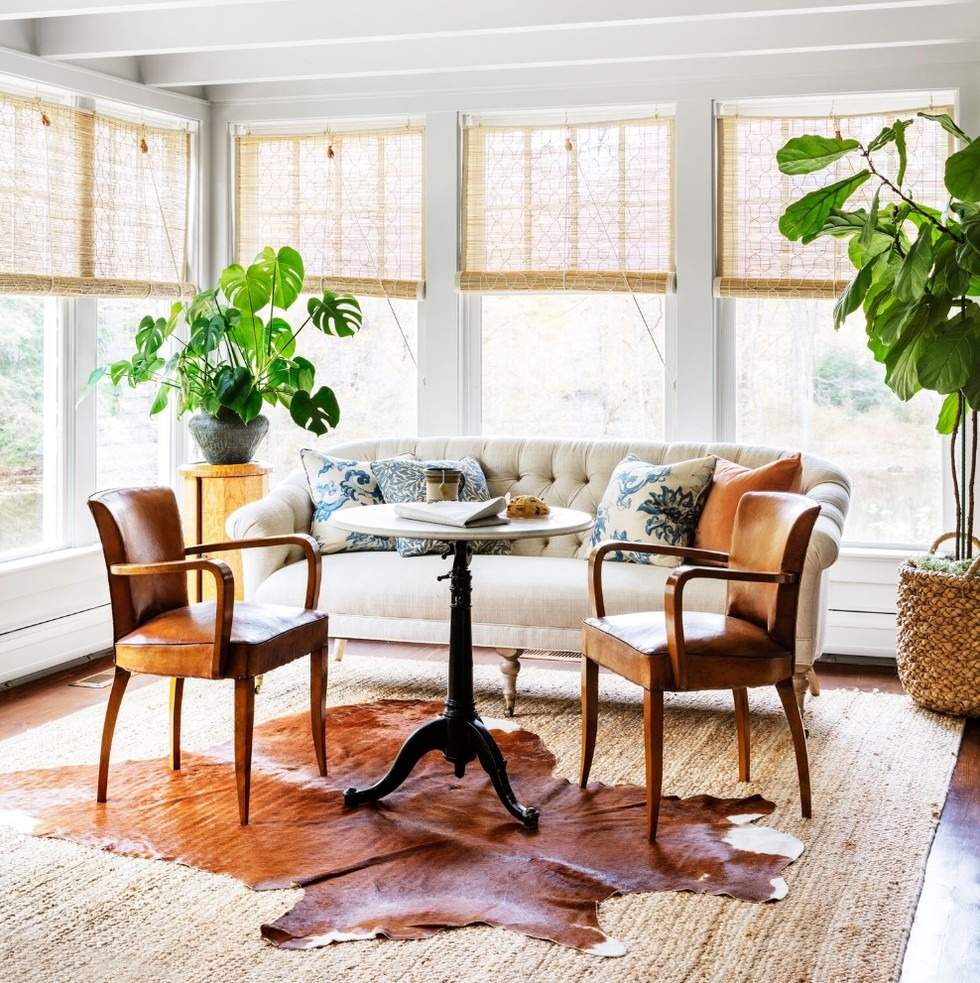
Use the seating group to determine the rug boundary
Jasmine Roth recommends a rug that reaches the front of the sofa and accommodates at least two legs of the other principal seats in most arrangements. The aim is to connect the pieces visually rather than leave a small rug isolated under the table. These are the designer's guidelines, not a universal rule against placing all furniture on a larger rug. Compare the actual layout and the visible border before deciding.
Create contrast through either pattern or surface
The source warns against repeating the same neutral color and texture across the rug, upholstery, and accessories. It suggests a quieter rug with stronger cushions, or the reverse, so the patterned elements do not all compete. Roth also describes layering a smaller rug over a natural-fiber base, leaving an approximately one-foot border as one possible proportion. Check whether the combined thickness interferes with doors, furniture stability, or walking before adopting that approach. A sample material and a taped floor outline can clarify both the appearance and the usable footprint.
Measure the connected area before comparing shop sizes
Roth's approach starts with the sofa and the principal seats, not an empty rectangle in the middle of the floor. Draw the arrangement and mark the extent of the front furniture legs before comparing available rug sizes. Include the position of an angled chair, which may sit beyond the straight edge suggested by the sofa alone. An illustrative plan could show a smaller rug reaching only the table and a larger option connecting the seats. That comparison makes the visual difference easier to understand. It also leaves room to assess the actual door movements and nearby routes rather than choosing a size solely because its label is commonly associated with living rooms.
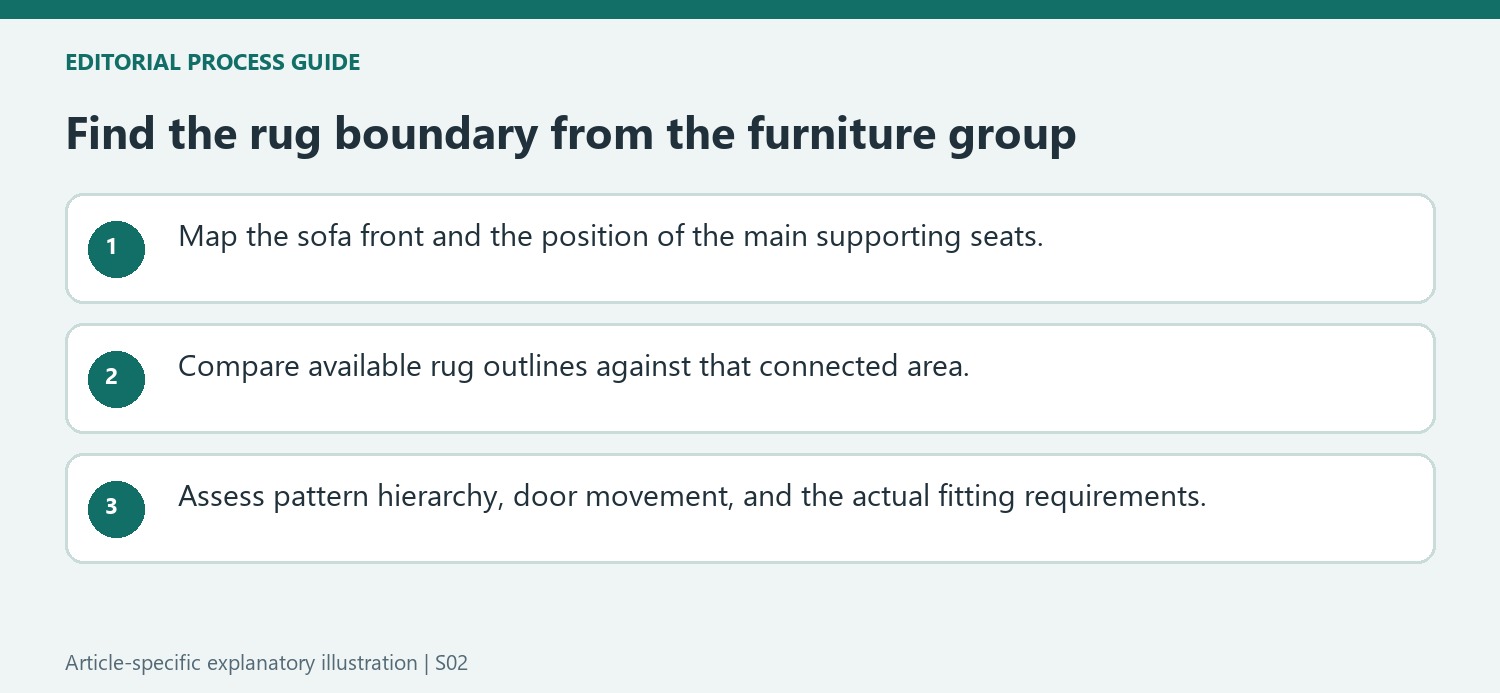
Decide whether the rug or the cushions should lead
The source recommends alternating stronger and quieter pattern rather than making every textile equally insistent. Compare a rug sample with the existing sofa, curtains, and favorite cushions together. A neutral rug can still introduce a different weave or surface, while a patterned rug may make simpler cushions the more useful partner. This is a way to establish hierarchy, not a prohibition on layered pattern or on neutral rooms. The result should reflect the person's preferences and the retained furnishings. Looking from the entrance as well as at a sample close up helps reveal whether the rug connects the group or seems like an unrelated decorative patch.
Treat layering as a physical arrangement as well as a color choice
Roth uses a large natural-fiber base with a smaller accent rug to change the appearance without replacing the whole foundation. Her approximate border is a styling example, so check how the two actual sizes meet at every side. An angled top rug can shift an edge into the route or under a furniture leg that was not affected in the straight arrangement. Follow the products' fitting, underlay, and care guidance and review any change in stability. The source's praise of natural fibers and washable outdoor rugs does not make all such products stainproof or suitable for the same cleaning method. Choose the material and combination by the instructions for the particular items and their real location. Retain both care labels when layering so later cleaning decisions do not treat the two materials as one.
References
- The Big Mistake Most People Make With Their Living Room Rugs. Good Housekeeping; Mariah Thomas.
A rug helps define and anchor a living room, particularly in an open-plan space.


Leave a Comment