
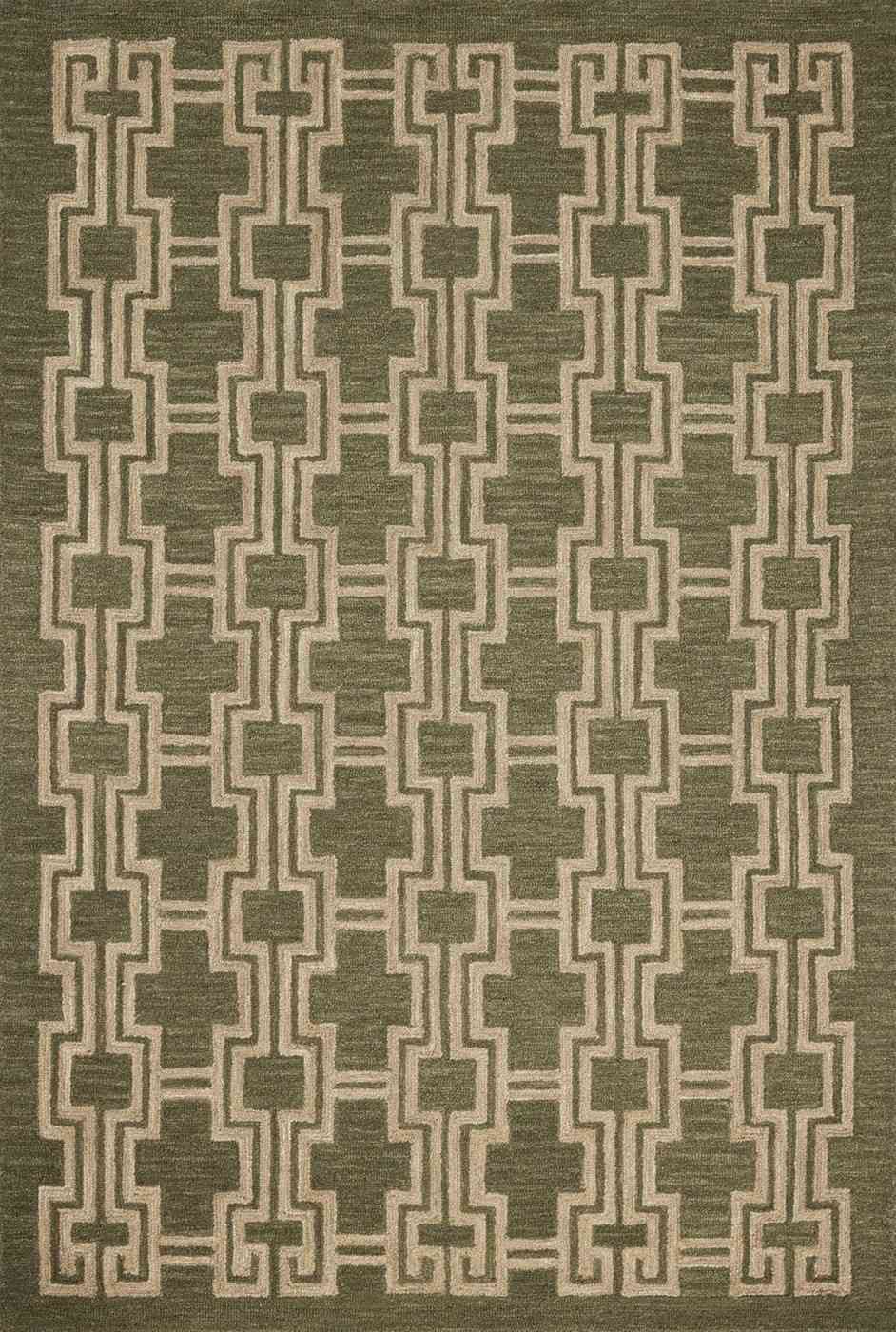
Choose Rug Texture with a Room's Longer-Term Style in Mind
House Beautiful's interview with Jeremiah Brent discusses rugs and cushions inspired by New York's West Village. Neutral elements, familiar references, and unexpected textures form part of the collection's approach, including high-low pile influenced by cobblestones.
For a compact living room, the useful idea is to consider how a rug can remain compatible as other furnishings change. Texture can provide character without depending on an entirely new color scheme. Treat the collection as a design reference and check the dimensions and care requirements of any rug being considered.
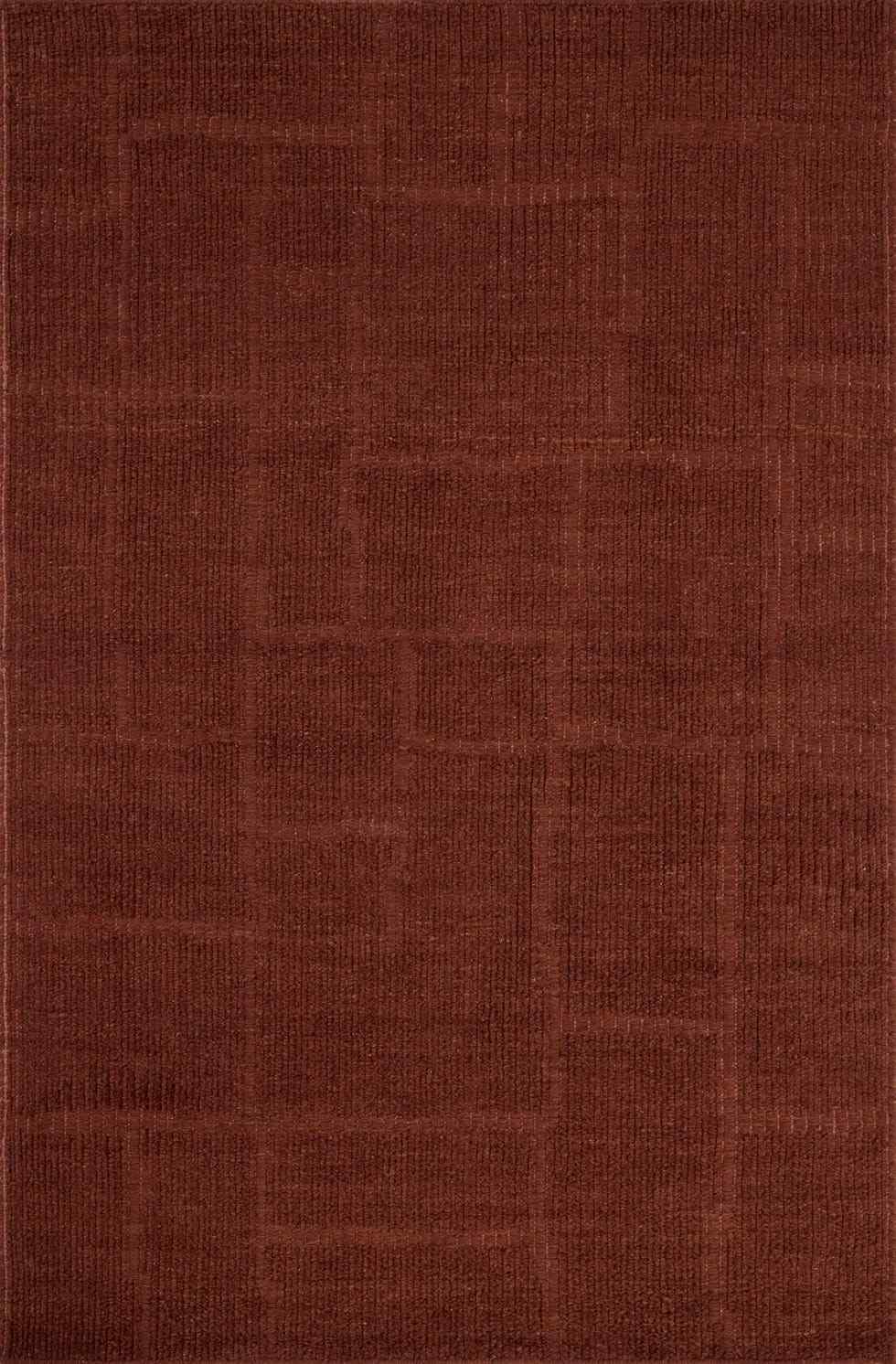
Understand the neighborhood references behind the texture
Jeremiah Brent describes West Village cobblestones as an influence on the Greenwich collection's higher and lower pile, while irregular street layouts inform other patterns. These details explain the intended character of the collection more precisely than calling every rug simply neutral. His Merlot example also shows that the range is not limited to pale beige. Compare the surface and color with the actual room rather than relying only on the collection's story.
Connect the rug to furniture and its supporting layer
The designer recommends avoiding an isolated rug floating in the center of the floor and using an appropriate rug pad. The right pad still needs to suit the rug construction and the flooring beneath it, so consult current care guidance. Dimensions and texture matter alongside the visual pattern, particularly where doors or chairs must move across the edge. The source's launch prices and ready-to-ship description belong to its publication context. Check the present listing before treating either as a current guarantee, and select a size that relates to the intended seating group.
Translate the inspiration into a surface you can compare
Brent explains how cobblestones and the neighborhood's irregular streets informed the pile and pattern. That account offers a useful way to look at the rug: compare raised and lower areas, the direction of the lines, and the relationship with existing furniture. A texture can be distinctive without a very bright color. Use a physical sample or current detailed product information where available, because an overhead photograph may flatten the pile differences. The Merlot example also demonstrates that a long-lasting scheme need not rely entirely on pale neutrals. Its suitability depends on the actual floor and surrounding upholstery, not solely on the urban story used to introduce the collection.
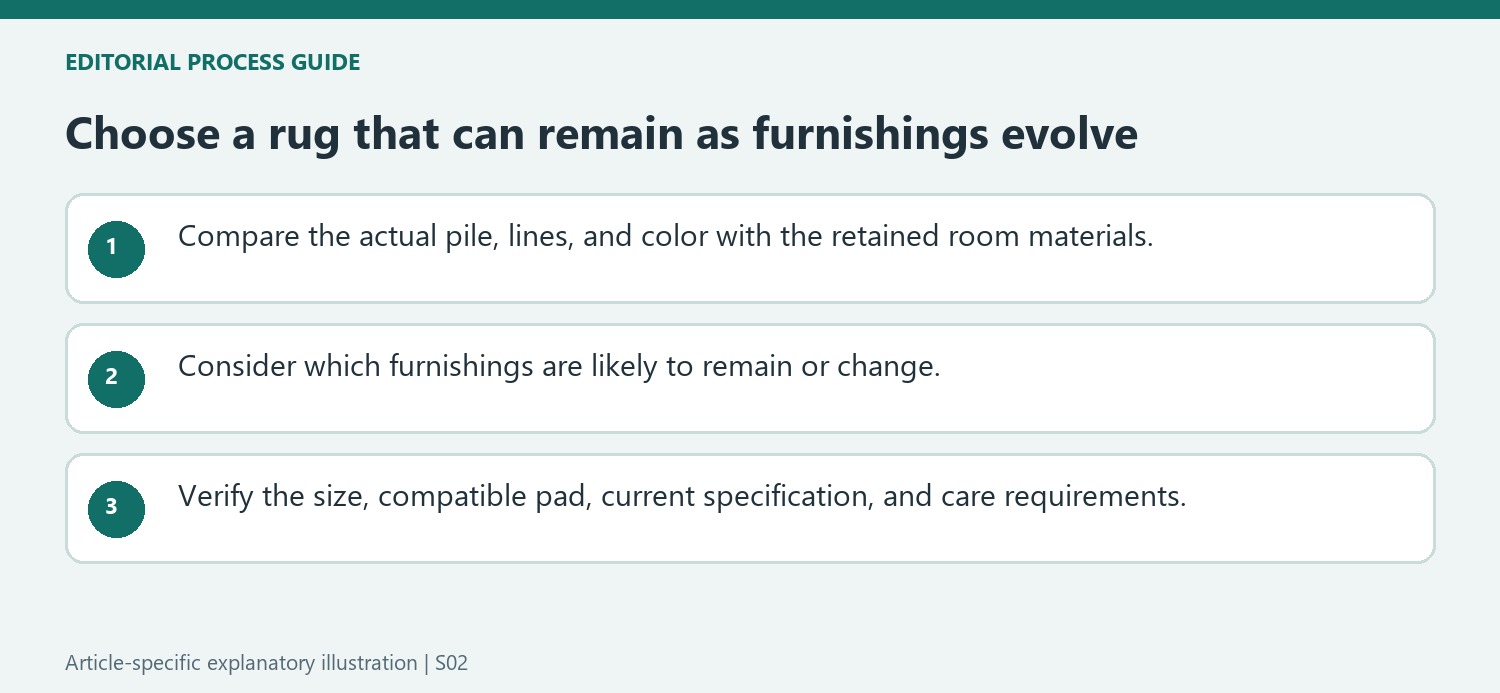
Consider the likely next version of the room
The designer values elements that can evolve with the owner rather than fix the interior to one brief moment. Identify the furniture likely to remain and any expected change, such as different cushions or a reupholstered chair. A rug with a workable relationship to those retained materials may offer more flexibility than one selected to match a single temporary accent. This is a planning exercise, not proof that a particular neutral will suit every future scheme. A richer rug can also provide continuity if its color is genuinely important to the owner. Compare the role the rug will play as a quiet connection or a stronger anchor before assuming that longevity and low contrast are the same thing.
Check the full installation instead of only the collection name
The reference emphasizes a supporting pad and anchoring the rug to furniture. Look at the combined rug and underlay in relation to the floor, doors, and chair movement. Choose a compatible pad according to the current guidance for both materials, rather than adding an arbitrary layer. A high-low surface may have specific care requirements that differ from a flatter rug already owned. The interview's stated prices relate to named sizes at publication and should not be applied to another size or current purchase. Measure the intended connected seating area, verify the present specification, and decide whether the selected texture provides the character the room needs without making its normal use or upkeep unnecessarily difficult. A useful rug should remain part of the working seating group rather than become an object the household must continually work around.
References
- Jeremiah Brent Reveals the Biggest MISTAKE You Can Make When Rug Shopping. House Beautiful; Heath Owens.
House Beautiful's interview with Jeremiah Brent discusses rugs and cushions inspired by New York's West Village.


Leave a Comment