
Give a Teen Bedroom Separate Daytime and Nighttime Roles
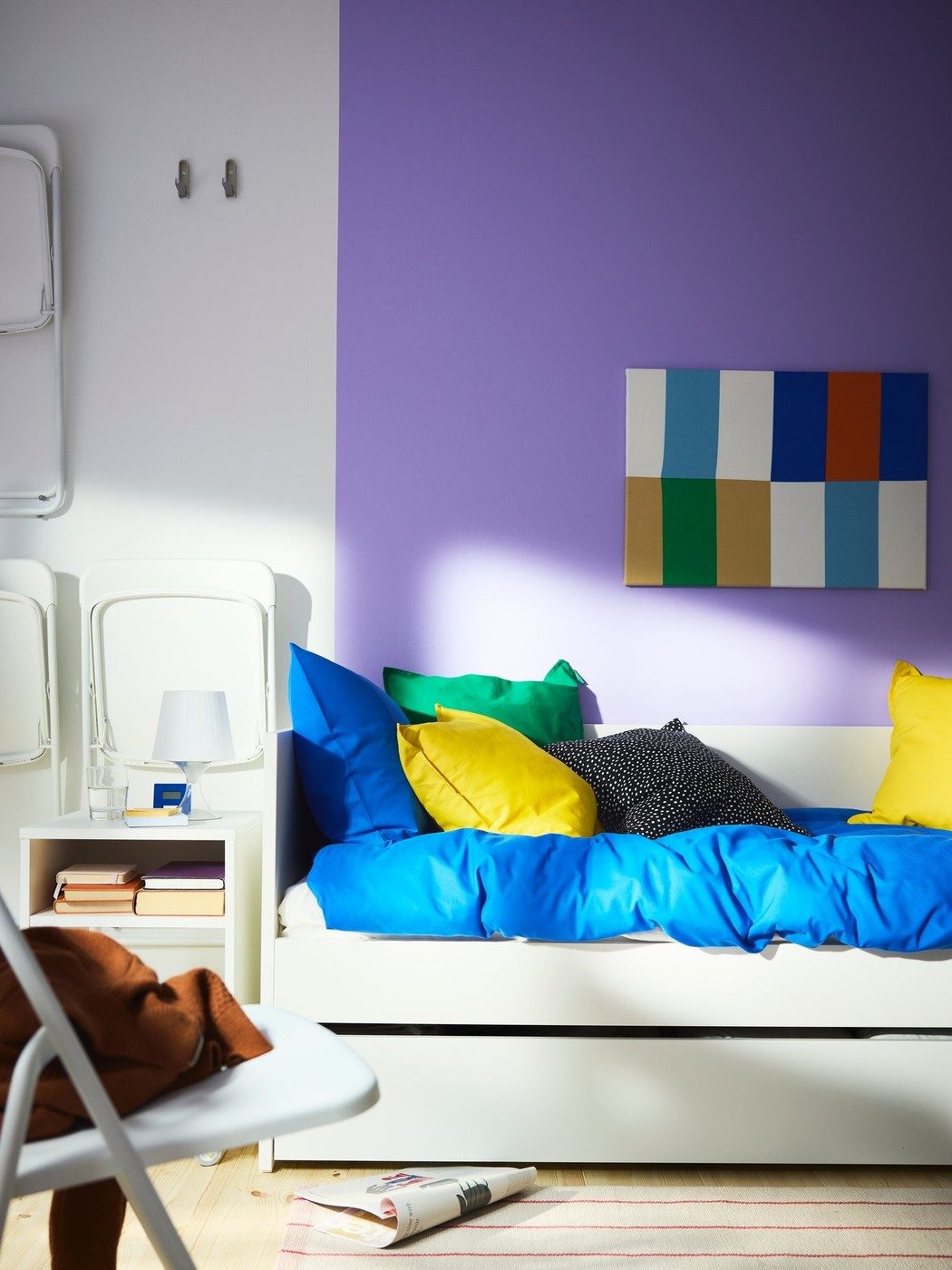
The teenage bedroom in the source functions as a place to study, relax, and sleep. Flexible storage at different heights accommodates changing possessions, while a daybed works as seating during the day and a sleep surface at night.
A trundle can provide another bed when the furniture is designed for that purpose. Plan the floor space needed to extend it and a nearby place for bedding. A room that converts comfortably needs usable clearance as well as furniture with several advertised functions.
Plan the conversion before choosing the daybed
The featured VIHALS daybed includes a pull-out trundle for a guest. Measure the extended position and preserve a usable route around both sleeping surfaces. Check the required mattresses and the product’s assembly instructions rather than treating any space beneath a bed as a second berth. The source stores spare bedding in a DIMPA bag; choose a clean, dry location and suitable cover for the actual bedding.
Make the wardrobe serve a changing collection
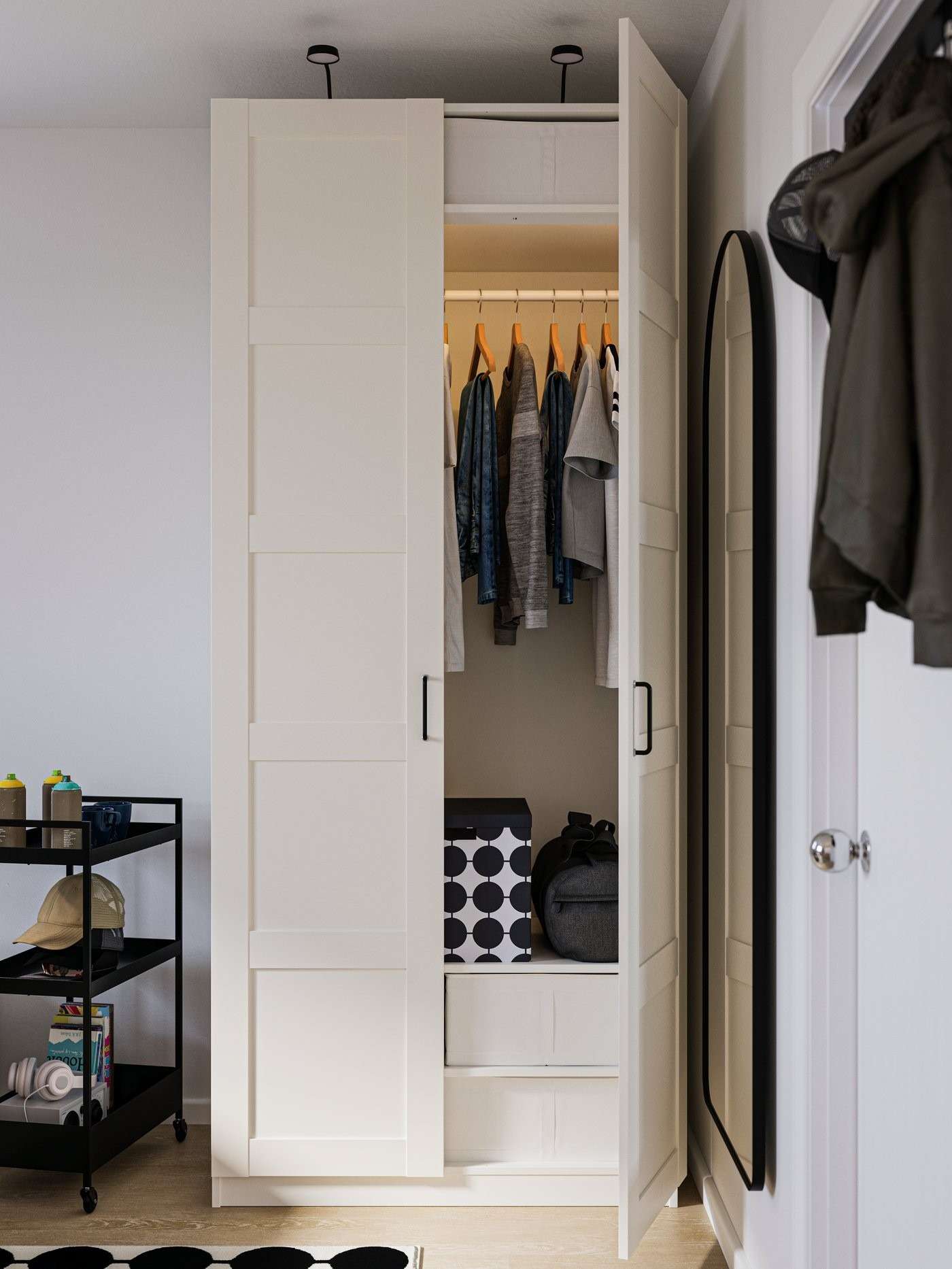
PAX storage with KOMPLEMENT interior fittings provides a framework for separating hanging clothes, folded pieces, and smaller belongings. Check the current regional system dimensions and compatibility before planning. A mix of low and high storage can keep everyday items convenient while leaving less frequently needed contents elsewhere. Follow securing requirements and do not assume all frame generations assemble or move in the same way.
Keep interests visible without covering every working surface
The IKEA room displays records, pictures, and objects while smaller containers handle miscellaneous pieces. Stackable or folding extra chairs support visiting friends when there is an appropriate storage position afterward. Removable picture hooks still require compatible surfaces and adherence to load and removal guidance. A flexible base allows decorative preferences to change without replacing the entire room.
Map the room in its daytime and nighttime states
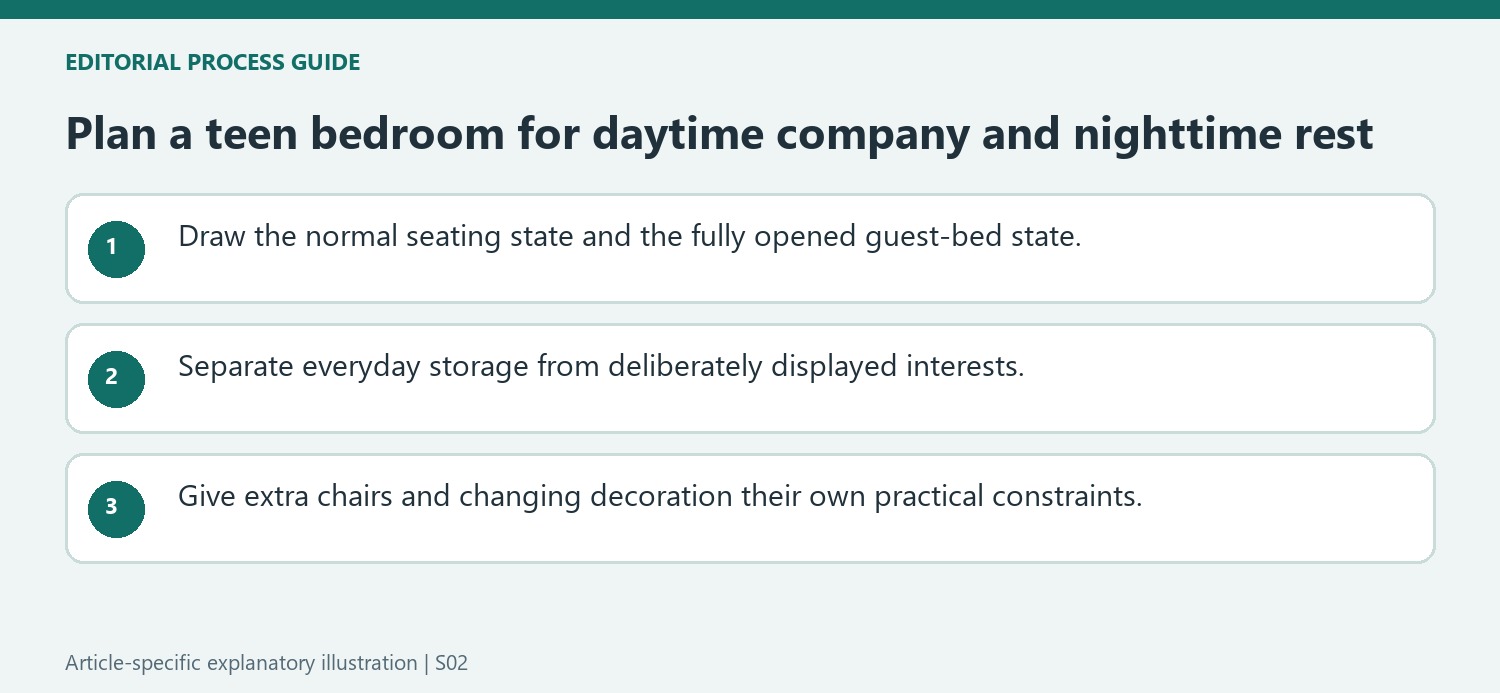
The source treats a teenager's bedroom as a place for company, projects, and rest. Its daybed and trundle example makes that change especially visible. Draw the ordinary seating arrangement and then the guest sleeping arrangement, including the bed pulled out and the route to the door. An advertised extra bed is useful only if that open state works in the room. Decide where spare bedding is kept and how the daytime cushions are handled at night. A storage bag can group those items, provided it suits their care requirements and remains accessible. The reference repeats some sections, but the underlying idea is a single practical comparison between uses, not evidence that every listed product suits every teen room.
Separate stored belongings from deliberate displays
The source connects flexible storage with space to show interests, from records to personal collections. List the objects that need an everyday destination and those the owner actively wants to display. A wardrobe and internal organizers can handle some categories, while wall boxes or shelving support others. Compare actual internal dimensions with the possessions before selecting a combination. Do not treat a planner's possible configuration as a guarantee that every component works in the available room. Leave an appropriate amount of clear surface for the desk's ordinary activities. This gives a changing interest room to develop without forcing each new object into a crowded display or requiring the larger furniture to be replaced.
Check occasional seating and changeable decoration in context
Foldable or stackable extra chairs can support visitors, but need a storage position when not in use. Include that position in the normal layout rather than treating the chairs as disappearing objects. The source also suggests adhesive picture hooks for frequently changing wall art. Check the actual hook's surface compatibility, permitted load, installation, and removal instructions; a broad no-marks description does not establish the outcome on every wall. A simple furniture background can make bedding and small accents easier to change as tastes evolve. Keep the teen involved in selecting the practical priorities as well as the decorative details. The room's flexibility depends on an understandable transition between uses and storage that fits current belongings, rather than a promise that one arrangement will meet every future interest.
References
- Teenage bedroom ideas. ikea.com.
Convertible seating and flexible storage can accommodate friends within a private room.


Leave a Comment