
Test a Sofa and Two Chairs as a Conversation Group
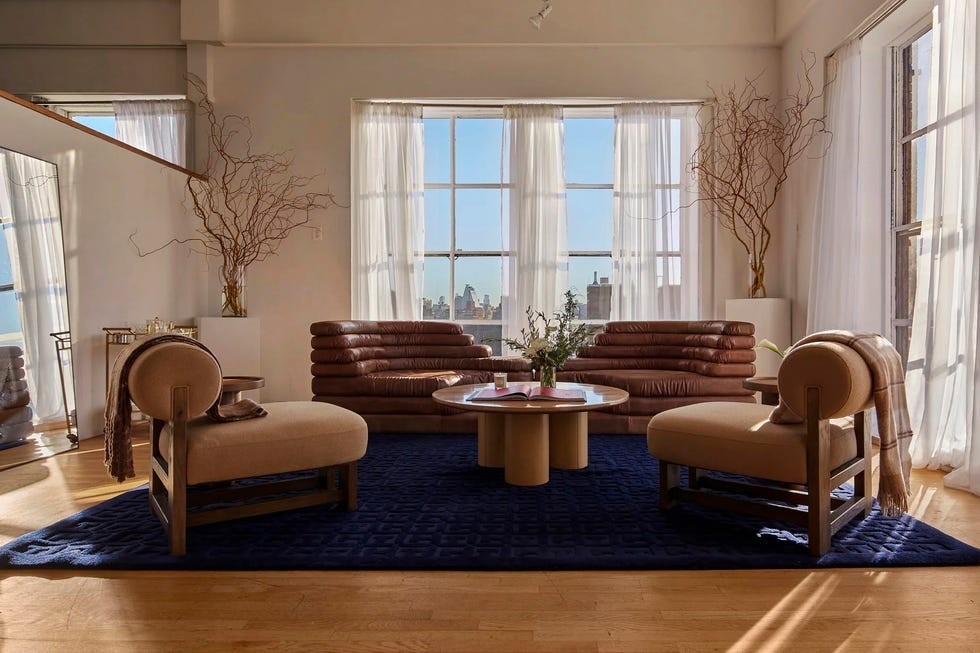
The source describes a living-room arrangement built around one sofa and two chairs. The chairs can sit side by side, angled toward the sofa, creating a conversational group without requiring another large sofa. Their separate footprints allow some adjustment.
Treat the arrangement as a starting point rather than a rule for every room. Measure clear routes, the coffee table position, and space for getting in and out of each seat. Smaller rooms may need a different number or scale of pieces.
Set the angle and spacing through a real-room test
The suggested arrangement places two chairs beside one another, angled inward toward the sofa. Brad Thornton describes the effect as conversational and intentional. Try the chairs with the coffee table and ordinary walking routes before settling the position. Each person should be able to enter and leave the seat without moving another occupied chair. The ratio does not supply a universal clearance measurement.
Let the number of users and room shape change the formula
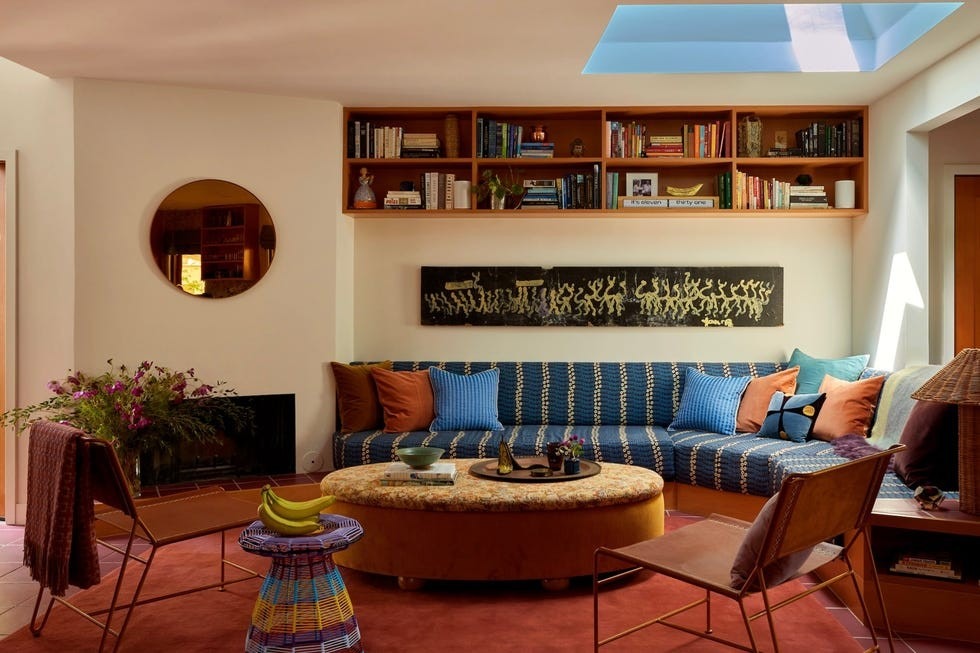
Zeb Knudsen and Jazmyne Crunk point out that symmetrical arrangements and even numbers of pieces can also work. A larger room may support additional seating groups, while a compact one may need fewer pieces. The article’s formula is a design starting point, not a reason to purchase two chairs where one would serve the household better.
Coordinate the chairs without insisting on a matching set
Tamara Feldman notes that chairs need not be identical. Look for a relationship in scale, material, or color while allowing contrast elsewhere through artwork or textiles. Avoid choosing by appearance alone: compare seat comfort, arm height, and footprint. A successful group supports conversation and practical movement rather than merely satisfying a furniture count.
Use the three-piece group as a layout to test
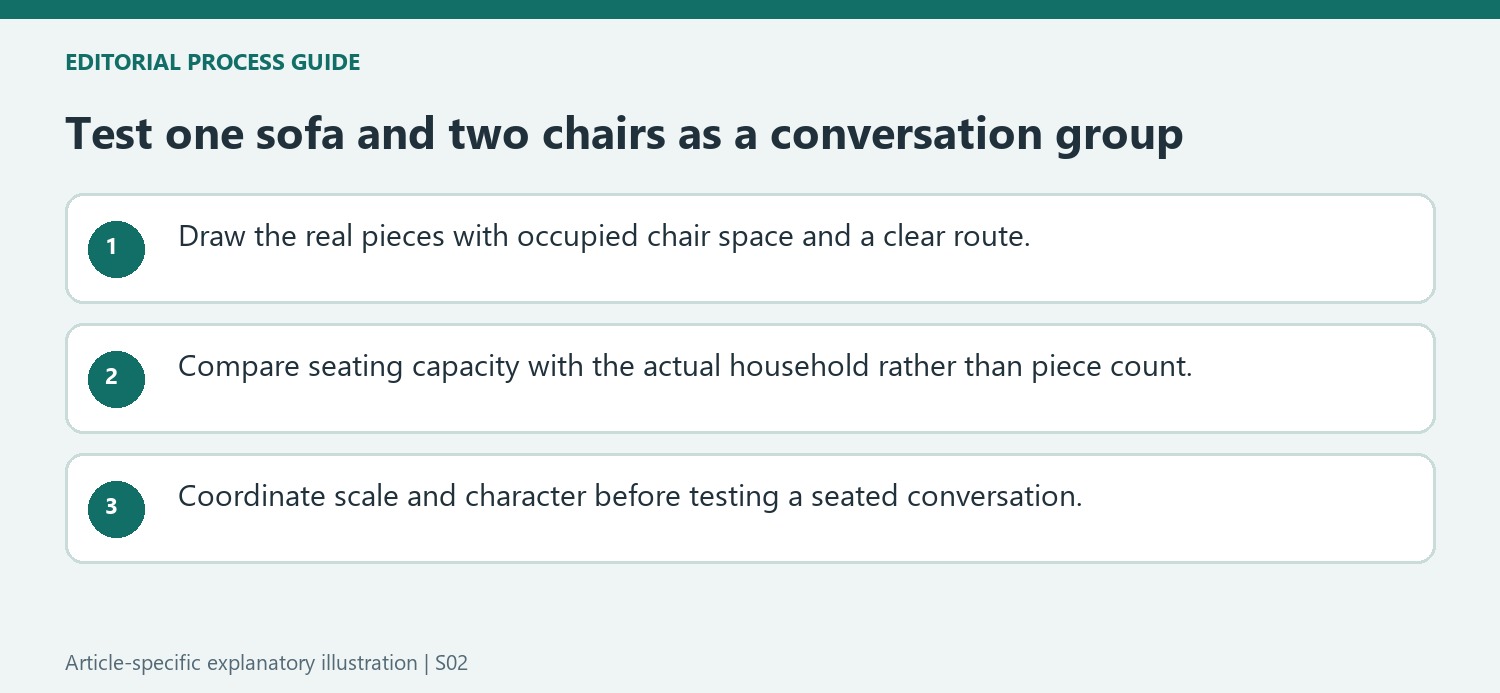
The source proposes placing two chairs near one another opposite a sofa, angled slightly inward. Compare that arrangement with the actual doorway, windows, and other fixed features rather than treating the ratio as a guarantee. Draw the furniture at its real dimensions, then include the occupied chairs and the route around them. Brad Thornton emphasizes both visual connection and circulation; the two need to work together. A pair that looks balanced on a plan can still crowd the approach if its arms or reclined positions are overlooked. Start with the pieces already available and test their relationship before buying a new matching pair solely to complete the formula. For example, compare entry to the group while both chairs are occupied and someone crosses toward the window. That test can reveal a circulation conflict hidden by a symmetrical view from the doorway.
Distinguish furniture count from the people being seated
The two-to-one description counts furniture pieces, not an exact number of people. Sofa width and chair size vary, so compare the group with the household and visitors it must accommodate. Zeb Knudsen and Jazmyne Crunk note that more symmetrical, even-numbered arrangements can also work. Their comments make the source's formula a useful starting option rather than a prohibition on opposing sofas or another layout. In a larger room, Amy Vroom suggests extending the principle through additional groups. Test whether each group still supports a clear activity and convenient route instead of multiplying seats until the space is full. More furniture is not automatically more sociable.
Coordinate the chairs without requiring an identical set
Tamara Feldman's discussion separates matching chairs from the need for variation elsewhere. Compare the chairs' scale, seat heights, and visual weight beside the actual sofa. They can relate through a material or outline without being identical, provided both remain comfortable for their intended users. Contrast can also come from artwork, a cushion, or another selected element, but those details cannot correct an obstructed route. Try a conversation from the occupied seats and compare access to useful surfaces. Then review how the group relates to a screen or fireplace if either matters in the room. A successful arrangement feels coherent in use because the seats connect and the movement remains practical, rather than because a numerical guideline has been followed precisely.
References
- Designers Say the “2-to-1 Rule” Is the Secret to a Perfect Living Room Seating Arrangement. House Beautiful; Jessica Cherner.
The seating guideline offers a starting point for balancing conversation and circulation.


Leave a Comment