
Arrange a Family Room around Activities That Can Move
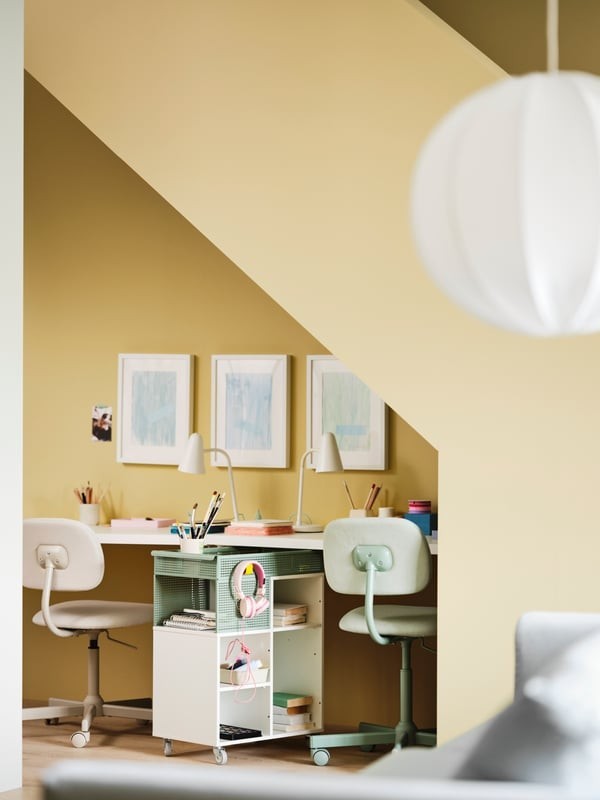
The source creates a multipurpose family room with a movable desk, a cart for school supplies, and play equipment that folds away. Open storage suits frequently used belongings, while boxes and closed cabinets contain things that need less immediate access.
A chaise placed back-to-back with the sofa establishes a quieter area without constructing a wall. A craft corner can occupy space beneath stairs. Combine task, ambient, and general lighting so the layout supports different activities after daylight fades.
Give every moving piece a destination
The guide suggests a wheeled desk and cart for study materials, plus a play mat and tents that fold away. Measure both the active arrangement and the storage position after use. A cart needs an accessible parking place, and folded play equipment needs a location that will not block another activity. The room becomes flexible when the return process is as clear as the setup.
Use a quieter corner without claiming full privacy
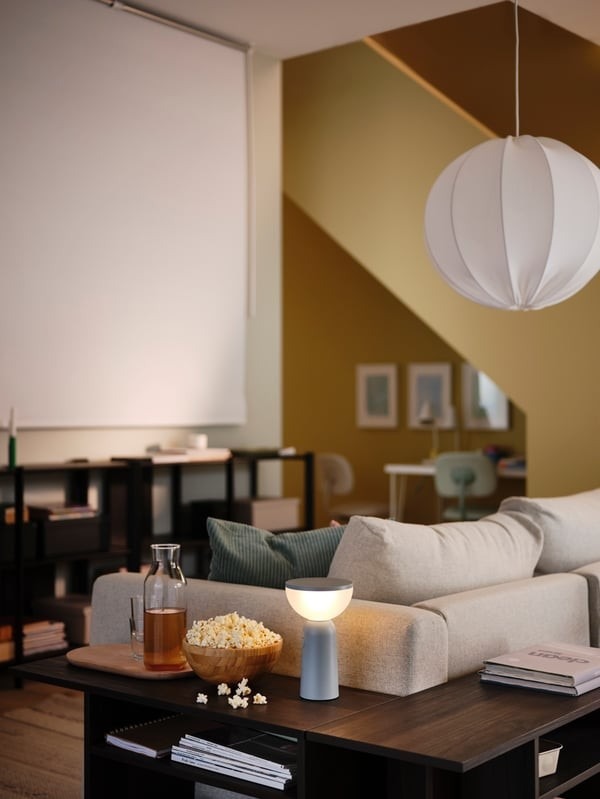
A chaise placed back-to-back with a sofa creates a different orientation and a smaller-feeling retreat. A child’s swivel chair offers another option when age and product guidance suit the user. These arrangements can provide a visual break, but they do not isolate sound like a separate room. Preserve routes around both sides of the seating group.
Match lighting and storage to the activity
Frequently used books and toys can sit in accessible open storage, while boxes and closed cabinets contain other categories. The source combines task, general, and mood lighting to support crafts and evening relaxation. An under-stair nook or projection surface requires suitable clearances and installation; do not assume any roller blind is compatible with every projector or window position. Choose the features that fit the family’s actual activities.
Choose flexibility around activities that really change position
The source combines a wheeled study setup, a foldable play area, and a larger relaxation group. List which activities need the floor at different times. If a homework cart moves, identify its route and the position where it is stored. If a tent folds away, choose a destination that is accessible when play ends. Furniture that moves easily in principle still needs a useful place to go. Compare the actual loaded components and operating instructions before adopting a mobile arrangement. The family does not need to reorganize the entire room for every change; a limited shift of the items directly involved can make the transition more realistic.
Compare a quiet nook with the room's simultaneous activity
A chaise placed back-to-back with a sofa and a hooded child's chair provide more individual positions in the source. These create different orientations within a shared space, rather than the privacy of an enclosed room. Consider what someone can see and hear from the proposed quiet seat while other activities continue. Include the side surface or light needed for reading, if that is its intended role. Under-stair study positions also need suitable headroom, working dimensions, and routes. The photographed grouping supplies an example, not measurements for another staircase. A cozy corner remains useful when its user can reach it without crossing an active play setup.
Plan movie time beyond the projection surface
The reference uses a blackout roller blind as a place to project a film. Check the actual projector, throw distance, power route, and the selected surface's suitability before treating any blind as a ready cinema screen. Confirm normal blind operation and preserve required room access in the viewing arrangement. A cart can carry refreshments where its load and position are appropriate, but should not obstruct the seating route. The wider source recommends general, task, and mood lighting for different activities. Compare which sources remain useful during each state and where their controls are reached. A flexible family room works through a small number of clear changes that everyone can understand, supported by storage destinations that remain available when the activity ends. Test one change with the room in ordinary use, including objects that are normally left on the moving furniture.
References
Portable work and play equipment helps one room change roles.


Leave a Comment