
Choose Rental Updates Around How They Will Be Removed
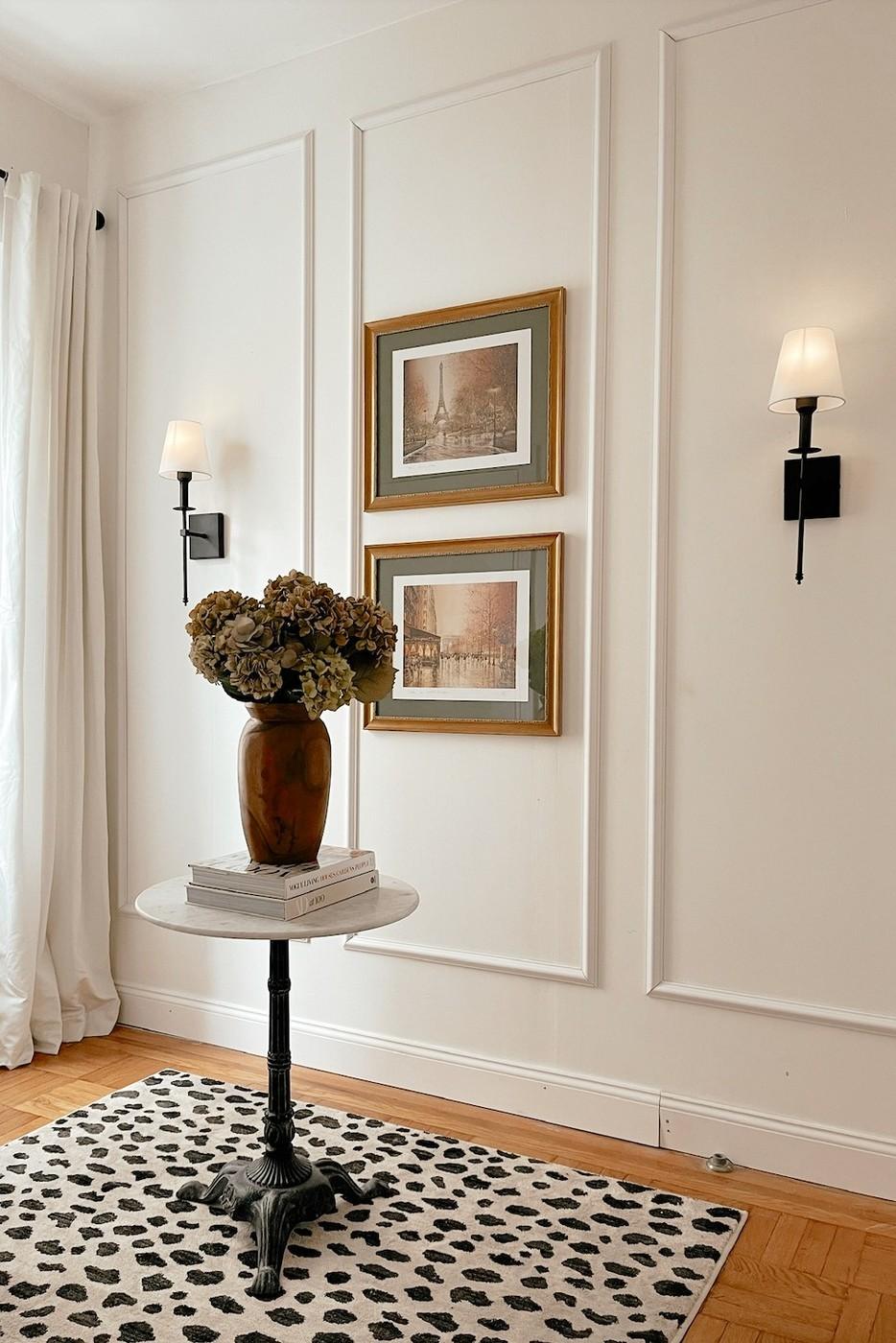
Good Housekeeping's renter-focused ideas include battery-powered puck lighting, temporary molding fixed with mounting tape, and peel-and-stick wallpaper. A freestanding faux stained-glass panel illustrates another approach: adding character through an object rather than permanently changing the window.
Each idea needs its own installation check. The same guide includes bookcases that may require wall fixings, so renter-friendly does not automatically mean no drilling. Review the lease and the product's support requirements, then choose changes that can be safely removed or taken to the next home.
Compare reversible objects with attached surface treatments
A portable decorative panel and a taped molding introduce different restoration tasks. Check stability and suitable support for a glass panel rather than simply leaning it where it could fall. For molding, confirm the tape’s intended load and surface compatibility. Neither the label renter-friendly nor a successful blogger example guarantees that the existing paint will remain intact.
Plan lighting around the actual product instructions
Battery-powered puck lights can avoid new hardwiring when the fitting is intended for that arrangement. Mount the complete assembly using suitable hardware and respect heat, clearance, and battery-access requirements. Changing a wired fixture is a different project and may need the landlord’s approval and an electrician. Keep original fixtures labeled if they will be restored at move-out.
Allow time for removal as well as installation
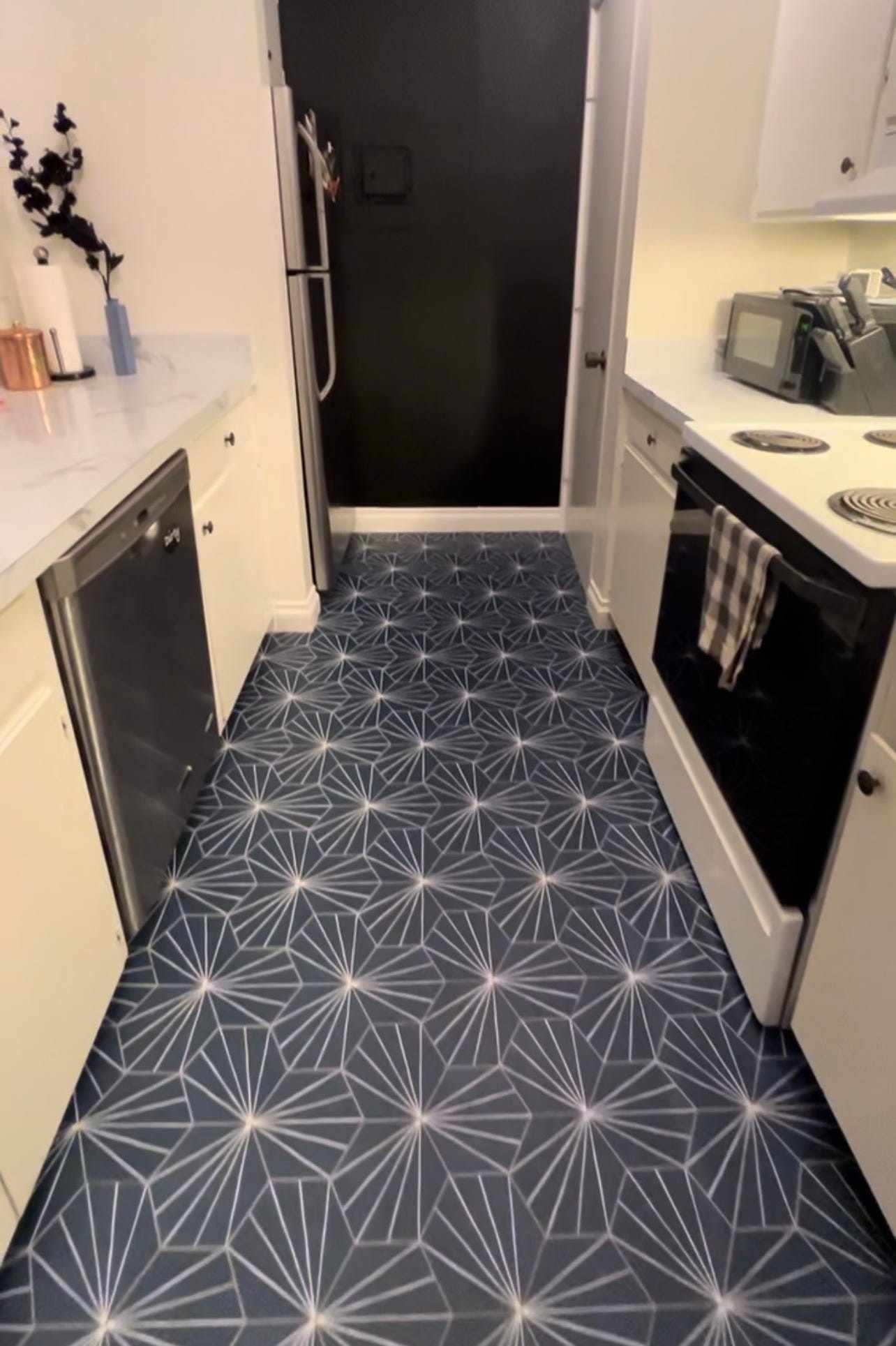
The article includes a tenant who found adhesive-floor removal much harder than expected and a countertop covering that needed substantial cleanup. Check current manufacturer guidance instead of assuming a homemade barrier layer works under every product. Surface suitability, moisture, and intended use matter for tile stickers too. Bookcases and window treatments may still need safe fixings, so agree on permitted changes and restoration before starting.
Sort possible changes by how they leave the rental
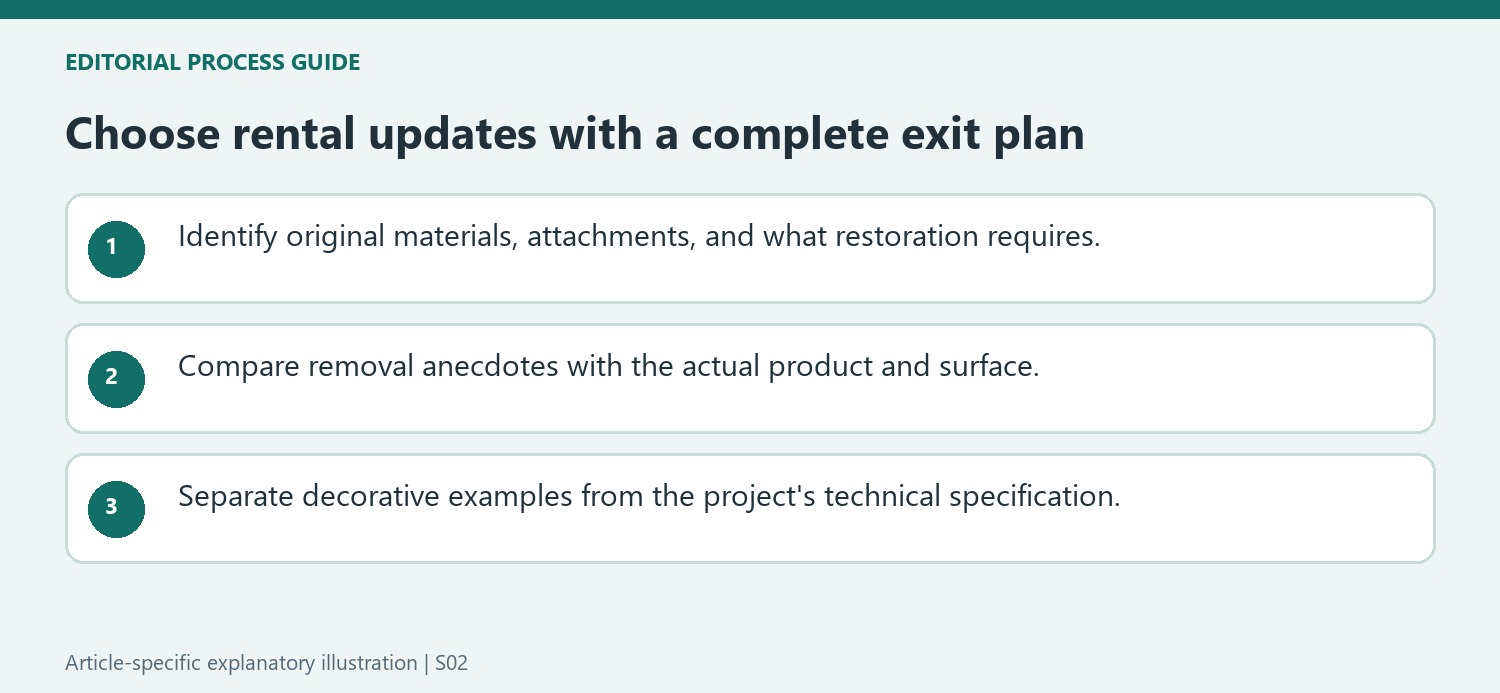
The Good Housekeeping roundup includes movable furnishings, adhesive finishes, fixture changes, and more involved decorative projects. They do not all have the same installation or removal demands. List the original material, the proposed attachment, and what must be restored for each idea. Keep original hardware or fixtures labeled where a permitted replacement is planned. Check tenancy requirements and actual product information before assuming a change is acceptable because it appears in a renter-focused article. A curtain or freestanding object may involve different questions from a wall covering or light fitting. Compare the whole project, including eventual transport and storage, rather than judging only the finished appearance.
Use the removal anecdotes to question broad promises
Shelby Turner describes adhesive floor tiles leaving residue and contact-paper removal requiring heat and manual work. Those details complicate the idea that temporary finishes always peel away easily. Check whether a proposed material is specified for the actual surface and conditions, including moisture or heat where relevant. The source's suggestion of an intervening paper or liner should not be treated as an approved flooring assembly without suitable guidance for the materials and location. A test area may reveal a problem early, but cannot guarantee the behavior of a whole installation. Budget time for removal and document the original condition before proceeding with a permitted update.
Distinguish decorative inspiration from technical instructions
The source includes improvised basket lights, a faux stained-glass panel, replacement fixtures, and a decorative fireplace. A brief description or attractive image does not supply the full support, electrical, heat, or material assessment for those projects. Brigette Muller's decision to hire a professional for an older building's lighting is a useful example of matching the work to its actual setting. Choose appropriately specified components and suitable installation help where needed. For a simpler update, compare retained furniture, textiles, or compatible replacement handles before tackling more demanding changes. The best rental improvement has a clear benefit now and a realistic exit plan later. Keep its instructions and original parts together so that removal does not depend on reconstructing what was changed months before. Label removed hardware by its original location so that similar-looking handles or fittings can be returned to the correct place.
References
- Designers Say These Renter-Friendly Upgrades Make the Biggest Difference. Good Housekeeping; Alyssa Gautieri.
Good Housekeeping's renter-focused ideas include battery-powered puck lighting, temporary molding fixed with mounting tape, and peel-and-stick wallpaper.


Leave a Comment