
Bring Color into a Rental Through Removable Furnishings
Treat the walls as a calm background
White walls can provide a useful foundation rather than a decorating problem. The source explores ways to add color without repainting the entire room, including substantial artwork and tapestries. A restrained background allows prints, texture, and furnishings to carry more of the personality. This can be particularly relevant in rented spaces where wall finishes are difficult to change, although individual ideas still need to be checked against the property's restrictions.
Choose the level of commitment carefully
The article distinguishes flexible decorative additions from changes that are more permanent. That distinction matters when trying to update a home without taking on another major project. Start by considering which objects can introduce the desired colors within the existing room. Keeping the walls simple does not require an entirely neutral scheme: the interest can come from the things displayed against them and the relationships among those pieces.
Begin with one substantial movable source of color
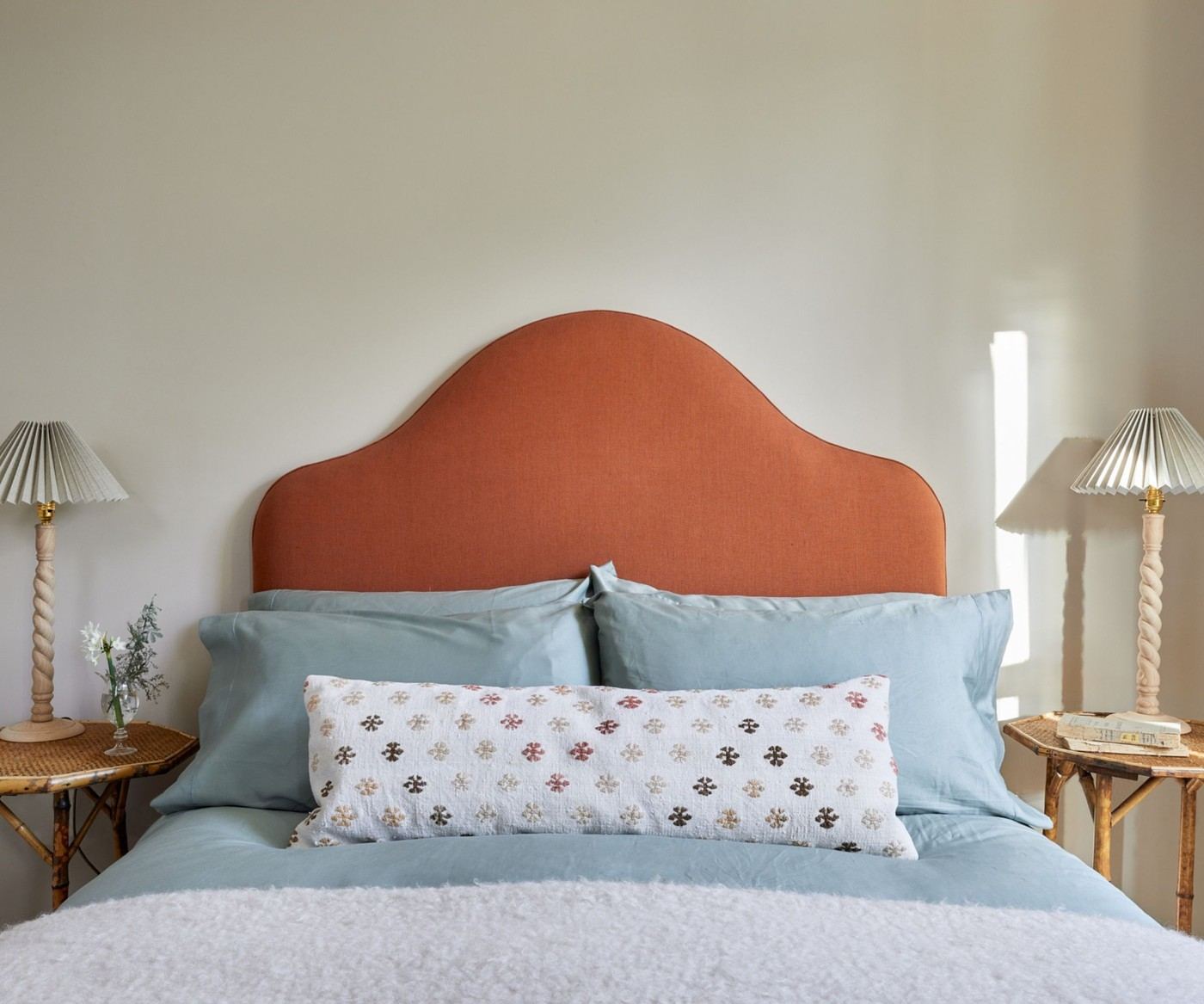
The writer considers oversized artwork and tapestries instead of building a large gallery of small frames. A bold upholstered headboard, chair, or rug can play a similar role. Compare the piece with the existing room before adding several competing accents. Choose an appropriate fixing for heavy artwork and check the headboard’s compatibility with the bed rather than selecting solely by fabric.
Use curtains to change a broad area of the room
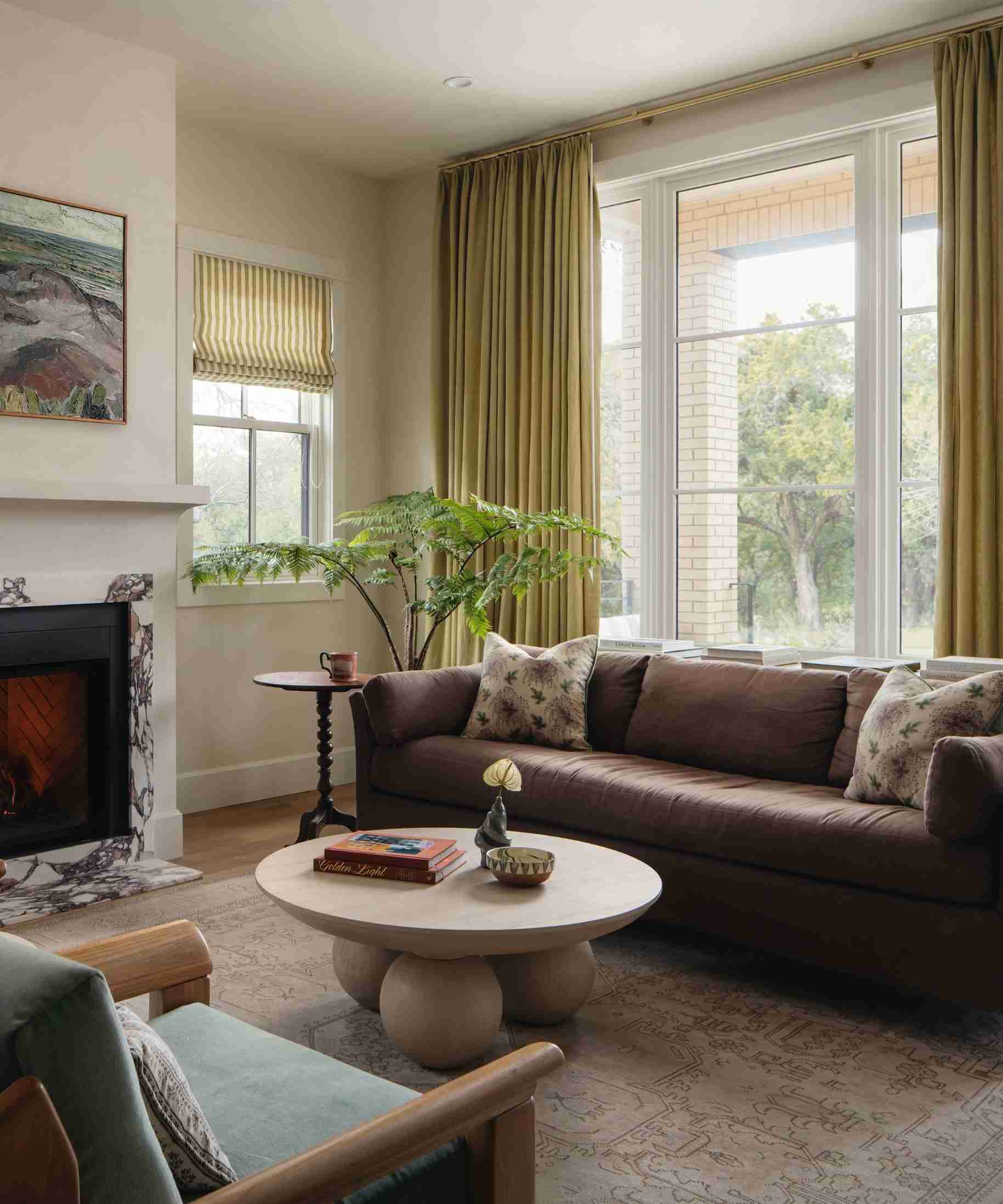
Long drapery can introduce color and texture while keeping the wall finish intact. Measure the available hanging height, stack-back space, and window operation. The rod and supports must suit the loaded fabric. Consider light control, privacy, and maintenance as well as the desired visual effect. A changeable textile can be a more practical rental choice than a fixed surface project.
Separate the article’s renovation ideas from portable options
The source also discusses painted cabinetry, woodwork, and installed tile. These can alter the property and are not equivalent to moving a rug or chair. Permission, preparation, and restoration need separate assessment. Use the article’s color relationships as inspiration while choosing an intervention appropriate to the lease and the amount of work you intend to undertake.
Distinguish portable color from changes to the building
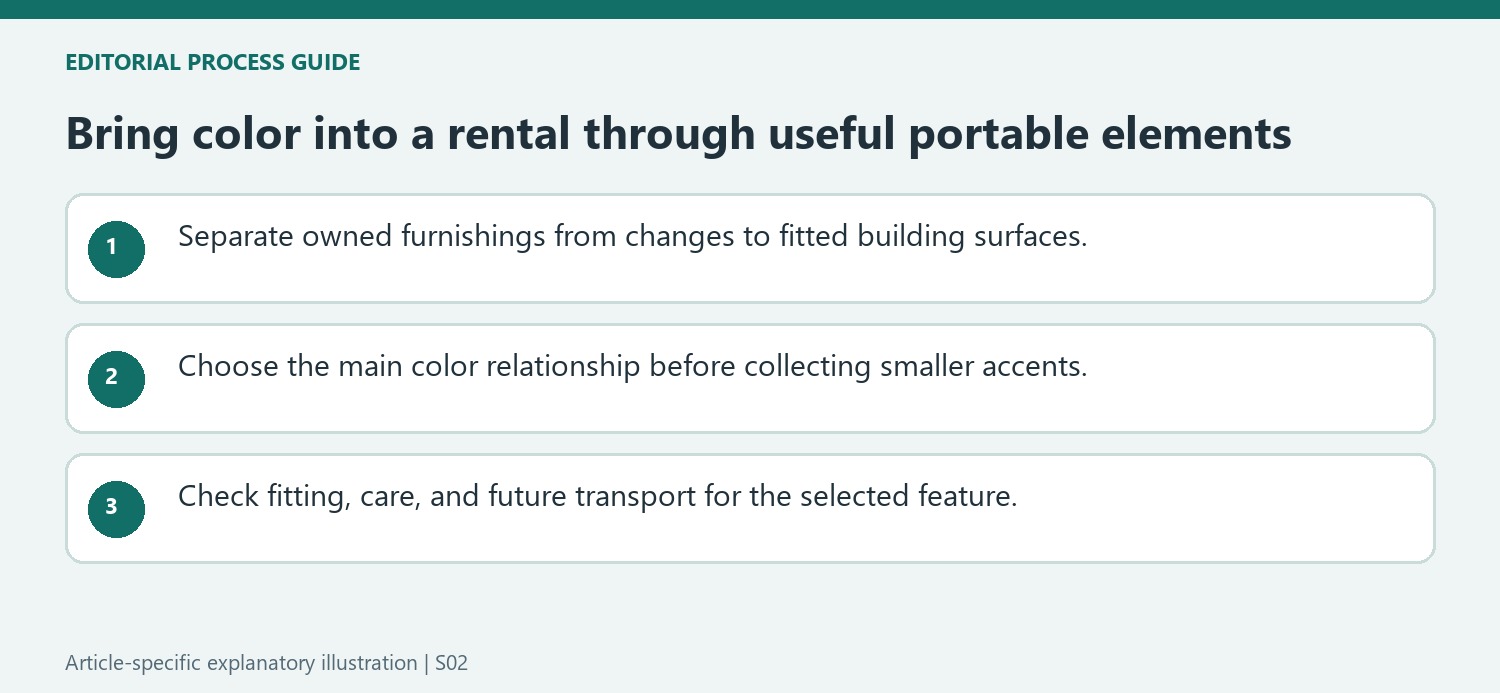
The source author describes a renovation and mixes furniture, art, curtains, painted cabinetry, and tile as alternatives to painted walls. Those options have different implications in a rental. An owned chair or rug can usually move with its owner, while changes to fitted cabinets or tiles involve the property itself and require an appropriate agreement and project assessment. Begin with the portable ideas if the goal is to add color while limiting the scope of alteration. A statement headboard still needs to suit the bed and its installation. The useful distinction is how the color is introduced and later removed, rather than whether a paintbrush appears anywhere in the project.
Choose one substantial color relationship before adding smaller accents
The source's bedroom example uses a distinctive headboard against light walls, while another room uses long colored drapes. Compare the chosen feature with the flooring, existing large furniture, and available light. A large textile may supply enough visual emphasis without many competing objects. Test a sample or an existing item in the room before committing to a full purchase. The article describes personal preferences rather than demonstrating that white walls or any accent color work identically everywhere. Decide whether the desired effect is a quieter background or a strong focal point. That decision makes smaller accessories easier to select and reduces the temptation to replace several unrelated pieces at once.
Include fitting and maintenance in the portable plan
Curtains need suitable support, useful operation, and appropriate light control, while a rug must work with door movement and ordinary routes. Large artwork also requires a permitted support method appropriate to its actual weight. These practical needs remain even when the item can be taken to another home. Review care requirements and realistic future use before choosing a strong-colored upholstered piece. The source suggests that furniture can be easier to change than repainting, but replacement cost and transport may still be substantial. Start with the piece that performs a useful existing role and supplies the desired color at the same time. A selective addition can personalize a neutral room without turning the absence of wall paint into a reason for unnecessary purchasing.
References
- Why I am not painting my walls – 6 alternative ways I'm adding color to my home instead. Homes and Gardens; Charlotte Olby.
White walls can provide a useful foundation rather than a decorating problem.


Leave a Comment