
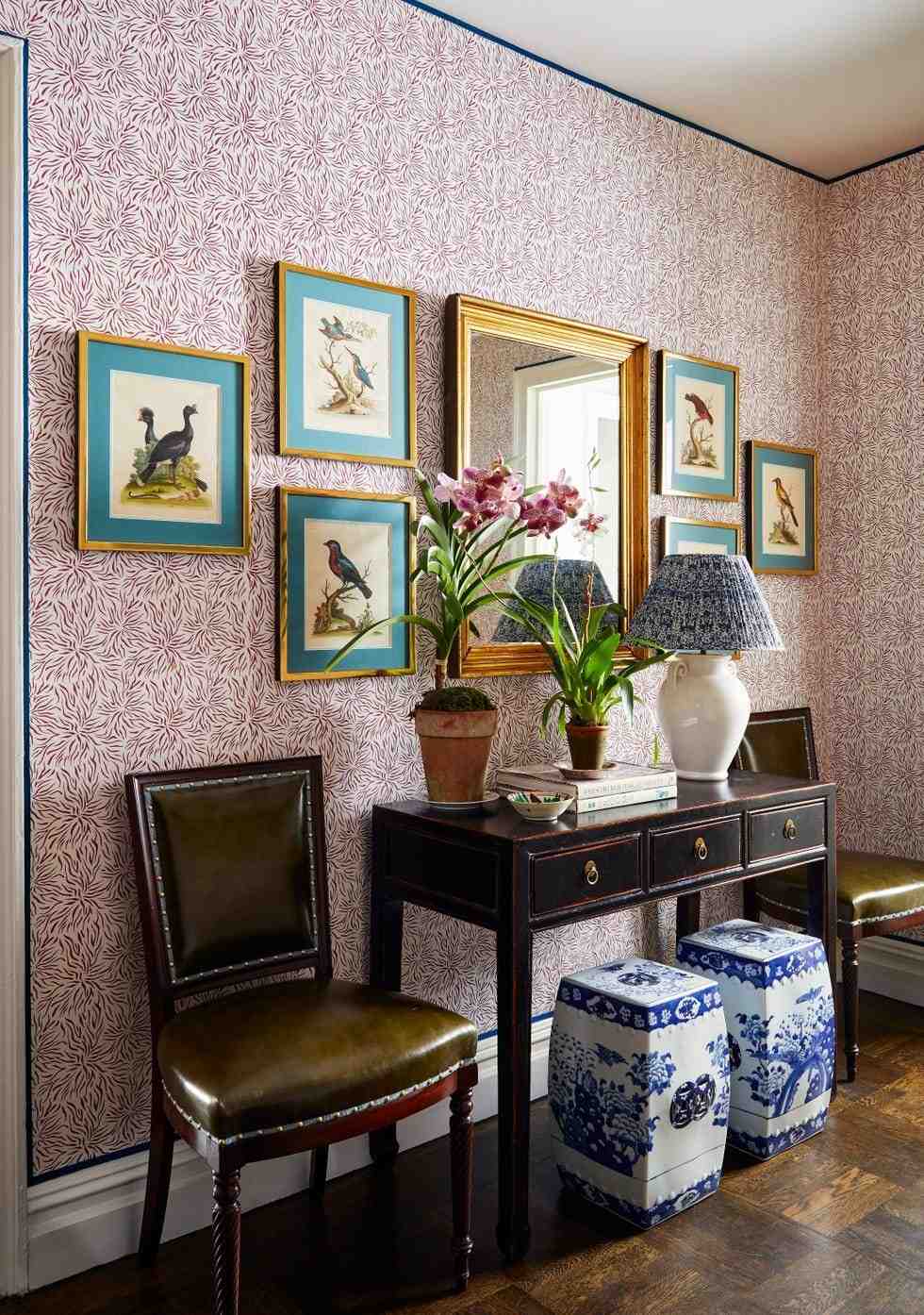
Invest in Rental Decor That Can Follow You Home
Lucy Doswell's New York rental combines personal decoration with pieces she could take to another home. House Beautiful describes framed bird prints as a movable investment in the foyer, while neutral furnishings and warm white walls keep the connected living and dining space airy.
The project also includes wallpaper, showing that a long-term rental can involve more committed decoration when appropriate. Distinguish those changes from the portable investments before borrowing the idea. Art and furniture can carry a personal style forward even when the next apartment has different architectural features.
Identify the portable investments in the actual project
Doswell’s framed bird prints can move with the family, unlike the foyer wallpaper and detailed ribbon border installed in this apartment. The project also uses floral armchairs against warm white walls and matching rugs to connect the living and dining areas. Those pieces introduce character while retaining flexibility for another home. Compare their dimensions with likely future layouts before treating any large furnishing as automatically portable.
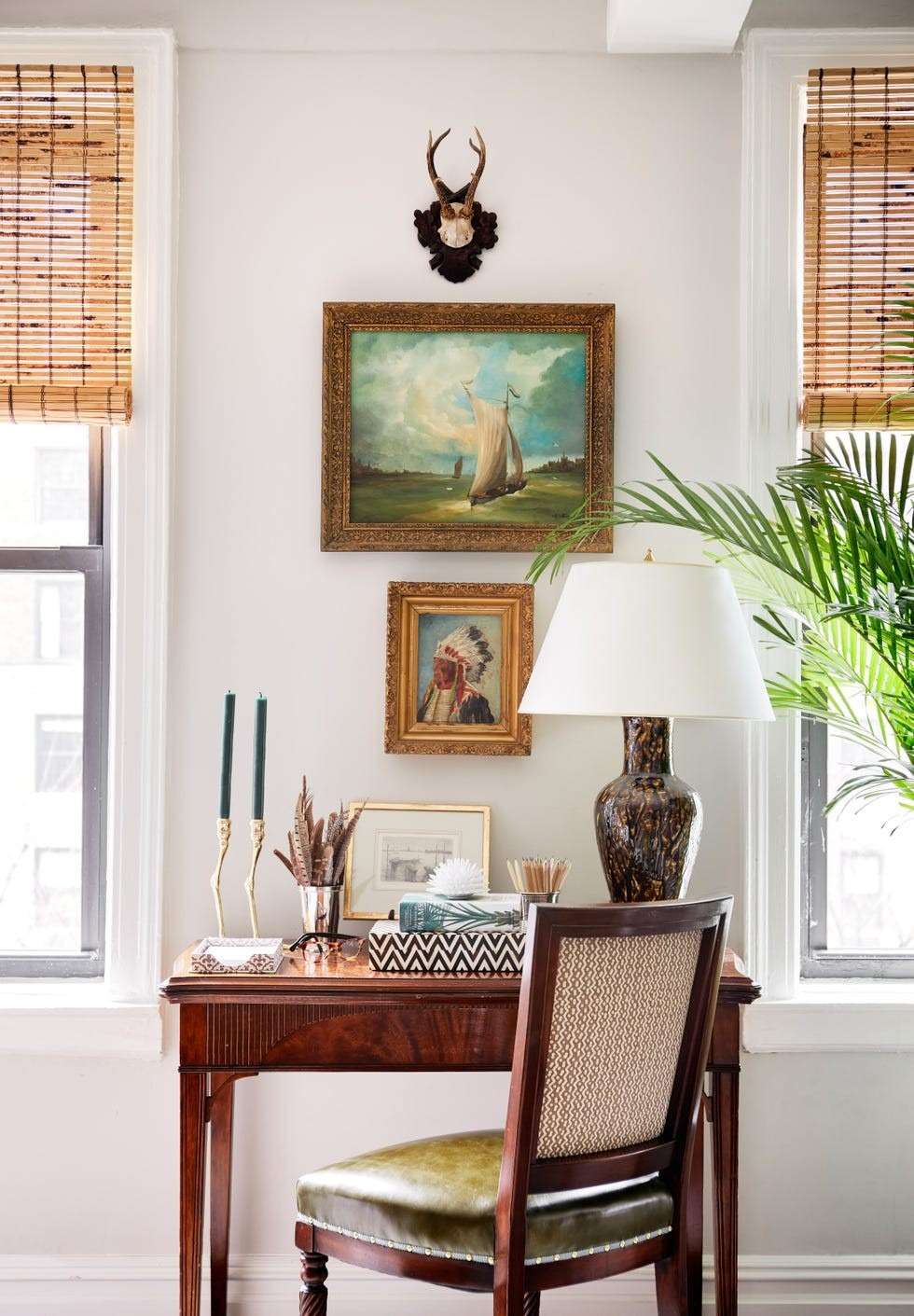
Notice how earlier furniture gains a new job
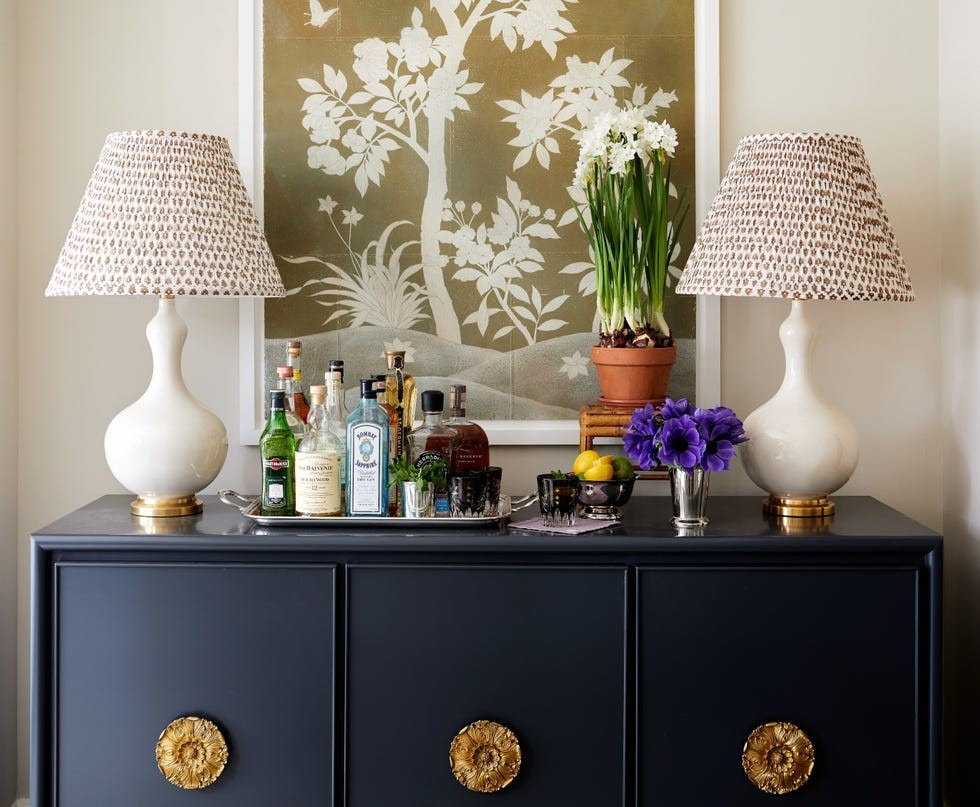
An antique folding dining table from a previous small apartment becomes a work-from-home desk. A former television console becomes a painted sideboard bar. These examples show the value of useful proportions and adaptable construction, rather than buying a custom built-in for every new room. A patterned headboard brings color to the primary bedroom without wallpapering every wall.
Keep the rental commitment explicit
The family’s longer-term plans help explain the more involved decoration. That does not establish permission for similar changes in another tenancy. Separate movable art, textiles, and furniture from work affecting walls or fittings, then agree on restoration where necessary. The lesson is to build a personal collection that can adapt, while making deliberate decisions about property-specific work.
Separate the apartment's character from the family's portable investments
Lucy Doswell's rental already had a fireplace, detailed trim, and a previously opened living-dining area in the source account. Those building features form the setting rather than changes that every tenant can reproduce. Her framed bird prints, floral chairs, and other owned pieces offer a more transferable lesson. Identify the objects that make a meaningful visual contribution and can plausibly work in another home. A portable investment still needs consideration of dimensions, care, and future transport. The family's expected stay also became longer than first imagined, so compare costs with a realistic range of possible tenancies instead of assuming either an immediate move or permanent occupation.
Keep adaptable pieces when their new role genuinely works
The antique folding table in the source had served an earlier small apartment and later became a work-from-home desk. A former television console was repurposed as a sideboard bar. These are examples of testing retained furniture against a new task, rather than replacing it because its original label no longer fits. Check working height, usable surface, stability, and the storage needed for the proposed role. An extendable dining table also needs room in its expanded state. The story supports the value of adaptable pieces without establishing that every antique table is an appropriate daily desk or every cabinet can safely hold a different load. Evaluate the actual object and the current room.
Use a coherent background to support distinctive textiles
The source connects warm light walls and neutral furniture with stronger floral upholstery, while related rugs link the living and dining areas. That approach can coordinate an open room without making every piece identical. Compare the largest textile features before adding smaller decorative layers. A patterned headboard can introduce personality without covering every wall, though its support and bed compatibility still matter. Doswell's use of wallpaper is part of this particular rental story, not permission to alter another property. Choose the mix of portable and agreed changes that suits the actual tenancy. The enduring lesson is to keep well-chosen belongings useful across rooms and homes while letting the building's existing character remain part of the design.
References
- Clever Ways to Make Your Rental Feel Like a Forever Home. House Beautiful.
Lucy Doswell's New York rental combines personal decoration with pieces she could take to another home.


Leave a Comment