
Learn the Constraints Behind an Improvised Adhesive Sconce
Separate the decorative fitting from the light source
The source recounts a rental bathroom project using repurposed sconces, wood, adhesive, and battery-powered puck lights. The aim was to create the appearance of wall lighting without drilling holes for the fittings. Because the illumination came from separate battery lights, this was not a conventional electrical installation. It is best understood as a particular home project rather than evidence that any heavy sconce can be safely attached to any bathroom wall with adhesive.
Assess the conditions before copying the idea
The author's fittings remained in place over time, but that personal outcome is not a universal performance guarantee. Bathroom moisture, the surface finish, the fitting's weight, and the adhesive's intended use all matter. A similar project needs compatible products and suitable mounting instructions. The useful design lesson is that decorative lighting effects can sometimes be achieved without rewiring, while the specific construction still requires careful judgment about the actual room.
Understand which layers support the decorative assembly
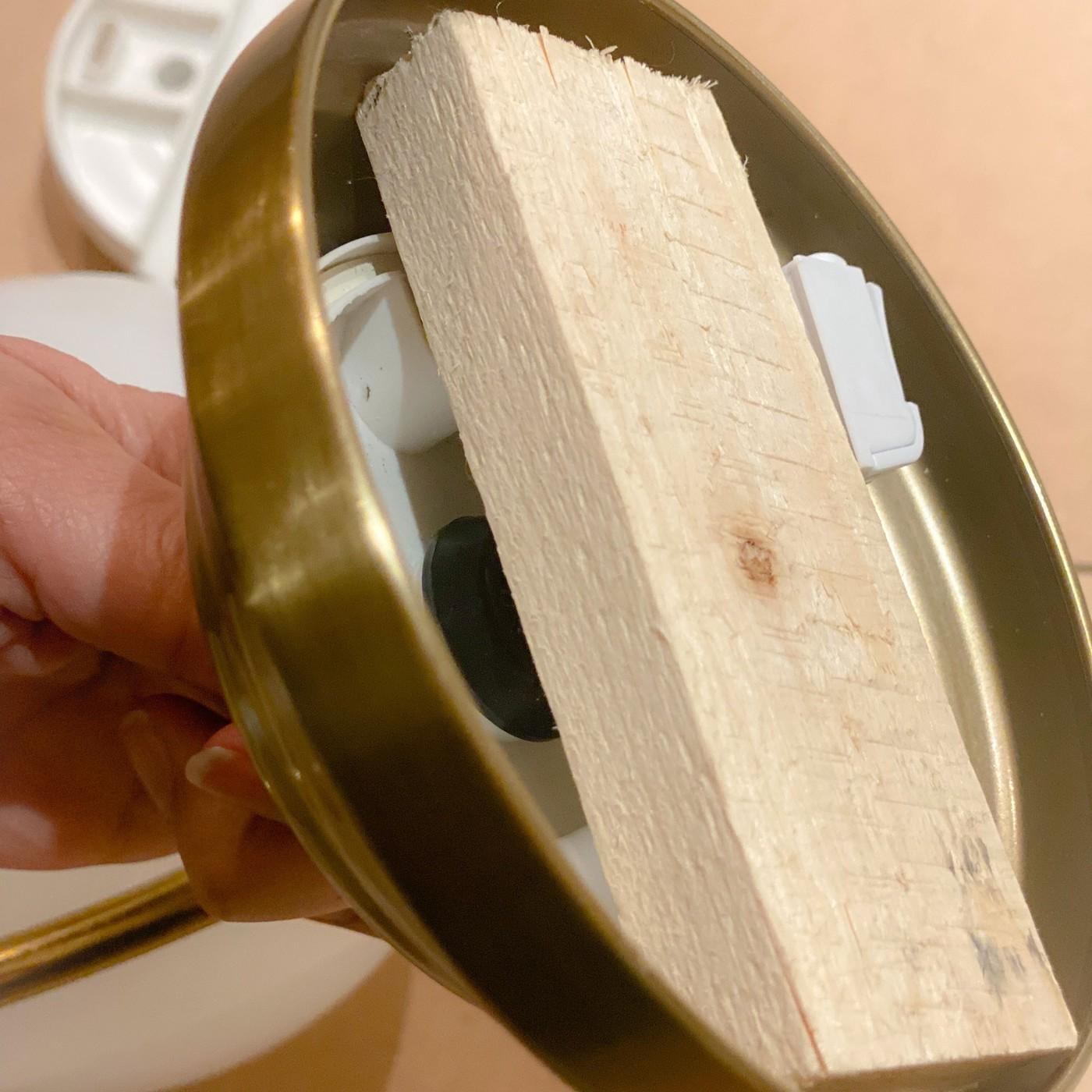
The author fastens a wooden block into the fitting and adheres it to removable vinyl tiles already covering the original wall. That is a specific sequence involving several materials. It does not show that the adhesive can be applied safely to every original rental surface or that combining different glues improves every bond. Assess the full load path and each product’s compatibility before considering a similar installation.
Keep battery access part of the design
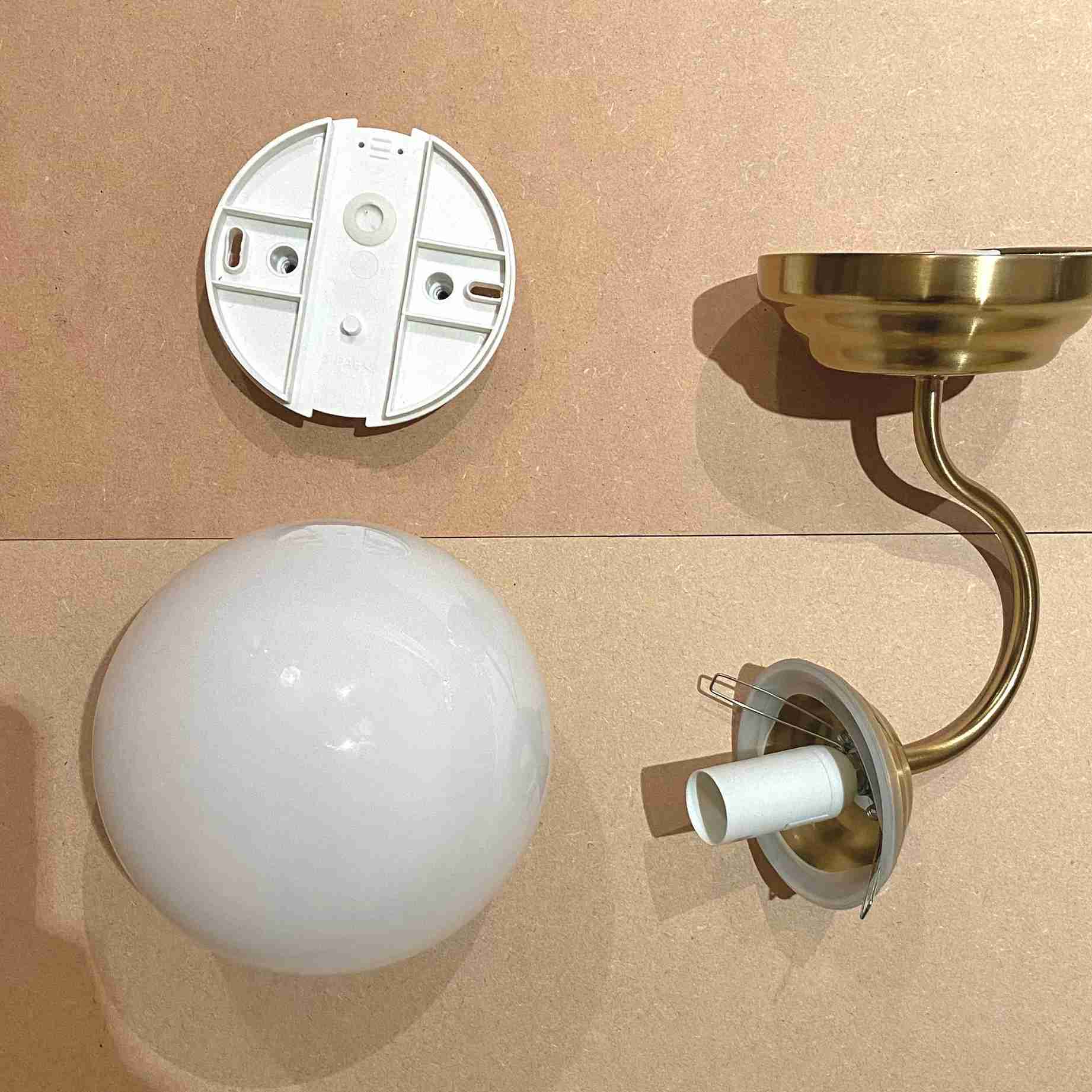
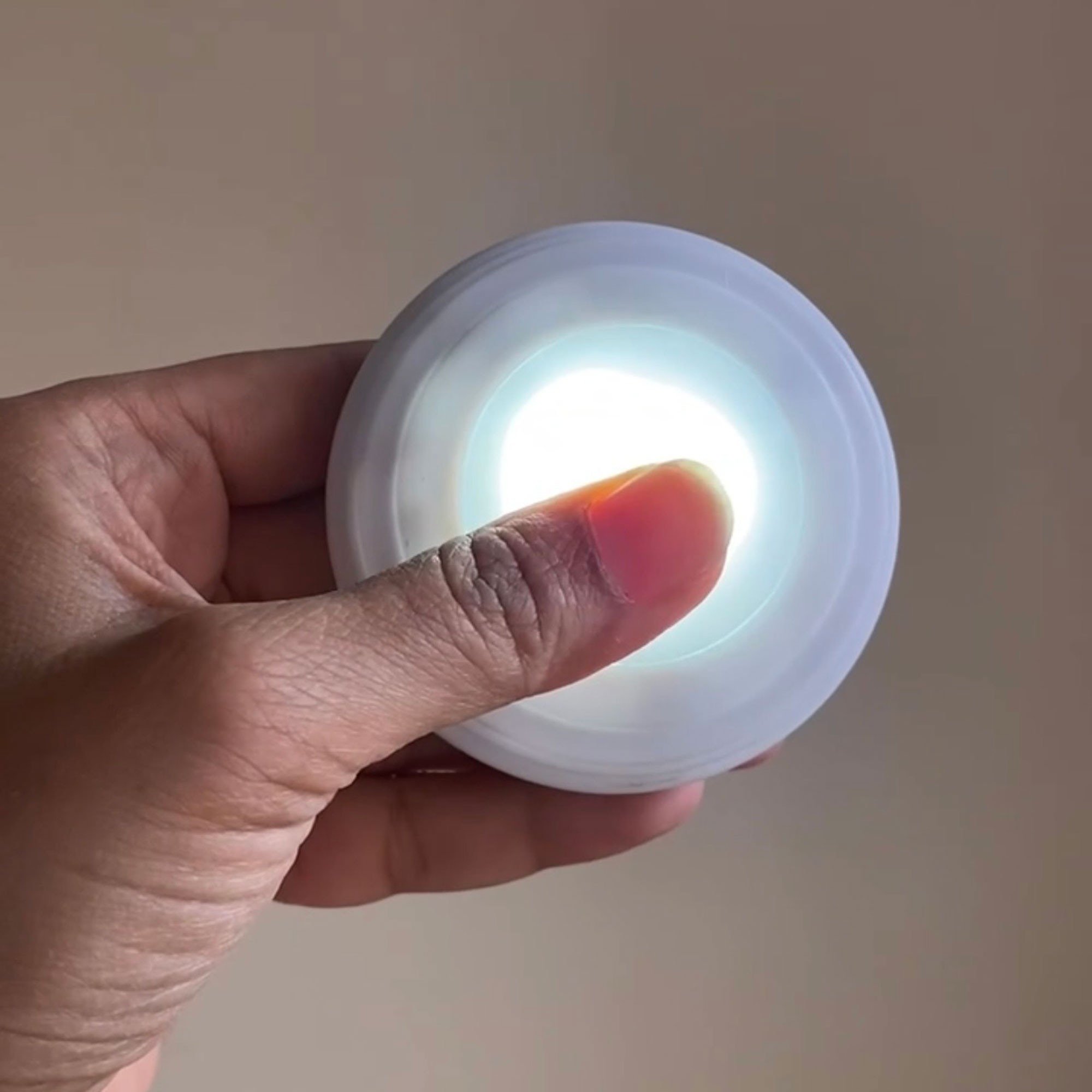
The light comes from battery-operated pucks placed inside the globes rather than a wired connection. The writer later finds removing the glass to service the lights inconvenient, so the fittings become more of an ambient feature. A purpose-designed cordless light with accessible batteries or charging may be a more practical alternative. Check bathroom suitability and the intended mounting system.
Use the long-term anecdote with its stated limits
The sconces remaining in place for five years is the writer’s report about this bathroom. The article itself asks readers to check weight limits, surfaces, and conditions, especially with glass fittings. It does not provide engineering verification for other assemblies. Borrow the idea of separating decorative appearance from hardwiring while choosing a suitable, specified solution for the actual location.
Read the account as an individual experiment with explicit limits
Ammarah Hasham reports that her improvised bathroom sconces remained in place for five years. That is a history of one assembly on one surface, not a general approval of adhesive mounting for glass light fittings. The source itself asks readers to check weight limits and suitable surfaces. Separate the observations from the specification that would be needed for another installation. The weight of the complete fitting, the substrate, adhesive compatibility, moisture exposure, and the way it can be inspected all affect the decision. Copying the visible result without those details can create a very different assembly. A purpose-made suitable cordless fixture may be a more straightforward option to compare.
Keep the lighting function separate from the decorative fitting
The account replaces an electrical lighting function with battery-operated puck lights inside the existing globes. It therefore does not demonstrate the original fitting operating in its original wired configuration. Hasham also notes that removing the glass made replacement fiddly, so the result became more of an ambient feature than a practical everyday light. Compare a proposed light by useful illumination and battery access as well as its appearance. Bathroom placement needs an actual product suitable for the relevant conditions and location. A wireless description alone does not establish that suitability. Treat the photograph as evidence of the author's arrangement rather than a full thermal, electrical, or mounting assessment.
Assess the final surface relationship and the eventual exit
Hasham states that adhesive was applied to removable vinyl tiles rather than directly to the original rental tiles. That extra layer becomes part of the support relationship; it cannot be ignored when judging the overall assembly. The story does not establish an identical removal outcome for another wall or coating. Check the complete product system and the tenancy's conditions before choosing any permanent or temporary adhesive. Preserve access for maintenance and review the mounting according to appropriate guidance. The most useful lesson from the account is its candid trade-off between a desired appearance and awkward servicing. Evaluate that trade-off before installation so that an attractive decorative light does not become a feature that is difficult to inspect, maintain, or remove.
References
- I was convinced my no-drill bathroom sconces would fall into the sink – five years later, they’re still up. Ideal Home; Ammarah Hasham.
The source recounts a rental bathroom project using repurposed sconces, wood, adhesive, and battery-powered puck lights.


Leave a Comment