

Choose a Convertible Sofa Around Everyday Changeovers
A convertible sofa can let a small home shift between sitting and sleeping without dedicating separate floor space to both functions. IKEA describes examples with built-in bedding storage, washable covers, and different ways of opening into a bed.
Compare the changeover as carefully as the daytime appearance. Some designs need clearance in front, while another example converts without expanding away from the wall. That distinction matters in a rental where the room shape is fixed. Select a piece that can work with the existing layout and future moves.
Compare the different opening mechanisms
The FRIHETEN example includes accessible storage for bedding and a conversion between sofa and sleeping use. SKONABACK is presented as changing function without expanding outward from the wall, while LINDAKRA combines several seating and storage roles. These are distinct models rather than interchangeable claims. Check the current regional specifications and test the conversion if possible.

Measure the occupied night layout
Mark the sleeping footprint along with the coffee table, lamps, storage doors, and route to the room’s exit. Decide where displaced cushions or occasional tables will go. A design with built-in bedding storage still needs the compartment to remain accessible during the normal routine. Confirm mattress, support, and intended-use information rather than selecting only by the number of advertised functions.
Plan care and future moves realistically
The source describes many covers as washable, but each model and fabric has its own instructions. Check which sections come off, how they dry, and what remains usable during cleaning. Compare delivery access and any disassembly requirements with the current home. A convertible sofa can concentrate two functions in one footprint, provided both sitting and sleeping remain convenient for the people using it.
Compare how often the sofa changes into a bed
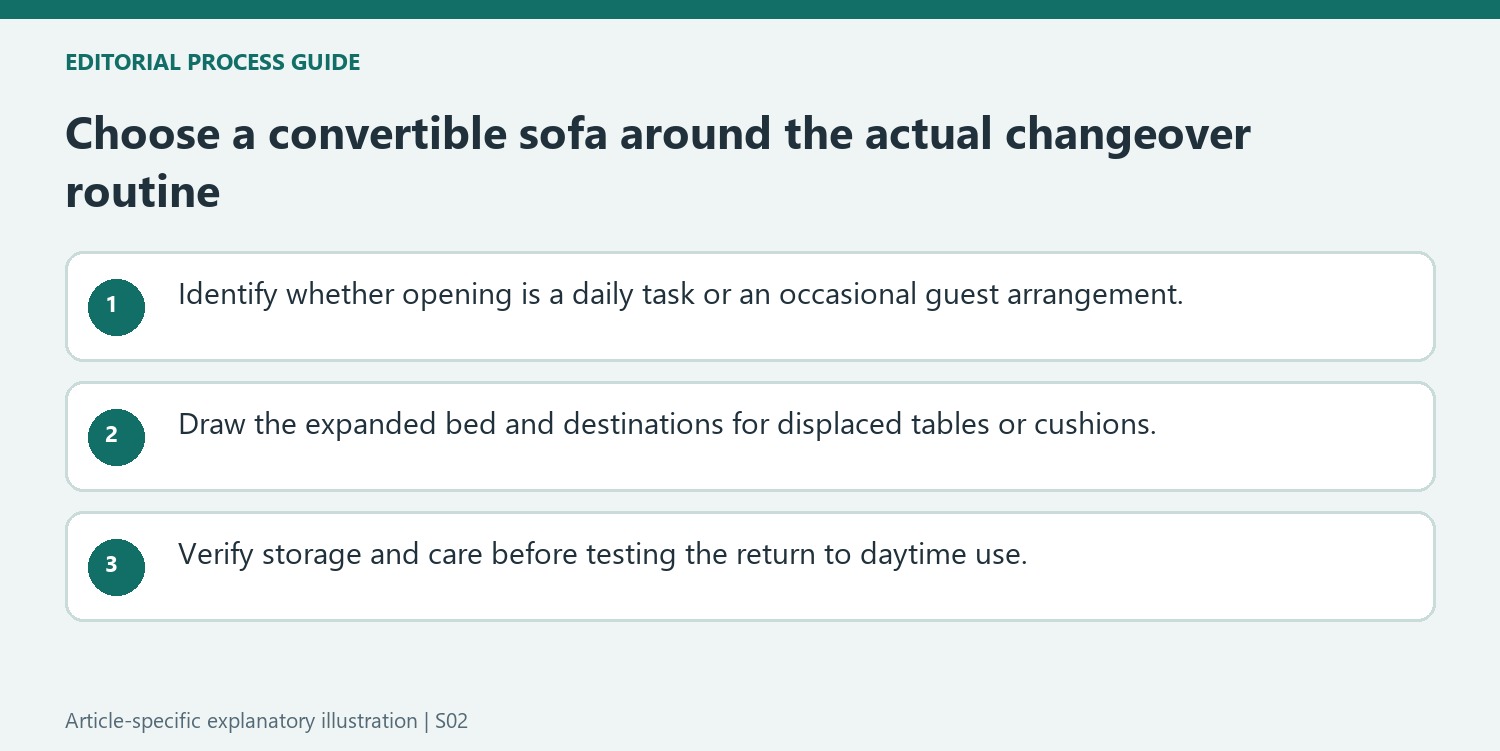
The source presents convertible sofas for both everyday room changes and occasional guests. Those routines deserve different priorities. List how often the bed opens, who handles the change, and where daytime objects go. A mechanism that is acceptable for rare visits may be inconvenient every evening. Compare actual sleeping dimensions and comfort information with the people using it rather than relying on a general flexibility claim. Include bedding storage in the plan and check whether retrieving it interferes with opening the bed. The named source models illustrate different approaches, but their current dimensions, configurations, and availability should be verified before a purchase.
Draw the whole room in the opened configuration
A sofa can fit comfortably while closed and still leave an impractical sleeping arrangement. Mark the expanded bed, any changed arm position, and the route to the door or bathroom. The source contrasts a corner sleeper with another design described as not extending outward from the wall. Verify the actual selected mechanism rather than transferring that description to every sofa-bed. A movable table needs a destination that remains accessible when the bed opens. If an ottoman or supporting section changes role, include it in both states. The useful comparison is the complete room with its normal belongings, not only the product's isolated demonstration on a clear showroom floor.
Check storage, care, and the return to daytime use
Built-in compartments can keep bedding close, provided their capacity and conditions suit the actual items. Do not assume every model's cover is removable or washable because the source describes easy-care options across much of a range. Follow the selected product's care label and instructions for operating, assembling, and maintaining it. A bed used regularly also needs a practical way to air or handle bedding according to its care needs. Test the reverse transition: remove the bedding, restore cushions, return the table, and reopen the ordinary route. A successful convertible arrangement reduces the amount of furniture the room needs while keeping that repeated sequence manageable. Its flexibility has value when both the daytime seat and nighttime bed genuinely work for the household. Compare the opening handle and the stored bedding from the position the user will normally occupy during that change.
References
A convertible sofa can let a small home shift between sitting and sleeping without dedicating separate floor space to both functions.


Leave a Comment