
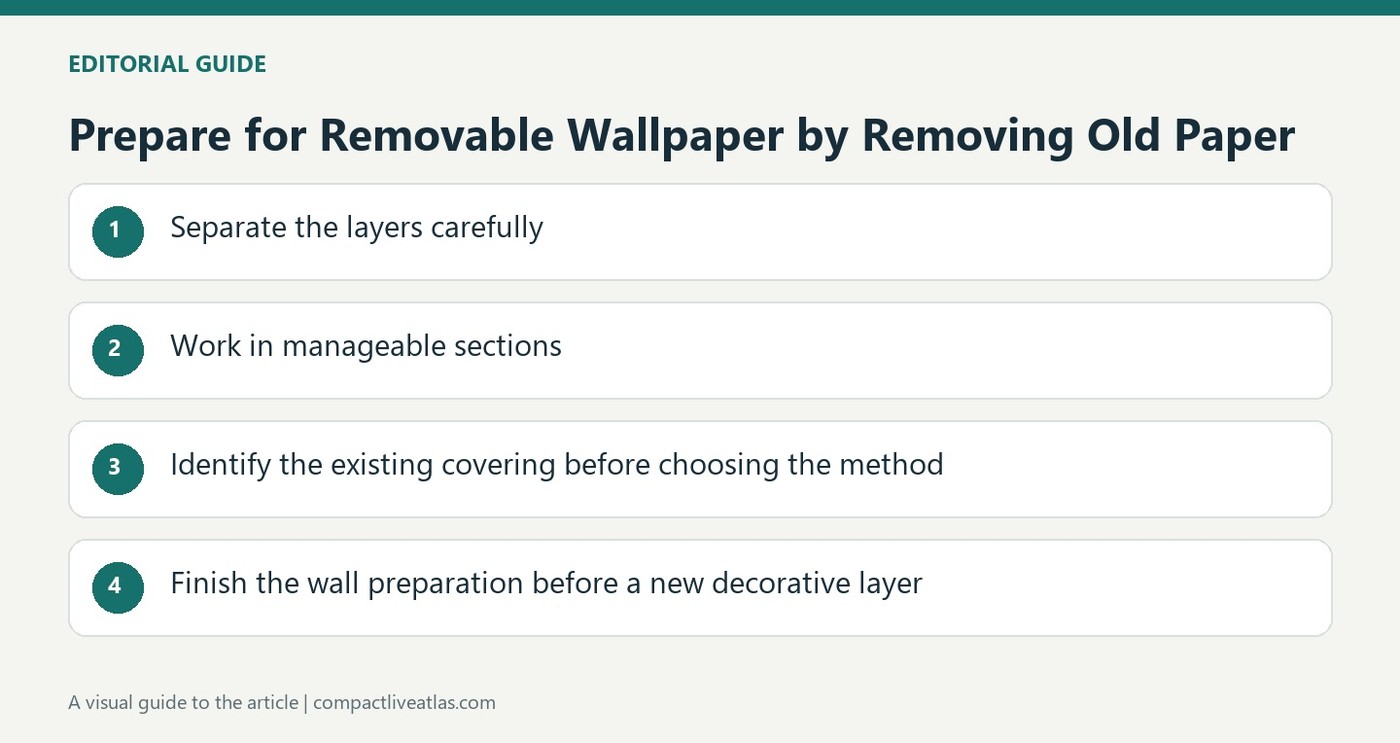
Prepare for Removable Wallpaper by Removing Old Paper
Separate the layers carefully
Preparing a wall for removable wallpaper sometimes begins with taking down an older pasted covering. Tempaper explains that traditional wallpaper has a decorative layer and an adhesive layer. Try lifting the decorative face first to expose the backing. If it will not separate, use a scoring tool lightly so water can reach the adhesive. Protect electrical outlets and turn off the power before working with water nearby.
Work in manageable sections
Moisten the paper with warm water, wait around ten to fifteen minutes, then lift a corner with a plastic putty knife held at a shallow angle. Peel slowly along the wall rather than pulling straight outward. Test a small area before tackling sections roughly two or three feet wide. Clean remaining adhesive with dish soap and warm water, rinse away residue, and let the surface dry completely. Repair damaged areas before applying a new covering or primer.
Identify the existing covering before choosing the method
This reference concerns traditional pasted wallpaper rather than simply peeling off a modern self-adhesive film. Its purpose is to reach and soften the old adhesive with controlled moisture. Work gently so a scoring wheel or scraper does not cut the wall facing beneath. If the surface begins to tear, pause and reassess rather than adding force.
Finish the wall preparation before a new decorative layer
The small test section helps reveal how readily the paper releases and what condition remains beneath it. Keep removed wet paper contained so it does not spread adhesive across the room. After residue is cleaned and the surface has dried, inspect for damage and use repair materials appropriate to the substrate. The next paint or wallpaper has its own primer and cure requirements. Do not cover damp patches, remaining paste, or loose wall facing in an attempt to shorten the project. Obtain permission and suitable help if the existing wall condition is uncertain.
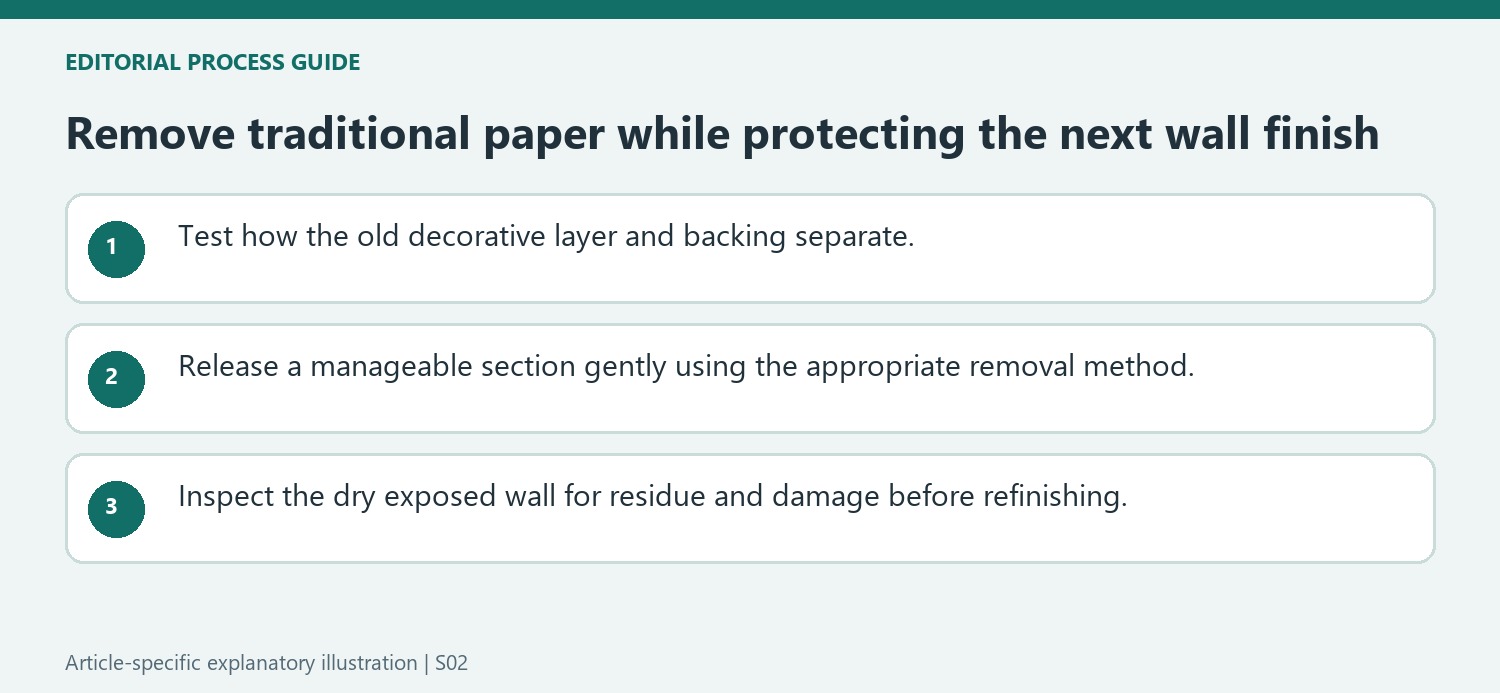
Identify the old covering before selecting a removal method
This Tempaper guide concerns traditional wallpaper removal in preparation for a new finish. Its wetting and adhesive-cleaning steps should not be transferred automatically to every removable self-adhesive product. Test a discreet section to learn whether the decorative face separates from a backing layer and how the underlying surface reacts. The wall may have different histories in different areas, so a result beside a door does not establish the condition behind furniture or near an older repair. Work in manageable sections, keeping the floor and surrounding finishes protected. Collect loose paper as the work proceeds so that the next area remains accessible.
Let the test section guide gentle progress
The source describes warm-water treatment, possible light scoring, and a plastic tool used without gouging the wall. Its example waiting interval is a starting point within that method, not proof that a particular wall is ready at an exact minute. Check whether the backing releases instead of compensating for resistance with more force. Scoring should reach the covering without cutting unnecessarily into the substrate. Stop and reassess if the wall face begins lifting with the paper. Avoid improvising mixtures of household chemicals from separate removal suggestions. The appropriate technique depends on the actual covering, adhesive, and substrate rather than on a promise that one solution dissolves everything.
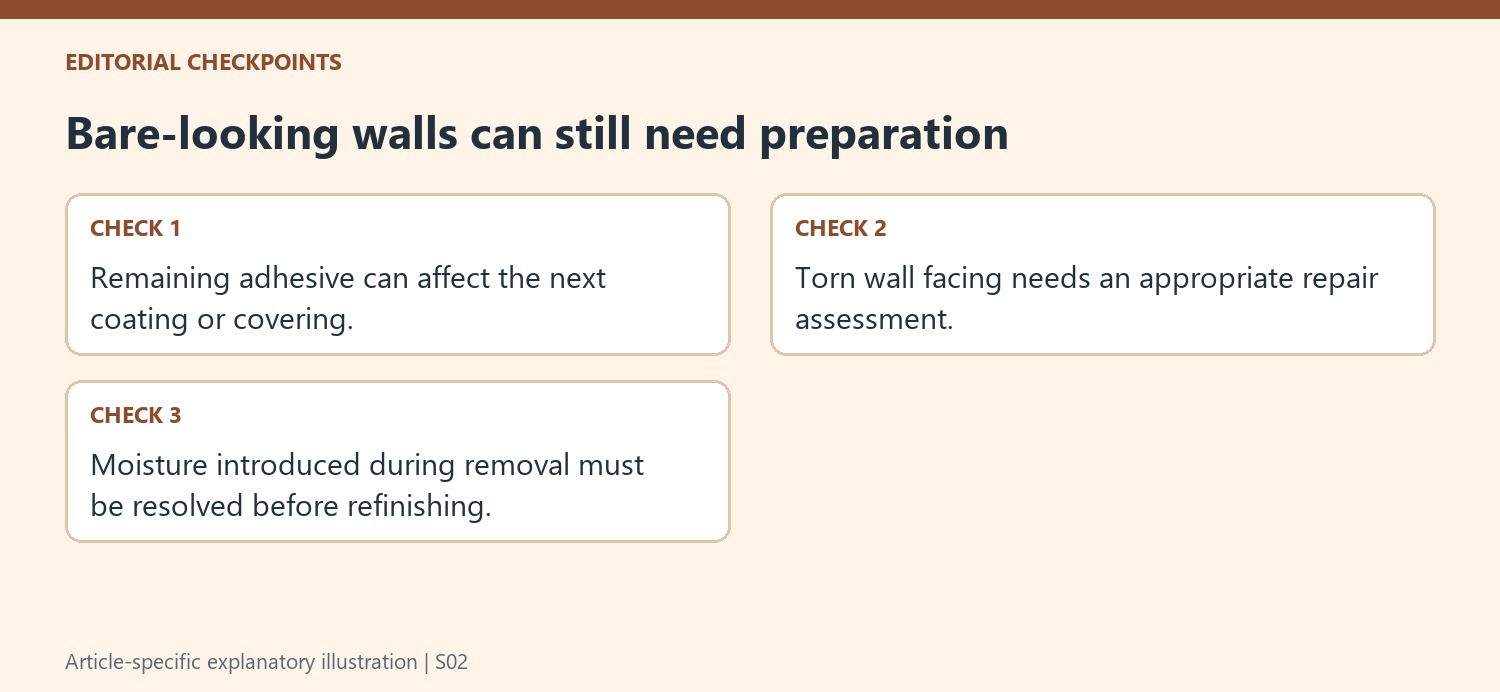
Judge the exposed wall as a new preparation task
A wall with no visible paper can still carry old adhesive, torn facing, chips, or damp patches. Inspect it after the cleaning and rinsing appropriate to the selected method, allowing it to dry before deciding on repairs. New paint or wallpaper needs a sound compatible base rather than a surface that merely looks bare from across the room. Follow the repair and finishing products' instructions for damaged areas and any necessary primer. Because the source involves water around walls, it calls for power isolation and outlet protection; do not treat that short reminder as comprehensive electrical guidance. Resolving the exposed wall's condition is the final removal stage, and may take a different amount of work from detaching the paper itself.
References
- How to Remove Old Wallpaper Without Damaging the Walls. Tempaper & Co.; Sam Lins.
Preparing a wall for removable wallpaper sometimes begins with taking down an older pasted covering.


Leave a Comment