
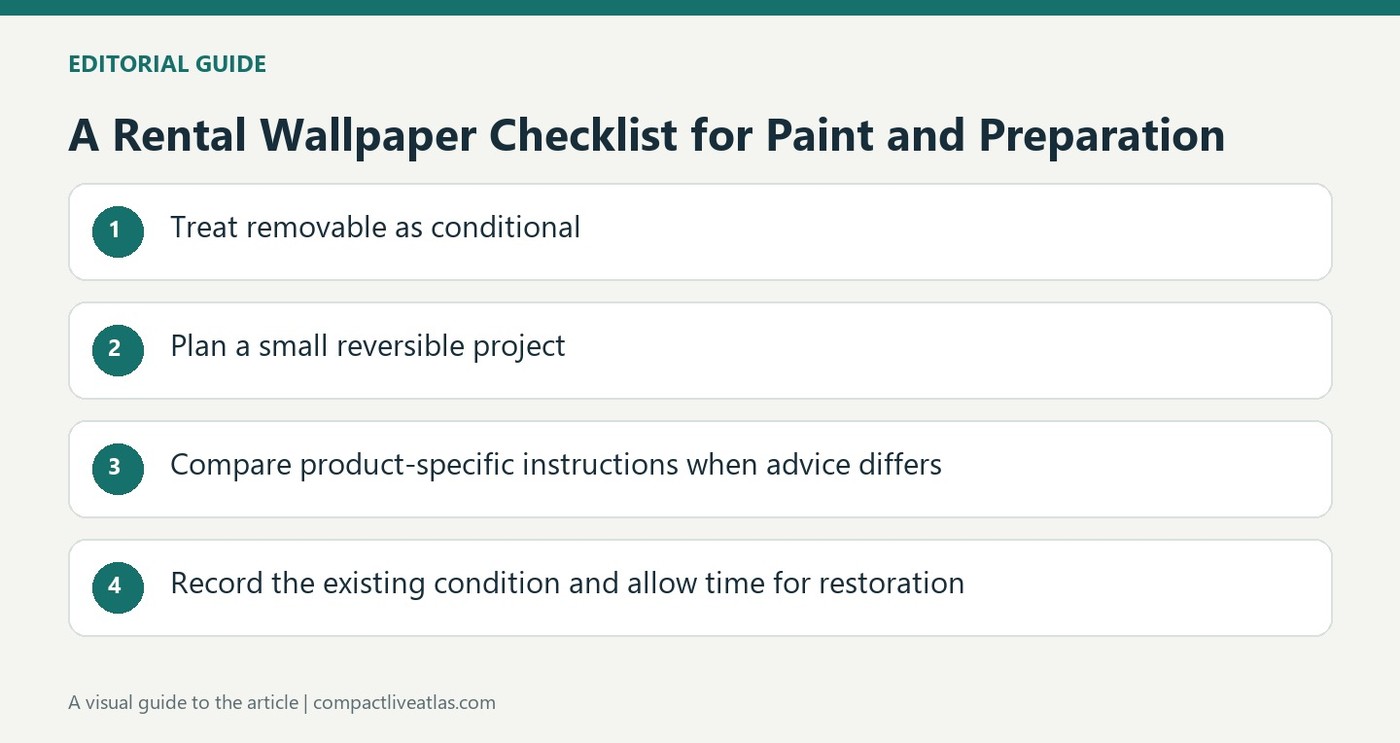
A Rental Wallpaper Checklist for Paint and Preparation
Treat removable as conditional
A removable label does not make every rental wall suitable for wallpaper. Walls Need Love emphasizes smooth painted drywall, a fully cured finish and a sample test before installation. Fresh paint can feel dry while still needing weeks to harden, and early application may lift that coating during removal. Textured, gritty or damaged surfaces deserve particular caution because the adhesive cannot make even contact across the wall.
Plan a small reversible project
Review the lease and obtain any required permission before changing a rented space. Clean the chosen wall, allow it to dry thoroughly and leave a sample in place for several days to check for bubbling or lifting. A single accent wall reduces the scale of the project while adding pattern and color. Follow the specific wallpaper manufacturer's guidance for paint finishes and humidity, since products differ. During removal, peel slowly at a low angle and stop if the paint begins separating.
Compare product-specific instructions when advice differs
The reference takes a cautious position on humidity and paint sheen, while other manufacturers approve particular products for different conditions. Do not combine the most convenient parts of conflicting guidance. Check the selected wallpaper’s current instructions and the paint’s actual cure requirement. A dry-feeling wall is not necessarily ready for an adhesive covering, and an expensive product does not make incompatible paint suitable.
Record the existing condition and allow time for restoration
Photograph the wall before the project and retain the product label and removal directions. Estimate enough time to remove the covering and address any agreed restoration before move-out. The source includes generalized lifespan, price-tier, and removal-time claims; these should not be treated as predictions for a particular room. A sample can reveal early lifting or an unsuitable finish, but a few successful days do not guarantee years of clean removal. Choosing a smaller project reduces the amount to manage while leaving the lease and surface requirements unchanged.
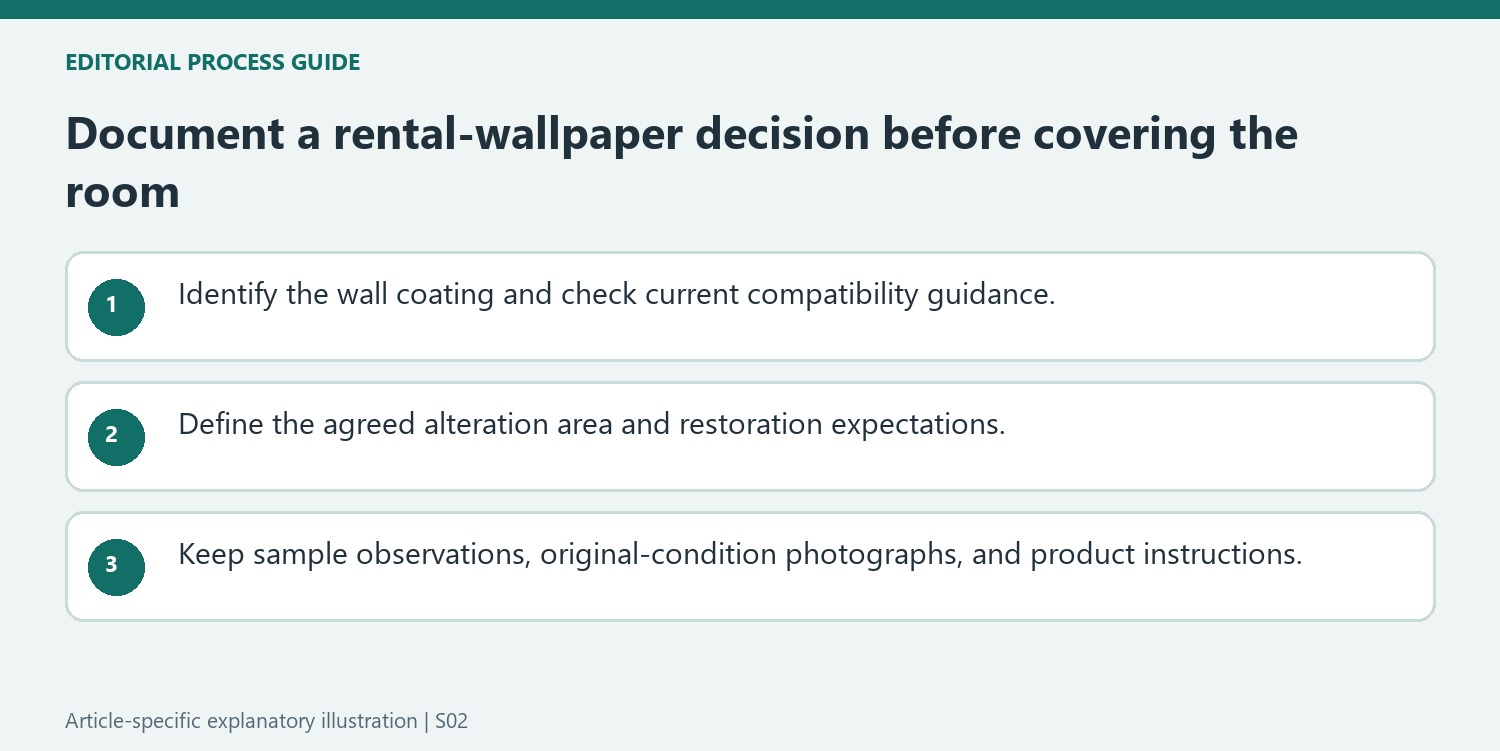
Build a preparation record around the actual paint
A useful rental-wallpaper decision starts with information about the existing coating. Record the paint product if known, when it was applied, its condition, and the wallcovering manufacturer's compatibility guidance. A generic curing interval in a shopping guide cannot resolve every paint chemistry or room condition. If the coating is unknown, ask the responsible property contact and consult the selected wallpaper supplier before proceeding. A wall that feels dry may still need a different preparation or waiting period. This record makes the proposed change easier to discuss and reduces reliance on a label such as renter-friendly, which does not describe the particular wall beneath it.
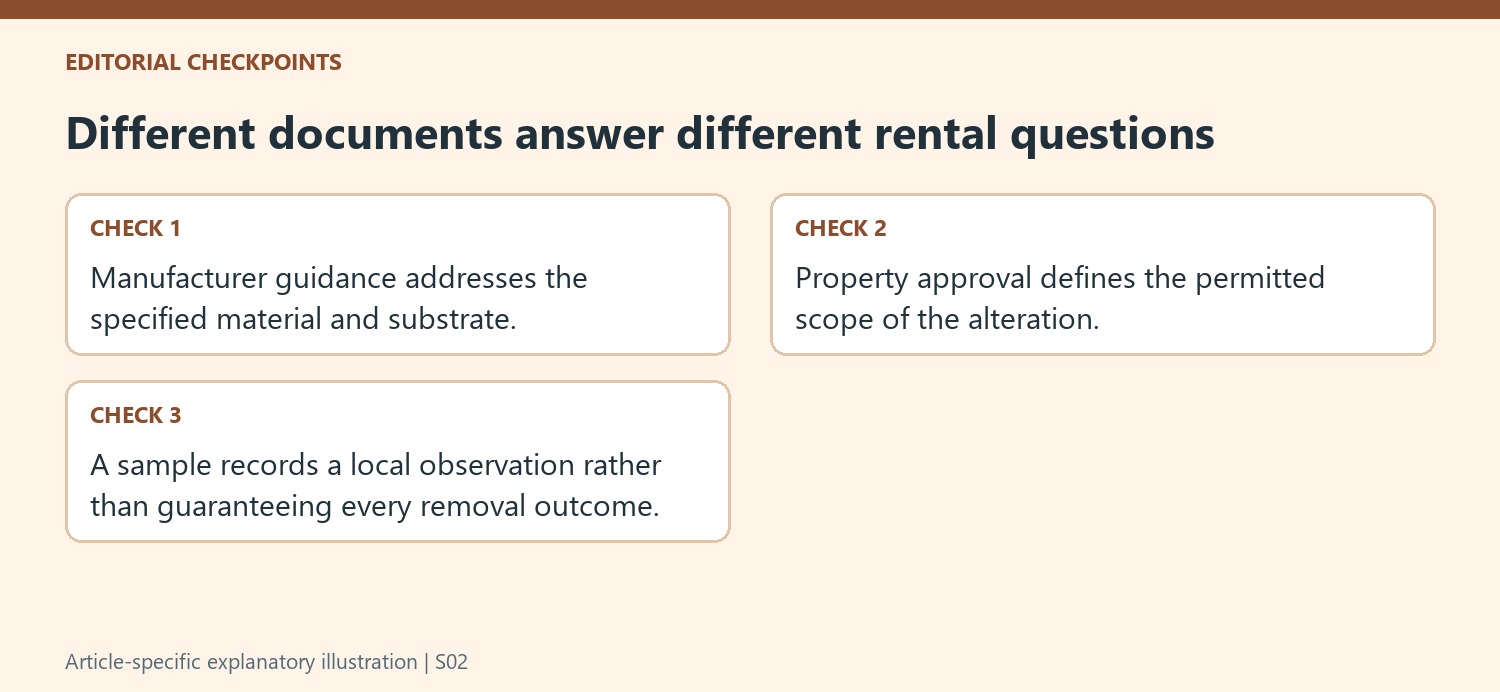
Make permission precise enough to guide the project
If approval is required, identify the proposed room, wall area, product, and eventual restoration expectations. Permission to hang a small sample may have a narrower scope than permission to cover an entire room. Keep an agreed record with photographs of pre-existing defects, especially where older repairs or weak paint might affect removal. The purpose is to establish what is planned and what condition is already present, without promising that documentation guarantees a deposit outcome. Product warranties and tenancy requirements address different relationships. Read each on its own terms, rather than assuming that a seller's removability statement settles the property's alteration conditions.
Use the sample to answer specific remaining questions
A permitted trial can show how the chosen finish looks against the furniture, how its texture reads in the room, and whether the local surface presents an obvious compatibility problem. Note what was actually tested instead of treating any brief successful patch as a prediction for every wall. Check the prescribed removal procedure and what supplies it would require before committing to the full installation. Retain product labels and instructions so a later move does not begin with guesswork about the material. Compare the proposed design benefit with installation, maintenance, and restoration demands together. The sensible rental choice is the system whose documented conditions fit this property, rather than the product with the strongest general assurance about easy removal or low cost.
References
- Wallpaper on Rental Walls Explained for Renters. WallsNeedLove; Chad Pitschka.
A removable label does not make every rental wall suitable for wallpaper.


Leave a Comment