
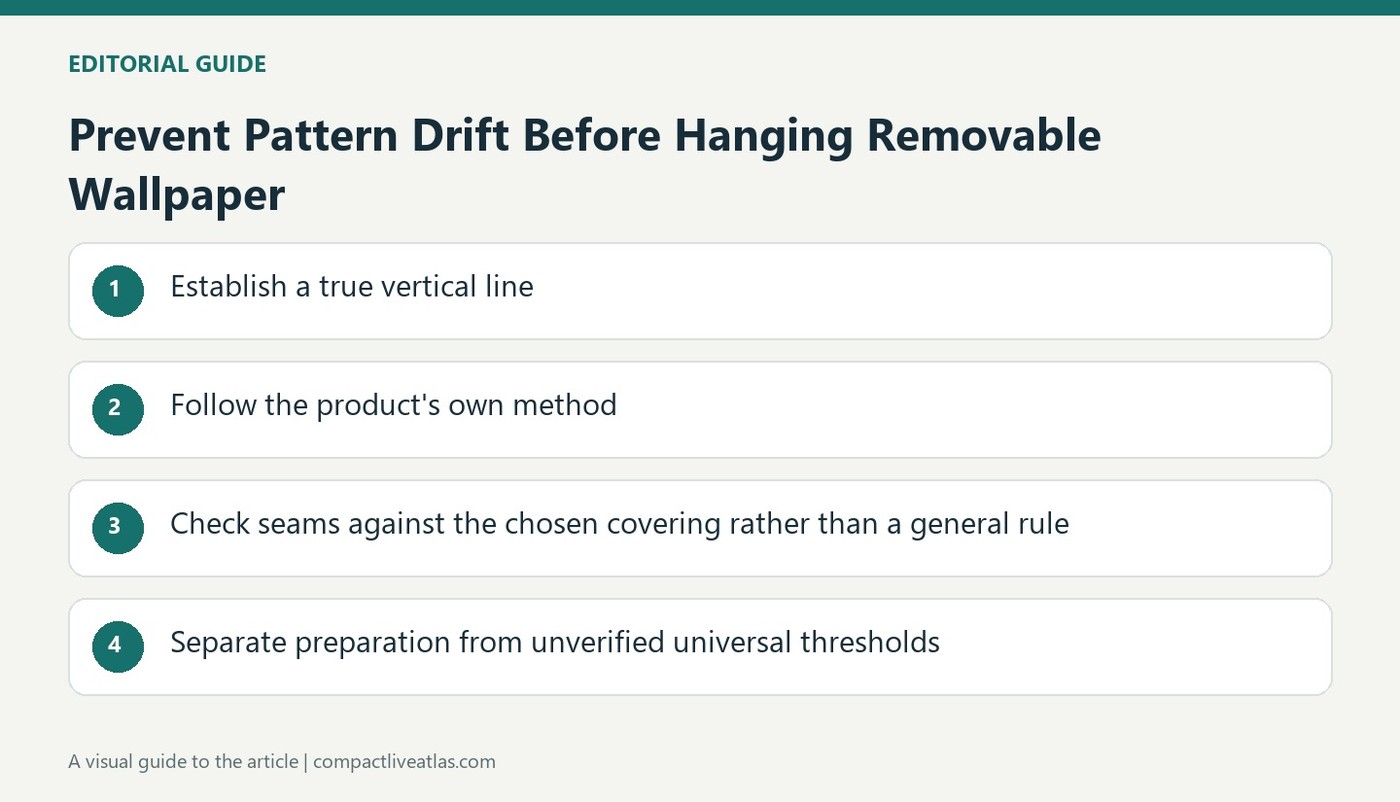
Prevent Pattern Drift Before Hanging Removable Wallpaper
Establish a true vertical line
Wallpaper errors often begin before the first strip reaches the wall. Walls Need Love identifies surface preparation, measurement and pattern alignment as important sources of trouble. Clean and dry the wall, then use a spirit level or laser level to mark a vertical reference. A corner or door frame can look straight while leaning enough to send a repeated pattern gradually off course across the room.
Follow the product's own method
Check the pattern repeat before cutting strips and confirm that rolls share the same dye lot. A dry fit helps reveal mismatched motifs before firm pressure makes adjustment difficult. Use a sharp blade for clean trimming and handle the edges gently. The source covers both pasted and removable wallpaper, so keep their instructions separate: booking times and paste selection apply to relevant traditional products, while peel and stick material follows its own backing, seam and surface instructions.
Check seams against the chosen covering rather than a general rule
The guide discusses edge-to-edge seams for relevant traditional products, but some removable systems specify a different overlap or installation sequence. Use the instructions supplied with the actual roll. Do not add paste to a lifting self-adhesive edge unless the maker explicitly approves it; doing so can change both appearance and removability.
Separate preparation from unverified universal thresholds
The reference gives numeric moisture and booking examples, but materials and measurement methods differ. A reading is useful only when interpreted for the substrate, meter, and product involved. Likewise, a paste-the-paper covering may require a waiting stage that does not apply to peel-and-stick material. For a large scenic mural or several uneven corners, professional help may be worthwhile because alignment mistakes accumulate across panels. Inspect the first strip before continuing. Correcting the starting line early is more manageable than discovering a visible drift after the whole room has been completed.
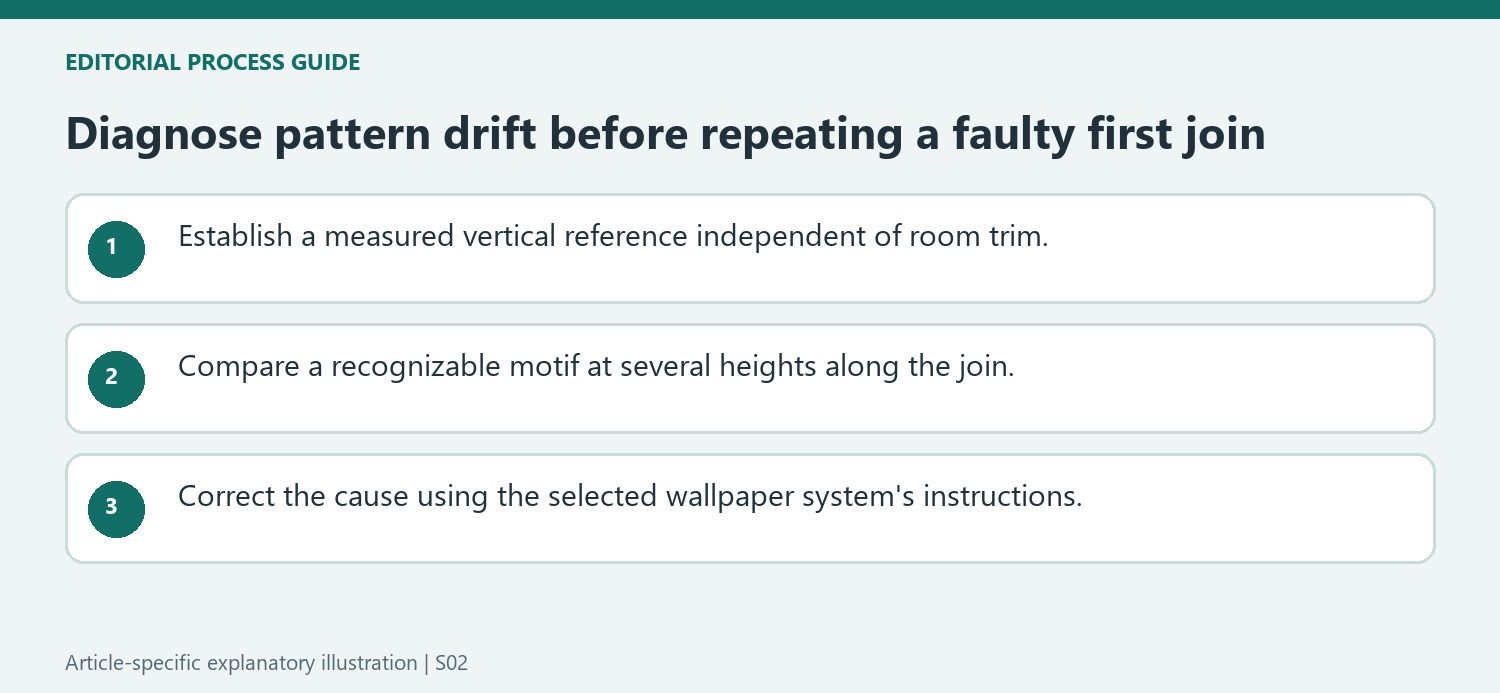
Distinguish a straight panel from a convincing pattern join
A repeated motif can appear to meet near the ceiling while a panel slowly drifts away from the intended vertical direction. Conversely, a panel can follow a reference line while the neighboring motif is matched at the wrong point in its repeat. Check both relationships early. Compare a recognizable feature at several heights and verify the measured reference separately. If the first join is wrong, correct the cause according to the product's handling instructions before repeating it across the wall. A room corner or door frame may provide a visual cue without being a reliable vertical datum. The measured reference helps avoid carrying an existing building irregularity into the whole installation.
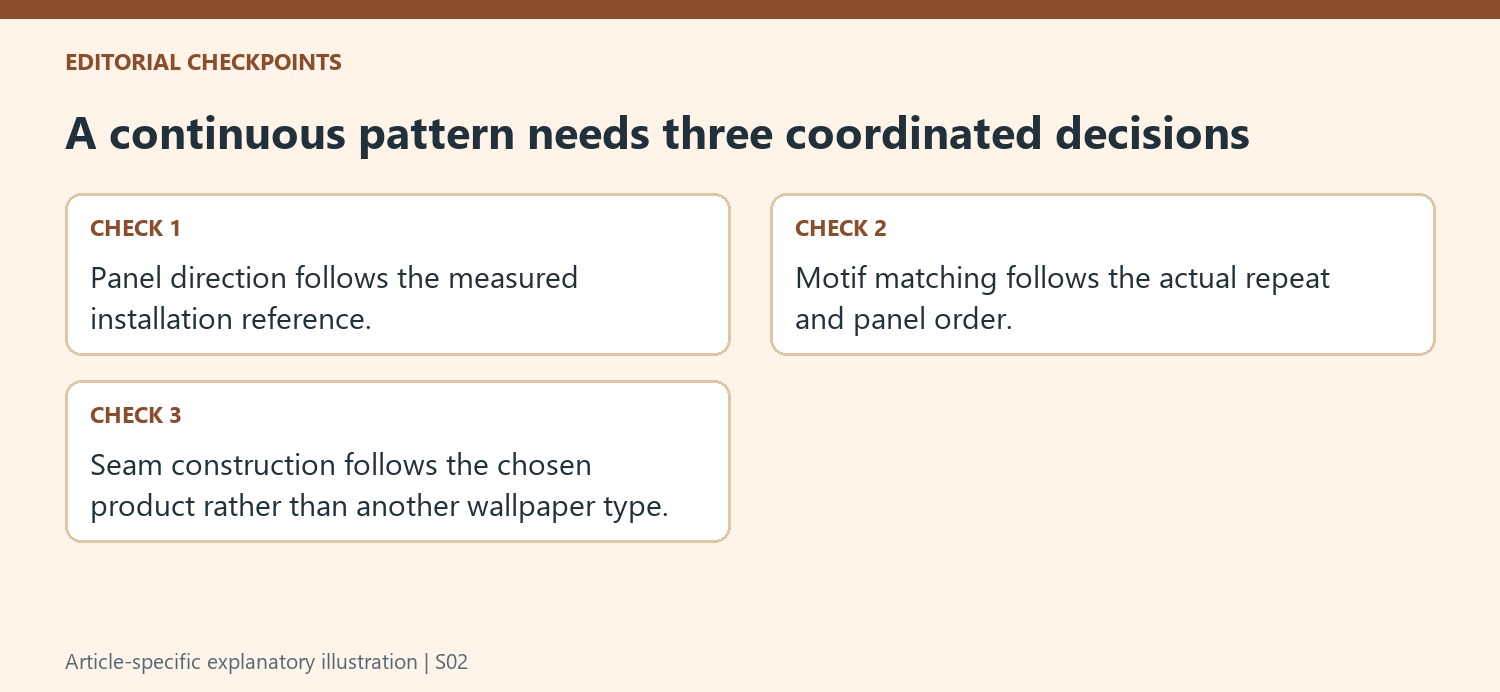
Lay out the sequence before committing difficult cuts
Review the pattern repeat, panel order, and any mural instructions with the actual wall dimensions. A simple dry layout can reveal whether an important feature lands at a doorway or whether an opening requires an awkward small section. Keep labels and batch information with the order of the pieces rather than separating them into an unidentified pile. Allow cuts according to the selected system instead of adopting a trimming allowance from an unrelated guide. Corners also need the maker's specified treatment: forcing a long panel to wrap a visibly irregular corner can introduce a different alignment problem on the next wall.
Return to the selected system when a seam misbehaves
The source discusses several wallpaper types, so diagnose a seam within the method actually being used. A pasted covering, pre-pasted material, and self-adhesive panel may have different requirements for preparation, timing, and repositioning. Follow its seam instructions rather than borrowing an overlap or butt-joint rule from another product. If an edge lifts or a join shifts, check the underlying preparation and specified handling before reaching for extra paste. Adding an unapproved adhesive can change removability as well as appearance. A complex mural or troublesome substrate may justify experienced installation help. The aim is to resolve the particular cause of drift or poor contact, keeping the decorative repeat and the attachment method consistent from the beginning to the last panel.
References
- Wallpaper Installation Mistakes Decorators Must Avoid. WallsNeedLove; Chad Pitschka.
Wallpaper errors often begin before the first strip reaches the wall.


Leave a Comment