
Give a Multipurpose Room a Flexible Folding Boundary
Start with the daily activity
A room does not always need a permanent wall to support more than one purpose. House Beautiful highlights folding dividers as a flexible way to split a studio, home office or open living area into useful zones. A screen can define a desk during working hours or mark out exercise space without committing the entire floor plan to a renovation. Its position can change as the household's routine changes.
Choose a style that belongs
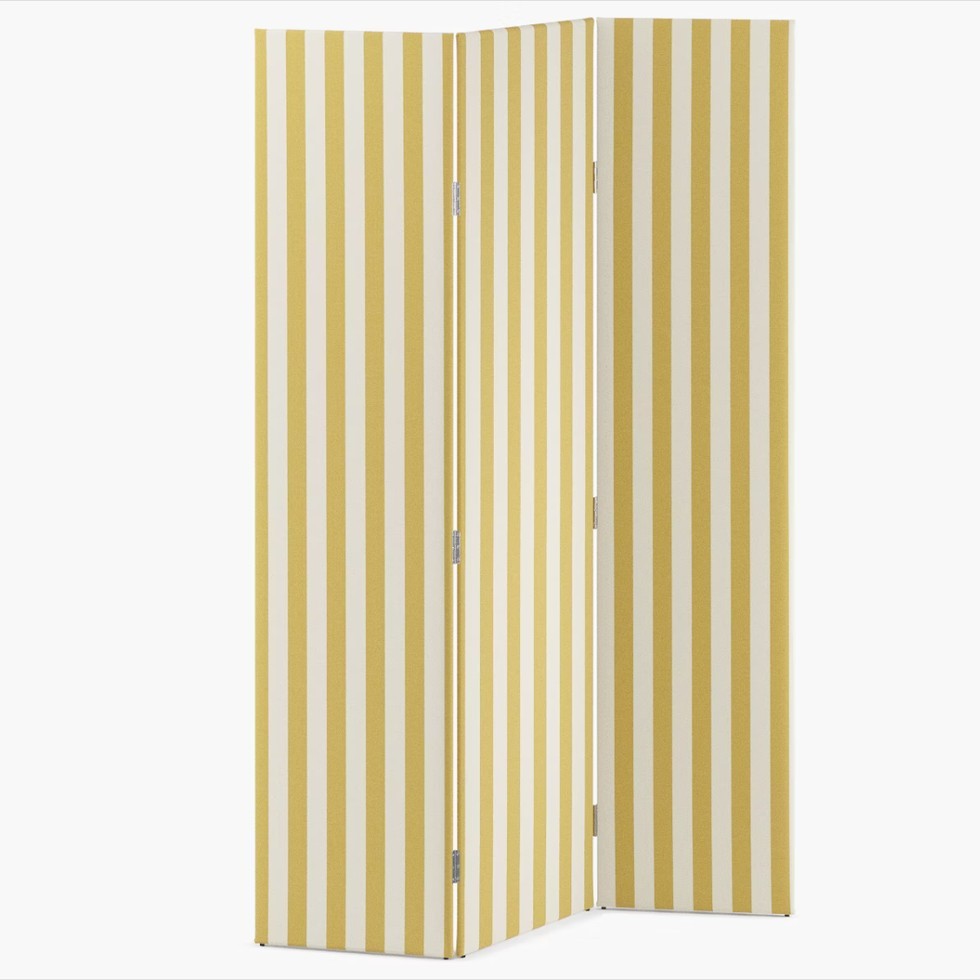
The publication points to decorative options including striped, floral and rattan designs. Match the screen's material and visual weight to the existing furniture, then consider how much privacy its panels actually provide. An open weave will feel different from a solid fabric surface. Measure the available floor space before choosing a divider and leave enough clearance around its folded panels. Treat the screen as an adjustable visual boundary, keeping doorways and the route to windows clear.
Measure the screen as an object with depth
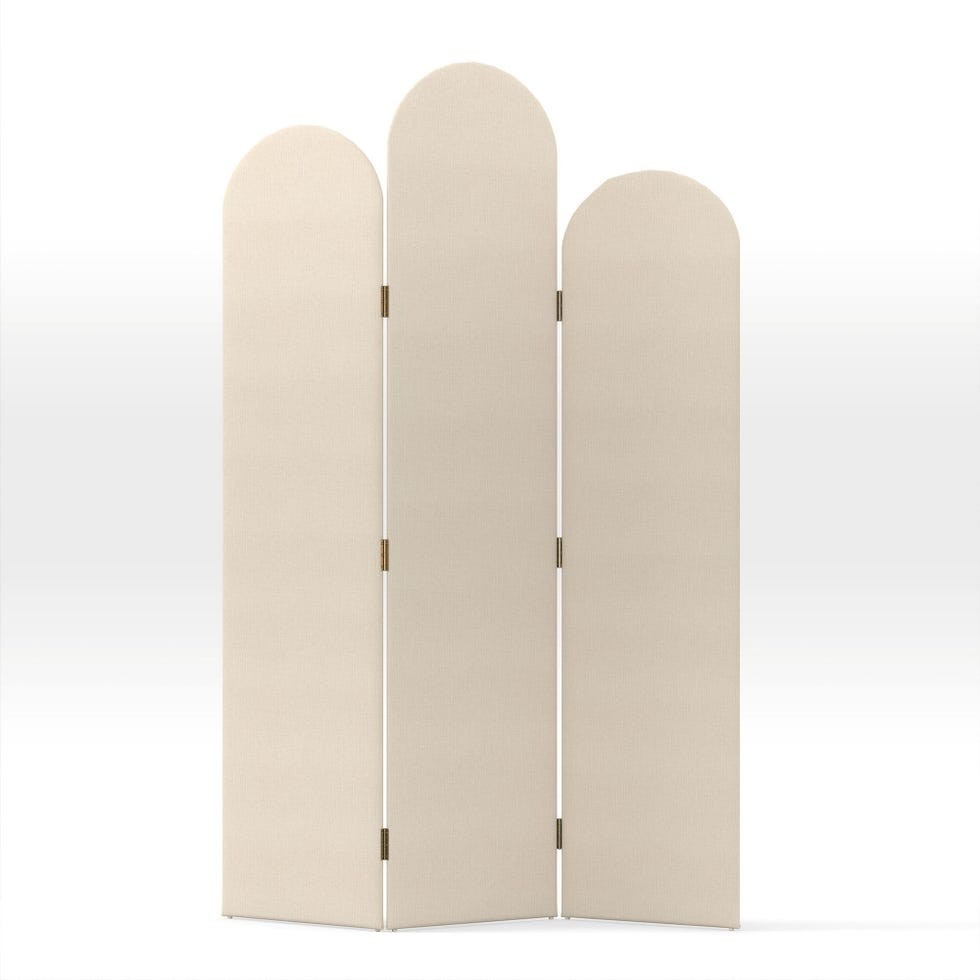
A folding divider usually stands in a zigzag or other specified arrangement rather than as a perfectly flat sheet. Compare that occupied footprint with the path around the desk, exercise area, or bed. Check its weight, panel joints, and stability requirements. Decide where it will be stored when folded so the temporary boundary does not become a permanent obstacle.
Match the level of enclosure to the activity
The source introduces decorative options rather than a detailed acoustic or privacy test. A floral fabric panel, open rattan weave, and striped design can have different transparency and visual weight. View the proposed position from both sides and consider changing light conditions. A screen can make an activity feel contained without creating a separate regulated bedroom or soundproof office. Choose a product appropriate to the household and keep exits, heating clearances, and windows accessible. Its value is a movable visual boundary that responds to a real need, not a guaranteed extra room.
Give the divider one clear role in the present room
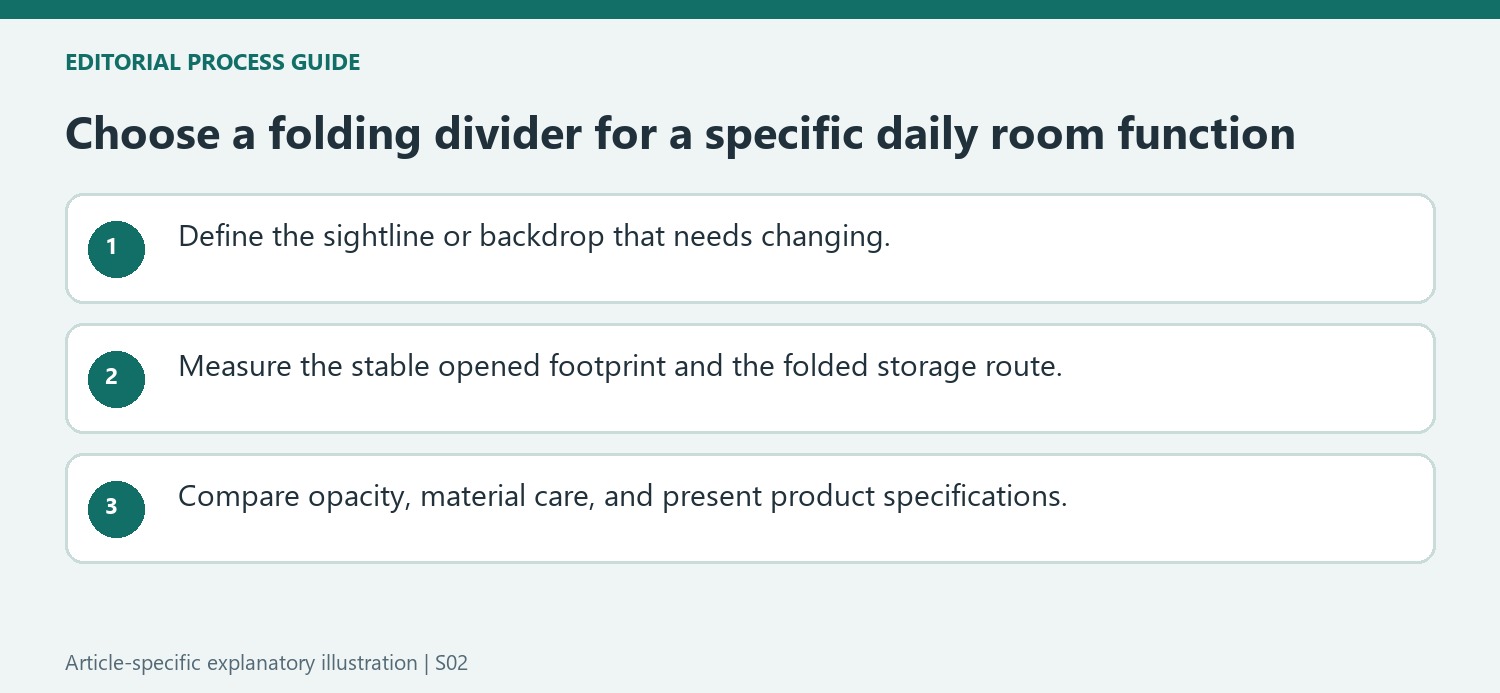
This House Beautiful shopping edit presents folding screens as a relatively flexible way to organize open space. Its short introduction is not a test demonstrating that every featured product creates a complete extra room. Identify which view needs interrupting and whether the boundary will remain in place all day or move between activities. A work corner may need a calm backdrop, while a seating area may simply benefit from a more intimate edge. The right height and opacity depend on those tasks and on seated as well as standing sightlines. Start with that requirement instead of choosing the most elaborate screen first.
Measure the opened arrangement as well as the folded object
A folding divider occupies a shaped footprint when set up according to its instructions. Check the width it covers in that stable configuration rather than adding panel widths and assuming they can form a flat wall. Include the hinge movement and any clearance needed to relocate it. Mark where the screen goes during cleaning, visitors, or exercise if the room changes function. The folded depth matters in storage, but so do height, weight, and the route through doors. A portable description does not prove that one person can conveniently move every design. Check the actual product specifications and handling guidance before treating the divider as a daily changeover tool.
Compare finish and openness with the remaining furniture
The edit includes stripes, floral patterns, woven materials, and other decorative approaches. An open design may introduce texture while leaving activity behind it partly visible; a more opaque design may supply a stronger backdrop but reduce light on one side. Look at the room's existing patterns and the view from both directions. Follow the screen's stability, placement, and care instructions and consider the household's actual occupants. It is a visual furnishing rather than a structural wall or a guaranteed sound barrier. Verify present pricing and availability separately from the historical shopping article. A successful choice should still be useful after the initial styling, with somewhere practical to fold, store, and maintain it when the next room function takes over.
References
- The Stylish Trick for Creating an Extra Room in Your Home. House Beautiful.
A room does not always need a permanent wall to support more than one purpose.


Leave a Comment