

Start a First Apartment with Adaptable Essentials
IKEA's first-apartment bedroom guide starts with practical needs: a bed or daybed, storage, lighting, a desk, and extra seating. Stackable or folding chairs make it easier to host friends without keeping every seat spread across the room all day.
The article also highlights lightweight storage and a daybed with boxes underneath for several daily uses. These movable essentials can adapt as routines change or a resident moves again. Check assembly and anchoring requirements for each item rather than assuming all temporary-looking furniture can stand without support.
Prioritize sleeping, storage, and the working surface
The IKEA guide offers a checklist, but the actual order depends on the resident’s routine. Measure the bed or daybed and identify the collection of clothes and other belongings before buying several small organizers. A compact desk still needs enough surface and a suitable chair for its intended tasks. Different light sources can serve getting dressed, studying, and quieter evening use.
Compare temporary-looking storage with its instructions
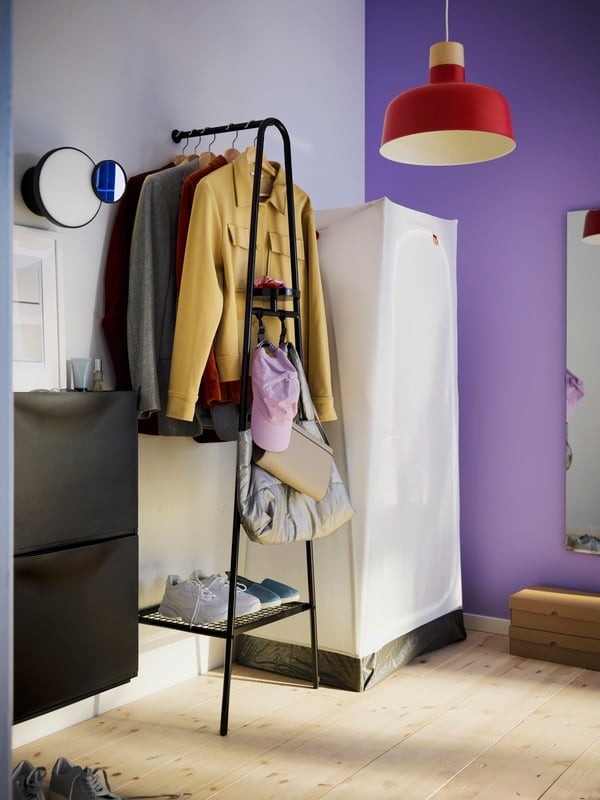
The source includes the lightweight VUKU wardrobe and an ALGANAS clothes rack, which have different assembly and securing requirements. Follow the actual model guidance rather than assuming a fabric enclosure or light frame never needs attention to stability. The VIHALS daybed with storage boxes concentrates seating, sleeping, and belongings, provided the boxes can be reached.
Give extra seating and display a manageable place
Folding or stackable chairs help with visitors only when their stored position and safe configuration suit the room. Open IVAR shelving can show personal collections while separate containers hold loose items. Removable art hooks also require compatible surfaces and load limits. Choose a few useful, adaptable pieces first, then let decoration develop as the everyday layout proves itself.

Use the first week to identify what must work immediately
IKEA's guide places lifestyle ahead of a finished decorating identity. A first room has to support sleep, getting dressed, work, and the belongings arriving in boxes before it can function as a polished display. List the activities that happen every day and match each with the minimum suitable furniture and light. Measure the available space with doors and drawers operating, rather than evaluating only a bare floor plan. A good immediate solution can remain modest and adaptable. The source's lively moving-day narrative is useful encouragement, but it should not obscure the different assembly, stability, and access demands of the actual selected pieces.
Compare multifunctional furniture in each of its working states
The featured daybed supplies seating, sleep space, and access to storage boxes. Check the route to those boxes when bedding or neighboring furniture is present. If a bedspread protects the sleeping arrangement during daytime seating, decide where it goes at night. A compact desk likewise needs a usable task area and a compatible chair, not just a small outline. Include the equipment and cables used for a normal work session. A hook or cable bag can organize a specific collection without making every device arrangement fit. Verify the current model specifications instead of transferring a useful feature from one named product to the whole category.
Let display and visitor seating develop around the proven layout
Open shelves can give meaningful objects a visible home while suitable closed containers gather items that do not need displaying. Test access before adding more pieces to fill an empty corner. Foldable or stacking visitor seats need a stored position as well as a safe place to use them; their number is still limited by circulation and room capacity. Removable picture hooks have product-specific surface and load conditions, even when the source presents them as a quick finishing touch. Keep the instructions and assembly information for furnishings likely to move again. Once the essential arrangement works, a smaller set of personal details can grow with the resident instead of forcing early purchases to define every future room. Adaptability is most useful when the furniture remains easy to operate and maintain in the present home.
References
- How to decorate your first apartment bedroom. ikea.com.
IKEA's first-apartment bedroom guide starts with practical needs: a bed or daybed, storage, lighting, a desk, and extra seating.


Leave a Comment