
Build a Teen Bedroom Layout from Its Daily Routines
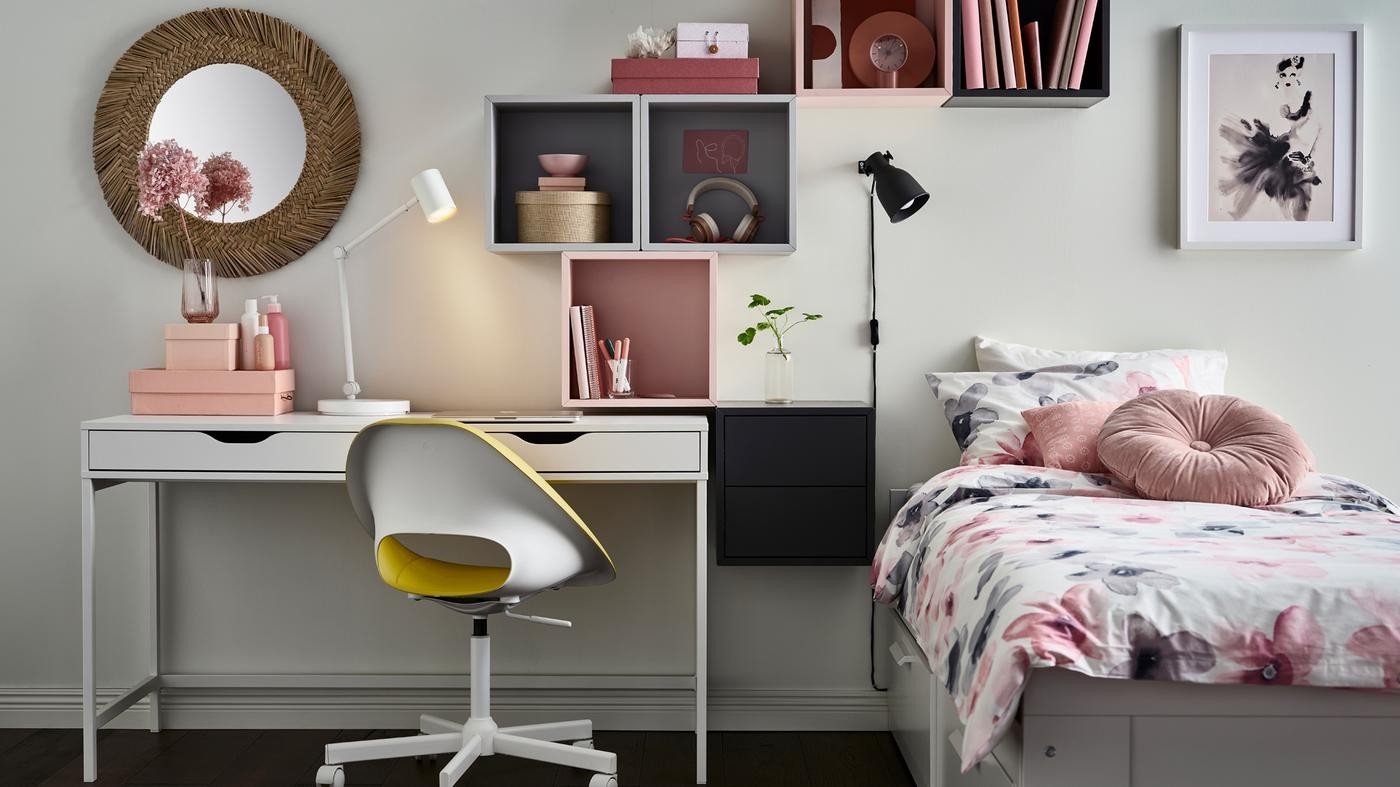
The source starts a teenage bedroom plan with the main bed and desk positions. Activity zones follow the way the occupant studies, relaxes, and gets ready. Storage placed within reach of these areas connects the layout rather than filling leftover corners randomly.
A swivel chair, organizers, mirror, and lighting respond to specific tasks. Consider movement between the desk, wardrobe, and bed before choosing decorative additions. Furniture becomes easier to use when the arrangement follows ordinary routines and the supplies for each activity remain close by.
Map the movements between the main activities
Begin with the dimensions of the bed and desk, including the desk chair when pulled out. Trace the ordinary journey from the door to the wardrobe, work area, and sleeping space. A storage unit can connect these zones if it can be reached without crossing another activity awkwardly. Test the arrangement before buying extra furniture rather than using decorative accessories to disguise an inconvenient route.
Let the task determine the accessories
The IKEA example mentions an adjustable swivel chair, organizers, a mirror, and lighting. These respond to different needs: studying requires suitable desk support, while getting ready needs a useful mirror position and appropriate illumination. Keep the supplies for each task nearby and give them a return location. The source does not prescribe a single measured layout for every teenager or claim that a particular chair fits every user.
Use color to connect the separate zones
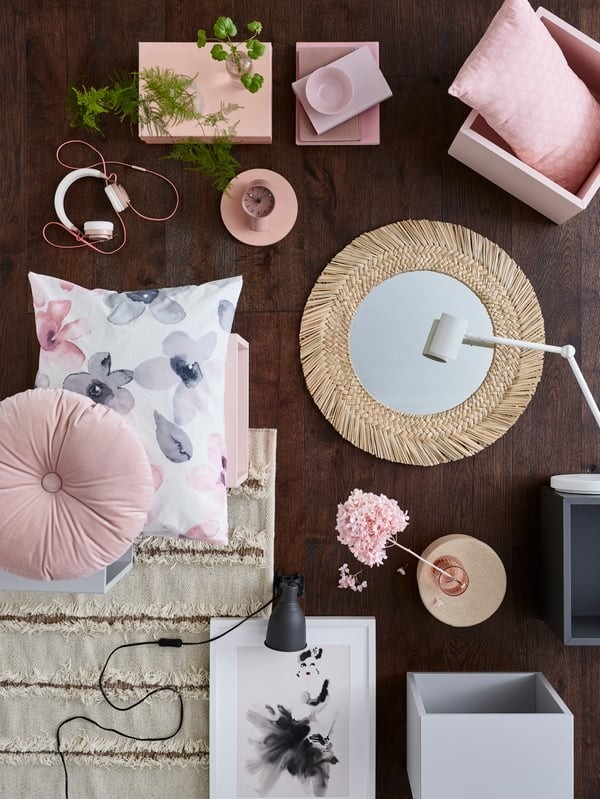
A main color and a central motif, such as floral details, can link the room while leaving space for personal contrasts. Choose changeable textiles, artwork, or small objects for evolving preferences. The practical furniture plan should remain usable even when the decorative theme changes.
Plan the room from a normal school-day sequence
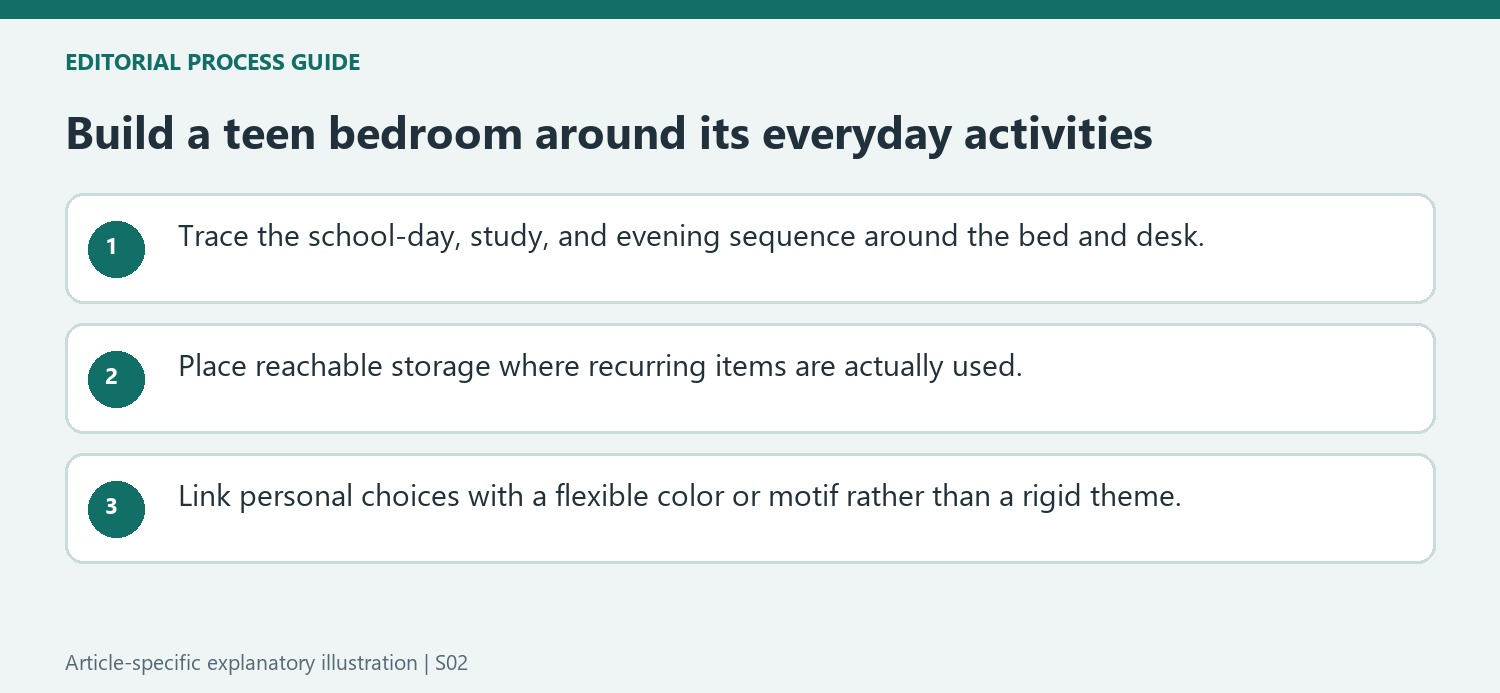
The IKEA reference identifies the bed and desk as major anchors and suggests letting frequent activities guide the supporting details. Walk through a typical morning, study session, and evening before deciding what furniture belongs around them. Clothes, school materials, and personal devices need destinations that match when they are used. A desk organizer is helpful only if it holds the things actually needed at that desk. Similarly, a mirror needs an appropriate viewing position and useful light rather than merely an empty section of wall. This activity-based approach gives the room a practical structure before color or decorative themes are used to bring it together. Record which items repeatedly travel between the two main zones so that their storage can serve both without becoming an obstacle.
Connect the main zones without duplicating every storage piece
The source describes the desk and bed as hotspots supported by reachable storage. Compare a shared nearby shelf or drawer with separate units at each position. Keep the items for focused work easy to retrieve from the chair, while the bed's immediate area can support its own evening routine. Include the chair's movement and any opening wardrobe doors in the plan. A room can appear tidy with everything shut yet be awkward when several activities happen at once. Where furniture height or reach can be adjusted, check that it works for the person using it. The reference mentions an adjustable swivel chair as a possibility, not a particular chair's fit or performance. Select actual furniture by the user's needs and available space.
Use a theme as a flexible link between personal choices
A main color and a recurring motif, such as floral elements, are the source's suggested starting points for visual harmony. They need not dictate every possession. Compare the largest surfaces first, then add a smaller contrast through a cushion, poster, or other item the teen chooses. These are editorial examples of applying the source's approach rather than a prescribed shopping list. Leave room for interests to change without replacing the bed and desk. An effective review asks whether the room still supports its common activities and whether the owner can maintain the storage. A coordinated appearance is useful when it helps the room feel personally coherent; it is less useful if maintaining it requires hiding every sign of ordinary life.
References
- Teenage bedroom styling tips. ikea.com.
Start with the bed and desk, then connect them through useful storage.


Leave a Comment