
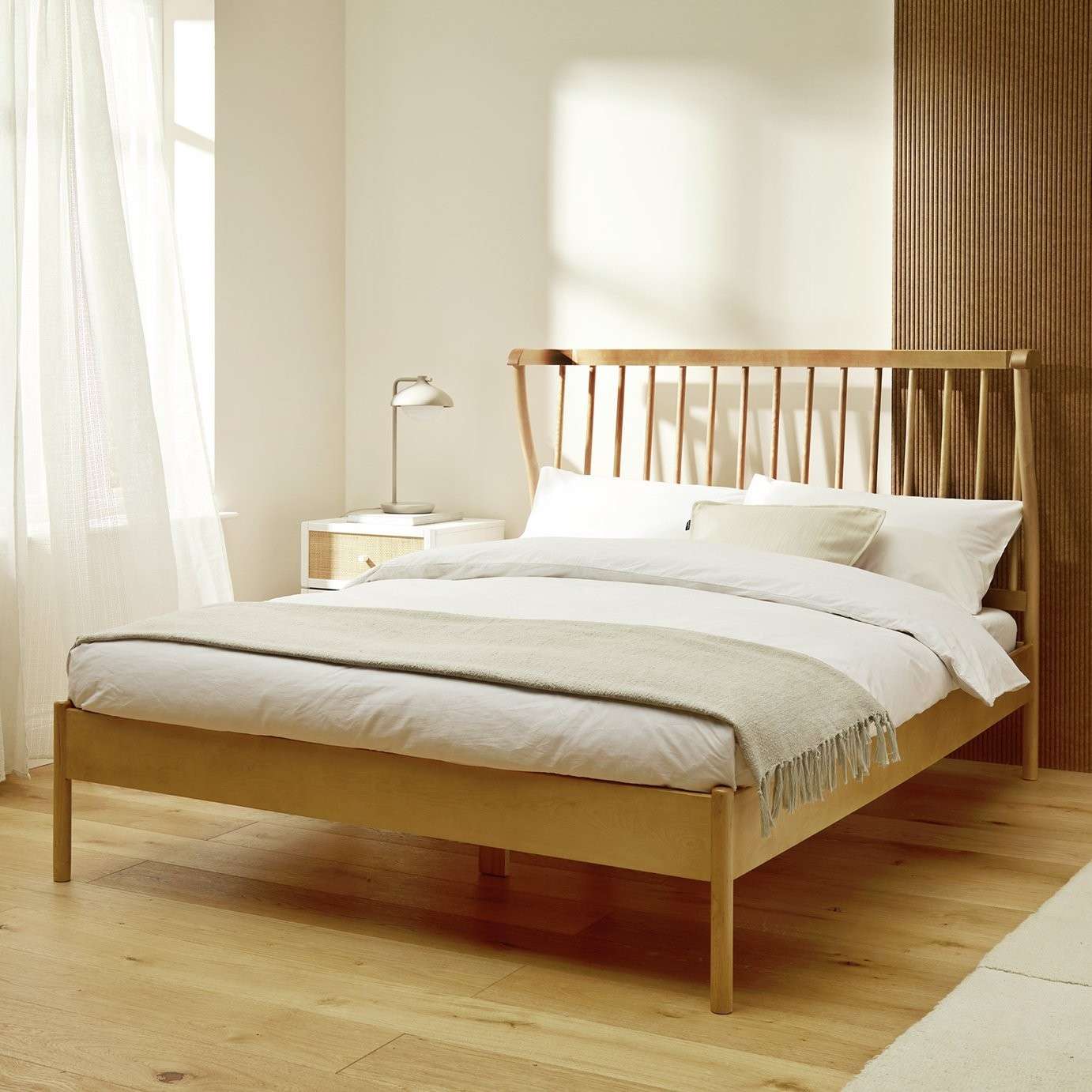
Keep More Floor Visible Beneath Bedroom Furniture
Reduce visual heaviness in the bedroom
The source describes a simple small-bedroom technique: choose furniture with visible, relatively high legs so more floor remains in view beneath it. This can make the room appear less crowded even though its actual dimensions have not changed. The effect comes from reducing the visual weight of the furnishings rather than removing their practical functions. It is particularly useful to consider when comparing otherwise similar bedside pieces or other bedroom furniture.
Combine the silhouette with sensible scale
An open base is only one part of a successful choice. Furniture still needs to fit the room and serve the activities for which it is intended. A compact bedroom asks decorative and practical decisions to work together, so assess the whole silhouette rather than focusing on an isolated detail. Visible legs can contribute a greater sense of openness, but they do not replace measuring the footprint or planning the surrounding arrangement.
Compare the base and the body of each piece together
Sophie Pringle combines visible legs with a relatively slender furniture profile. A chest may stand above the floor yet still feel dominant if its body is deep or its outline is heavy. Compare the actual storage volume with the footprint and the route past it. The open base should remain visible rather than immediately becoming another unplanned storage pile.
Use the finish to support a coherent room
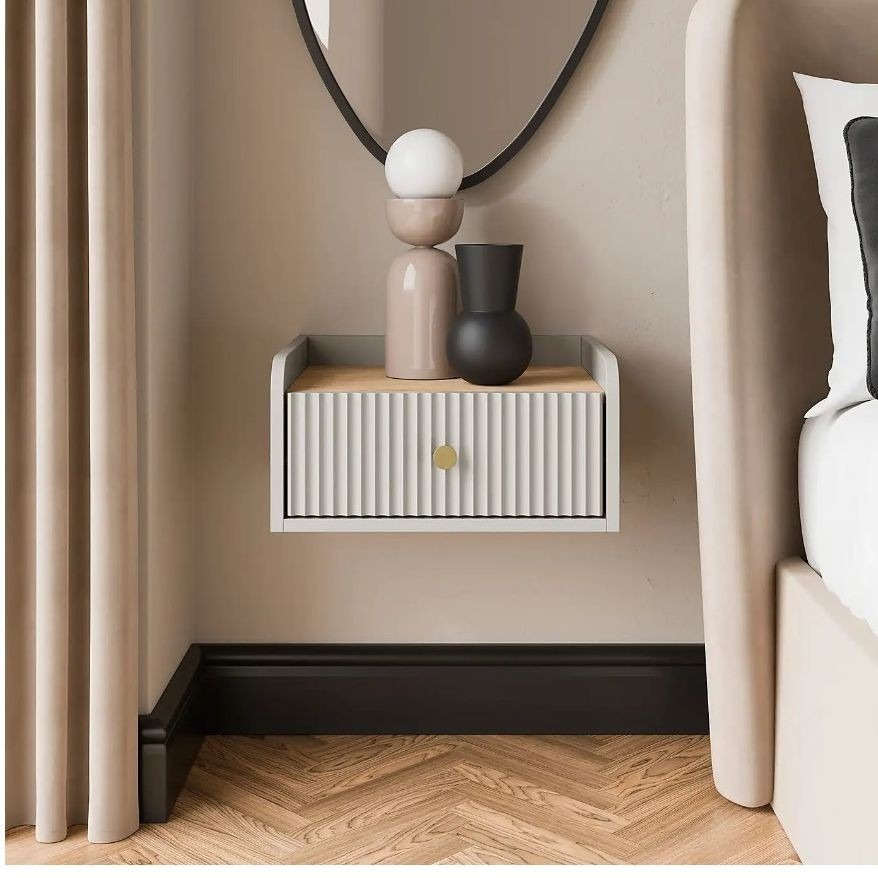
The designers discuss lighter finishes that sit comfortably with the walls and floor, while making clear that a small bedroom does not have to be entirely pale. The point is to consider competing focal pieces and overall visual weight. A quieter furniture group can still include color and character in bedding or objects. The source also suggests wall-mounted bedside shelves and lighting where these suit the installation. Built-in storage or a properly specified ottoman bed may reduce the need for extra cabinets, but introduces its own access requirements. Choose the combination that preserves comfortable movement rather than pursuing visible legs on every item regardless of function.
Distinguish visible floor from additional usable area
Emma Deterding and Sophie Pringle describe how raised furniture lets the eye continue beneath a bed, dresser, or bedside table. This can make the room appear less interrupted by solid blocks. The floor area itself does not increase, and the furniture still occupies its full footprint. Compare photographs or a measured mock arrangement at ordinary viewing height before deciding that taller legs solve the room's problem. A slender outline may reinforce the visual effect, as Pringle suggests, but the piece must still provide the storage or surface needed. A lighter-looking dresser is not an improvement if it leaves essential belongings with no appropriate destination.
Consider the space below as part of the maintenance plan
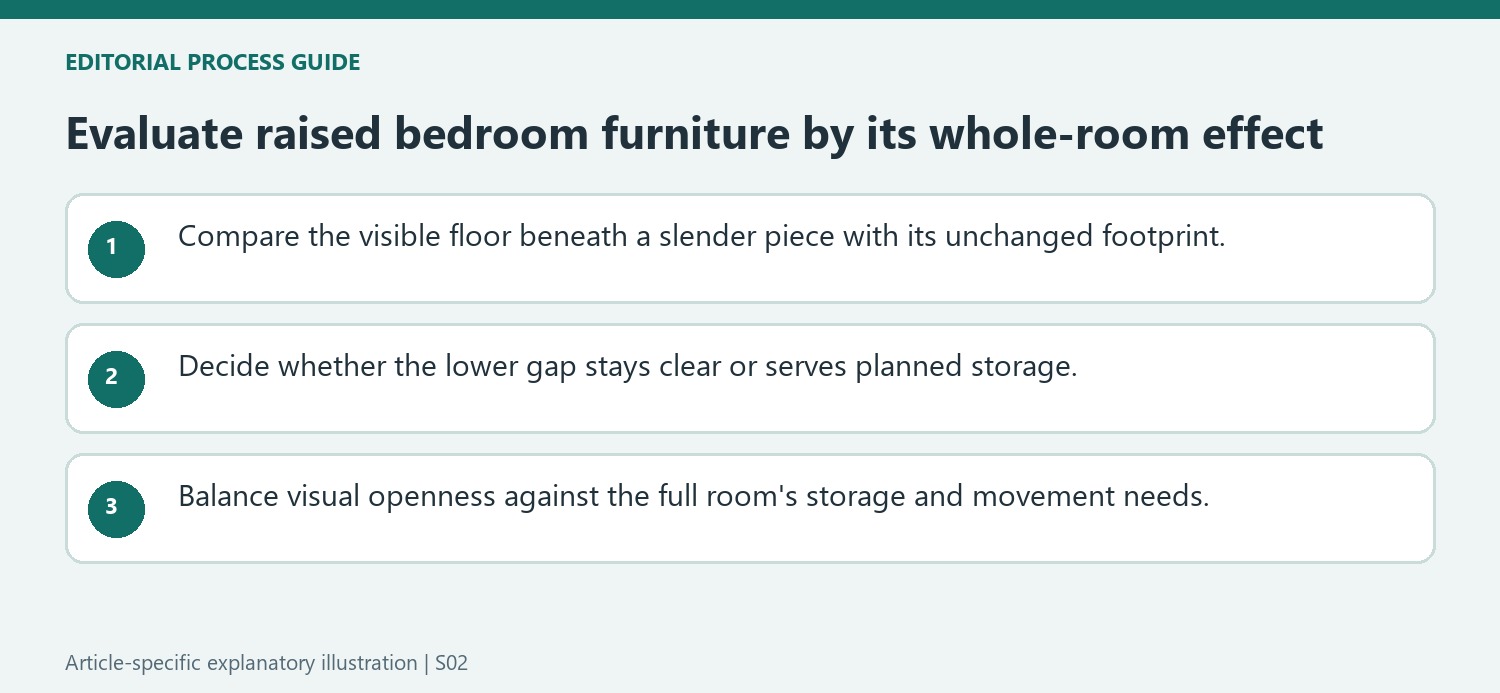
More visible floor is useful when it remains visually clear. Filling the gap beneath raised furniture with loose boxes can remove the effect that motivated the choice. Decide whether that area is meant to stay open or provide organized storage, and compare the result honestly with a solid-front alternative. This is an editorial application of the source's visibility principle, not a claim that either storage type is always superior. Check cleaning access and the actual product's stability and intended use. Do not modify legs or raise a frame merely to copy the appearance without suitable manufacturer guidance. The furniture's proportions and dependable operation still matter.
Balance visual lightness with the room's complete storage needs
Both designers also discuss multifunctional pieces and wall-mounted alternatives. A storage bed may have a more solid appearance yet remove the need for another bulky unit. Compare the overall room, including the opening space needed for that bed, rather than treating high legs as the only desirable feature. A bedside shelf can keep the floor clearer where its support and height suit the user. Finishes close to the surrounding palette may reduce contrast, but Pringle explicitly allows character and stronger colors. Select the important focal point and avoid making every piece compete. The practical objective is a room with easy movement and a deliberate distribution of visual weight, rather than a collection chosen solely because all its furniture has exposed legs.
References
The source describes a simple small-bedroom technique: choose furniture with visible, relatively high legs so more floor remains in view beneath it.


Leave a Comment