
Place the Desk Without Making Work the Bedroom's Focus
Keep work away from the visual center
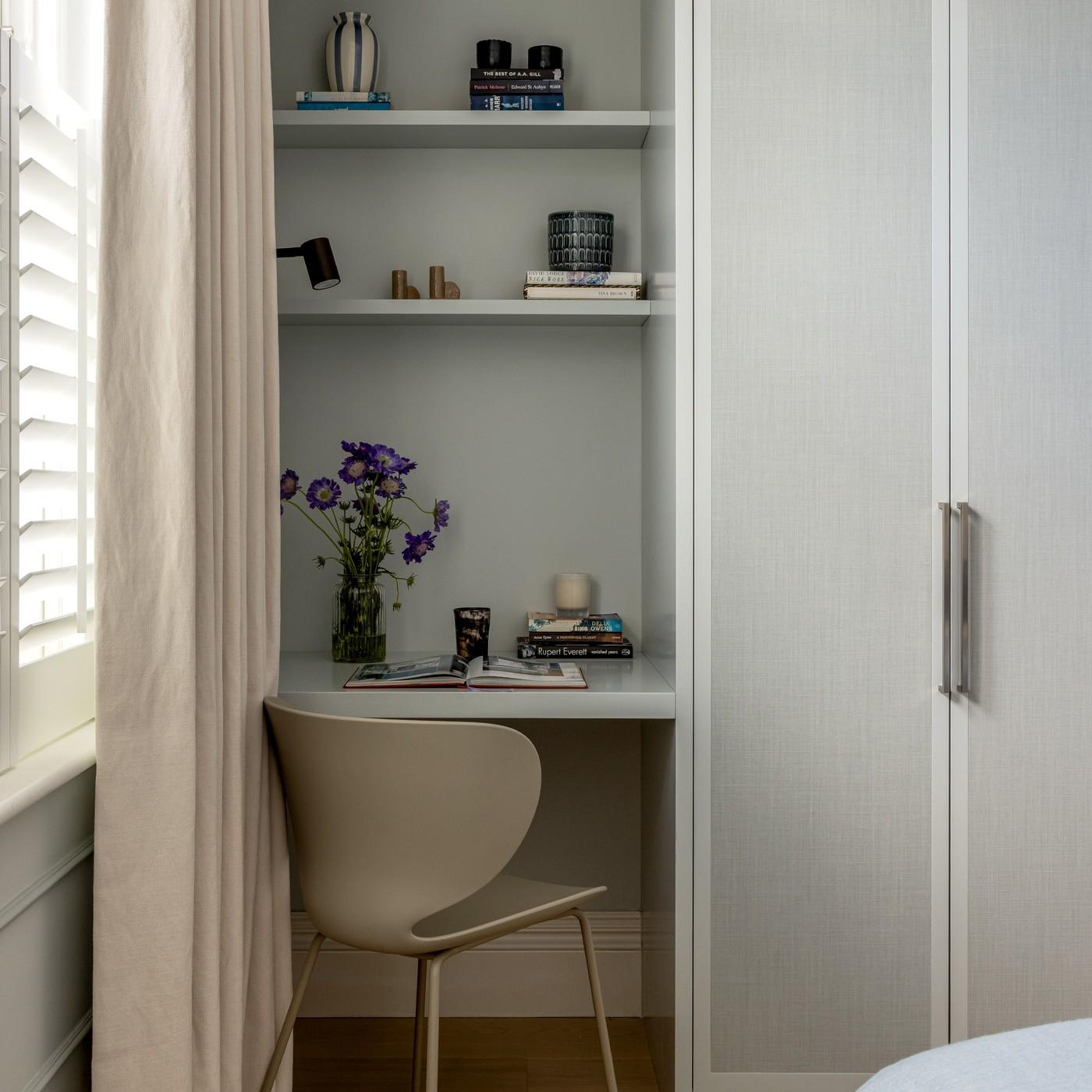
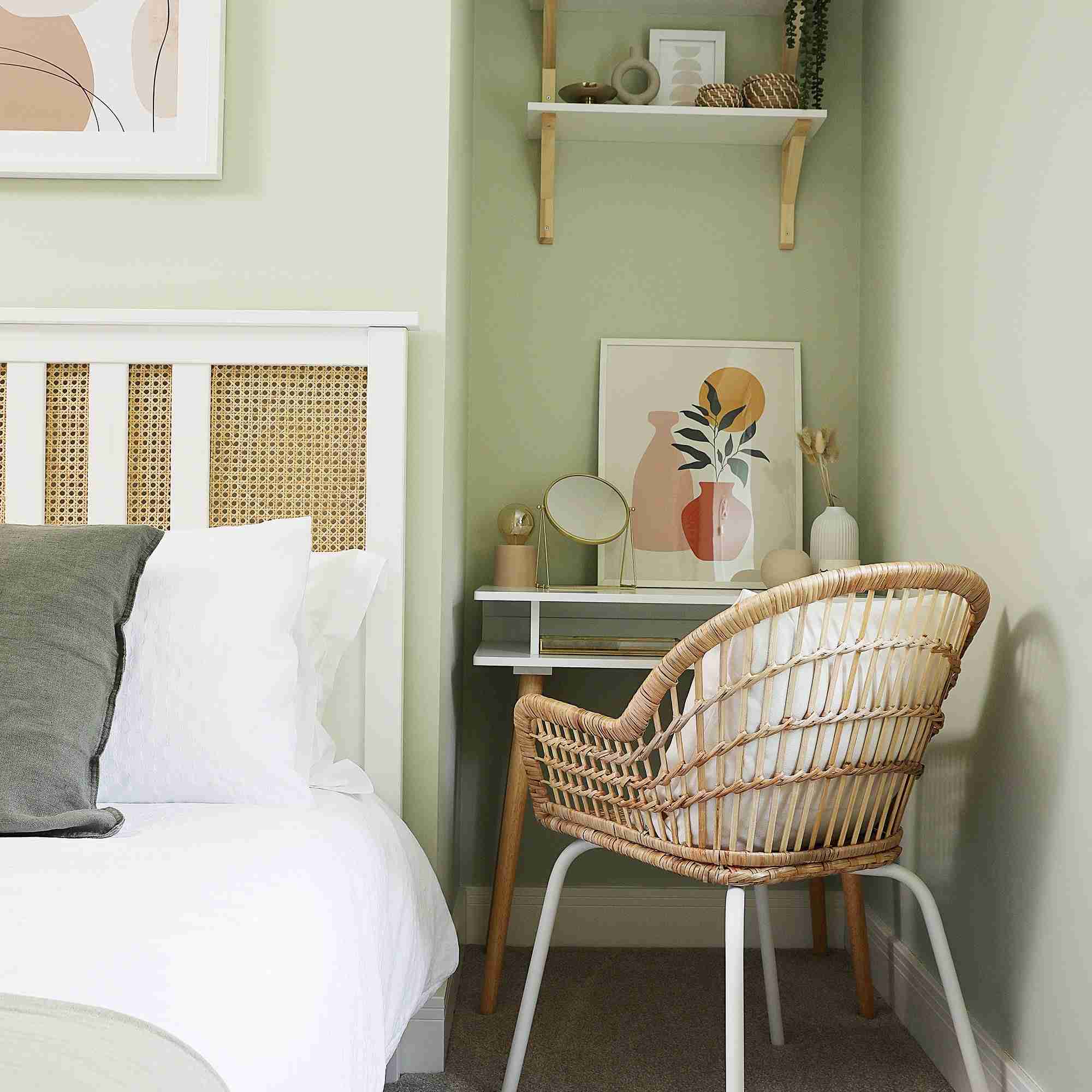
Adding a desk can make a bedroom useful during the day, but it can also make the room feel like an office. The source recommends treating the workspace as part of the room's overall design rather than an unrelated item dropped into it. One suggested approach is to avoid making the desk the first thing seen from the doorway. A corner or position against a window wall can preserve the bed as the principal focal point.
Think about the complete arrangement
The bedroom still needs to support relaxation, storage, and dressing, so desk placement should be considered with those functions in mind. An integrated position can reduce the feeling that work is dominating the space. The article's emphasis is on preserving the room's restful character while accommodating practical needs. Choose a location that feels intentional within the existing plan instead of using whichever gap happens to remain after everything else is installed.
Consider what remains visible from the bed
Carina Raymond recommends checking the view when lying down as well as the first impression from the doorway. A compact desk in an alcove or within coordinated joinery may make the activity feel contained. A window position can be useful, but compare glare, equipment, and the room’s actual circulation before choosing it. These are design suggestions for a calmer appearance rather than a guarantee about sleep outcomes.
Give work equipment an end-of-day destination
A bureau or desk that closes behind doors can conceal the surface when not in use. Even a drawer for paperwork and a clear cable arrangement can help distinguish working time from the room’s other functions. Check that doors and folding surfaces can operate without displacing essential bedroom furniture. Use finishes and materials that relate to the existing storage, and choose a chair for comfort as well as appearance. The workspace should be appropriately sized for its daily tasks while leaving the bed, wardrobe, and dressing route easy to use.
Check the view both on entry and from the bed
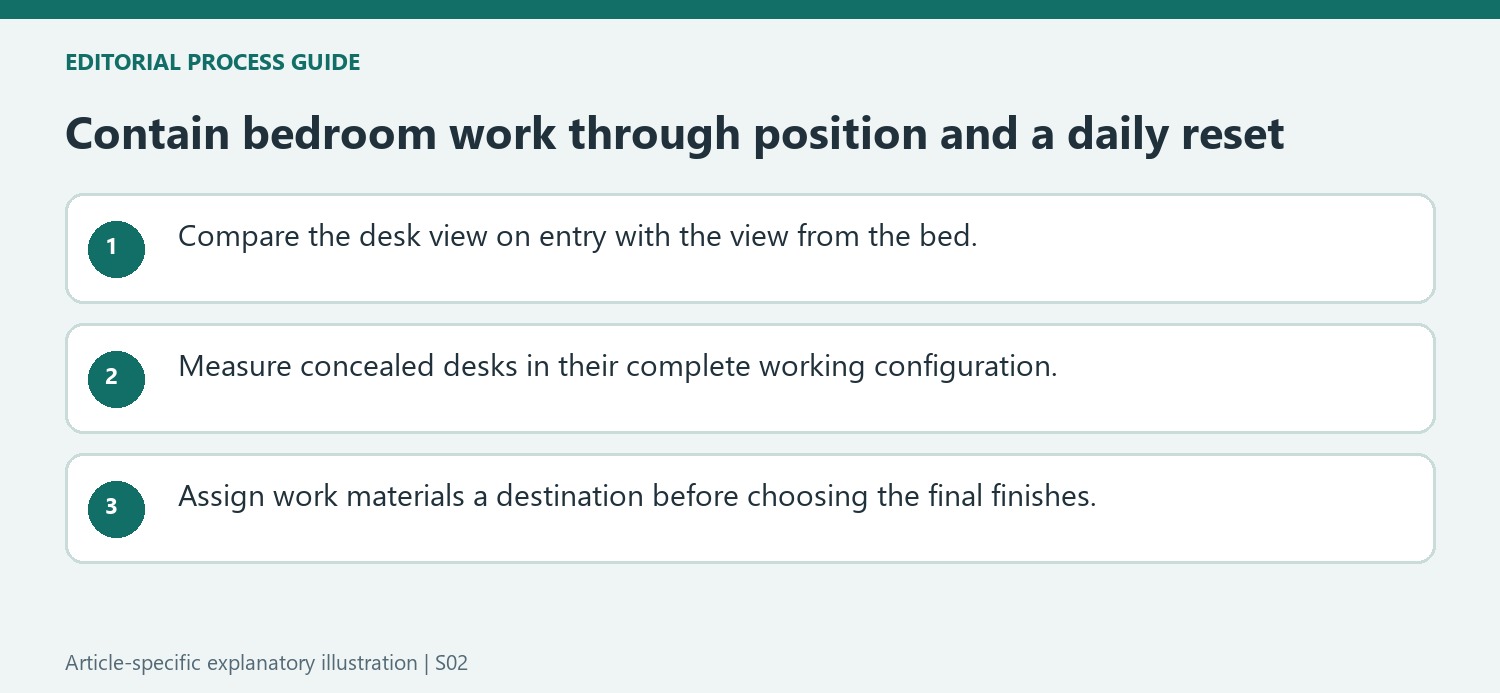
Lara Clarke suggests avoiding a desk as the first thing seen on entering, while Carina Raymond asks what remains visible when lying in bed. Compare both viewpoints in the actual room. A position beside a window or within a corner may reduce the desk's prominence, but must still provide workable dimensions and preserve the room's circulation. These are design strategies for containing the work area, not a guarantee of improved sleep. The source's broader aim is to keep the bedroom feeling restful. Test whether the proposed location actually reduces the visibility of work materials without making the workstation so awkward that it spreads elsewhere.
Assess concealed furniture with the working setup in place
A desk behind doors or within fitted joinery can create a clearer visual boundary when closed. Check the open configuration just as carefully. Include the chair, the depth required for equipment, and the storage needed for papers or chargers. A bureau that closes only after every item is moved somewhere else may create a burdensome daily reset. A sloping ceiling or alcove also needs enough usable space for the person and the intended activity. The source identifies these locations as possibilities rather than universally suitable offices. Compare the actual furniture mechanism and installation information with the setup it must contain before committing to a concealed design.
Make the end-of-day reset part of the layout
Katerina Tchevytchalova and the other designers favor materials and colors that connect the desk with the bedroom's existing furniture. Pair that visual integration with specific storage destinations. Decide where the current laptop, loose papers, and cables go and how easily they can be retrieved the next day. A drawer or concealed shelf can be sufficient for a compact setup if the contents fit and relevant equipment guidance is followed. Select useful task lighting alongside a chair that suits the actual working routine. A consistent finish cannot compensate for an uncomfortable surface or an overflowing storage area. The best position is one that contains the work both during use and afterward, allowing the bedroom's main functions to remain practical and visually coherent.
References
- 5 clever ways to add a desk to your bedroom without disrupting your sleep – interior designers reveal all. Ideal Home; Amy Lockwood.
Adding a desk can make a bedroom useful during the day, but it can also make the room feel like an office.


Leave a Comment