
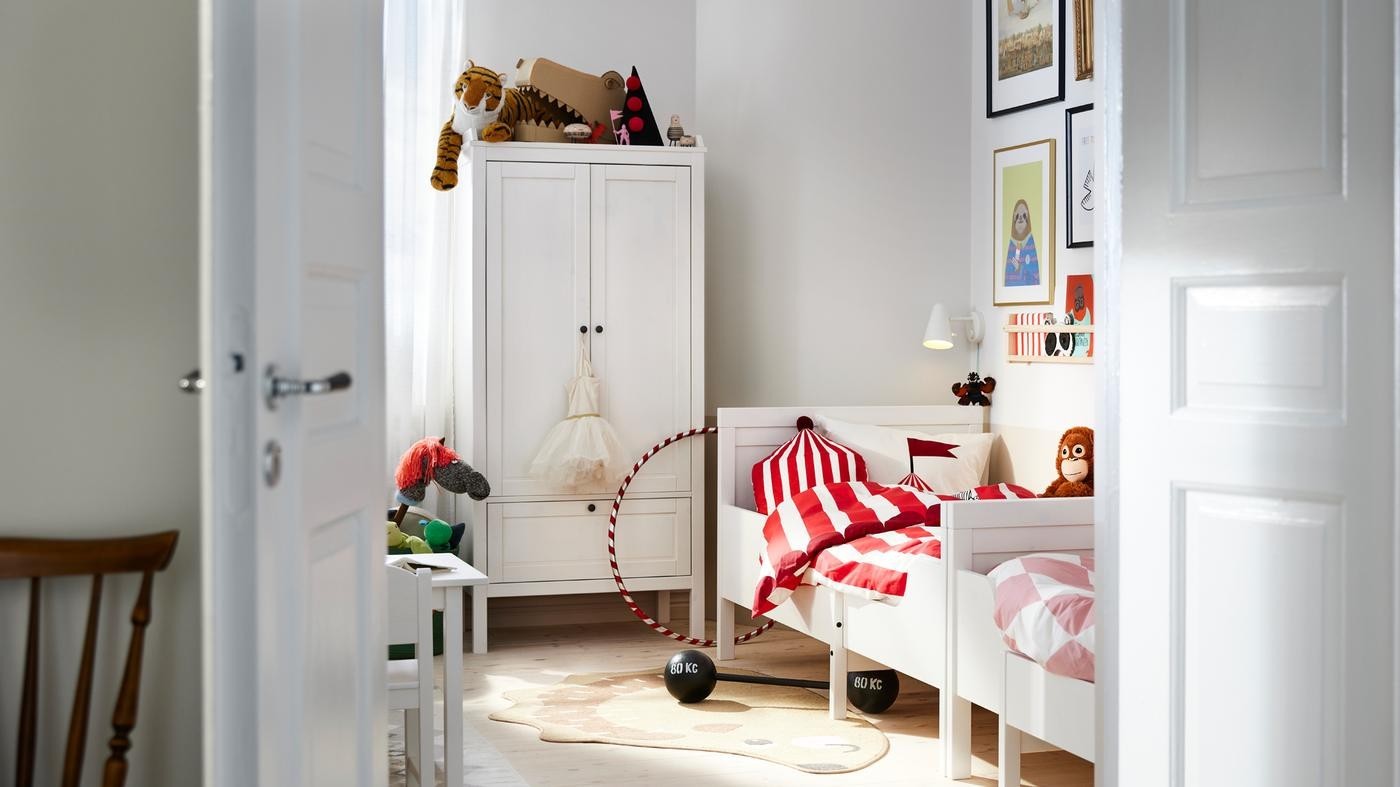
Use Coordinated Furniture to Organize a Shared Family Bedroom
The source uses matching extendable beds in a bedroom shared by parents and children. Different rugs and bed linen distinguish the children's areas while a coordinated color scheme keeps the room visually connected. Neutral furniture leaves room for accessories to change.
Wall storage above the beds and a wardrobe provide places for belongings without spreading cabinets across every open section of floor. Adapt the example to safe furniture installation and realistic access. Shared appearance should support, rather than replace, each person's practical space.
Give each child an identifiable part of the room
The IKEA example uses identical extendable bed frames but different rugs and bedding to distinguish two personalities. Red and pink remain within a related color family, creating connection without making every object match. This is a useful separation of permanent furniture from changeable details. Let each child recognize their own belongings and sleeping space while retaining a straightforward shared layout.
Keep changing preferences in the accessories
The wardrobe and wall storage form a neutral background for toys, masks, wall art, and patterned textiles. These smaller details can change as the children grow, whereas replacing all the large furniture would be more disruptive. Check age suitability, assembly, anchoring, and access for the specific storage and bed configuration. Storage above a bed should follow the system’s installation requirements, with contents chosen for that position.
Plan the transition to quieter activities
The source describes lowering a blind and playing soft music as part of the room’s evening atmosphere. Adapt that idea to household preferences rather than assuming a universal bedtime effect. Practical window coverings, suitable lighting, and a clear place to return toys support the room’s changing use throughout the day.
Coordinate the permanent furniture without erasing individual zones
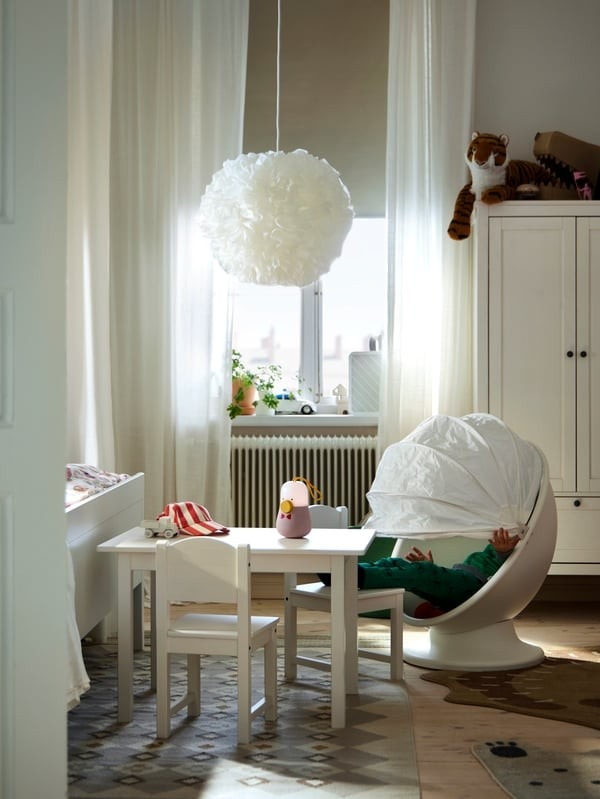
The IKEA example uses matching extendable beds and white traditional-style furniture as a stable background. Different rugs and bed linen distinguish the children's places, while related red and pink tones connect them. Translate that relationship by deciding which large pieces need to remain consistent and where each child can make a personal choice. Identical furniture does not require identical possessions or decoration. The source illustrates a shared family bedroom, but its photographs do not provide a universal arrangement for every family size or age. Compare the actual sleeping spaces, access, and storage requirements before copying the composition. A clear boundary between each child's belongings can matter as much as matching finishes in making a shared room comfortable to use.
Give small belongings an understandable return destination
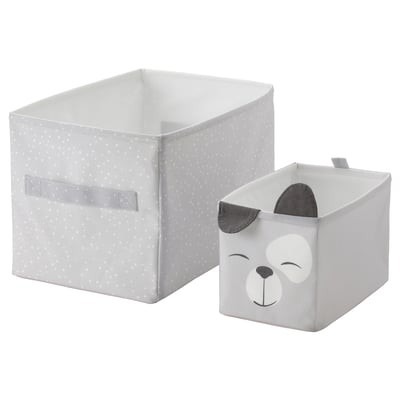
Wall storage in the reference holds toys and masks, and small containers help organize objects that would otherwise scatter. Choose positions and containers that suit the actual age and abilities of the children using them. A practical test is whether one category can be found, taken out, and returned without emptying several others. Keep adult-controlled or unsuitable objects in appropriately managed locations. The wardrobe forms part of the neutral furniture background, but its internal categories still need to reflect the family's real clothing. When two people share a storage unit, recognizable divisions can support independent tidying. Start with a small set of frequently used belongings before extending the system across every toy and garment.
Plan the evening change as carefully as the daytime appearance
The source shows a partly lowered blind and describes music as part of winding down. Treat those as examples of atmosphere rather than a promise that every child responds the same way. Decide how the shared room changes when one person is resting and another still needs access to clothes or belongings. Useful local light, manageable storage, and a clear route can reduce the disruption of that change. Decorative details are easier to update than the bed and wardrobe, so leave room for interests to develop. Follow the actual bed's adjustment and use instructions as children grow. The long-term value of a coordinated background is its ability to support changing personal details while retaining a workable shared arrangement, rather than maintaining one photographed look indefinitely.
References
Matching main pieces can coexist with individually defined places for children.


Leave a Comment