
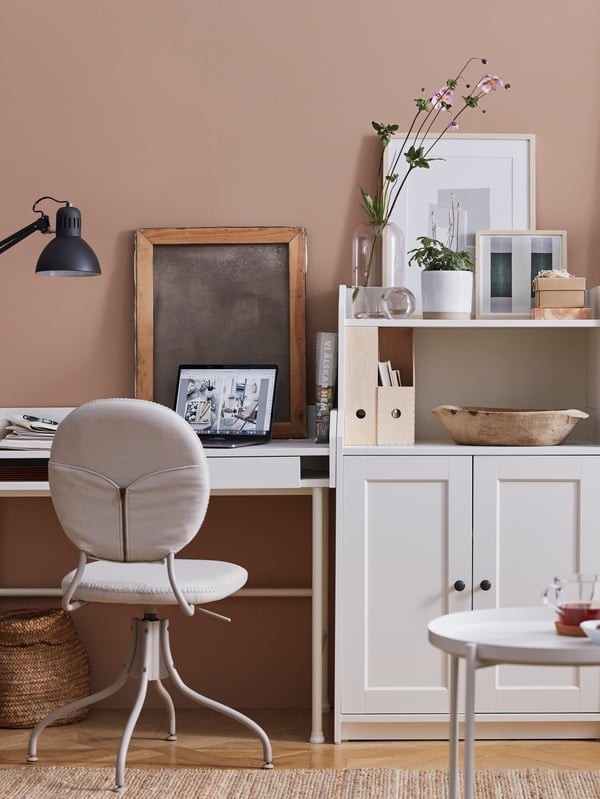
Make a Living-Room Desk Belong to the Furniture Group
The source integrates a desk with living-room furniture instead of treating the work area as an unrelated office. Space beneath the desktop conceals a keyboard, mouse, and cords. A cabinet combines upper display storage with lower sections for papers.
The sofa remains a distinct place for relaxation. This separation gives work equipment a defined destination when the day ends. Position the desk where its chair and storage can be used comfortably without interfering with the seating group or the route through the room.
Check the desk with the chair in use
The IKEA arrangement treats work furniture as part of the living room’s coordinated materials and colors. Measure the chair’s pulled-out position and the route behind it as well as the desktop itself. Keep the sofa accessible while someone is working, rather than requiring the whole room to pause whenever the desk is occupied. A compact footprint should still leave a usable working surface.
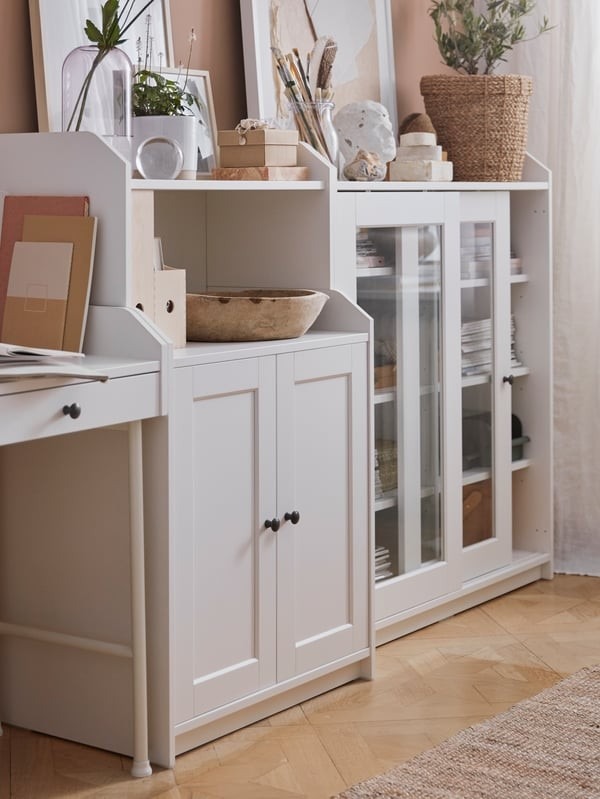
Separate display from work-related storage
The cabinet places favorite objects and plants in its upper display area, with papers, books, and work documents stored below. This gives the furniture two roles without scattering office equipment across the seating group. Assign shelves or drawers to clear categories and avoid putting watering plants where leaks could affect documents or electronics. The source describes the arrangement as an example rather than supplying a complete equipment or installation specification.
Make putting work away a short routine
The featured desk provides storage beneath the top for a keyboard, mouse, and cords. Check how the actual equipment fits and follow device ventilation and power guidance. Return loose papers and accessories to their assigned compartments when work ends. The living room then regains an ordinary seating focus without needing to remove the desk itself.
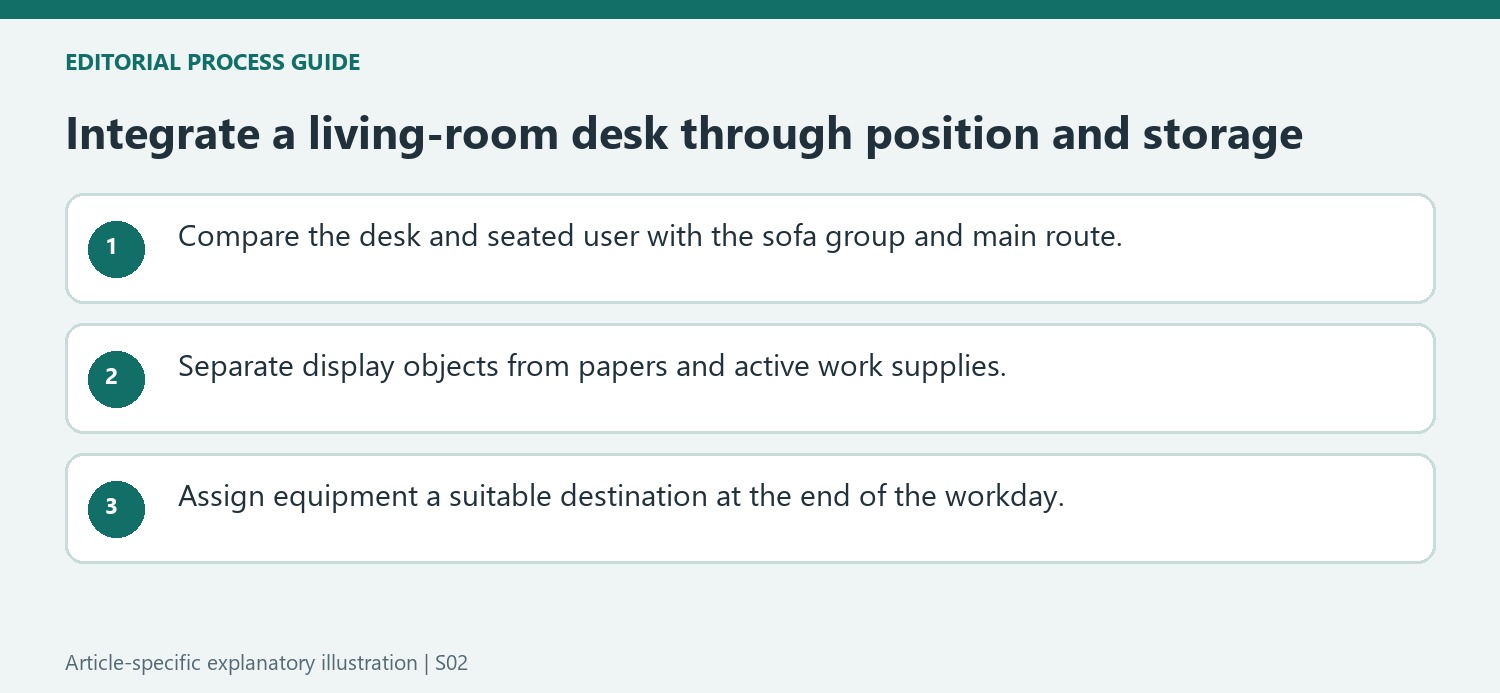
Connect the desk to the existing furniture vocabulary
The source living room gives the desk a finish and outline that relate to the surrounding storage. Begin by comparing the desk position with the sofa group and the room's main route. A compatible appearance can make it feel like a considered part of the room, but it does not remove the need for adequate work space. List the equipment and working materials before selecting a compact surface. The photographed setup illustrates one combination rather than specifying the correct dimensions for every worker. Check the chair position with someone seated and include the space needed to move away from the desk. That active footprint is more informative than the closed furniture outline alone.
Assign display and work storage different roles
The example places favorite objects and plants above, with papers, books, and work documents stored below. This gives different belongings distinct destinations rather than expecting every shelf to perform the same job. Identify which documents need frequent access and which supplies can remain concealed. A display shelf should not become the only available resting place for loose work materials. Compare cabinet openings with the adjacent desk and seating, and use the actual unit's installation requirements. Personal objects can help the room retain its living-room character, while a clear storage boundary prevents current work from gradually occupying the whole furniture group. Review the arrangement after a normal work session rather than only when freshly styled.
Design the transition back to leisure
The source describes storing the keyboard, cords, and mouse beneath the desktop at the end of the day. Confirm that a proposed desk really offers the appropriate clearance or storage for the equipment you use. Do not assume every visually similar model has the same feature. Decide where the laptop and papers go as well, following relevant equipment guidance when devices are stored. A workable reset can be short: return current materials to their assigned space and restore the surface needed for ordinary living-room use. The sofa and supporting furniture should remain accessible while the desk is operating. This complete transition gives substance to the reference's work-and-life balance idea, rather than relying solely on a calm palette to make an unfinished workstation disappear.
References
- A living room for relaxing and working. ikea.com.
Coordinated storage helps a work area coexist with a separate resting place.


Leave a Comment