
Concentrate Family Storage to Preserve Play Space
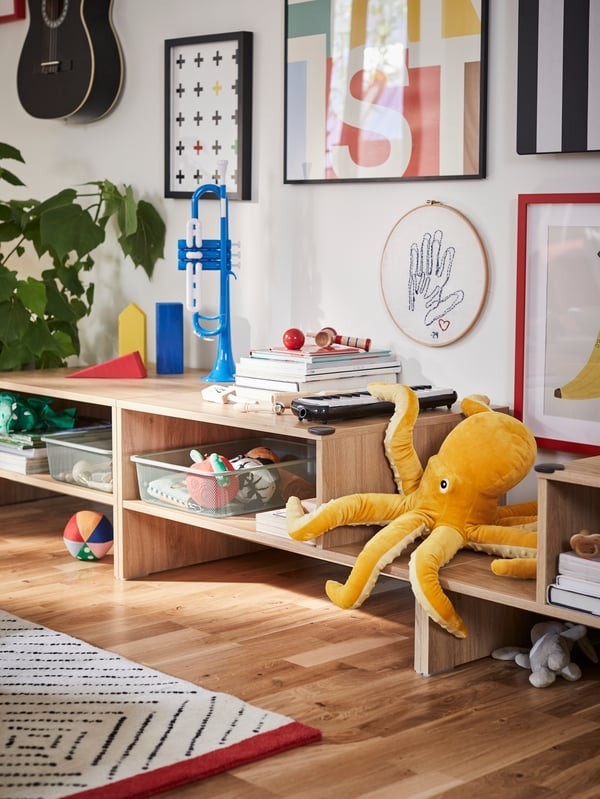
The family room in the source uses stackable storage poufs as additional seats and places for belongings. Low coffee tables and portable toy boxes allow children to reach what they use. Taller storage combines open and closed sections in a smaller floor footprint.
Keep fragile possessions away from active play and consider exposed furniture corners when planning routes. Choose the size of the seating group around the floor space the household actually needs. An extra storage feature is less helpful if the surrounding room becomes difficult to use.
Compare storage seats with their actual use
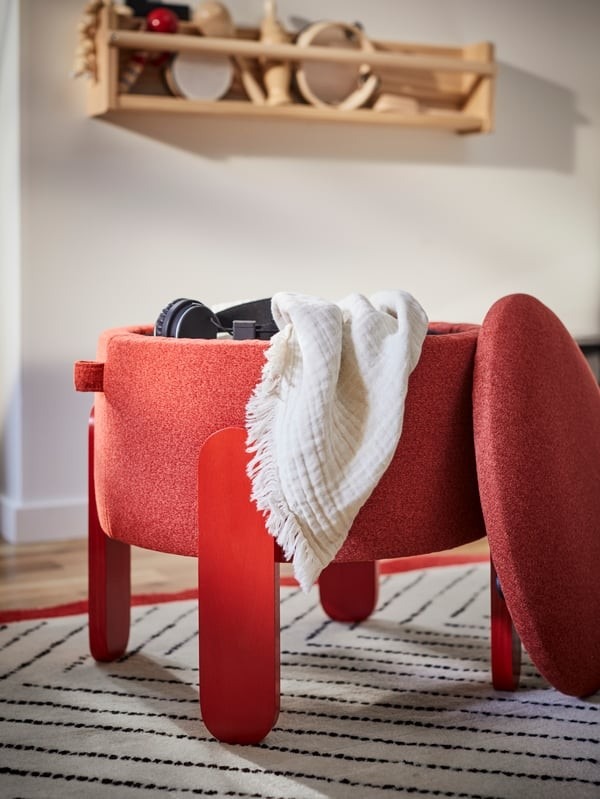
The featured FORLUNDA pouf provides a soft seat, concealed storage, and a stackable form. Confirm the current model’s stacking and load instructions before adapting the idea. A stack of occasional seats needs a stable parking position that does not consume the play area it was intended to free. Store contents that remain easy to retrieve when the pouf is in normal use.
Give children a manageable return system
Low HOLMERUD tables and portable TROFAST boxes place toys near the activity. Separate categories into boxes the users can handle and return. Keep small parts and art supplies appropriate to the children’s ages. Corner bumpers can reduce exposure to particular edges, but do not make every furniture arrangement injury-proof or replace suitable supervision.
Concentrate the adult storage without creating a new hazard
The tall LADMAKARE combination mixes display and closed cabinets so less child-friendly objects can be separated from everyday toys. Follow anchoring requirements and choose appropriate contents and positions. The sofa, textiles, and children’s chair make the room inviting, but leave a genuinely usable floor area rather than treating every spare corner as another furniture opportunity.
Concentrate storage without making every item equally reachable
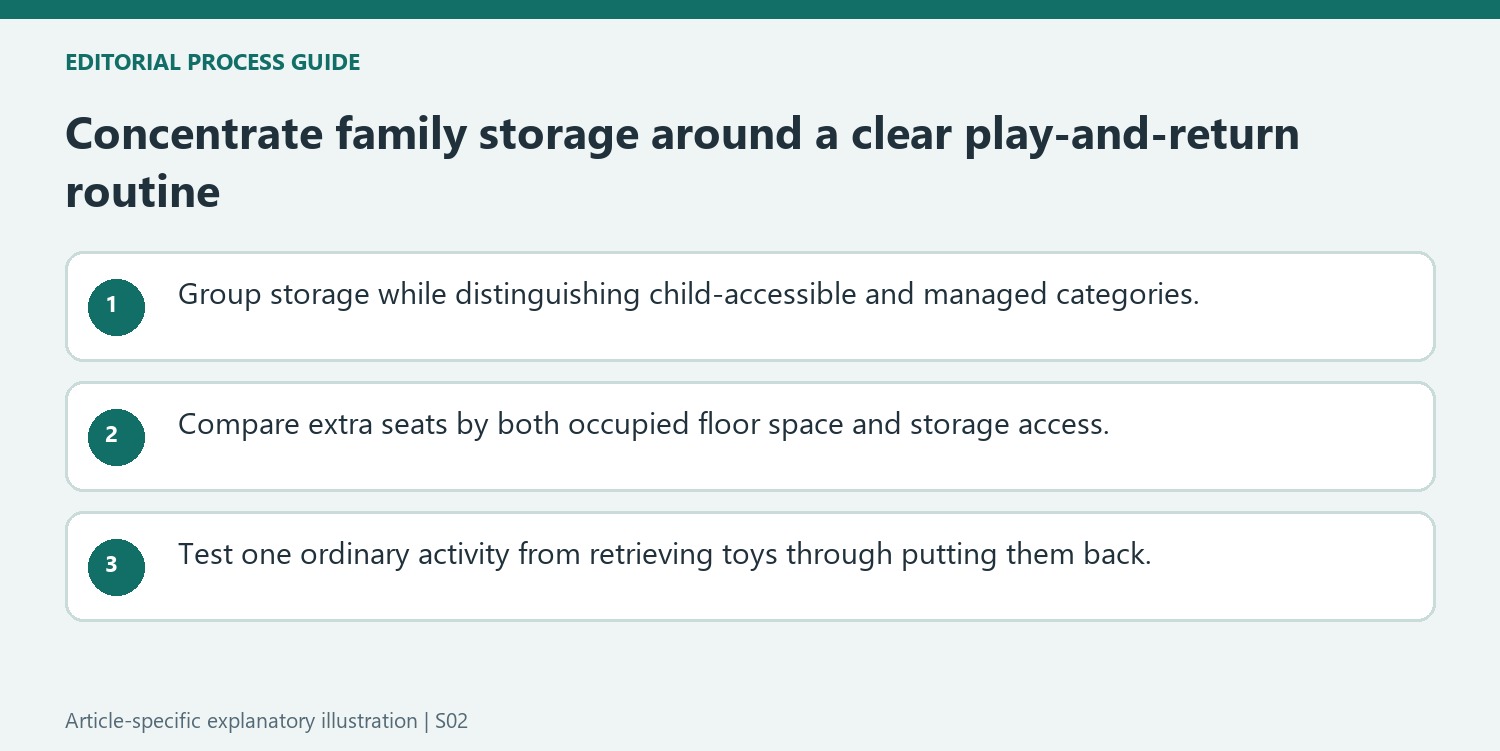
The IKEA family-room example groups much of the storage along a wall so that other parts of the room remain available for shared activities. Within that group, low boxes give children access to selected toys, while other objects occupy different positions. Decide which categories should be independently accessible and which need adult management. Height alone is not a complete child-safety strategy; follow the actual furniture's installation and anchoring instructions and consider the objects being stored. The practical organizing objective is a clear relationship between the play area and the relevant toy category. A concentrated cabinet is most useful when its contents have destinations people can understand and reach appropriately.
Evaluate extra seating together with its storage mechanism
The source pouffe provides another seat and space beneath its removable top, while the coffee-table examples use open compartments. These serve different retrieval patterns. A lidded seat needs a temporary destination for the top and any person or object occupying it. Open storage is quicker to see, but needs categories that remain manageable in view. The reference describes the pouffe as stackable; check the actual product's current instructions and intended configuration before relying on stacking at home. Count the supporting surfaces and seats that the family really uses. Extra multifunctional pieces can still consume the floor space intended for play if they are bought without a clear role.
Test the play-and-return sequence with one familiar activity
The example combines a sofa, a child's chair, accessible boxes, and soft floor textiles. Rather than reproducing the complete shopping list, select an activity the family already enjoys. Check where its materials are retrieved, where they are used, and how they return to storage. A toy box that is easy to carry may support that sequence, depending on its contents and the user's ability. Leave an appropriate route around the seated group. Corner bumpers appear in the source, but should not be treated as eliminating all furniture-related risk. The useful result is a room where the adults' and children's belongings can coexist without every activity requiring a major rearrangement. Review overflow categories early so that the intended play area does not gradually become another storage zone.
References
Low accessible pieces and tall storage can serve different household needs.


Leave a Comment