
Leave a Living Room Ready for Play and Easy to Reset
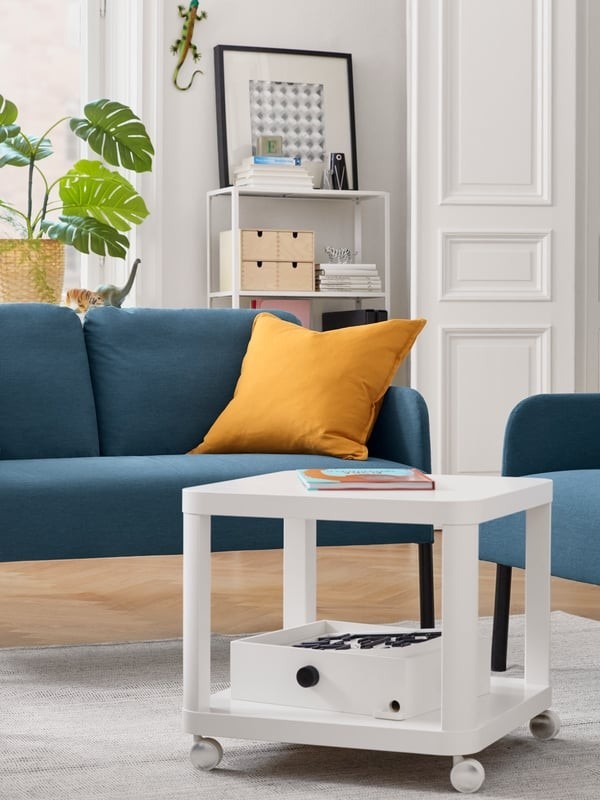
The source combines a lightweight sofa with a side table on casters, allowing the furniture to shift as family activities change. The table's lower shelf adds storage. Baskets and boxes within a television bench contain toys near their point of use.
A display cabinet holds artwork and materials, while frequently used art supplies stay low enough for children to reach. Plan the return journey for every portable item. The room can change role more comfortably when play equipment has an obvious place afterward.
Test how often the room really needs to change
The lightweight sofa and wheeled side table support different arrangements, but the route for moving them matters. Check the floor surface, handles or lifting guidance, and room around other furniture. A movable table should have a defined position when it is not beside the sofa. Keep its lower shelf organized so the contents do not spill whenever the table changes location.
Place creative materials where the right user can reach them
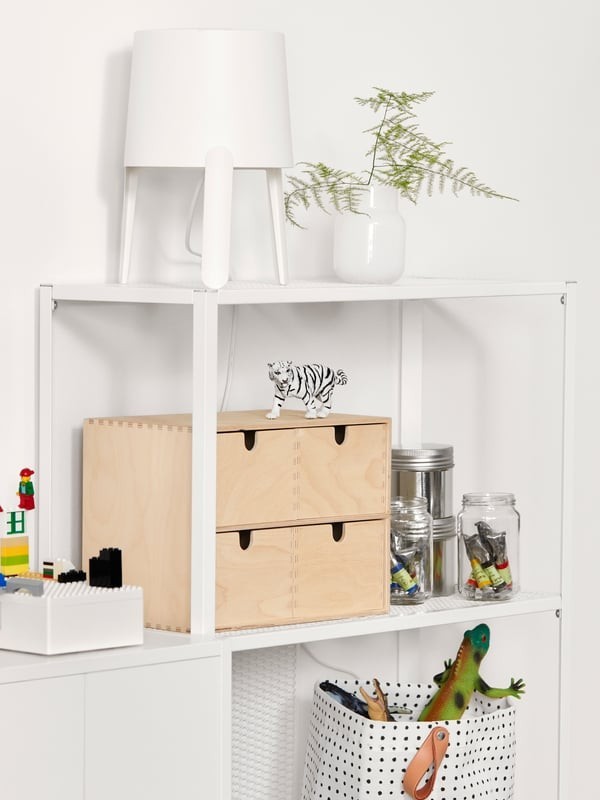
The source groups art supplies in clear jars or boxes and gives toys easy-to-grab baskets. Choose age-appropriate containers and supervise materials that should not be independently accessible. Low storage can encourage return routines, while display cabinets provide a separate place for finished artwork. Glass jars are one example in the styled room, not a requirement for every household.
Give the display and concealed storage different jobs
Baskets inside the television bench can contain toys, while the cabinet displays selected creations and holds materials nearby. Avoid allowing every open surface to become a miscellaneous landing place. Follow furniture and television securing instructions and preserve access to equipment. The flexible room works when each activity has a place to begin and a straightforward place to put things away afterward.
Define what moves and where it moves to
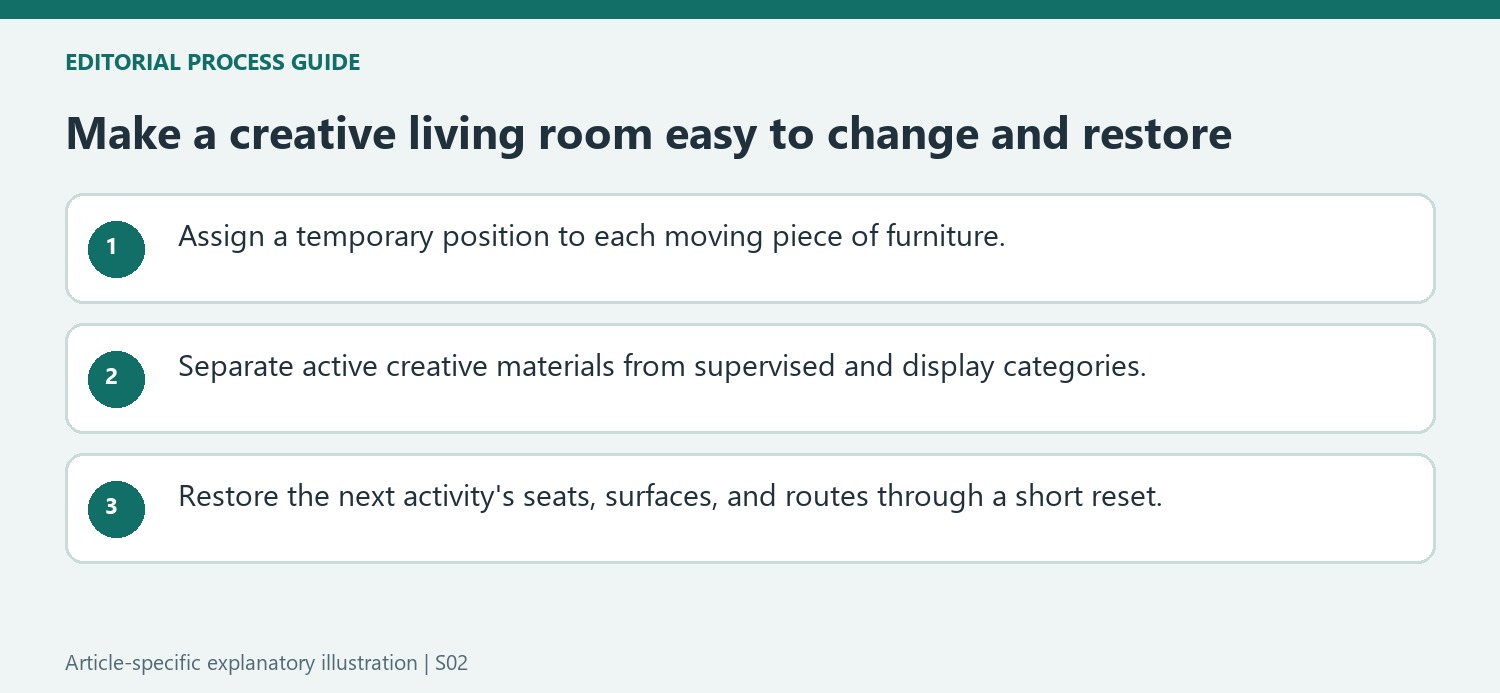
The source uses lightweight seating and a side table on casters to make room for creative activity. A flexible layout needs more than pieces that can theoretically move. Mark the temporary position of each item and check that it does not block another useful route. Compare the effort of the change with how often the activity happens. A simple shift of one table may be more practical than moving the entire sofa group every afternoon. Use the actual furniture's handling and operating guidance instead of inferring that every similar-looking piece is easy to lift. Decide which adult manages a change where that is appropriate for the furniture and household.
Place creative materials according to use and supervision
The reference shows art supplies in containers, toys in baskets, and completed work within display storage. Separate these roles before choosing containers. Materials needed for an activity should be identifiable, while those requiring supervision need appropriately managed access. A clear jar makes its contents visible but is not automatically the right container for every child or material. The source display cabinet provides an example of combining storage with self-expression; it does not establish that every shelf height or glass-fronted unit is suitable in every household. Review the actual unit's installation instructions and the intended users. A small, accessible selection can support creativity without exposing the entire supply collection at once.
Design a reset that restores the room's next activity
Boxes and baskets can help open TV-bench storage look orderly when each one has a defined purpose. At the end of drawing or play, compare the route back to those destinations with the furniture's normal positions. Put frequently returned materials close enough that tidying does not require moving another item first. The wheeled table's lower shelf can keep a selected category together, but its loaded dimensions and movement still need consideration. A useful reset restores a seat, surface, and route for the next use rather than aiming for an untouched showroom. Review the things that repeatedly remain on the floor or sofa; they may reveal an inconvenient storage position rather than a lack of discipline. Adjust the smallest relevant part of the arrangement and test the next normal session before adding more containers.
References
- A living room that makes room for play. ikea.com.
Movable tables and accessible storage reduce the effort of changing activities.


Leave a Comment