
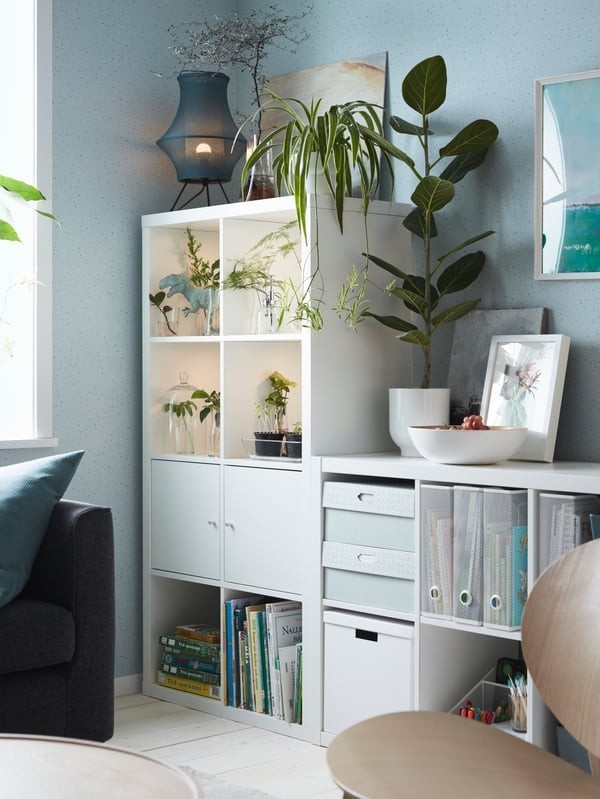
Put Children's Everyday Supplies within Comfortable Reach
The source positions books and art materials on lower shelves so children can use the living room more independently. Boxes, lids, and magazine files give smaller belongings defined places. A child-sized swivel chair provides a distinct seat beside the family furniture.
A washable sofa cover accommodates the practical demands of shared use. Arrange storage close to the activity it serves, then leave enough space to carry containers and put them away. Reachable supplies help most when the cleanup route is equally straightforward.
Separate independent access from adult-controlled supplies
Low shelves can make books and suitable creative materials easier for children to choose and return. Keep sharp tools, small parts, or other restricted supplies in an appropriate separate location. Choose containers the intended user can carry and open, then give each category a recognizable place. A tidy-looking shelf is less useful if returning a book or box requires an adult to rearrange everything.
Check care instructions for the shared seating
The example uses a sofa cover that can be removed and washed. Confirm the care label, removable sections, and drying instructions for the actual cover rather than assuming every upholstery fabric is machine washable. Plan how the room can remain usable while the cover dries. Place lamps and their cords so they do not interfere with retrieving toys or moving around the seating group.
Treat extra equipment as a separate decision
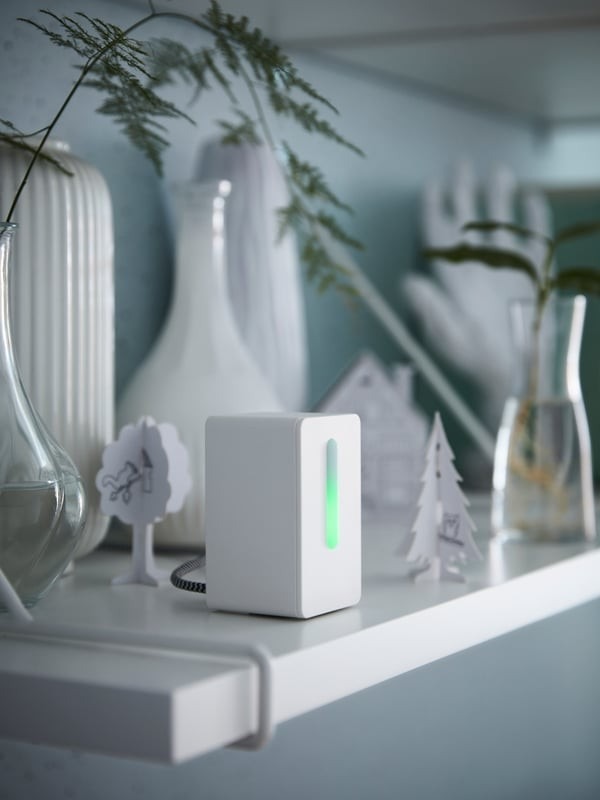
The source also mentions a hooded swivel chair and an air-quality sensor paired with a purifier. Check age suitability and product instructions for the chair. A particle sensor does not measure every aspect of indoor air quality, and a purifier is not a substitute for addressing pollution sources or appropriate ventilation. These accessories are optional features of the example, not requirements for reachable toy storage.
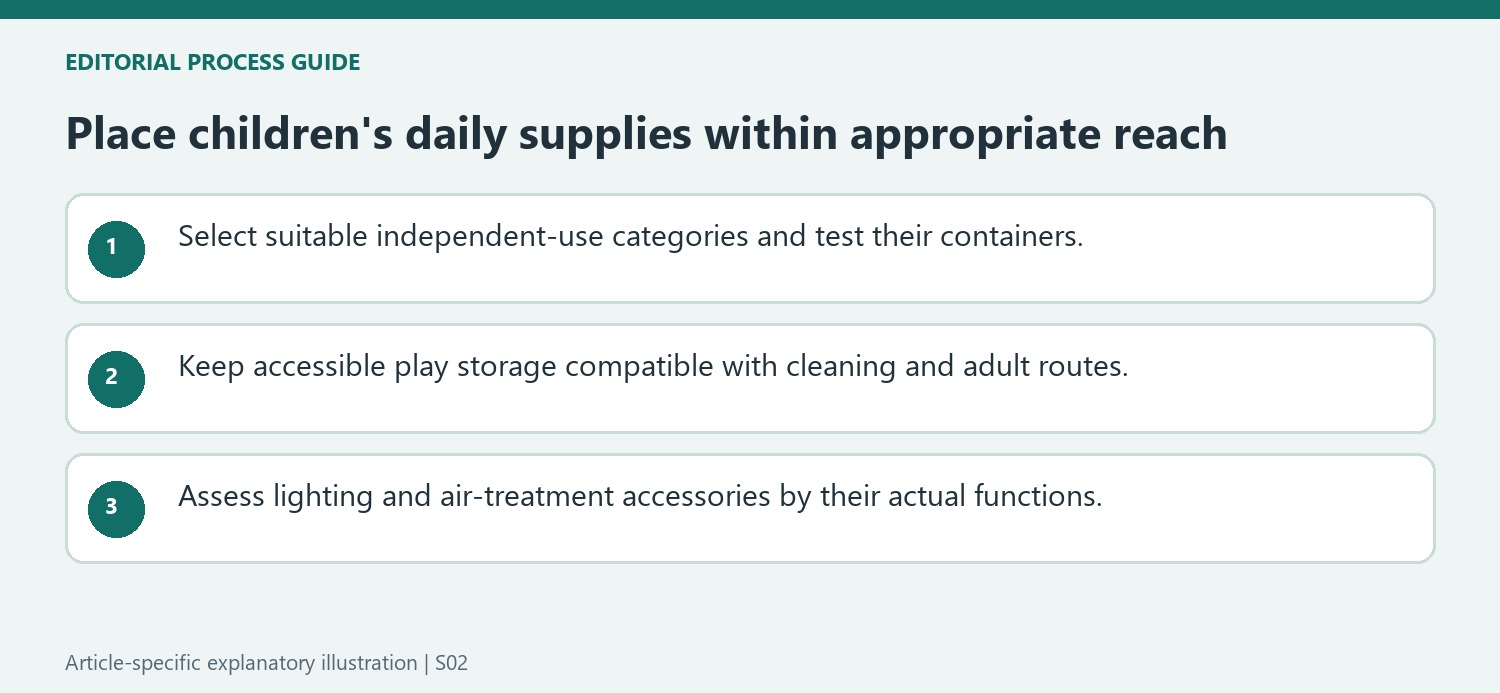
Choose which everyday supplies belong within easy reach
The reference puts children's books and art materials on the lower part of the shelving. Apply that idea selectively to items appropriate for independent access, rather than lowering every household supply. Compare the child's reach with the height and handling of the actual container. A lid can make a group look tidier, but may add a step that makes return difficult. Try a small familiar category first, such as the books currently being read, and observe how it comes out and goes back. The source uses boxes and magazine files as organizing examples; their usefulness depends on what they hold and the abilities of the people using them.
Connect accessible play storage with adult maintenance needs
The room combines children's activity with a sofa whose cover can be removed and washed. Check the actual cover's care label and removal instructions before assuming every upholstered piece tolerates the same treatment. Similarly, a hooded swivel chair is presented as an enjoyable feature, but the short source does not establish a developmental outcome for every child. Choose and use it according to its intended age range and current instructions. Adults still need a workable route around the seating and a destination for belongings that should not be freely accessible. A shared room works best when the child's selected materials can be used without making every adult surface part of the play-storage system.
Distinguish an atmospheric detail from a measured function
Shelf lighting can change the appearance of the storage, while useful task lighting must still suit the activity and selected fitting. The source also shows an air-quality sensor and mentions a purifier. Check which pollutants or particles a particular sensor measures and what the purifier is specified to address; neither the photograph nor a broad description establishes comprehensive air-quality protection. Place equipment according to its own guidance rather than squeezing it into an attractive gap among objects. The transferable room-planning lesson is to identify each accessory's job before counting it as a solution. Reachable supplies, manageable cleaning, appropriate furniture, and useful lighting support different needs, and one appealing detail cannot replace the others. Review them separately after a normal session of family use.
References
Low shelves and portable containers can anchor a family activity area.


Leave a Comment