
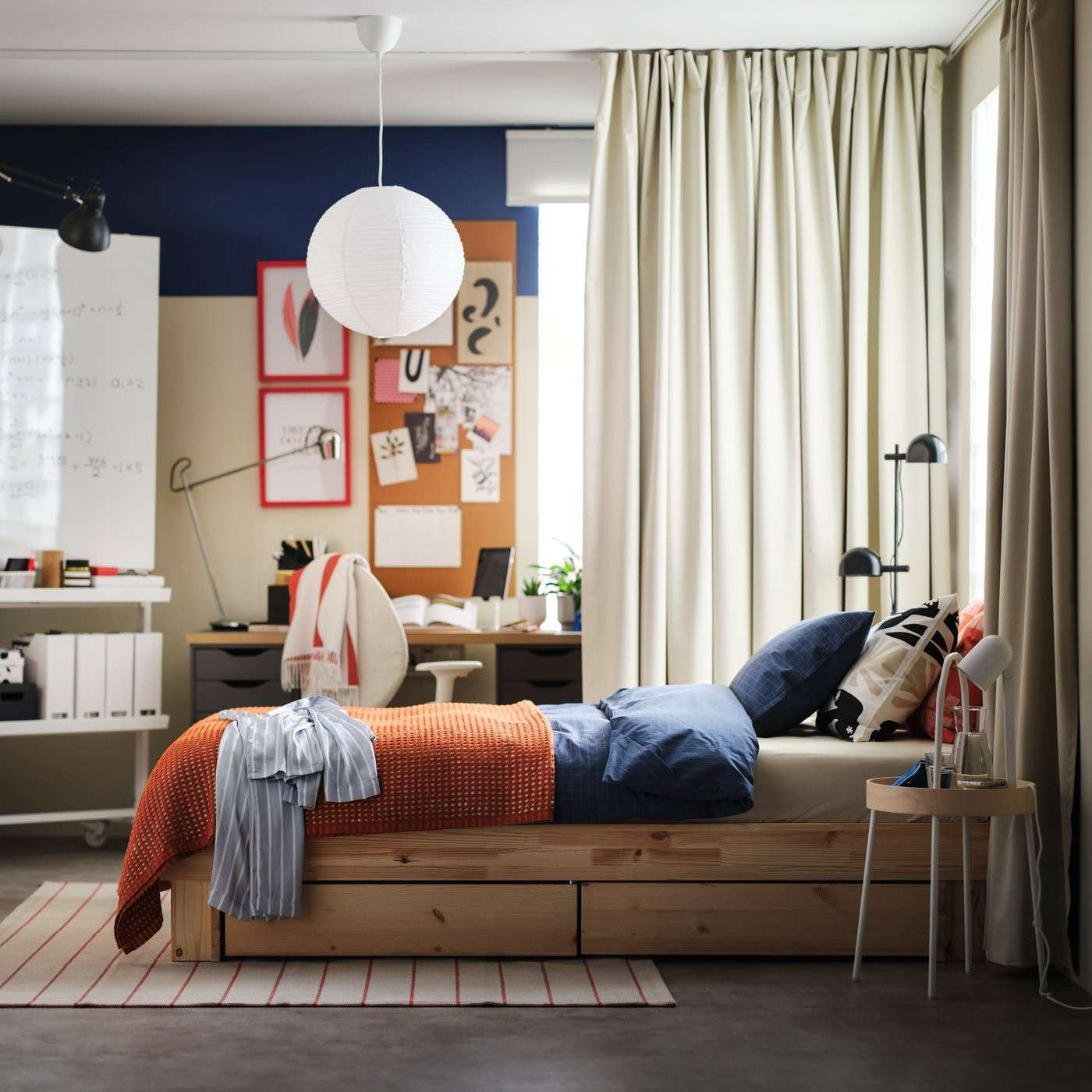
Conceal a Bedroom Workspace When the Workday Ends
The source places bedroom workstations behind a curtain or sliding wardrobe doors. Including work storage within the concealed area keeps papers and equipment with the desk. The arrangement offers a way to reduce visible work materials from the bed.
Another approach is to coordinate the desk with the rest of the bedroom furniture. Either option still needs an orderly working surface and usable chair clearance. Decide whether concealment or visual continuity best supports the room's actual work and sleep routines.
Include storage inside the concealed zone
The IKEA guide emphasizes putting a substantial share of the work storage behind the curtain or doors along with the desk. Larger objects can occupy shelves or cabinets, while smaller supplies need drawers and containers. Keep the arrangement understandable when open; a curtain does not resolve an overloaded working area. Measure the chair and the full travel of the covering so closing the area is a simple routine.
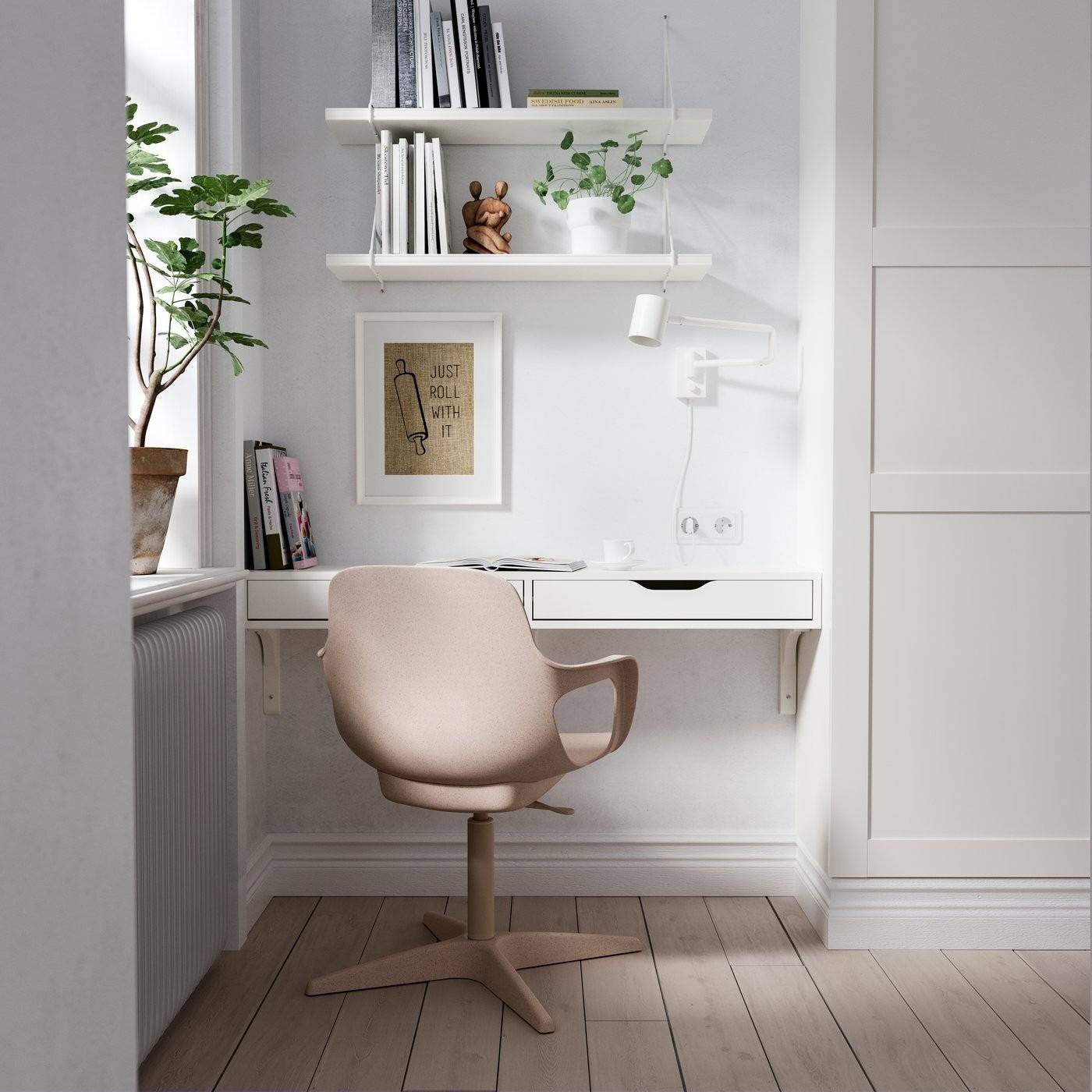
Choose visual continuity when concealment is impractical
A desk in related finishes can belong to the bedroom’s furniture group and may also serve as a vanity if its dimensions and storage suit both tasks. Give cables, papers, and chargers defined locations. Check power and ventilation instructions before enclosing electronic equipment, and keep fabric away from unsuitable heat sources. A decorative screen can mark the work zone but does not provide full acoustic privacy.
Check the working position and task light
The guide discusses adjustable desk height and dedicated lighting. Compare the desk, chair, equipment, and user together rather than selecting solely by appearance. Keep the lamp useful for reading or writing without directing glare toward the screen. The intended benefit is a contained, comfortable work area, not a guaranteed improvement in focus or sleep.
Choose the boundary by the workspace that has to disappear
The IKEA reference offers curtains and sliding doors as ways to conceal a bedroom desk. List the complete setup before choosing either. The desk, chair, storage, lighting, and the space needed to use them all belong in the calculation. A curtain can hide a view without reducing the equipment's physical footprint. Sliding doors need their own opening and installation space. Check access with the boundary open and confirm that it can close around the stored setup without touching unsuitable equipment or obstructing another function. The source's finished photographs illustrate possibilities rather than a complete project specification. A practical boundary should be easy to use after an ordinary working day, when the desk is not freshly styled.
Organize the area behind the boundary as a workplace
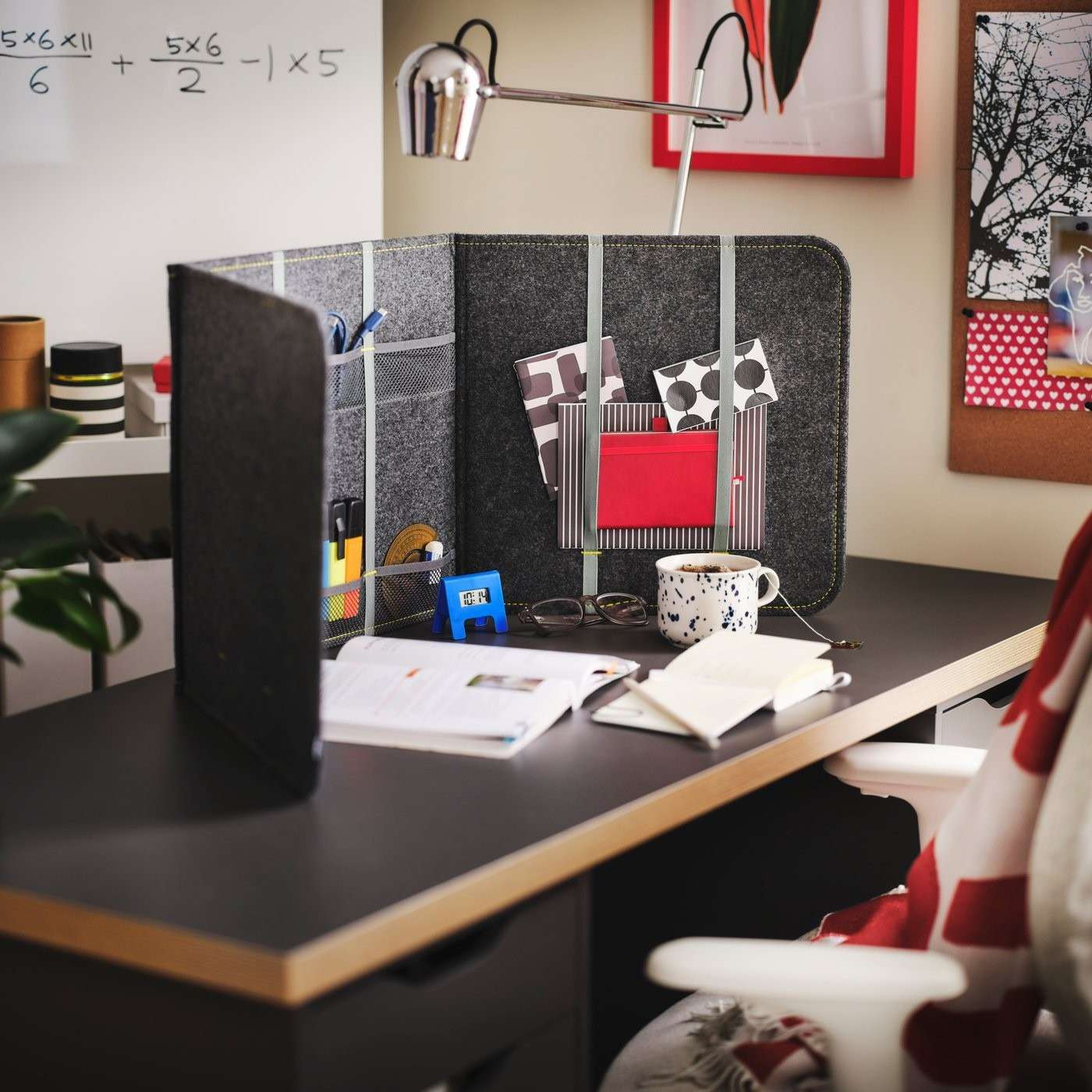
The source emphasizes mixing open and closed storage around the desk rather than concealing a disordered pile. Assign larger objects first, then smaller supplies in drawers or containers. Keep the current task's essentials reachable from the working position, and compare the depth of a desk screen with the actual usable surface. Zoning can reduce some visual distraction, but a screen alone does not create another room or guarantee concentration. Include a suitable chair and task light for the person's work. A compact setup still needs enough space for the intended activity. If papers repeatedly spread onto the bed, reconsider the work-surface and storage arrangement instead of expecting the curtain to solve it.
Integrate cables and personal details without obscuring their requirements
The reference shows cable trays, clips, and storage accessories alongside coordinated desks. Use those examples to identify the cable route, then check the actual equipment's installation, ventilation, and electrical requirements. A tidy photograph is not a wiring specification. A sit-stand desk also needs a clear operating range and components suited to its movement. Small personal details can connect the work corner with the bedroom, but they should leave the useful surface and controls accessible. Finish by testing the whole transition: put work materials in their destinations, move the chair as planned, and close the boundary. If that process is convenient, concealment becomes a useful everyday feature rather than an extra chore performed only when the room is photographed.
References
- Great ideas for your bedroom workspace. ikea.com.
Curtains and sliding doors can visually separate a desk from the sleeping area.


Leave a Comment