
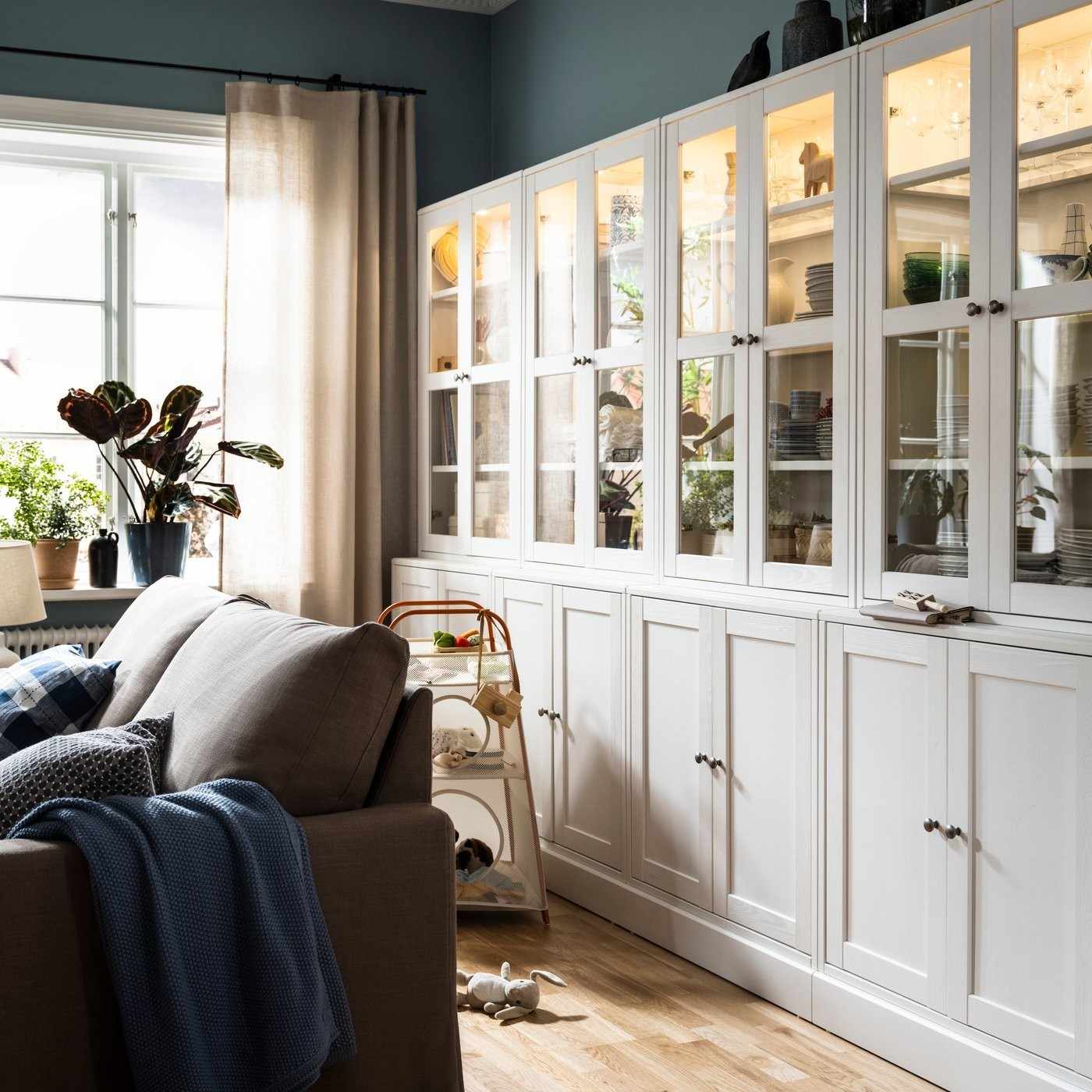
Arrange Family Seating Around Flexible Storage
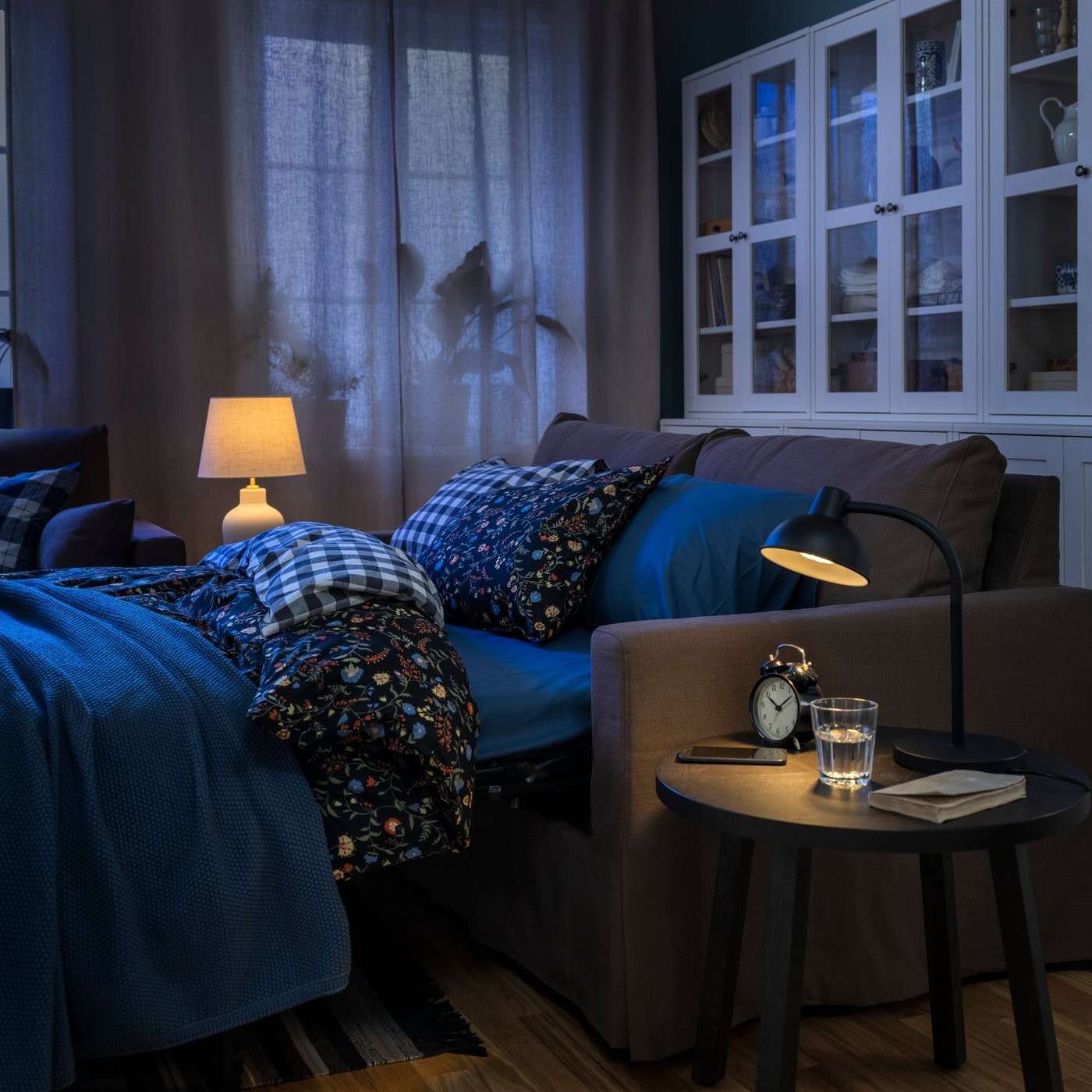
IKEA's family living room combines generous seating, a two-seat sofa bed and washable sofa covers. Pine and glass storage displays favorite objects while concealing toys and smaller belongings behind solid doors. Boxes help children carry items out and return them afterward.
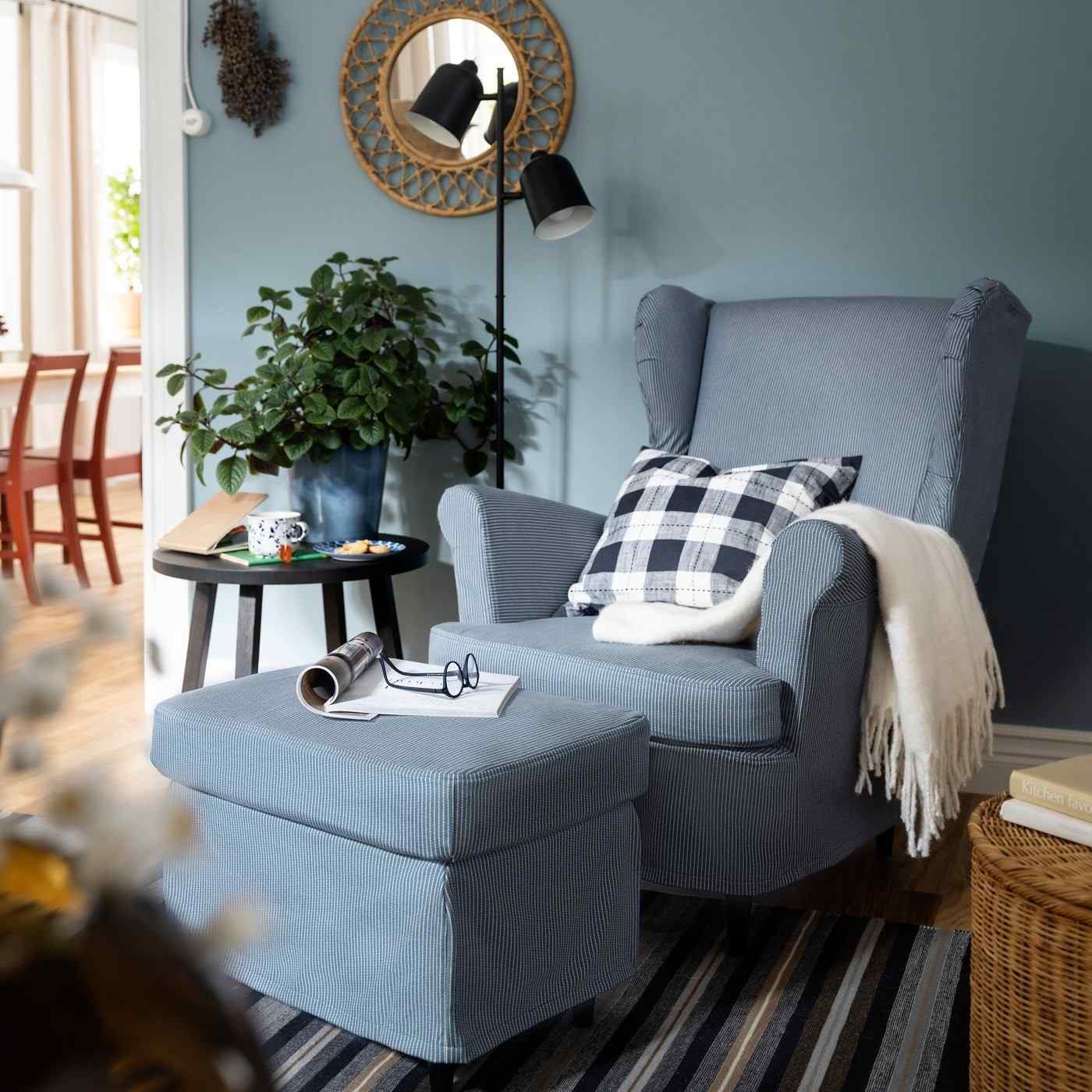
A separate armchair, footstool and reading lamp create an individual retreat within the shared room. The arrangement lets the same space shift from daytime play to a quieter evening without changing its main furniture.
Measure the guest-bed arrangement as a separate layout
The two-seat HYLTARP sofa bed changes the footprint when opened. Check the sleeping position, access, and room needed for the mechanism before assuming the daytime seating plan will accommodate overnight guests. Give spare bedding a clean, accessible location and follow the actual upholstery care label. A removable cover does not mean every component can be washed in the same way.
Give display and hidden storage different contents
The HAVSTA combination uses glass doors for favorite objects and solid pine doors for belongings that should remain out of view. Boxes inside help smaller toys and accessories travel to the play area and return afterward. Keep children’s containers manageable and follow the storage system’s anchoring requirements. Glass-fronted display can limit ordinary dust exposure without making a cabinet airtight or suitable for every fragile object.
Preserve a quiet seat within the shared room
The STRANDMON chair, footstool, reading lamp, and side table form a smaller setting beside the main sofa group. Leave access to it when toys or guest seating are in use. Portable children’s stools and toy boxes support changing activities, but each needs a return position. The room can then shift toward evening relaxation through cleanup and lighting rather than a complete furniture rearrangement.
Compare the family seating group in more than one state
The source combines sofas, a wing chair, a footstool, and a sofa-bed. Draw the ordinary seating positions before planning the guest sleeping state. Include the unfolded bed and identify which table or other piece needs to move. A sofa-bed gains value when the household can make that change without losing an essential route or access to bedding. Similarly, a footstool needs a useful position when someone is seated and a place when it is set aside. The reference's upholstered pieces are examples of a coordinated room rather than proof that the complete group fits every family space. Keep the seats that correspond to real habits and compare occasional needs around them.
Separate display, toy access, and protected storage
Glass-fronted and solid-door cabinets in the source support different purposes. Display belongings can remain visible, while toys in boxes can return behind closed fronts at the end of the day. Decide which box a familiar activity uses and test how it leaves the cabinet and comes back. Glass may reduce dust exposure, but does not make a cabinet maintenance-free or automatically suitable for every object. Check installation and anchoring instructions for the actual furniture, and manage access according to the household's needs. Grouping storage can clarify the room only when it is assigned to retained belongings. An attractive tall unit still becomes awkward if its most useful compartments are filled with rarely handled objects.
Support a quiet corner without fragmenting the shared room
The source wing-chair corner includes a lamp and side table, creating a more individual activity within the larger family setting. Compare that complete footprint with the route and other seating. A lamp placed for reading needs useful light and reachable controls, while the side table should support the objects actually used there. Removable covers on the sofas can help maintenance where the specific care instructions allow it. The evening change described in the reference depends on toy storage being convenient enough to use, not just on dimmer-looking photographs. Review the return routine and the locations of items that remain out. The flexible room succeeds when shared play, individual rest, and occasional guests can be accommodated through clear, manageable transitions.
References
IKEA's family living room combines generous seating, a two-seat sofa bed and washable sofa covers.


Leave a Comment