
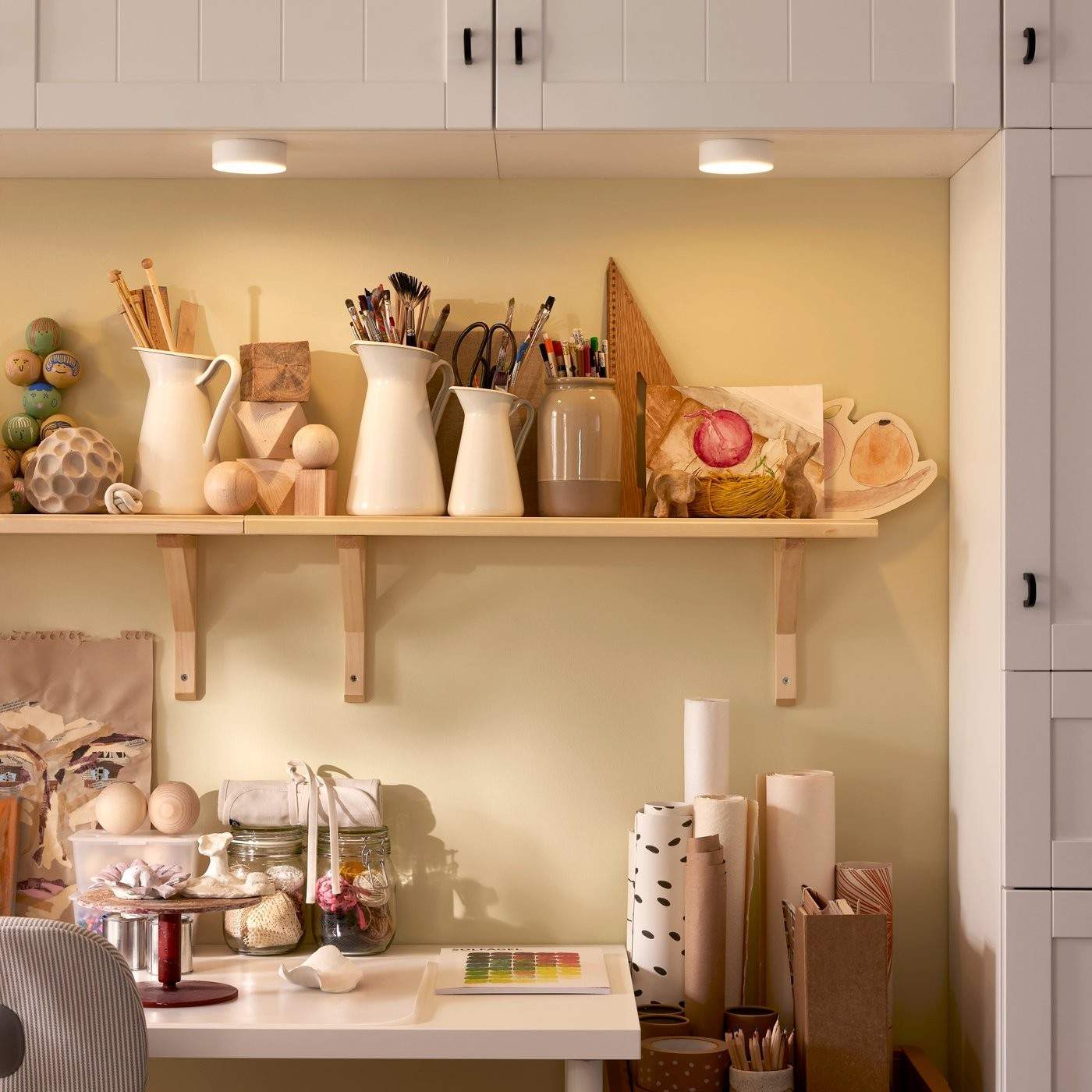
Plan a Creative Family Room around Storage and Cleanup
The compact family living room in the source uses a glass cabinet for display alongside drawers and closed modular storage for creative supplies. Boxes inside the cabinets keep smaller materials together. A chaise sofa provides a separate place to relax.
When adapting the layout, consider where a project starts, where supplies are retrieved, and how the shared surface is cleared. Concealed storage is useful only if it remains accessible. Keep the routes between craft materials and the work area comfortable during ordinary family use.
Separate finished work from the working materials
The HEMNES glass-door cabinet displays selected objects while its lower drawers conceal other belongings. BESTA storage provides additional closed compartments that can be configured for the household. Start with the paper sizes, craft tools, games, and boxes that need accommodation, then compare interior dimensions and door access. Keep restricted materials in appropriate locations rather than assuming every creative supply should be independently reachable.
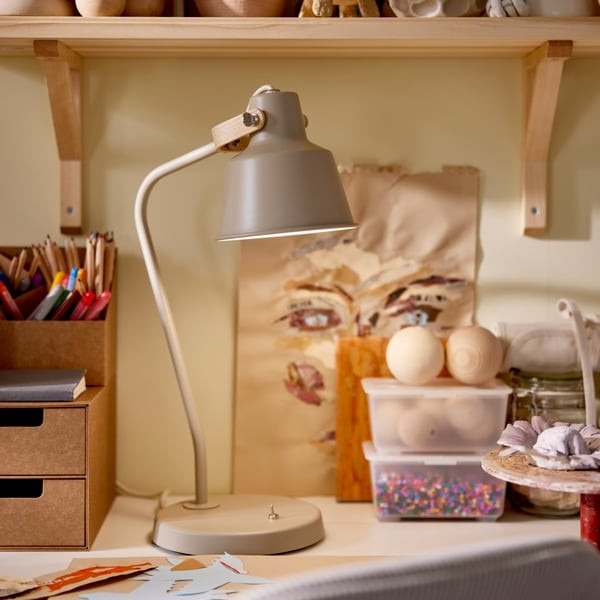
Give the hobby corner usable light and seating
The source includes a desk, swivel chair, nostalgic desk lamp, and an optional adjustable stool for working together. Measure the desk with both people present and leave a clear path back to the sofa. A compact activity nook needs enough surface for the intended project; a decorative lamp alone does not establish adequate lighting for detailed work.
Use textiles and coordinated furniture to connect the room
The EKTORP chaise sofa offers a separate place to rest, while cushion textures, throws, and a striped jute rug personalize the arrangement. Follow the current care labels rather than relying on a general washable-cover claim. A coordinated television bench holds remotes and board games and manages cables. The storage should make cleanup short enough that the creative room remains comfortable for ordinary family relaxation.
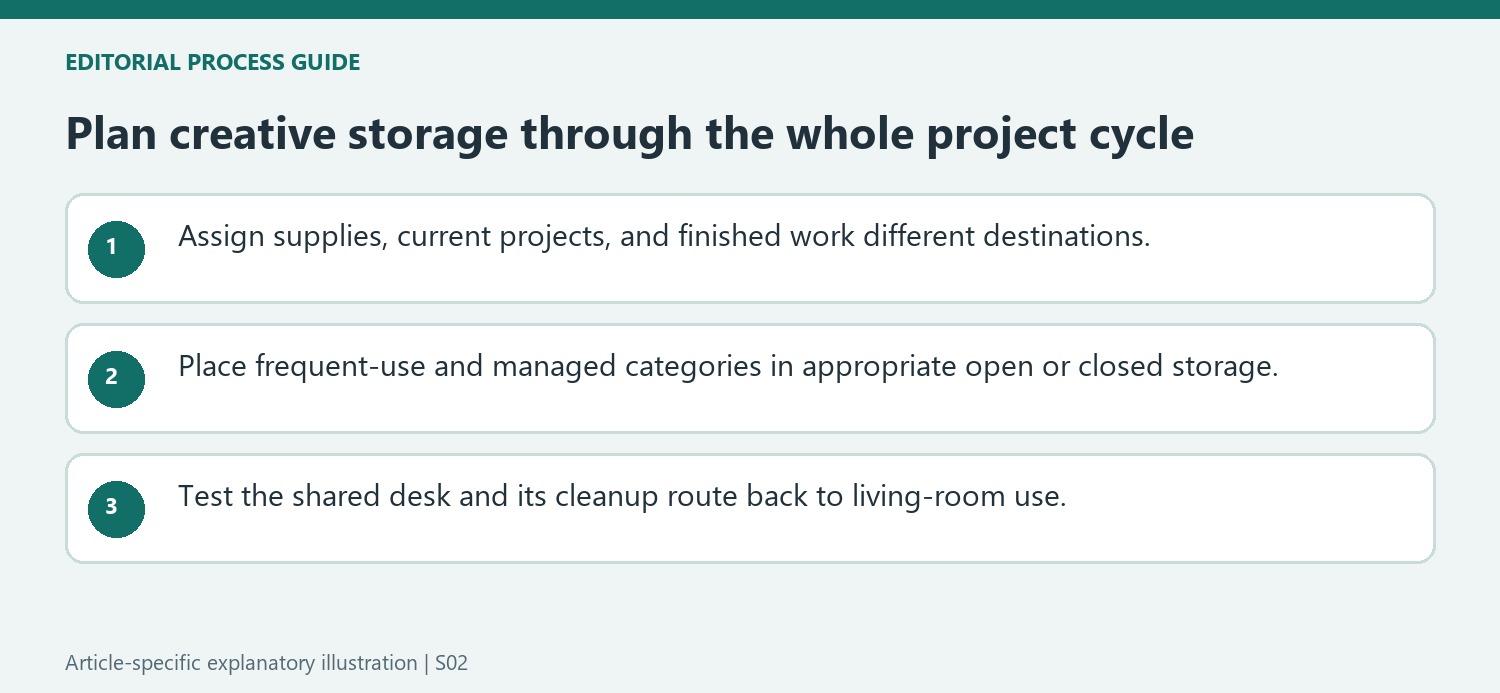
Give unfinished projects a destination as well as supplies
The source combines a dedicated activity nook with display and concealed storage elsewhere in the living room. Identify the stages of a familiar project: taking out supplies, working, pausing, and displaying or storing the result. An unfinished piece may need a different location from clean paper or loose tools. This is an editorial way to apply the source's craft-storage idea without assuming every project can fit inside a small box. Measure the category that actually needs accommodation. Keeping one current project together can make the shared surface easier to restore without requiring the family to abandon work whenever the room changes to another activity.
Choose open and closed positions by handling frequency
The glass-fronted cabinet provides display space and lower drawers, while the surrounding cabinets conceal other belongings. Open shelves near the desk can make frequent supplies easier to retrieve, provided the contents suit that access. Decide what should be visible, what needs protection, and what requires managed access. Glass helps reduce dust exposure but does not make the cabinet maintenance-free. Follow the actual furniture's fixing instructions, especially where tall or wall-mounted units form part of the arrangement. A coordinated collection of boxes is useful only after the categories and available internal dimensions are clear. Avoid buying a full organizer set before checking the objects that will occupy it.
Connect the creative nook with the room's maintenance routine
The source includes a desk lamp, swivel chair, and an additional stool for shared activity. Compare their complete working positions with the route to the sofa. A stool used by another person needs space at the surface, rather than merely somewhere beside it when empty. Task lighting should suit the activity and the selected fitting. The sofa's removable covers can support cleanup where the current care instructions permit, but they do not determine how art materials should be handled nearby. Decide where potentially messy work belongs and what is cleared before relaxing. The reference's personal textiles and finished artwork can then add character to an arrangement whose everyday transitions already work. Review the objects repeatedly left out after a session; they may need a more suitable temporary destination.
References
A mix of display, drawers, and closed cabinets supports hobbies beside relaxation.


Leave a Comment