
Let Mobile Storage Support a Shared Creative Table
The source equips an adaptable workspace with a sit-stand desk and rolling carts for different activities. Work materials and art supplies can move to the surface when needed, then return to their own storage. A pegboard holds schedules and samples nearby.
The table can support working, knitting, painting, or dining when its surrounding space remains usable. Plan where each cart parks during another activity. A multifunctional surface works best when changing tasks does not require finding a new home for every loose object.
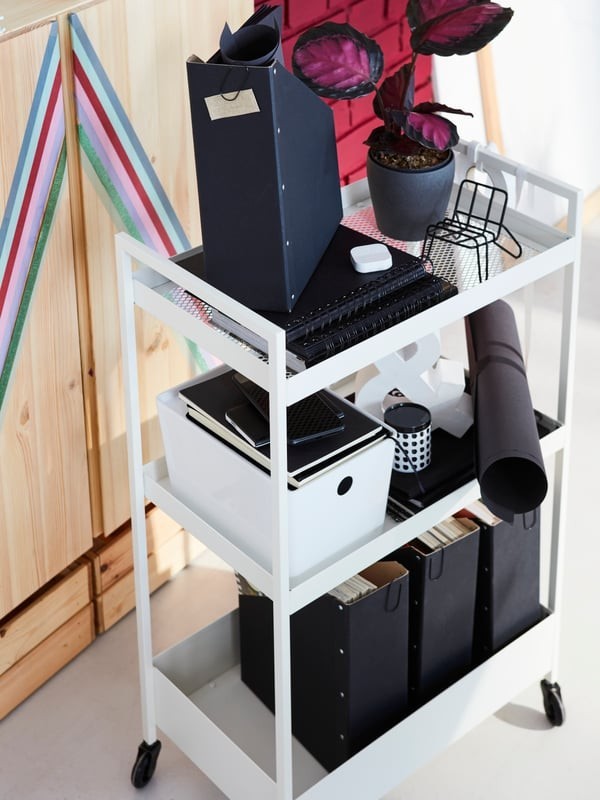
Assign the carts before filling them
The IKEA guide suggests separate mobile storage for work and leisure. One cart might hold office materials while another carries art supplies, but food and drinks should remain suitably separated from paint or sensitive equipment. Measure the parking positions, wheel clearance, and loaded capacity. A cart that cannot be returned easily will leave the shared table surrounded by permanent overflow.
Treat every table function as a real setup
Writing, painting, knitting, and dining require different tools and surface protection. Decide what can remain nearby and what must be removed before another activity starts. Follow the desktop’s care guidance when using water, adhesives, or craft materials. Keep lifting paths and cables clear on a height-adjustable desk, and use the desk and chair according to their instructions rather than assuming adjustment alone ensures comfort.
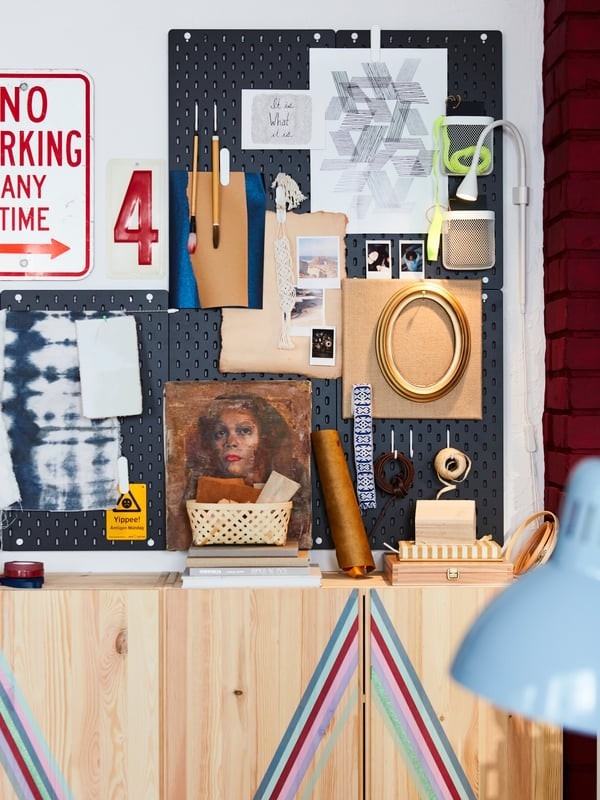
Use the wall for active references and selected display
The source combines a pegboard for schedules, samples, photographs, and reminders with an IVAR side unit used as a personal gallery. Choose a few useful references that support the current work rather than covering every available area. A simple stool can be personalized when the treatment suits its material and function. These decorative changes should support the workspace, not substitute for sufficient storage or an appropriate working position.
Give each cart a defined category and parking place
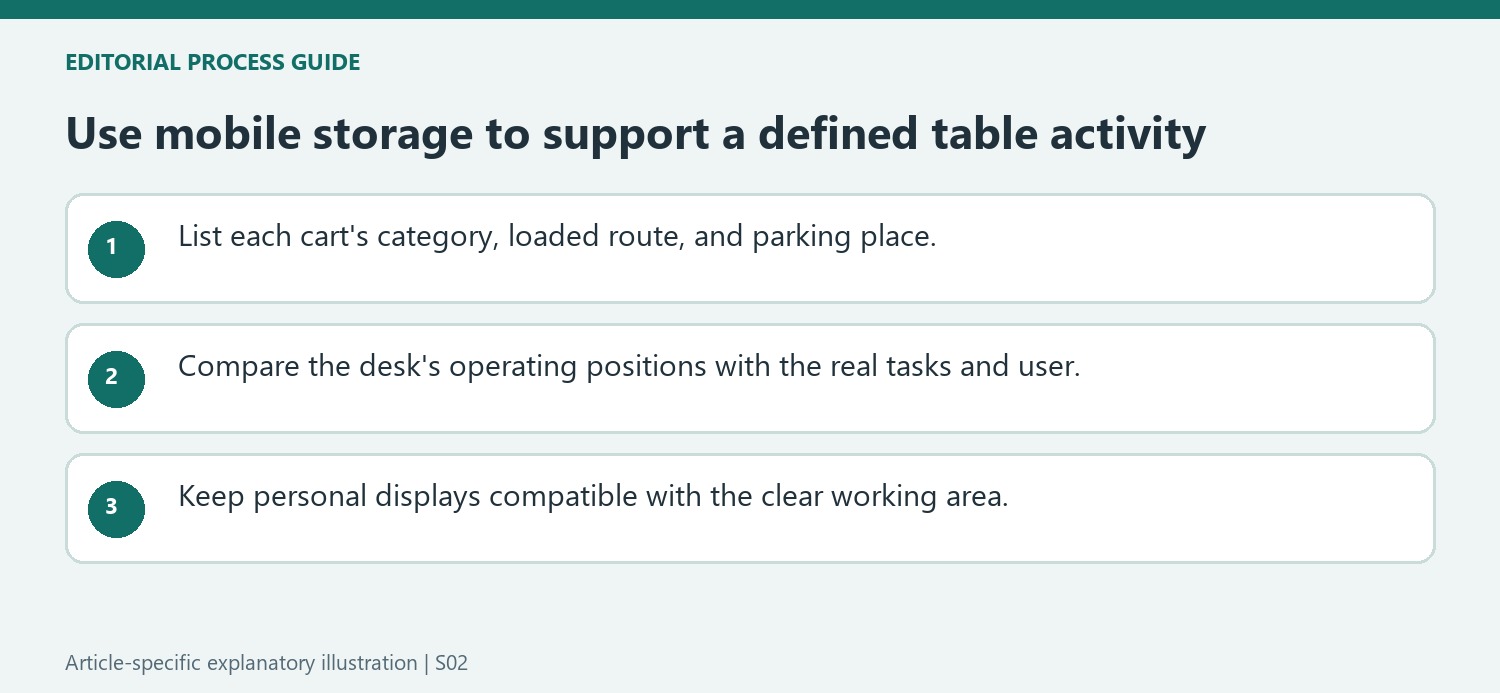
The source suggests separate carts for work and creative or social activities. Begin by listing what actually travels to the shared table. A cart of current files needs a different arrangement from paints, knitting materials, or serving items. Check the loaded height and footprint, the route between storage and table, and the place where it parks afterward. Do not assume a wheeled unit disappears when work ends. A defined category makes it easier to see when unnecessary objects begin accumulating on it. If one cart can serve several activities through removable suitable containers, compare that option with buying several permanently loaded units that the room has to accommodate.
Test the table in the positions each activity requires
The reference introduces sit-stand desks as one way to change working position. Check the actual desk's permitted range, load, and operating instructions rather than treating adjustability as proof of a fit for every user or task. Include chair and leg space as well as any nearby storage. A surface used for painting or dining also needs care and protection appropriate to the material. The source's list of possible activities is an invitation to consider flexibility, not confirmation that every desk is specified for all of them. Compare the most common activity first and identify the practical change needed before another begins.
Keep personal displays useful without overstating their effects
Pegboards in the source hold schedules, images, and inspiring materials, while an IVAR side unit is used as a display framework. Decide what information needs to stay visible and what is decorative. Verify mounting and the intended use of components rather than reproducing an improvised display solely from its appearance. A customized stool can express personality, but any added covering should preserve its appropriate use and stability. The article describes an inspiring atmosphere without measuring a guaranteed increase in motivation or productivity. Its transferable lesson is that familiar materials and personal images can make a workspace feel more individual. Keep the active working surface, controls, and storage route clear so that decoration supports rather than complicates the actual routine.
References
Separate supply carts help one surface change between work, hobbies, and meals.


Leave a Comment