
Give a Family Room a Quiet Seat beside Shared Activities
The source combines a family living room with space for a tween and occasional sleepovers. Cabinets coordinated with the wall color reduce visual competition. An armchair at the windows creates a quieter position for personal interests beside the shared seating area.
A nearby surface supports the quiet activity, while a rug and blockout curtains help change the room's atmosphere. Plan the retreat so it remains accessible when the larger room is busy. One shared space can accommodate different levels of participation without every seat serving the same purpose.
Connect the quiet seat with a practical activity
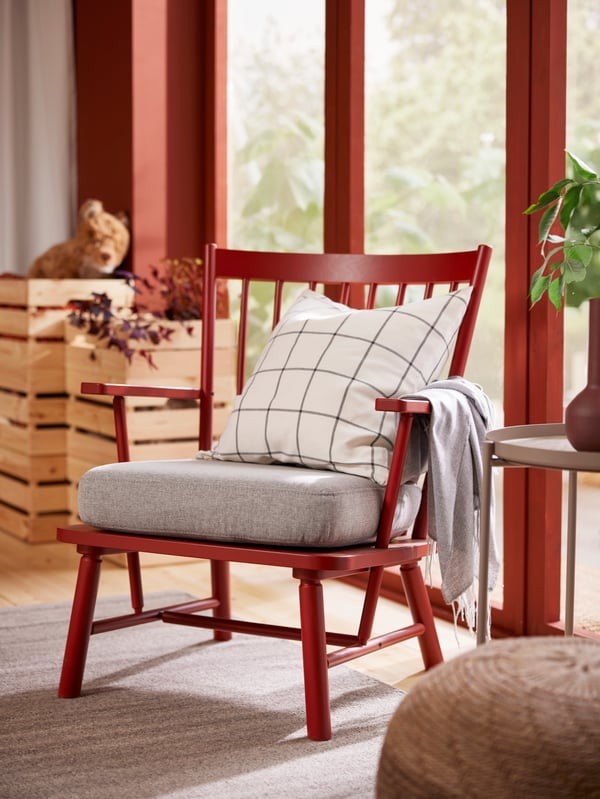
The PERSBOL armchair beside large windows provides a distinct position within the family room. Check the seat comfort, nearby surface, and light for the intended hobby or reading task. Leave a route to it when others occupy the main seating group. A different seat orientation can support a quieter experience without promising acoustic separation from the rest of the room.
Use coordinated storage without erasing its purpose
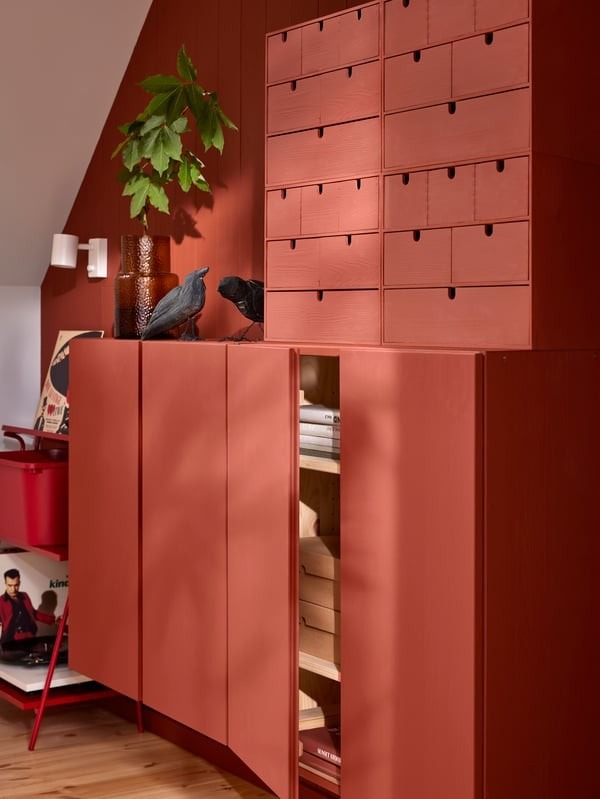
The source paints pine IVAR cabinets and a MOPPE mini dresser to relate to the wall, while red open storage adds contrast. Follow the finish instructions and allow appropriate preparation and curing for the actual material. Keep handles and labels understandable so the visually unified furniture remains easy to use. Related colors can reduce visual competition without making a packed cabinet physically larger.
Choose textiles for both atmosphere and care
The wool rug, cushions, and blockout curtains soften the styled room and make it more personal. Check maintenance, curtain hardware, and window operation before adapting the look. If the room also hosts a sleepover, plan the sleeping footprint and bedding storage explicitly. The article presents an example of a shared family setting, not a guarantee of sleep comfort or performance from any single textile.
Give the quieter chair a complete useful position
The source places a PERSBOL armchair near a large window as an individual spot within a family room. Identify what that person actually does there: reading, a small hobby, or simply resting. Check the useful light and any supporting surface the activity needs, then include the route around the chair. A position near a window may offer an attractive view but still needs comparison with changing daylight and reflections. The room can support a quieter orientation without becoming acoustically separate. Assess the chair together with the sofa and other simultaneous activities rather than assuming the corner will provide privacy solely because it is styled with a throw and cushion.
Use coordinated color without losing track of storage roles
The reference paints pine cabinets and small drawer units in colors that relate to the walls, alongside distinctive open storage. The resulting visual connection does not determine the best contents for each piece. List what needs drawers, what needs a larger concealed compartment, and what is deliberately displayed. If refinishing a suitable unfinished unit, follow the selected product and coating instructions, including preparation and curing. Do not assume every existing finish can be treated the same way. A consistent color can link differently sized pieces while their internal categories remain specific. Keep frequently used household belongings identifiable instead of allowing the unified appearance to hide an unexamined mixture.
Treat textile changes as part of the room's different states
A rug, curtains, and a sofa bed in the source help the family room support both ordinary relaxation and occasional sleepovers. Compare the sleeping configuration with the route, bedding storage, and available light control. Blockout curtains can reduce incoming light when properly fitted, but the source does not establish a particular sleep outcome for every user. Check the actual care and installation information. Wool and other tactile materials contribute to the room's character without replacing the need for practical maintenance. The reference's Scandinavian expression comes from the relationship of colors, materials, and furniture, rather than a requirement to buy every named item. Keep the features that support the household's own routines and use small personal details to make the setting feel individual.
References
Coordinated cabinets and a window-side retreat can balance group and individual use.


Leave a Comment