
Give a Teen Bedroom Chair More than One Useful Role
The source places a chair near a mirror and hooks so it supports getting dressed as well as reading. Cushions allow the bed to act as daytime seating. Under-bed storage accommodates belongings without adding another large cabinet.
Wall shelves free floor area while keeping selected possessions accessible. Check how the chair relates to the bed, desk, and storage openings. A piece that supports several routines should still have a clear position rather than becoming an obstacle that moves around the room.
Place the chair where its extra role is genuinely convenient
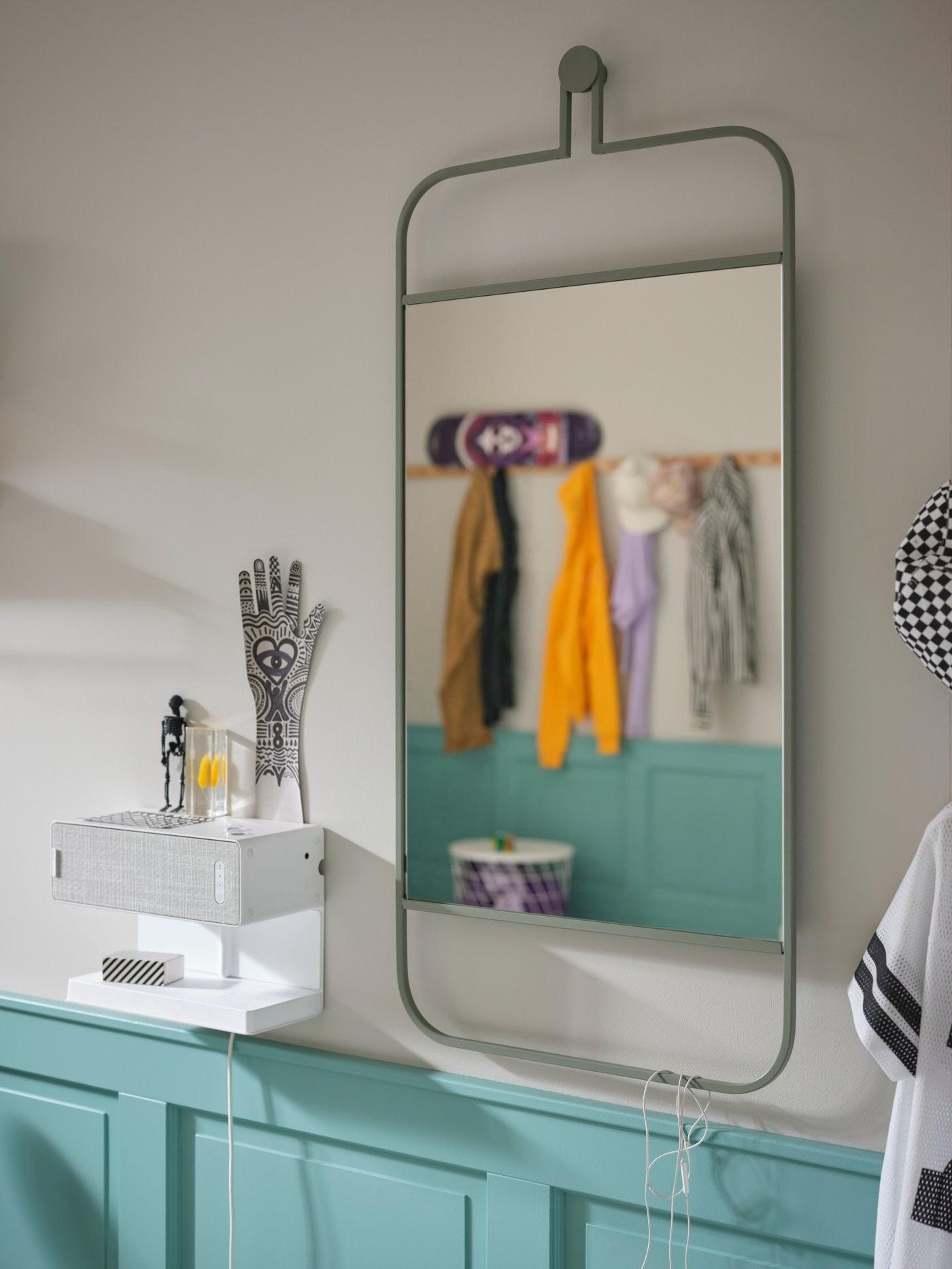
The IKEA guide combines a reading seat with a mirror and nearby clothing hooks. That gives getting dressed a defined location rather than leaving garments on whichever surface is free. Check the chair’s depth, the position of its arms, and the space for sitting down. Keep the wardrobe and bedroom door usable when someone occupies it.
Use the bed as daytime seating without losing the sleeping setup
Cushions can make sitting on the bed more comfortable and introduce a changeable color accent. Decide where they will go at night so the conversion does not produce a floor pile. Under-bed containers should fit the actual frame and be easy to pull out. Store clean, dry contents appropriately rather than treating the entire hidden area as undifferentiated overflow.
Give wall storage a carefully chosen load
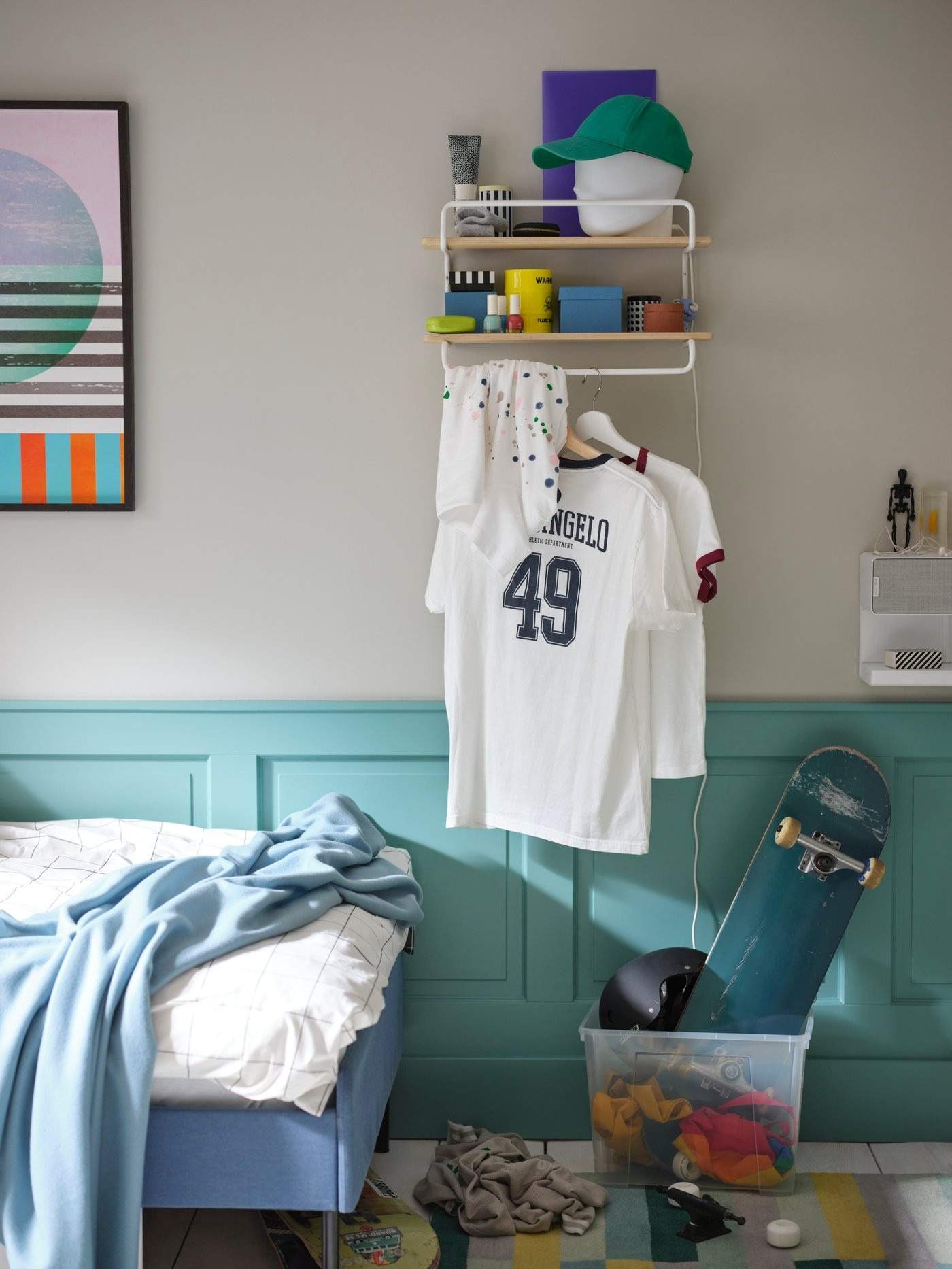
The source includes a wall shelf with a hanging rail and a wall-mounted speaker that also offers a small surface. Compare the mounting requirements and intended load for each component. Keep frequently used belongings accessible without overfilling the shelf. The room’s visual lightness comes from a considered furniture count and placement, not from assuming that mounted objects occupy no usable space at all.
Define the chair's role at different times of day
The source easy chair supports short breaks, longer reading, and getting dressed. Compare those roles with the actual bedroom routine before adding another seat. A reading position may need useful light and a small surface, while a dressing position benefits from a reachable mirror and a suitable destination for clothing. Check that the complete arrangement leaves access to the bed and other storage. An easy chair can perform several jobs without transforming mechanically, but only if it remains available. If it becomes the permanent landing place for unsorted laundry, neither the reading nor dressing role will be comfortable. Give those clothes a specific return destination rather than expecting the chair to solve a storage shortage.
Compare the bed's daytime use with its nighttime reset
The reference proposes adding cushions so that a bed can act as daytime seating. Decide what has to move before sleep and where those cushions go. Include under-bed storage in the same operating plan: a drawer or box needs room to come out even when the chair is occupied. These are editorial applications of the source's multifunctional-room approach rather than a claim that every frame is designed as a sofa. Check the selected bed's intended use and support. A simple daily change can be useful, while a complicated ritual may leave the bed and floor crowded. Test the transition with the belongings normally in the room, rather than only with the surfaces cleared.
Use wall positions for defined storage and accessories
The source combines a wall mirror, a wall-mounted speaker, and shelving with a hanging rail. Each requires its own appropriate support and permitted use. A speaker described as offering a shelf should still be loaded and installed according to that actual product's guidance. A trophy shelf and rail also need to suit the objects and clothes they hold. Place frequent-use accessories where they can be retrieved without stretching over occupied furniture. The visual benefit of lifting storage from the floor does not remove its physical projection into the room. Compare the whole wall grouping with the teen's changing interests and keep an area for personal display. A smaller number of clear, reachable roles can serve the room better than filling every blank section with another accessory.
References
Reading, dressing, and daytime lounging can share a compact furniture arrangement.


Leave a Comment