
Blend a Work Corner into the Living Room
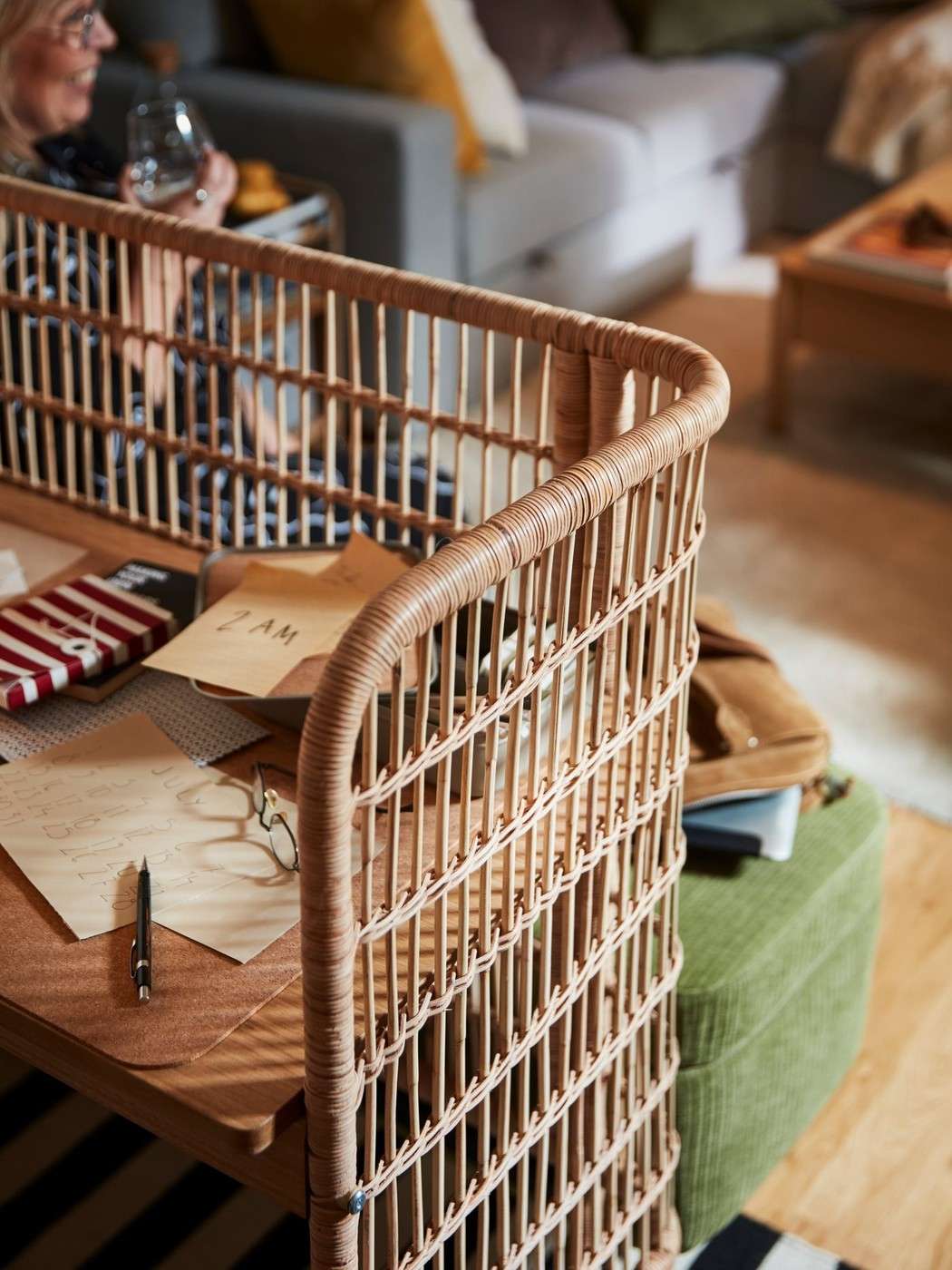
IKEA's coordinated desk alcove uses rattan and light wood to connect the work area with surrounding furniture. The desk's wrapped side creates partial seclusion without shutting the corner off entirely. This keeps paperwork or crafts close to the social space.
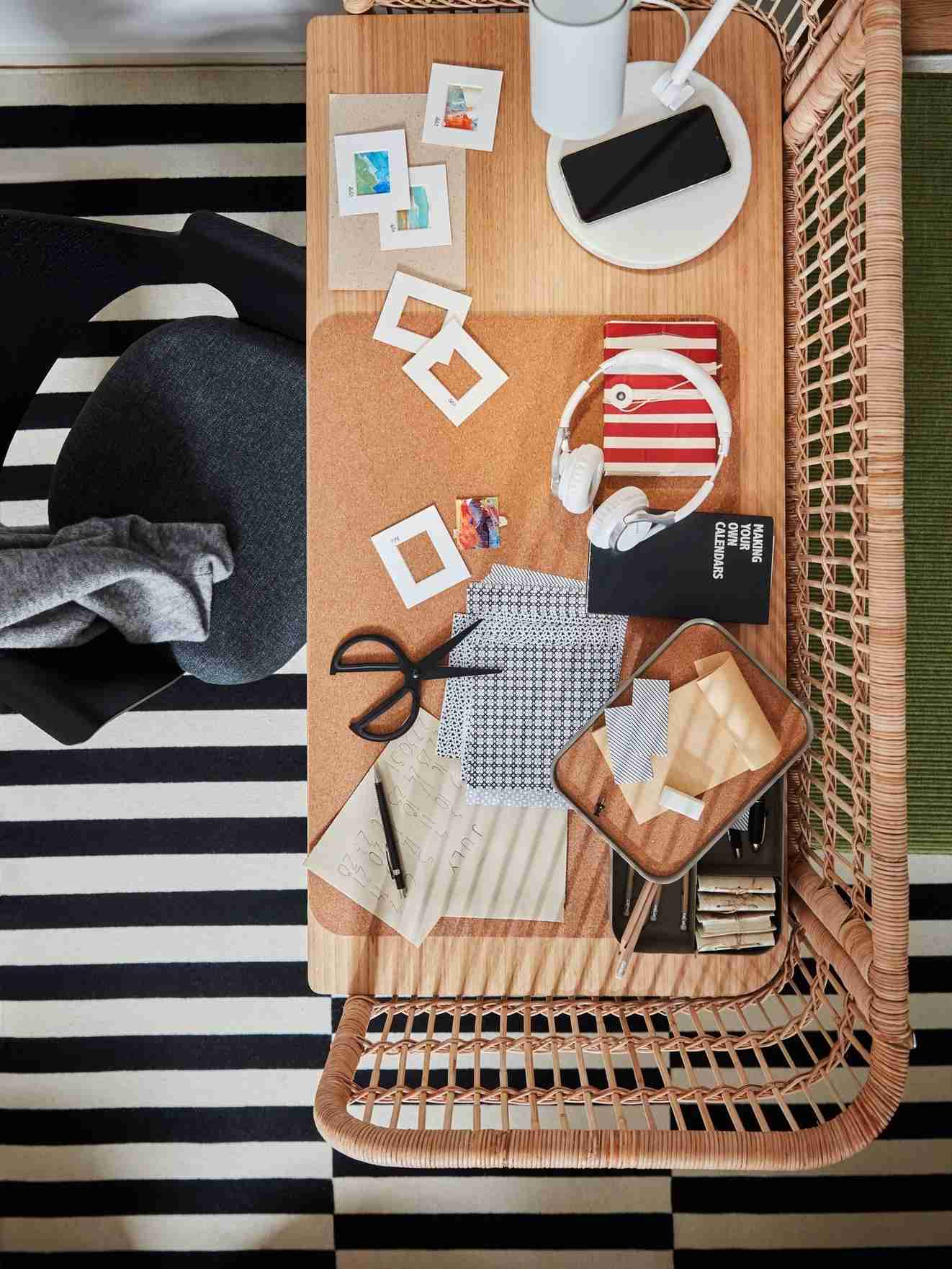
With limited desk surface, the example combines functions through a lamp with charging, stackable boxes and a protective cork pad. Organizing accessories by activity makes the area easier to switch between different tasks.
Treat the rattan side as a visual screen
The FRYKSAS desk’s wrapped side gives partial seclusion while relating to the room’s other rattan and light-wood furniture. It does not function like a separate soundproof office. Compare the seated view, desk access, and walking route before using a screen to divide a shared space. Keep the enclosure light enough that the work corner remains connected when that is the desired effect.
Give nearby furniture the storage work
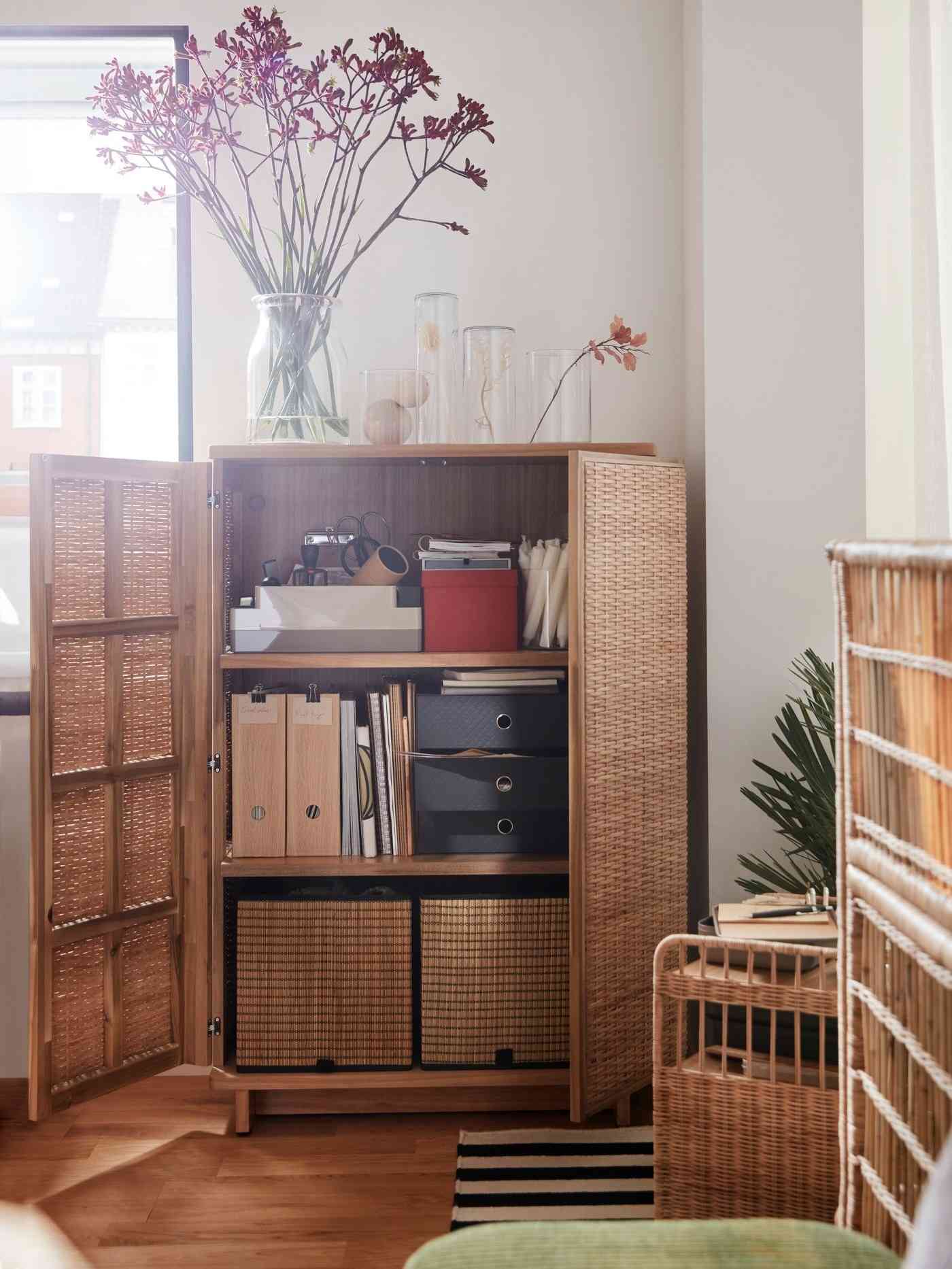
The matching cart and cabinets hold accessories without filling the space beneath the desk with drawer units. Cabinet doors that open widely still need unobstructed clearance. BILLY bookcases with files and boxes provide another option for grouping paperwork and smaller materials. Check internal dimensions against the actual objects and follow securing requirements for tall storage.
Preserve enough surface for the activity
A lamp with charging combines functions, and a cork pad protects part of the desktop during suitable tasks. Confirm electrical compatibility and care instructions rather than assuming a pad protects against every craft material. Separate accessories by activity so they can be changed quickly. An adjustable chair can support different users when its range and working height fit them; coordinated appearance alone does not establish comfort.
Use the desk screen as a partial visual boundary
The rattan-wrapped desk in the reference connects with the living room's other materials while defining a working position. Compare what the screen hides from nearby seats and what remains visible. A wraparound side can give some visual enclosure without providing the acoustic separation of another room. Decide whether that degree of boundary suits light paperwork, studying, or the activity actually planned. Include the chair's operating position and route to the living area. The source's language about focus describes an intended atmosphere rather than a measured outcome for every user. Choose the desk because its working dimensions and partial screening suit the task, then assess how its material relates to the surrounding furniture.
Keep nearby supplies accessible without filling the leg space
The reference leaves the area beneath the desk relatively open and assigns accessories to nearby cabinets, bookcases, and a matching cart. Identify which items need to be reached while seated and which can be retrieved during a break. A cabinet with wide-opening doors needs space for that movement in the actual layout. Check its dimensions, installation requirements, and the internal boxes before counting its full capacity. The cart also needs a parking place that preserves the desk's approach. Separating storage from legroom can be useful, but only when the supplies remain conveniently accessible. Otherwise current materials may accumulate back under the surface and undo the original benefit.
Assess combined accessories by both of their functions
The source mentions a lamp with an integrated charger and activity-specific boxes. Verify compatibility and the actual product's charging and lighting information before assuming one accessory replaces separate equipment. A protective desk pad needs to suit the surface and the work performed on it. If different household members use the corner, compare the seat adjustment and desk relationship for each person rather than relying on a single styled view. The natural-material palette and nearby living-room seats can make breaks feel connected to the rest of the home. Preserve that connection through a simple return routine for current supplies. The desk becomes part of the living room when its daily operation and storage are considered along with its visual appearance, not solely because the woven finishes match.
References
IKEA's coordinated desk alcove uses rattan and light wood to connect the work area with surrounding furniture.


Leave a Comment