
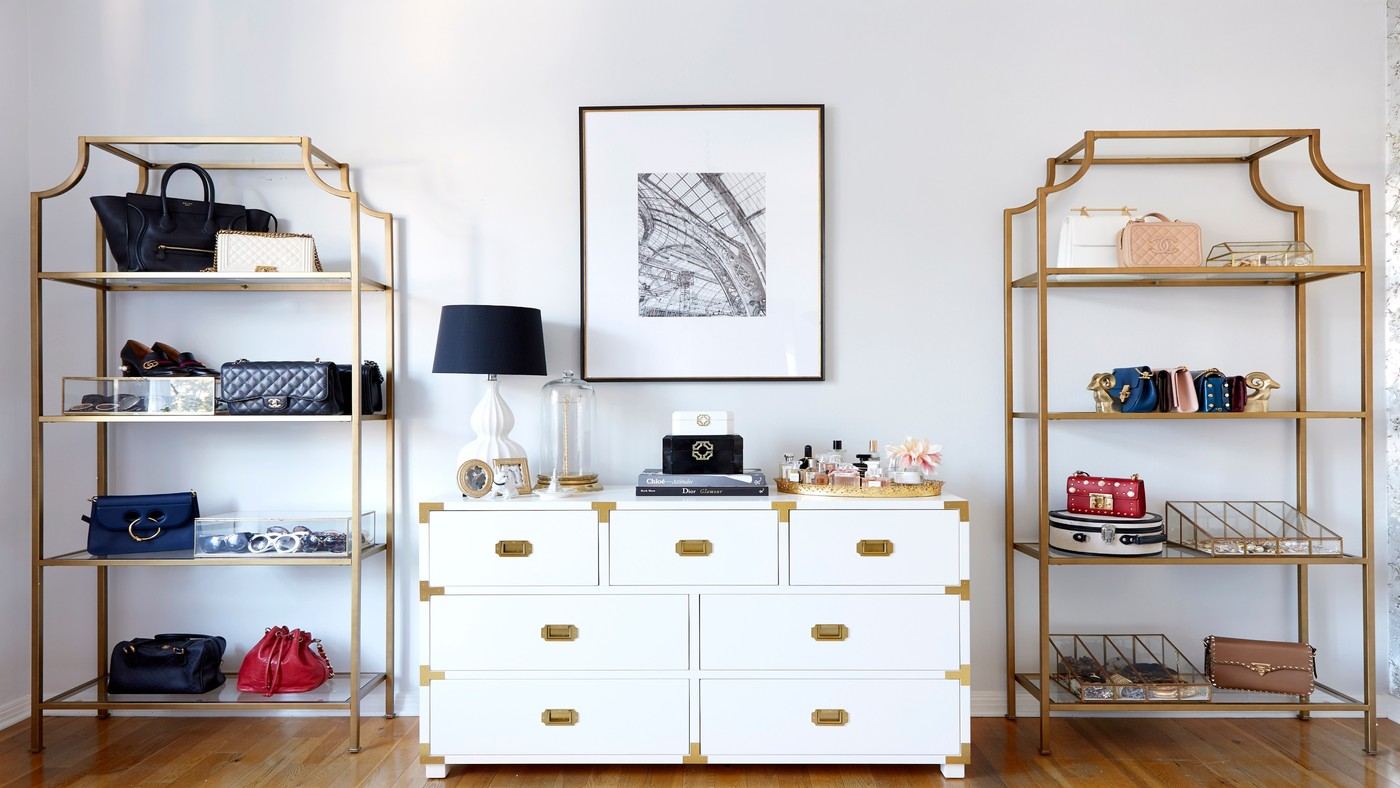
Look for Storage Inside Furniture You Already Need
Real Homes' apartment storage guide recommends combining functions through furniture with concealed compartments. A storage ottoman or coffee table can hold spare blankets and pillows, while an old trunk may provide both a surface and a place to keep belongings.
In the bedroom, a bed with built-in drawers can supplement limited dresser capacity. Choose the compartment around the items being stored and check the opening clearance. The goal is to make an essential piece work harder, rather than add storage furniture that consumes the floor area it was meant to free.
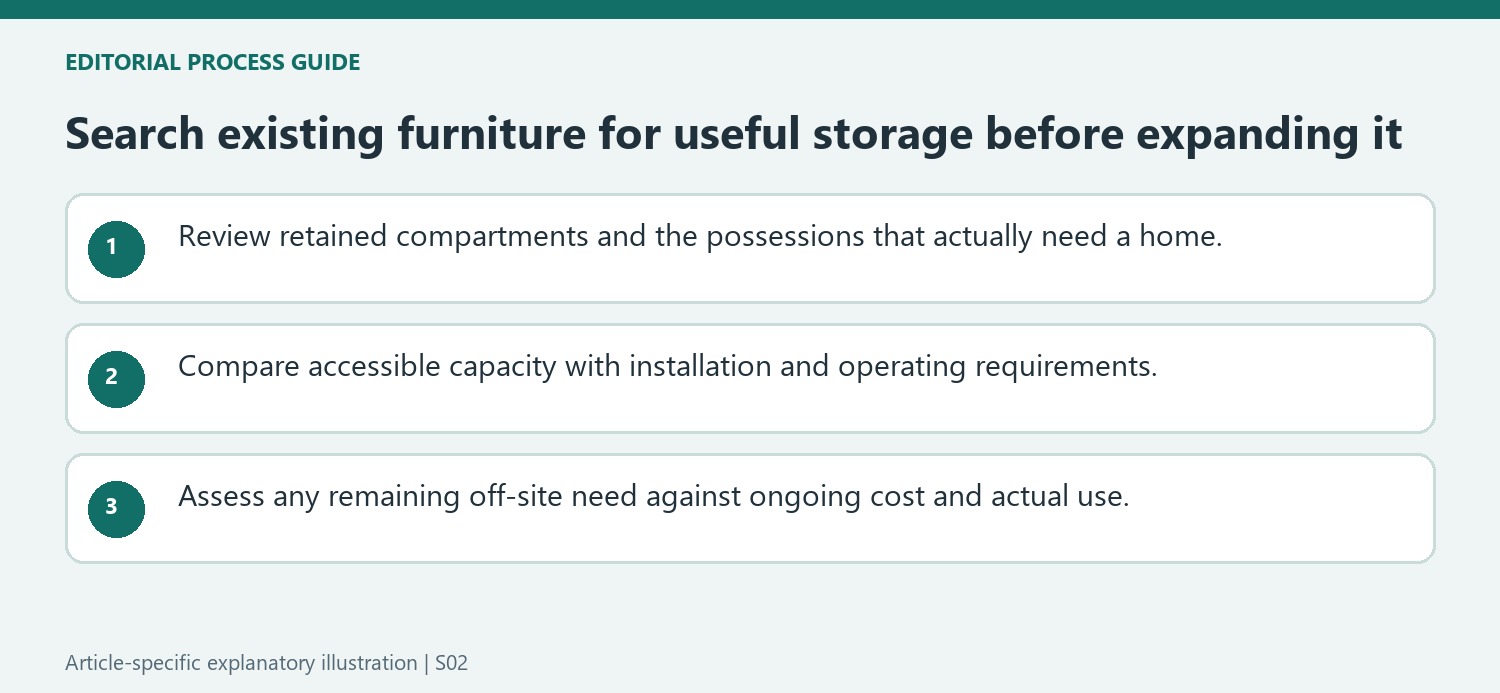
Identify the unused capacity before buying another cabinet
The reference proposes storage ottomans, tables with hidden compartments, beds with drawers, and desks with hutches. These concentrate belongings around an existing furniture function, but each requires appropriate access and dimensions. A trunk used as a table also needs a sound structure and a practical opening position. Compare the contents and frequency of retrieval before choosing between a lower drawer, overhead shelf, or lift-up lid.
Assess the installation demands of larger changes
The article also mentions wall beds, bed risers, high cupboard storage, and hanging cookware. These are not interchangeable quick fixes. A wall bed needs its specified anchoring, risers must be compatible with the bed and intended load, and a loaded rack requires suitable support and safe clearances. High storage is more useful for light, occasional items than for heavy appliances that are difficult to retrieve. Use the source as a list of opportunities to investigate, not a complete installation guide. The best change increases accessible capacity without making the main furniture unstable or leaving everyday items awkward to reach.
Audit the retained furniture before adding more storage
The reference begins with storage furniture, but the existing nightstand, media cabinet, and bed may already contain capacity that has not been assigned well. Review the possessions that need a place and the compartments currently occupied by unrelated items. A coffee-table trunk can conceal belongings, although it needs a convenient lid opening and suitable condition for the intended use. A lower drawer may be more accessible for daily items than a large cavity beneath a tabletop. Compare each piece with what it could replace in the room. Another storage purchase is useful only if it solves a genuine capacity or retrieval problem rather than duplicating a function that can be reorganized.
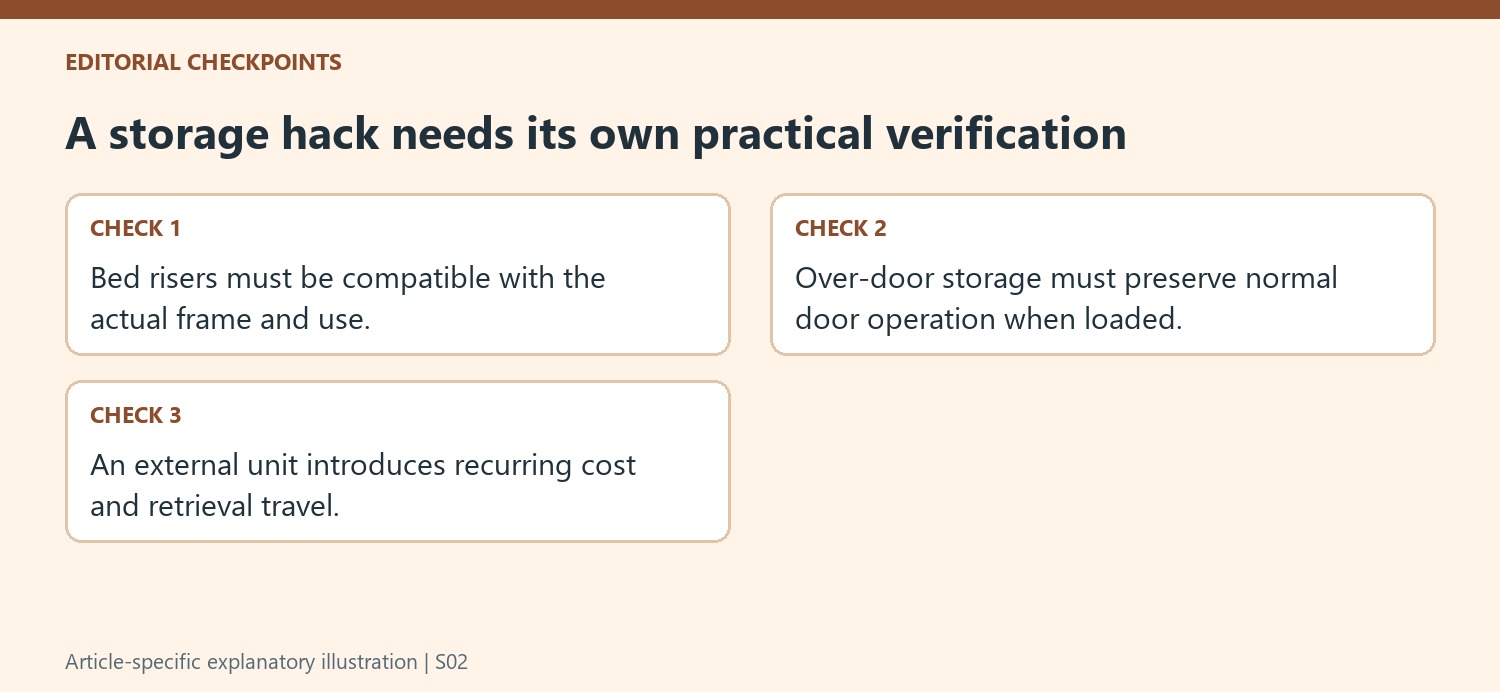
Distinguish an easy addition from a structural change
A desk hutch and an over-door organizer can use vertical space, while a folding bed, pot rack, or mounted cabinet introduces more substantial support requirements. Check the specific product and permitted installation rather than treating them as equally simple hacks. Bed risers must be compatible with the frame and its loading; an elevated mattress also changes the height of bedside access. Similarly, stored items above kitchen cabinets need a practical retrieval method and an environment suitable for the contents. The source's suggestion to use every gap should be interpreted alongside those limits. An inaccessible or poorly supported storage position can create more difficulty than the space it appears to gain.
Keep contents near their activity and account for ongoing cost
The article suggests concealed entertainment storage for a range of possessions. Identify which objects genuinely belong near that location, and keep access to equipment, connections, and the actual cabinet's ventilation requirements. Behind-door storage also needs the door to close and swing normally with its contents in place. If the remaining possessions require an external storage unit, compare recurring cost, travel, access, and the likelihood of using those objects again. A rented unit is not automatically the most economical answer simply because another apartment costs more. Reduce and reorganize first, then compare the specific capacity gap. The most useful adaptation makes everyday belongings easy to find without turning the whole home into a sequence of packed compartments. Leave room for the ordinary movement of belongings instead of measuring capacity only when every shelf is tightly filled.
References
- 10 storage hacks for small apartments that you haven't thought of. Real Homes; Amanda Lauren.
Real Homes' apartment storage guide recommends combining functions through furniture with concealed compartments.


Leave a Comment