
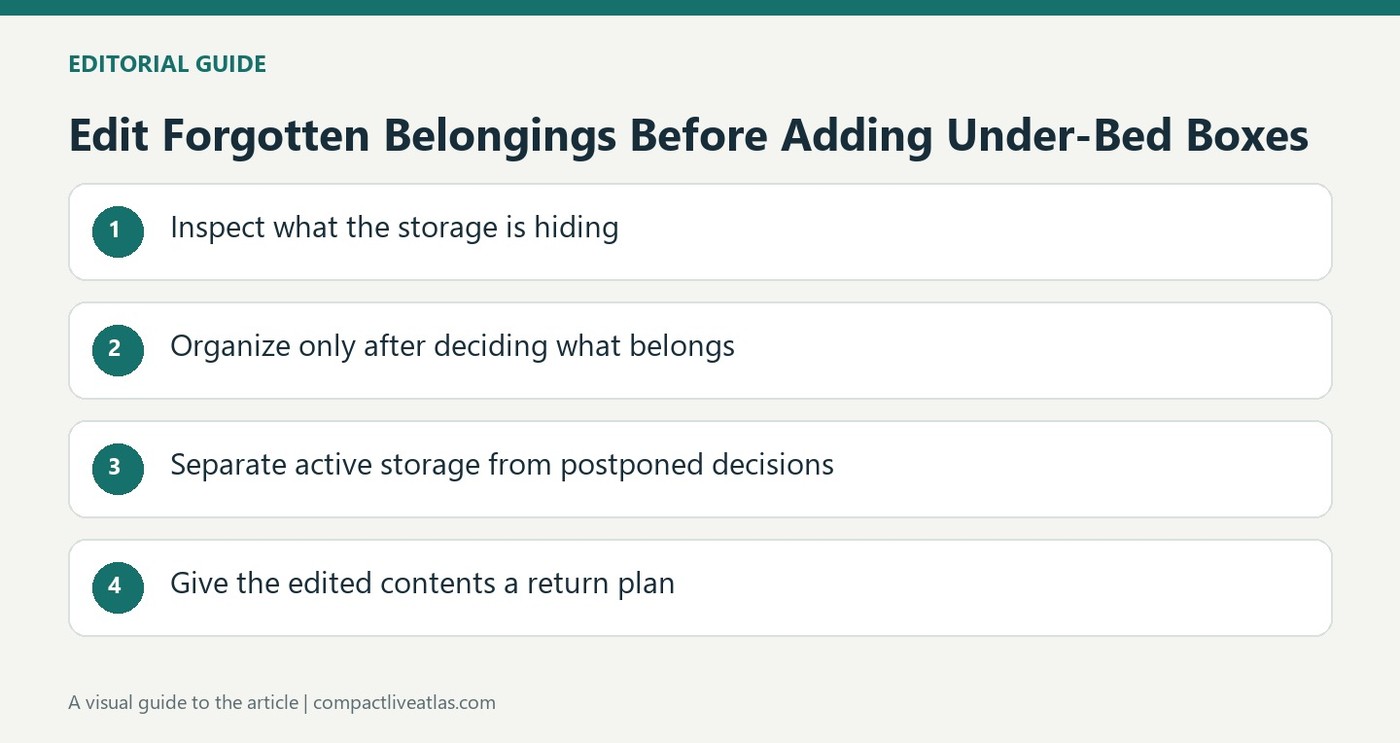
Edit Forgotten Belongings Before Adding Under-Bed Boxes
Inspect what the storage is hiding
The source uses the Minimalists' idea of a clutter coffin to describe containers that conceal belongings without resolving whether they are needed. Under-bed storage can become an easy destination for objects that are simply postponed. A tidy-looking exterior may therefore hide a growing organizational problem. The suggested reset begins by facing the contents directly, rather than buying another basket or moving the same unopened box to a different place.
Organize only after deciding what belongs
Consider whether stored objects are useful, wanted, and worth the space they occupy. The distinction is between giving necessary belongings an accessible home and hiding decisions for another day. The source's under-bed example demonstrates how a basic change in approach can improve a crowded storage area. Treat a container as part of a system with a clear purpose, not as proof that the clutter inside has already been dealt with.
Separate active storage from postponed decisions
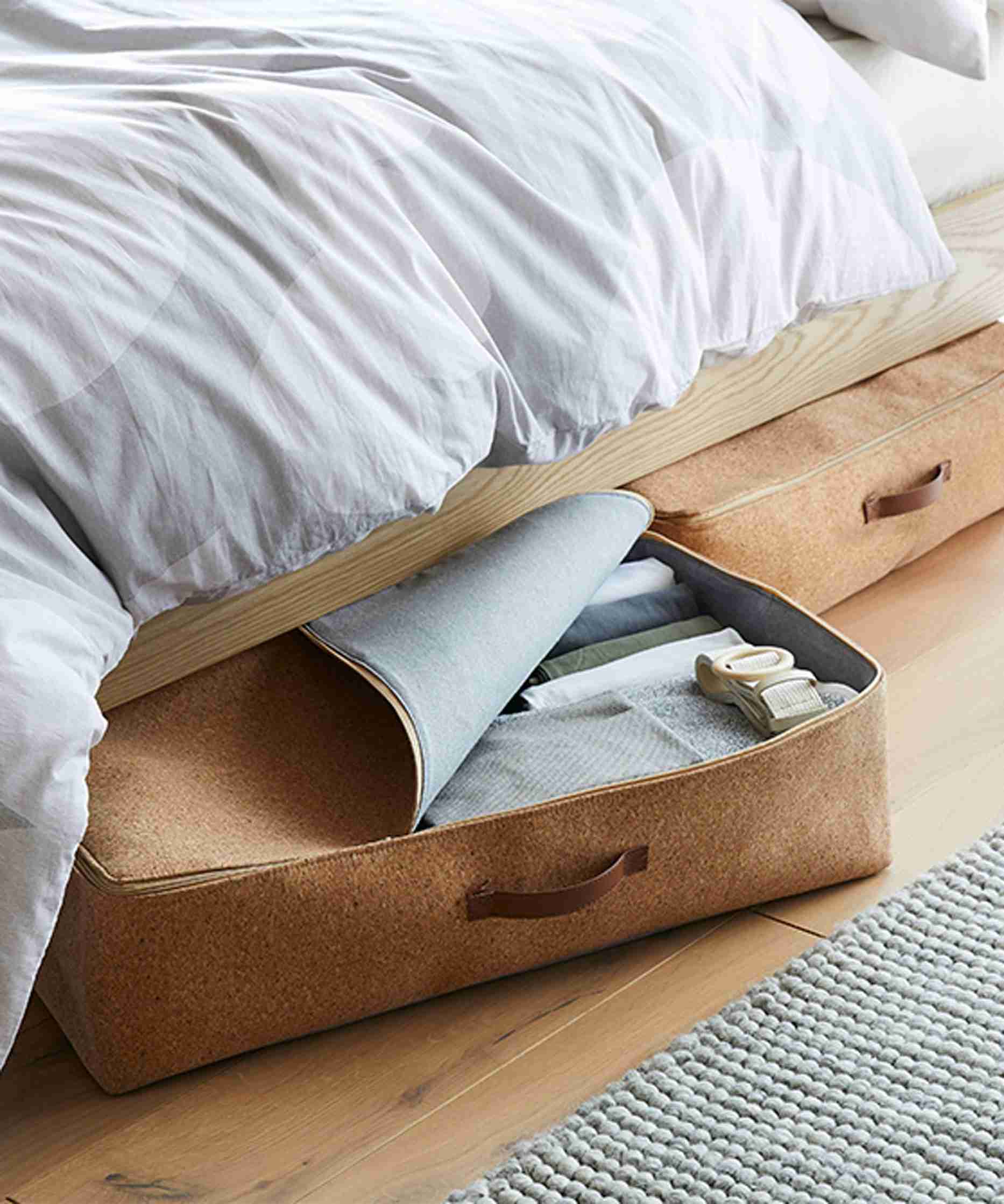
The writer’s own under-bed area contains fabric bags and woven baskets, including an electric blanket and a lounging pillow. Some objects serve an identifiable seasonal or everyday purpose; others have simply remained out of view. Angelia York’s advice is to make storage intentional and functional. That supports keeping useful contents while questioning boxes whose purpose can no longer be explained.
Give the edited contents a return plan
Empty one container where there is room to inspect it and decide which items are regularly used, seasonal, or ready for donation or disposal. Clean and fully dry retained textiles according to their care instructions before repacking. Label seasonal containers so their purpose remains visible after they slide out of sight. An under-bed bag is not inherently a problem; the issue is whether it lets necessary belongings remain accessible or conceals decisions indefinitely. Avoid buying a replacement organizer until the retained contents and available clearance are known. A smaller, clearly assigned collection is easier to maintain than an anonymous row of closed boxes.
Ask why each container has not been opened
The Minimalists' metaphor targets containers that postpone a decision rather than support a useful storage purpose. Distinguish that problem from legitimate seasonal or sentimental storage. A rarely opened box can still have a clear reason to exist if its contents matter and are appropriately kept. Review an under-bed bag by category: what is used regularly, what duplicates a supply elsewhere, and what is retained only because choosing a destination feels difficult? The source writer found unused clothing and surplus blankets, but another household will have a different mix. Use the example to ask sharper questions rather than applying an automatic deadline for discarding every object not recently handled.
Turn the review into decisions that change the contents
Meghan Cocchiaro's REAL approach starts with removing and sorting, then editing and assigning locations before choosing containment. Work on one manageable area so the process can reach a useful stopping point. Identify the belongings that stay, move elsewhere, leave for donation, or need appropriate disposal. Arrange the actual next step for those leaving rather than shifting the undecided pile into another corner. Assign retained categories according to frequency, weight, and practical handling. That can show that an existing bag already has enough capacity once unrelated items leave. Buying a new container before those decisions risks preserving exactly the problem the metaphor is meant to expose.
Make the finished location understandable when revisited
A label or visible contents list can explain why an occasional category is stored away. Keep the location retrievable without dismantling several other storage groups. Review it when the relevant season or activity returns, using that event as a chance to see what remained useful. The aim is not to avoid all containers; the source organizers explicitly recognize their value after editing and planning. A well-defined under-bed group can keep the bedroom functional without becoming forgotten storage. Judge success by the ability to find, use, and return what was deliberately kept, rather than by how completely the floor looks empty after everything is hidden.
References
- I tried The Minimalists' Clutter Coffin decluttering method – it's the best tip I've tried all year. Homes and Gardens; Chiana Dickson.
The source uses the Minimalists' idea of a clutter coffin to describe containers that conceal belongings without resolving whether they are needed.


Leave a Comment