
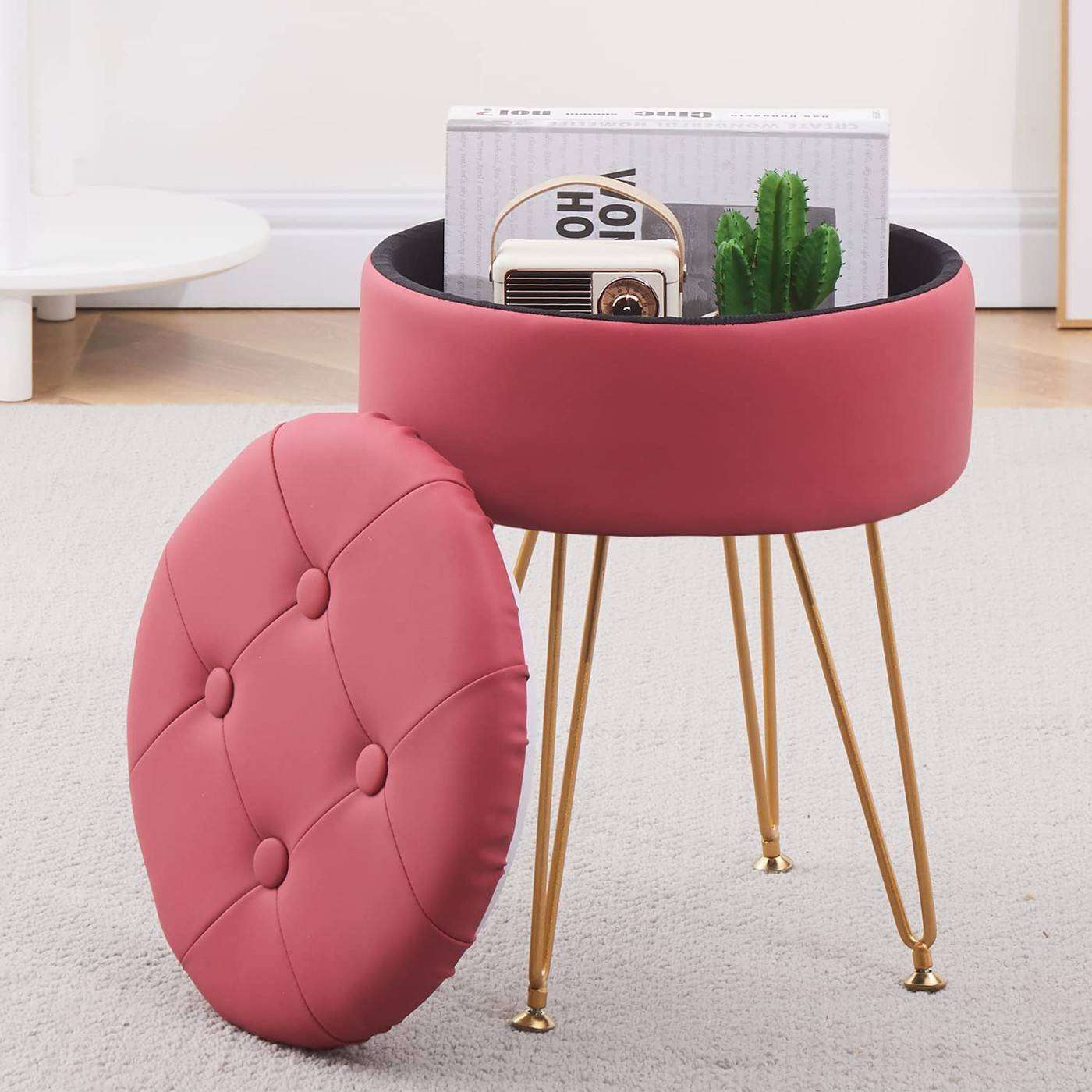
Choose Double-Duty Furniture Around Your Actual Routine
A small apartment can retain personality without filling every corner with a separate furnishing. Real Homes recommends choosing pieces around lifestyle, such as a sectional that provides enough seating without another chair or nesting tables that spread out only when extra surfaces are needed.
These overlapping roles can reduce the number of pieces the storage and layout must accommodate. Before buying, decide which functions occur daily and which are occasional. Furniture earns its footprint when it supports those routines rather than simply appearing compact in a shopping guide.
Compare the furniture in both its compact and active positions
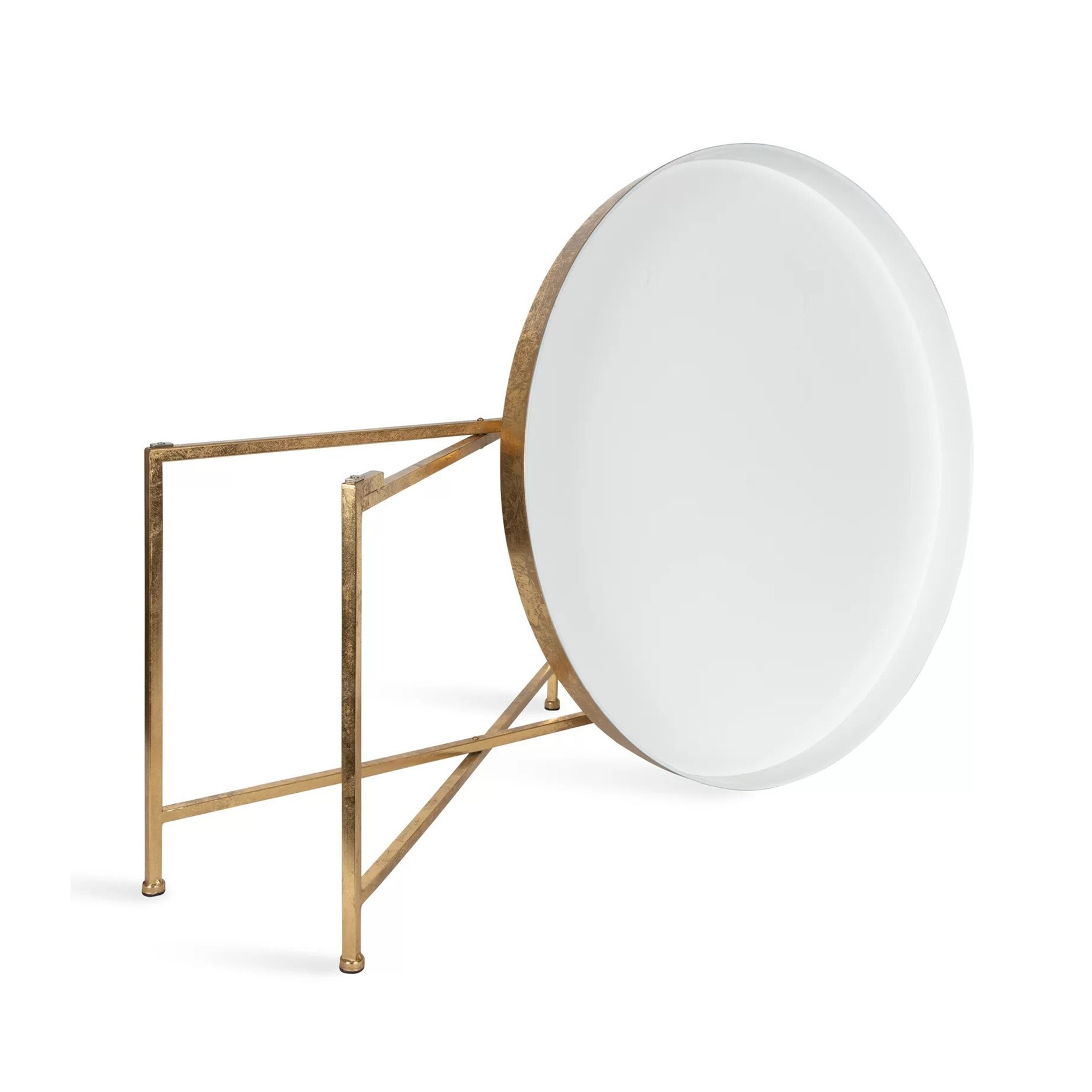
The sectional example reduces the need for a separate accent chair when its seating capacity suits the household. Measure the full footprint and the route past it rather than assuming a single large piece always saves room. Nesting tables need enough clearance to spread out when entertaining and an obvious place to return afterward. Their usefulness depends on both arrangements working.
Separate occasional needs from everyday requirements
A table used for guests does not need the same permanent footprint as a daily desk. Equally, a compact item that must be laboriously rearranged each morning may not support the intended routine. List the activities, their frequency, and the objects that must remain nearby before comparing products. One nesting table might serve as a bedside surface, but only if moving it later does not disrupt another essential task.
Keep the personality while editing the furniture count
The reference encourages color, pattern, and decorative character rather than prescribing a minimalist style. Its shopping prices are time-specific, and the cached selection is not a detailed product-performance test. Use the examples to identify overlapping functions, then check current specifications, comfort, stability, and access for the actual item before purchasing.
Write down the routine the second function must support
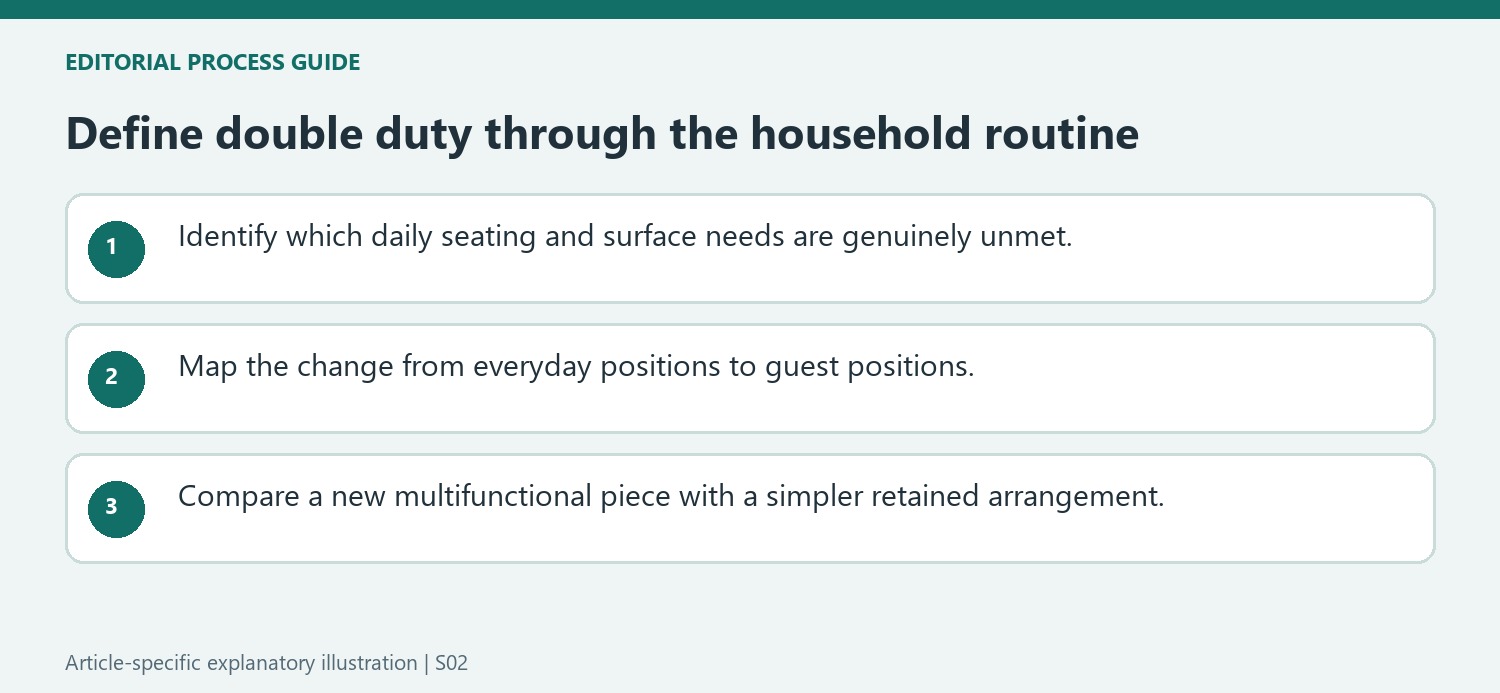
The source argues for furniture that suits the household's lifestyle rather than an obligatory minimalist appearance. Describe a normal evening before deciding what double duty means. If everyone sits together on a sectional, an additional accent chair may consume space without meeting an actual need. If one person reads separately, that seat may have a useful role. Compare the retained furniture as a group, including the surfaces needed for drinks, a lamp, or current activities. A piece earns its space through the jobs it reliably performs. A label describing several possible functions does not establish that those functions are useful in this particular home.
Test the change between daily and guest arrangements
Nesting tables are the source's clearest example: they can remain grouped for ordinary use and spread out when more surfaces are needed. Map where each smaller table would go and which route must remain open. If one table becomes a nightstand, decide whether it stays there or has to be borrowed back whenever guests arrive. That is an editorial planning question, not a performance claim about a specific product. Check stability, accessible height, and the intended use against the actual table's information. A flexible arrangement works best when changing it takes little effort and does not leave another room without an essential surface.
Compare replacement with keeping a simpler existing arrangement
The short reference includes a shopping selection but does not document every product's dimensions, storage capacity, or operating mechanism. Verify those details with current product information before buying. First test whether removing an unnecessary piece or redistributing a side table already solves the problem. Furniture with storage or a transforming feature can add useful capacity, but may also bring a heavier outline or more steps during daily use. Compare the complete routine, including clearing surfaces and returning the room to its usual state. An ordinary table that stays useful can be a better fit than a complex piece whose extra function is seldom used. Set a realistic priority for the activity that happens most often, then assess occasional needs around it. This keeps the decision grounded in how the household actually lives instead of the largest advertised number of functions.
References
- My apartment is TINY and has zero storage whatsoever, these are the small space furniture pieces I swear by. Real Homes; Holly Phillips.
A small apartment can retain personality without filling every corner with a separate furnishing.


Leave a Comment